

Ebook Info
- Published:
- Number of pages:
- Format: PDF
- File Size: 2.65 MB
- Authors: Shirley Glass
Description
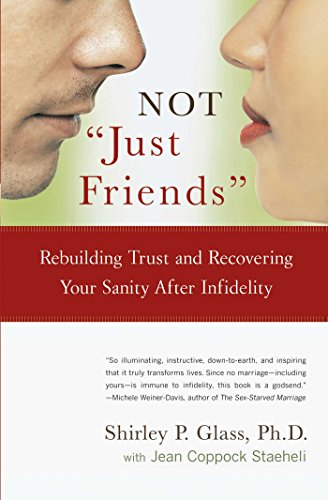
One of the world’s leading experts on infidelity provides a step-by-step guide through the process of infidelity—from suspicion and revelation to healing, and provides profound, practical guidance to prevent infidelity and, if it happens, recover and heal from it.You’re right to be cautious when you hear these words: “I’m telling you, we’re just friends.” Good people in good marriages are having affairs. The workplace and the Internet have become fertile breeding grounds for “friendships” that can slowly and insidiously turn into love affairs. Yet you can protect your relationship from emotional or sexual betrayal by recognizing the red flags that mark the stages of slipping into an improper, dangerous intimacy that can threaten your marriage.
User’s Reviews
Reviews from Amazon users which were colected at the time this book was published on the website:
⭐TL;DR version: If you have been through a cheating event, you most likely will need this book for advice and healing (especially if you are the spouse of the cheater).If you are reading this in desperate need of help/hope because you recently found out your spouse cheated on you, first I want to say that I am so sorry this has happened to you. I’ve been through that chaotic, confusing and scary couple of days after the “discovery” and I truly empathize with your situation. Especially those of you who have no support to help you deal (close friends, family, etc that you could tell in confidence). The good news is, you have found the right book, and it will help you through this time.This book probably saved my marriage. After I discovered my wife had been in an emotional/online relationship with an ex for the previous two years, I was almost in physical shock I think (edit: looking back with a couple years’ perspective, I definitely suffered from PTSD in the year + following “The Event”).I will never forget that gut-punching feeling of betrayal when I found out, and to say this book helped me is a massive understatement. It saved my sanity, and helped both of us cope with what statistically is a marriage-ending affair.We both read it at the same time, then I re-read it, made copious notes, and discussed each of them in detail with wife.Then I read it again. And maybe one more time. Obviously, the book “spoke” to me at a time when I was at a loss as to what to do next, or how to move forward. It was an emotional security blanket for me, and I am NOT an emotional person (quite the opposite). Looking back, I was almost obsessing over “The Book” and I am sure my wife did not share that…enthusiasm about it (but to be fair, she was on the other side, and the book explains how the offender and the offended typically react differently, and why).Had we acted on my initial instinct to go see a marriage counselor (well actually my FIRST instinct was to call a divorce lawyer), I think that would have failed. Or at least would have had a high chance of failing. That might have worked if we had access to a top marriage counselor, or someone with even a bit of Glass’ experience or resume, but most of us don’t have that. And if you don’t have access to that kind of expert, IMO, you’re likely better off NOT going to a “local yokel” who means well, but with this very difficult and complicated issue, can really make things worse. Glass mentions this in the book as well, about how much misinformation about the topic is out there, is espoused by therapists, is written up in mags and newspapers, and treated as “best practices” for these situations).If something like this has just happened to you (particularly if you are on the receiving end of your spouse’s cheating), just trust me, read this book. It will help, and if you respond as I did, it will actually help you heal and act as a “pain reliever” while you heal. It will not be a “good read” or “enjoyable” or any other similarly silly description of this book that I saw in other reviews. It will be HORRIBLE, because it’s going to open up every detail and some hard truths that you probably don’t want to think about.But it will be necessary IF you want to try and save your marriage (BOTH of you, sincerely, not just one, or one saying they do because they fear the consequences of not saying they do).It will even be brutal, because Glass can be very direct, and doesn’t candy coat the reality of the situation. She reminds me of a tough, but beloved coach from high school. For instance, she suggests if X and Y happen, or has happened, and Z is true, then moving forward as a married couple will probably not work, and you need to look at “exit” options. Even if that is the ultimate outcome, or the suggested path, she walks you through that as well, in the least damaging way possible.Even though the book was written by an older woman, I find the style, vocabulary and even thought processes, to be very much relevant for current times (I saw another review dinging the book for being anachronistic). In fact, the thinking and even style is so NOT dated, I was surprised after reading the book, to find out that the author had been dead for more than a decade!Glass obviously placed a lot of faith in science and data (I love that), since she herself did many clinical trials and used data from other scientific studies on infidelity to back up her assertions and advice. But as expert and clinical as she is on the subject, her tone and demeanor come across as a sincerely caring, but very professional doctor.Sadly (maybe), two and a half years after my “Event”, I still think of this book occasionally, and have an urge to re-read it, or at least look at my highlighted sections. These moments occur less frequently as time goes on, and they are short-lived, thankfully (and to date have not actually gone back to read it, just the feeling of needing/wanting to, in dark/bad moments).I have no idea what Glass would think of that, but I can say that I am still married, and as a result of much of the advice (both do’s and dont’s) which we followed during those dark days, I think we both handled it as well as it could be given the circumstances, and to the extent possible, healed the gaping wound in our marriage.Maybe like grieving the death of a loved one, there is no ‘fix’ or solution to an infidelity event – there’s just trying to cope in as healthy a way as possible, with the hope that one day the pain will diminish. Given the difficulty, complexity, and variability of this topic, Glass covers most if not all bases as a fantastic guide for BOTH spouses through this event, and probably comes as close to a ‘solution’ as possible.(Edited 7/29 to add: I also HIGHLY recommend a new book I just listened to, “Marriageology” by Luscombe. An amazing listen via audiobook, and for anyone in the recovery phase of an infidelity event, I think should be the follow up book after the one I reviewed above. She is also very data/study-centric, but it’s so well-written that it’s not dry or boring, or overpowering (too many numbers!) at all. Such a gift for writing, and the content is really eye-opening for anyone that wants to improve their marriage: cheater, cheated, or not). I’ve read several books on marriage, and this one to date is by far the best.)
⭐Not “Just Friends” seemed like an interesting read to me, as I am fascinated by anything psychology-related, especially when it comes to relationships. As someone who has endured abuse in several intimate relationships (mostly verbal, but some physical), I am grateful that I have never been sexually cheated on, as far as I know, despite having had many wounds and raw spots in my psyche as a result of those relationships. I have always wondered why people cheat, and have never thought of the idea myself, despite the misery, low-self-esteem, and exhausting amounts of work I have experienced from previous abusive relationships. Before the actual review starts, I probably should note a disclaimer here: I am a young, never-married college student with no plans for children and am heading toward a successful career. For as long as my lifetime will allow, I would love to also have a monogamous partner for companionship, love, and sexual intimacy.First, I will start out with the positive points of the book. I should point out that the authors use a wonderful set of vocabulary words (e.g. “acumen”) that one does not see often in many self-help books, further enriching the reading experience. The Kindle edition is especially nice, because it is easy to highlight and look up said words for future use.Second, the writers did offer some interesting insight as to why people cheat. Various statistics are presented that challenge the common myths surrounding infidelity. The most fascinating and validating concept to me is the following: the cheating partner is usually not straying because his or her needs are not met; the said partner is actually not *giving* enough to the relationship. This debunks the myth that the betrayed partner is usually at fault for the affair because the partner is not attending to the cheating partner’s needs. Of course, the authors do acknowledge that entitlement and character (though they do not actually use that word) are the bottom line as to whether someone will cheat or not. Like myself, some people are naturally monogamous according to genetics (not mentioned in the book), and/or they have unconscious “blinders” that keep them away from temptation, because they are either incredibly happy with their partner, morally opposed to cheating, take precautions, set boundaries, etc. In other words, biological, psychological, social, and emotional factors all play into whether or not someone will cheat, especially inner attitudes about what is acceptable behavior for him or herself.Third, the book offered various stories and explanations of how many affairs start from an innocuous friendship based on lively conversation, advancing to sexual tension and eventually an intensely emotional and sexual affair that entrenches the original relationship into a mire. Although I wish the anecdotes had more conclusions (“they stayed together” or “they divorced”). After reading this book, I realized that I was emotionally cheated on in one of my past relationships. He had longtime sexual/romantic feelings for her that she did not reciprocate, but he complained to her about my sexuality without discussing it with me first. When she said inappropriate and disparaging remarks about me through her “unbiased female perspective,” he believed her word over mine, despite the fact that I have never talked to her or met her. He made it evident through his words and actions that he respected and valued her more than me as a person, and never defended me to her. After ending the relationship, my research, therapist and friends assured me that he was controlling and verbally/physically abusive, and I was not at fault.Fourth, the book cites common-sense yet commonly ignored facts about what affairs really are. For instance, sexual activities outside of a relationship are always cheating. Even if it is just kissing. Sure, intercourse is way more devastating and less forgivable than a kiss, but it is absolutely imperative to acknowledge any extramarital sexual activity as cheating. Emotional cheating means one or more of the following: sharing more with the other person than with your spouse, betraying your spouse by sharing concerns with the affair partner rather than talking to the spouse yourself, badmouthing the spouse to the affair partner, and/or somehow placing yourself in a position that establishes more emotional intimacy with the affair partner than with your spouse.However, the negative aspects of this book cannot be ignored. I regret to say that I was surprised at how this book tended to actually sympathize more with the cheater than the betrayed partner. Dr. Glass said that she advises the majority of couples stricken by an affair to try to reconcile. Although she claims she understands how devastating and hurtful betrayal is in a relationship, it seems that she downplays it to acknowledge the [self-inflicted] “hurt” and “pain” the cheater experiences. I do wonder if Dr. Glass has experienced a betrayal herself. Perhaps she never has, and is incredibly naive and ignorant, or she has cheated herself and wishes to idealize the end-product of cheating as fixable and relationship-strengthening. She does not stress how entitled and abusive cheating is to a relationship. I am of the camp that believes cheating is never acceptable in a relationship; if one is unhappy, it is best to voice concerns and work on the relationship with love, respect, and honesty. If issues are not resolved in a timely manner according to one’s liking, it is possible to leave and then find someone else in our relatively liberal American society. If my hypothetical boyfriend/husband had a sexual affair AND needed to actually grieve over the loss of his affair partner (through “me time”) while remaining ambivalent about me, I would promptly show him the door instead of staying and working on the relationship like Dr. Glass suggests.In the heartbreaking case of Ralph and Rachel, I wished that Rachel had left Ralph, discounting the possibility that she would not get adequate child support. Ralph and Rachel seemed to be a happy couple who believed in monogamy. Ralph later had an affair with his younger coworker, Lara, after an intense friendship sparked into sexual tension and forbidden romance. Why did Ralph do this? Rachel was tired from taking care of three small children– gasp! Ralph felt neglected and like they did not do enough for themselves. Rachel also had separate interests, such as the fact that she did not like the Sopranos like Lara did. The situation did not drive Ralph to cheat on Rachel. His attitudes of entitlement, compartmentalization, and disregard for both Rachel and Lara’s feelings led him to make an entirely selfish decision that will forever scar the relationship between Ralph and Rachel. Had Ralph just been a better person and had manned up and had a respectful heart-to-heart with Rachel (“Darling, I want us to make more time for ourselves rather than discuss the kids all the time.”), they could have worked out a compromise and made their relationship stronger by overcoming the difficulties of raising children together. Although Dr. Glass never outright says this, it seems like she places about half the blame on infidelity for the betrayed partner’s “nagging” and whatnot, although she says there is no way to affair-proof a marriage. Rachel’s so-called lack of attention did not cause or play in the part of any of Ralph’s infidelity. Ralph cheated because he decided to cheat. Simple as that. If he did not feel entitled to do something unacceptable that he and Rachel had discussed before, he would not have cheated. If he did not silently believe that his “needs” came before that of Rachel and their children, and/or if he could truly love Rachel more than any other romantic option, he probably would have never cheated.Another couple’s story angered me. After a long period of healing time, the betrayed wife surprised her unfaithful husband one night by wearing a wig to bed resembling the (very different) hair of his affair partner, leading to giggling and lovemaking. She will never live up to his fantasy woman affair partner, so she tries to be “the cool wife” by joking about the affair and posing as the other woman for his fantasies. Stories like these are patronizing and demeaning, reeking of the double-standard that benefits the cheating partner.Last, but absolutely the most disturbing part, is that this book often discounts personal autonomy, taking responsibility for one’s actions, and personal power to do the right thing in the midst of trying times. Dr. Glass does mention briefly that individual issues can contribute to cheating. The truth is that a person’s own unique set of beliefs, attitudes, morality, and reasoning is the be-all and end-all as to whether or not they will cheat. The same can be said for other destructive behavior, such as violence. Even if one feels the intense emotions of despair, destructive, unjust violence as a follow-up is never encouraged. The same can be said for relational aggression or betrayal of a friend’s trust in a way that deeply wounds him or her. Then, why is it okay for someone to cheat then expect the partner to stay with him or her? Even worse, the book suggests that the betrayed partner to become a control freak; “mommying” the cheater and snooping during his or her “recovery” process post-cheating. The book recommends that the betrayed spouse require call check-ups, like “where are you? who are you with? what are you eating for dinner?” much akin to the worried parent with the newly driving teenager. The book advises that partners spend a lot of time together, doing lots of hobbies together and almost implying that a relationship is vulnerable to infidelity if, gasp, you have some different interests.I strongly suggest that anyone subjected to betrayal read the excellent books by Lundy Bancroft. For cheatees, “Should I Stay or Should I Go?” (especially helpful if you have also read “Why Does He DO That?”) helps you realize your self-worth and discover underlying attitudes that allowed your partner to treat you terribly, without shaming you for leaving if that is what you decide to do. Although the books are more directed toward women, many of the concepts can be used by men dealing with abuse and infidelity from women, as the bottom line is entitlement, selfishness, and lack of empathy, not gender.
⭐As a psychotherapist who works with couples, I wanted to understand the mechanics of affairs, how they happen and the stages of recovery so I could better help my clients.This book delivers on all counts!It’s excellently written, with clear stage-by-stage explanations of each emotional phase people go through when dealing with infidelity.It then walks through each stage of recovery, and then gives hints and exercises to do together in order to move forward as a stronger pair.It has been very educational and a book I have gained massively from!
⭐Every wife should read the first half of this book at least. Wish I had.Not everything will be relevant but it does stop you from sticking your head in the sand.
⭐If you are are unfortunate enough to need this book, it is worth buying. If you follow the advice, I.e. tell the absolute truth from the start, the advice might work. You have to both read it and follow the rules.
⭐very well referenced based on thousands of couples the psychotherapist has worked with. gives great hope, empathy and practical solutions for creating and negotiating resolution and tips for prevention. highly recommended, and ive read many therapy books over the years
⭐This is by far the best help you could find by way of a book. there is so much rubbish out there onthis subject but this woman really conects and knows exactly what its like aand what you aregoing through. Buy it!!
Keywords
Free Download NOT “Just Friends”: Rebuilding Trust and Recovering Your Sanity After Infidelity in PDF format
NOT “Just Friends”: Rebuilding Trust and Recovering Your Sanity After Infidelity PDF Free Download
Download NOT “Just Friends”: Rebuilding Trust and Recovering Your Sanity After Infidelity PDF Free
NOT “Just Friends”: Rebuilding Trust and Recovering Your Sanity After Infidelity PDF Free Download
Download NOT “Just Friends”: Rebuilding Trust and Recovering Your Sanity After Infidelity PDF
Free Download Ebook NOT “Just Friends”: Rebuilding Trust and Recovering Your Sanity After Infidelity