

Ebook Info
- Published:
- Number of pages:
- Format: PDF
- File Size: 0.80 MB
- Authors: Viktor E. Frankl
Description
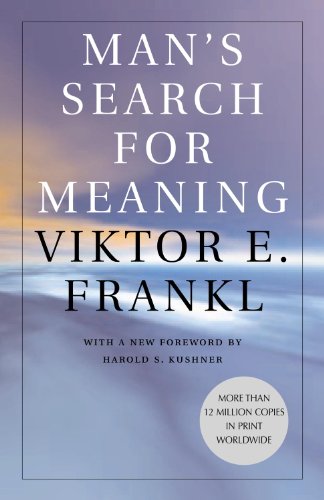
Psychiatrist Viktor Frankl’s memoir has riveted generations of readers with its descriptions of life in Nazi death camps and its lessons for spiritual survival. Between 1942 and 1945 Frankl labored in four different camps, including Auschwitz, while his parents, brother, and pregnant wife perished. Based on his own experience and the experiences of others he treated later in his practice, Frankl argues that we cannot avoid suffering but we can choose how to cope with it, find meaning in it, and move forward with renewed purpose. Frankl’s theory-known as logotherapy, from the Greek word logos (“meaning”)-holds that our primary drive in life is not pleasure, as Freud maintained, but the discovery and pursuit of what we personally find meaningful.At the time of Frankl’s death in 1997, Man’s Search for Meaning had sold more than 10 million copies in twenty-four languages. A 1991 reader survey for the Library of Congress that asked readers to name a “book that made a difference in your life” found Man’s Search for Meaning among the ten most influential books in America.
User’s Reviews
Reviews from Amazon users which were colected at the time this book was published on the website:
⭐This 2008 edition of Frankl’s 1945 book is a must read for every human being who wants to lift their spirit in moments of despair. The book is structured in three different parts. The first one (Experiences in a Concentration Camp) and the Postscript (The case for a Tragic Optimism) fit beautifully together, and are the basis of Frankl’s philosophy and psychotherapy system called Logotherapy. They are narrated in a very conversational way because they are, after all, a memoir. They differ greatly in style and tone from the second part (Logotherapy in a Nutshell), which is a summary of Frankl’s therapy system, partially based on Frankl’s experiences and observations as Auschwitz inmate, and partially on techniques and views of the world that he had started elaborating before he was sent to the camp. This part is drier in style, way more technical and not as approachable for the reader, unless the reader is really into therapy or a therapist. Harold Kushner’s preface to this 2008 edition is a good summary of the book main points, while Frankl’s preface to the 1992 edition summarizes well how the book and Logotherapy came to be. The book has many pearls of wisdom, and is very uplifting despite the brutality of what we read. In all honesty, I already expected that when I picked up the book. Some prisoner’s stories are utterly poetic despite their tragedy. I’m glad that those people’s historical memoirs had been so beautifully preserved. On the other hand, this is a survivor’s first-person narration of the events, so that allows for invaluable insights into the reality of the extermination camps and into the inmates’ mental/emotional state and fortune.Since we live in 2021 and we’re pretty aware of the Nazis’ atrocities, most of the things that Frankl tells about his experience are somewhat lessened by the impact on the reader of dozens of documentaries and movies on WW2. It might have been chilling reading the book in the postwar era, when all the details were still unfolding and the wold came to realize what had really happened. What we didn’t know before reading the book is that a new therapeutic model, Logotherapy, was greatly influenced by the Jew’s suffering in Auschwitz, and that there is hope even in the biggest moments of despair. For the rest, Frank’s take on life is admirable and full of wisdom, whether you are into Logotherapy or not. I especially liked his comments on love, the youth and unemployment, as they are still, more than half a century later, valid. LOGOTHERAPY, SOME CORE PRINCIPLES AND POINTS I LIKE> The great task for any person is to find meaning in his/her life. Frankl saw three possible sources for meaning: Work (doing something significant), Love (caring for another person), and Courage in difficult times.> Suffering is meaningless; we give our suffering meaning by the way in which we respond to it.> You cannot control what happens to you in life, but you can always control what you will feel and do about what happens to you.> Logotherapy aims to curing the soul by leading it to find meaning in life.> What matters is to make the best of any given situation.> Man’s main concern is not to gain pleasure or to avoid pain but rather to see a meaning in his life.> The aim of life is not to be happy as the seeking of happiness can increase someone’s unhappiness.> Suffering is unavoidable, is part of life, and we need to accept it and re-frame it.> Tragic optimism, i.e., one remains optimistic in spite of the “tragic triad, or those aspects of human existence which may be circumscribed by: (1) pain; (2) guilt; and (3) death and that we should say ‘yes’ to life in spite of all that.> To suffer unnecessarily is masochistic rather than heroic. > Success cannot be pursued but it is an end result that the unintended side-effect of one’s dedication to a cause greater than oneself or as the by-product of one’s surrender to a person other than oneself.There are hundreds of pearls of wisdom that I cannot reproduce here because it would take too long, but those are the ones that made me read the book in the first place.SOME CRITIQUEFrankl poignantly mentions that despite all the inmates being subject to the harsh situations (food and sleep deprivation, hard-work labor, extreme cold, beatings, etc.) some died and some survived, and he ways that, many of those who died did so because they gave up on life and lose hope in getting alive out of the camps and resuming their lives after the war.I love most of what Frankl says and his attitude towards life. However, we cannot say that Frankl survived just because he had a specific mindset, hopes of getting alive, finding his family and publishing the basics of Logotherapy included in this edition, which he had already started writing before being taken to the camp. First of all, he was an intellectual and a psychiatrist, i.e. a person with a strong mind, mentally s stable with enough intellectual harnesses to re-frame anything in his head to give it meaning. He certainly was an optimistic, like it’s in his nature. Not everyone was so well equipped mentally and emotionally. What’s more, there must have been other people who, like him, had hopes of surviving, seeing their families and doing something with their lives in the outside world, but they never made it because, I can only hypothesize, their physique and immune system, as well as their mental state weren’t Frankl’s.
⭐I enjoyed the book which has an extensive account of the authors time in various concentration camps during World war II.I wish there was more added to this section.Then, all of a sudden the War ends, and it seems like he is in a rush to get the book over with.A very quick explanation of his theory of finding a purpose for ones life, and the importance of that in coping, or thriving with ones life despite the circumstances of that life.If you see a purpose for your life that you find meaningful, then one can face almost any circumstances.This section was way too short!And, then finally a very short section on different neuroses and a list of therapies that had a positive effect on patients.I was not aware of this theory of psychiatric treatment, but I agree with the premise entirely.Instead of years of analysis, offer a set of exercises to cure the behavior and quickly help the patient to have a better life.I have never seen the need for endless introspection for root causes instead of offering practical ways to improve ones life.Good book, but too short.
⭐It’s not exactly a review but some thoughts after reading this book and observing current events.Can you imagine life being upended in a matter of weeks? You were forced to board a train to Auschwitz for a new life of unknowns. When you arrived, you were either directed to the left or to the right. You and your family were separated. You were instructed to go right while the rest of your family were instructed to go left. The life for the right group turned out to be half a decade of dehumanizing tortures. As for the left group, they were murdered within 24 hours of arrival to Auschwitz. You learned about the fate of the left group by realizing what all the smokes were rising above the structure your family went into. I was in shock and disbelief when I read about this in Man’s Search for Meaning but this crazy thing DID happen 80 years ago, just a few years before my parents were born. How could this world be so barbaric?Before Auschwitz, most people were living a fairly normal life worrying about paying their bills, raising their family, advancing their careers, etc just like us ordinary beings today. People know there’s war but I doubt people thought about how they could be swallowed by the wars in a matter of weeks started by sinister people who only care about their own power. The whole thing is just insane and ridiculous and you would hope humanity learned its lessons. Nonetheless, 80 years later, we are back to square one. The war in Ukraine is ruthless and absurd. It destroyed a country where hardworking people falsely thought they could live in peace and prosperity. The Russian soldiers are asked to invade and to do cruel things Putin asked them to do: murdering, vandalizing, setting things on fire and destructing instructures that took years to build. I don’t think these Russian soldiers out of their own will would want to do this. What exactly is this evil power force making people do crazy and destructive things? Is it really just Putin? Or somehow our world allows this to happen.This reminds me of the story Haruki Murakami wrote about his father. His father was forced to go to China to fight the war for Japan during WWII. He was a 19 year-old, having grown up in a Buddha temple in Kyoto. Despite the Buddhist teachings, he was forced to go to war by the government. His father witnessed the killing of Chinese prisoners of war and might even be forced to do the executions. Part of the military training at the time was for new soldiers to practice killing POW to get them into “the zone”, to become a competent fighter. His father told Murakami about this and this made a huge impression on him. He could sense his father was deeply affected by this experience for the rest of his life, with grief and guilt. After all, he was complicit. But he as an individual had no choice. If the government forced him to choose war, he could not choose peace instead. If the government goes completely insane, we as citizens have no recourse.As I am typing this up, I am wondering how long the peaceful life we have in America would last. Three months ago most Ukrainian people probably couldn’t imagine what lay ahead. Should I worry about my family in Taiwan? Things can change drastically in a very short period of time. My husband and his family left Vietnam in 1982 to escape communism. They endured several years of communism rule and my father in law was jailed for a couple of years for “helping Americans”. Prior to the communist takeover, the family ran a large rice mill and owned a substantial amount of prime real estate in Saigon. Then Americans left. Overnight they lost all their assets to the communist regime. They went from a materially rich life to a life of hunger and partial homelessness. Young women had to hide to avoid being raped. My mother in law sold her gold jewelry in the black market to get her husband out of jail and the family escaped to America penniless. Who is responsible for all the sufferings? They did nothing wrong. They were hardworking people running an honest business. Perhaps they didn’t pay enough attention to international politics. But the price they had to pay was absurdly high.We individuals are so small and powerless we don’t know what current of our crazy time can swallow us despite our innocence and futile efforts. The thought that we are in control is an illusion. When I think about the great suffering in Auschwitz, China, Vietnam and endless other man-made tragedies, I am so grateful for the peaceful time I still live in and whatever worries I have seem so trivial. If we strive for anything for the world, we should strive for peace.
⭐THIS BOOK REVIEW IS ONLY BASED ON MY FEELINGS DURING READING THE BOOK. IT DOES NOT INTENT TO HURT ANYONE’S FEELINGS, AND DOES NOT MEANT TO COMPARE WITH ANY OTHER REVIEWER’S FEELINGS.Well writing a review for this kind of extraordinary book is a big audacity for me. however here I’m, trying to give some brief review of the book. The book is basically divided into three parts, the first one describes the way the Jews prisoners were treated in the Nazi Concentration Camps and how their lifestyle was. In the second part, the author described the basics of Logotherapy, a way of treatment of the Psychotherapeutic Patients. And finally, in the third part, he described what he actually meant by Man’s Search for meaning. Being a Jew, the author was transferred to the Auschwitz, Dachau and other concentration camps during the Nazi occupation in Austria. Here, in the first part of the book, the author described his days in those concentration camps, where is were no chance of seeing the morning sun in the next day. And this happened every day. He described the way the SS guards used to treat the prisoners, the corruption prevailed in the camps, the malnutrition, the lifestyle of the camp Jews etc. The way he described the tortures the prisoners suffered, would surely bring tears to your eyes. During his description, he also pointed out the psychological condition of the other comrades in those camps. When most of the prisoners lost all hope of his life, some of them still kept the faith, that good days were coming. In the second part, the author basically described the Logotherapy Techniques. And the most interesting part of the book is the third part. Here the author describes “Man’s search for meaning”. We, the human beings on this planet are living for a purpose. Until & unless we can’t find the purpose of our life, there is no reason for us to be here alive. Most of the prisoners in the camps lost all of their hopes and then died because they lost their purpose, as per the author. It is a must-read book for all I think. The book also consists of few life-changing quotes which I liked in the book and would like to share:1. For success, like happiness, can’t be pursued; it must ensue, and it only does so as the unintended side-effect of one’s dedication to a cause greater than oneself or as the by-product of one’s surrender to a person other than oneself.2. There are things which must cause you to lose your reason or you have none to lose.3. Suffering completely fills the human soul and conscious mind, no matter whether the suffering is great of little. Therefore the ‘size’ of human suffering is absolutely relative.4. No man should judge unless he asks himself in absolute honesty whether in a similar situation he might not have done the same.5. The human being is completely and unavoidably influenced by his surroundings.6. Suffering is an ineradicable part of life, even as fate and death. Without suffering and death, human life can’t be completed7. Emotion, which is suffering, ceases to be suffering as soon as we form a clear and precise picture of it.8. There is no need to be ashamed of tears, for tears bore witness that a man had the greatest of courage, the courage to suffer.9. A man who becomes conscious of the responsibility he bears toward a human who affectionately waits for him, or to an unfinished work, will never be able to throw away his life. He knows the “why” for his existence, and will be able to bear almost any ” how”.10. The body has fewer inhibitions than the mind.11. No one has the right to do wrong, not even if wrong has been done to them.
⭐The book says, ‘The Classic tribute to hope from Holocaust’. And Sir Frankl was a “Holocaust survivor”.This book has two parts:1.Experiences in a Concentration Camp.2.Logotherapy in a NutshellThe second part is so impactful and unique that you will re-read this book. The first part mainly is the autobiographical account of Sir, Frankl and the best part is both parts mutually support their credibility.The way he has poured all the pain in this book is not so easy and that too after experiencing it, I was literally shocked because firstly, I was unaware of the term “Holocaust”, maybe I have read before somewhere in History but I was unaware while reading and Secondly, I had never come across something like this.He has talked about everything related to life in this book and you know what the best part is even after so much pain, I felt sad but I wasn’t demotivated, I could relate it and with each page-turning, what I found was ‘I am into the book’, suffering all this but I wasn’t tackling all the worst situation in my life as he did.Suddenly I started understanding that what life is? what suffering is? and what surviving is? and where am I lacking?So, in another way, I discovered the answer to three most important questions which I wanted to be answered since maturity.I came across a new word “Logotherapy” and I loved that section so much that I will re-read this book.In one line, I learned a lot from this book, which I can further practice to live a peaceful and beautiful life ahead. And this what makes this book worth reading.
⭐Very moving book, in a kind of Dith Pran way… he is clearly mentally resilient and robust to find a way of dealing with the harsh conditions of a slaughter camp called Auschwitz, without being dehumanised. Two quotes really moved me ” if you can understand the why in your suffering, you can find the how in your suffering”. And after being released in 1945, although depersonalised by the awful conditions there, 3 weeks later he was able to say” I give thanks to God who has led me to a spacious place”.. He reluctantly agreed to write a script which as we know became this book.Anyone who feels their life has no meaning or purpose, as our society has become increasingly Dickensian in the last 10 years, will find hope, as I did, to motivate myself to lead a fuller life, in spite of some of life’s setbacks. I feel a winner, now, and am grateful for a special mentor who gave me her copy to learn wisdom…. I bought my own copy, as above to refer to it in times of stress. Other than that, it is a great read, which casts an objective eye on a period of history, some would rather forget.
⭐This is wonderful book, inspiring and wise. My uncle was taken by the Nazis and was almost dead due to typhus when the camp at Dachau was liberated. He was discovered in a heap of bodies by a doctor who noticed a flicker of his eyelids. He was taken to hospital in Budapest and survived until 1967. This book gave me an insight into what he must have suffered. He never complained was always cheerful and full of mischief. The second half of the book about logotherapy is also very interesting and worth reading.
⭐Much has been written about this book and deservedly so: it’s examination of life and death in the concentration camps of Nazi Germany and how Frankl and others survived is extraordinary – and let us fervently pray that it remains extra – ordinary. But one of the things Frankl’s book does is remind us how much our circumstances and society determine how we behave. We all would like to think that if we had been born in the early 20th century in Germany we would have been one of the brave people who resisted Nazism and tried to smuggle the Jews to freedom. The events of the last two years have unfortunately shown us that the vast majority of the population would happily go along with demonising a sub set of the population, particularly when encouraged to do so by those in power and those with loud media voices. A tiny, tiny percentage of the German population actively resisted the Nazis. We, you and I, would be no different today.But Viktor Frankl, a German Jew, was in the part of the population that was demonised and destroyed. Frankl survived and his book is, in part, an exploration of why some men lived when others, faced with similar hardships, died. According to Frankl, the key factor in determining someone’s endurance in the face of unimaginable suffering is the ability to find some meaning in that suffering. While a devout Jew himself, Frankl was also a psychiatrist, and in examining the factors enabling survival, Frankl deliberately separated meaning from religious faith: any meaning to be found in the situations the concentration camp inmates fouind themselves in was helpful.Frankl went on to found a school of psychiatry, called logotherapy, which argues that the search for a meaning to one’s life is the central human motivating force. He may well be right, once we take Maslow’s hierarchy of needs into account and the ordinary necessities for living are accounted for.But by divorcing meaning from its usual historical anchor, religious faith, Frankl also described the peculiar situation we find in the modern world, where the desperate search for meaning in a consumer world has led to people passionately embracing a whole variety of causes, from veganism to climate change, and equally passionately imposing these values on their fellows. So the peculiar paradox of the 21st century is that its great dilemma is to escape from the fervent beliefs of people searching for meaning in places which simply do not have the moral or intellectual gravity to sustain the importance they attach to them. Hence the increasingly hysterical attempts to force norms on other people, so that the cognitive dissonance of realising that what you have dedicated yourself to simply does not carry the import that you have given it.Today, we suffer for other people’s meanings. And Frankl unwittingly ushered this in.
Keywords
Free Download Man’s Search for Meaning in PDF format
Man’s Search for Meaning PDF Free Download
Download Man’s Search for Meaning PDF Free
Man’s Search for Meaning PDF Free Download
Download Man’s Search for Meaning PDF
Free Download Ebook Man’s Search for Meaning