Ebook Info
- Published: 2013
- Number of pages: 215 pages
- Format: PDF
- File Size: 1.70 MB
- Authors: Elaine Pagels
Description
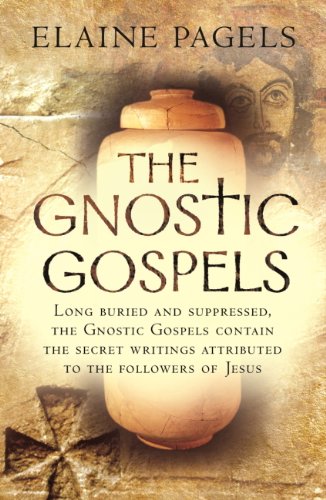
As discussed in The Da Vinci Code… Long buried and suppressed, the Gnostic Gospels contain the secret writings attributed to the followers of Jesus.In 1945 fifty-two papyrus texts, including gospels and other secret documents, were found concealed in an earthenware jar buried in the Egyptian desert. These so-called Gnostic writings were Coptic translations from the original Greek dating from the time of the New Testament. The material they embodied – poems, quasi-philosophical descriptions of the origins of the universe, myths, magic and instructions for mystic practice – were later declared heretical, as they offered a powerful alternative to the Orthodox Christian tradition. In a book that is as exciting as it is scholarly, Elaine Pagels examines these texts and the questions they pose and shows why Gnosticism was eventually stamped out by the increasingly organised and institutionalised Orthodox Church.
User’s Reviews
Reviews from Amazon users which were colected at the time this book was published on the website:
⭐I read this years ago right after graduating from high school. This book was a life changer for me. I was heavily indoctrinated in the Catholic church and felt that by even reading this book and daring to speculate about its contents that the church roof would fall in on my head the next time I went to church. Although it was close to heresy for me to read about the early formation of the church, the good news is that I’m still here! The roof did not cave in on me and I continue to be fascinated with the line between historical, man-made doctrine and what went into the Bible as we know it now. Gnostic gospels takes the nag hammadi (sp) scrolls and shows that there were many gospels around the time of Christ. The fact that these gospels were jarred up and buried shows that they were not the favored gospels and possession was tantamount to death. Why were they different? Is it because these gospels talked about finding God within instead of using the priestly class as intermediaries? Or perhaps it was because this group of gospels treated women equal with men? Both concepts were diametrically opposed to the books that survived. So what else is there in these books and how exactly does a religion founded in blood, and reinforced by crusades and inquisitions further the true message of God? This book is a good place to start answering questions like that. Everyone will have their own opinion, but at least by reading the book it will be an informed decision.
⭐Simple: Every Christian should read this book. Enlightening and very educational. Answers all those nagging questions you have always had in the back of your head. Because so much is revealed, it becomes very clear why these books were kept of the Bible. Highly recommend to all who are true seekers.
⭐This book provides a fascinating review of not only the general contents of the gnostic gospels but it provides a historical evolution of the early church. This historical review shows how the early church had to deal with many views of Christ and what his words and life meant and how the early church silenced these voices to reflect the structure that ensured their power, influence and success survived. A must read for anyone who wants to know how the early evolved.
⭐This is an excellent introduction to the Gnostic Gospels. The only bizarre and sickly disconcerting aspect of the book comes near the end, and serves to – in a way – Undo Pagels’ entire project. To wit, the early followers of Jesus – these Gnostics (and the whole point and impetus and sine qua non for Pagels’ book) – were persecuted, eliminated, and destroyed (killed, driven out) by the founders of the early Roman Christian Church. Pagels then makes the most disturbing comment – no longer history nor analysis – but a very unthinking and un-scholarly Conclusion, that, in essence, she – as a Catholic – is satisfied (“happy” even) with this genocide and this sacro-cide (killing out an entire religion), because she thinks the Church could not have survived as a mystic cult but needed the Church-political and ecclesiastical structure to ensure its existence. Thus she writes a book exploring these fascinating early – and, in her telling – True Christians, but – in the end – she is content to see that neither they (bodily) nor their religion (which is closer to Jesus Christ than either the surviving Catholic or Protestant deformations of the true, early church) survived. So, in the “Crime and Punishment” question, Pagels implicitly and explicitly argues that she is FOR the ENDS justify any bloody and WRONG MEANS. I purchased the book in 2001 – I can only hope she has revised that sloppy – or all-too-revealing – Conclusion. So, buy one of the new versions of the actual Gospels, and leave Pagels to her inner-conflict which she should have left inner and not, in the twisted end, reverted to being a mere Cheerleader and shill for the Catholic Church (against which I have nothing, except when it tries to hide its past Sins without Repenting, including – as did the Protestant Church – colluding with the Nazis in Germany against the Jews, and the pedophilia Crisis). The Catholic Church also did many wonderful things – it was the root of all Learning, Medicine, Socialism – free food and entertainment on ca. 45 paid-holidays for Medieval serfs and citizens. (Note: it was the Renaissance where the Church becomes Inquisition-Bloody again). It’s a good book but I would give it 5 stars for the first parts, NEGATIVE stars for the Conclusion where Pagels dumps her role and very conscience as an historian and person and goes off on a preachy tangent.
⭐I was disappointed that there was not a lot of the textual context of what was discussed. I had expected more of the original texts included. The general gist was somewhat helpful, but I found reading the Dead Sea Scrolls themselves gave me a different picture from Pagel’s conclusions.
⭐easy read of a fascinating subject. Elaine Pagels’ life concentration and fascination is distilled through the pages as if she is sharing a coffee and talking to you. Well written, superb research. Fantastic to discovery our past and how is diverges or matches (sometimes) the stories we are told by institutions.our life story – our connection with deep past – excellent for our times.
⭐Excellent unbiased and well researched book by one of the finest scholars in the early Christian Church & what did and didn’t make it into the New Testament
⭐This is one of the most readable books.This is a well researched and presented book. It satisfys in respect of being both wondefully grounded while losing none of its power to present information that can be added to any seekers libary of gnosis. It presents a rich source of information that helps in desiphering the politics of this new world order whilst shining a light on that which has passed and by which we have all been left poorer.This is a book to rouse the spirits of the individual and give valuable insight in to the machinations of those without a true heart and no genuine spiritual insight whom would seek to control the life of the spirit
⭐A fascinating journey through the early establishment of the Christian church through the review and comparison of two different interpretations of Christs work. One being the version that prevailed, the other encapsulated in these incredible gospels. All in all, a highly readable and enjoyable look at the ancient idea of finding God through the study of ones self.
Keywords
Free Download The Gnostic Gospels in PDF format
The Gnostic Gospels PDF Free Download
Download The Gnostic Gospels 2013 PDF Free
The Gnostic Gospels 2013 PDF Free Download
Download The Gnostic Gospels PDF
Free Download Ebook The Gnostic Gospels