Ebook Info
- Published: 1992
- Number of pages: 192 pages
- Format: PDF
- File Size: 3.06 MB
- Authors: Elaine Pagels
Description
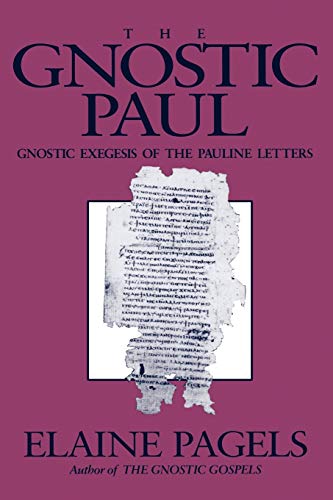
In this highly original work, Elaine Pagels demonstrates how evidence from gnostic sources may challenge the assumption that Paul writes his letters to combat “gnostic opponents” and to repudiate their claims to secret wisdom. Drawing upon evidence from the gnostic exegesis of Paul, including several Nag Hammadi texts, the author examines how gnostic exegetes cite and interpret key passages in the letters they consider Pauline -1 & 2 Corinthians, Galatians, Ephesians, Philippians, Colossians, and Hebrews. Besides offering new insight into controversies over Paul in the second century, this analysis of gnostic exegesis suggests a new perspective for Pauline study, challenging students and scholars to recognize the presuppositions-hermenuetical and theological-involved in their own reading of Pauls letters. Elaine H. Pagels is the Harrington Spear Paine Professor of Religion at Princeton University. She is the author of The Gnostic Gospels, which won the National Book Award and the National Book Critics Circle Award, The Johannie Gospel in Gnostic Exegesis, Adam, Eve, and the Serpent, and the best-selling Beyond Belief: The Secret Gospel of Thomas.
User’s Reviews
Editorial Reviews: About the Author Elaine H. Pagels is the Harrington Spear Paine Professor of Religion at Princeton University. She is the author of The Gnostic Gospels, which won the National Book Award and the National Book Critics Circle Award, The Johannie Gospel in Gnostic Exegesis, Adam, Eve, and the Serpent, and the best-selling Beyond Belief: The Secret Gospel of Thomas.
Reviews from Amazon users which were colected at the time this book was published on the website:
⭐Doctor Pagels has given us an exciting opportunity to look into the dynamic culture of the early Christian church. Up until the last 30 years, we saw everything as being historically seamless. Her work on Paul and other explorations of early Gnostic writings as found in the Nag Hammadi library have opened the windows. We begin to see how the dominant Roman centered Christian church powered by bishops suppressed the inclusive, philosophical, learned Christian expression of a pluralistic branch of the Christian church in favor of a literalist understanding of scripture and male dominance. This more democratic group of Christians were labeled heretics and Gnostic because they saw Christian expression and the Christian story as part of the greater metaphorical tradition of heroic spirituality. I commend this book to any reader who is on an inquisitive journey and willing to take a critical look at early Christian beginnings and Paul’s Gnostic vision.
⭐Like more than a few folks, I found the writings of the Apostle Paul somewhat hard to follow. Even the Book of Acts says Paul once lectured so long into the night that a young man fell asleep and from a second story window and had to be resurrected by Paul. I always found the first part of that story more believable than the second.As Pagels explains, her self-assigned task in this book is not to prove that Paul was a gnostic. Rather, she explains how Paul has usually been portrayed as “the Anti-gnostic Paul” quoted by the orthodox bishops in their refutations of the ones they labelled heretics, most of whose books were inaccessable to us until the find near Nag Hammadi. She explained that rather than responding that Paul was a dumb jerk, the gnostics called him “The Great Apostle” and gave a different interpretation of his words, saying that they were privy to a hidden oral tradition not received by their detractors. So, she took it upon herself to examine the way that the Gnostics (primarily the Valentinians) used Paul’s words in their depiction of him as one of their own – not as a second or third century gnostic, but as an inspiration to them, a father to them, in the word. She gives us a look at Paul as they saw him, the Gnostic Paul.In an era in which most people find repugnant the teaching attributed to Paul that women must be silent in the church, that they may not teach or hold clergy positions, the facts that the Valentinians not only permitted women to perform in all of these roles but also tended to reject the notion of a hierarchy of clergy over laity (they took turns playing deacon, bishop, reader, etc.), and that they championed interpretations of Paul’s words that supported their positions, arouses renewed interest in the banished gnostics.While some fret that modern Christians may be led astray by those cunning gnostics, the fact is that so many sheep are simply leaving the fold altogether. Perhaps a rediscovery of what’s best in Valentinian Christianity is the church’s best hope for renewed vitality.In her book, Pagels devotes considerable attention to matters pertaining to the interpretation of Paul’s words regarding relations between the sexes, as well as between masters and slaves. She shows that the gnostics had a very symbolic way of looking at his words on these matters, and that they didn’t buy the “worldly” interpretation championed by the church fathers.It’s easy for modern people to find the Valentinians views on gender equality more appealing than those of the church fathers. However, most of us have already arrived at our views and would hold them regardless of what Paul said or meant. Thus, there is not much need to read such a book simply so that we can feel good about Paul or the latent potential of the church to drop some heavy old baggage. Many of us don’t spend much time in churches anyway. We don’t need Paul’s permission to hold our views.And I suppose that might have been true for the Valentinians, too. Christianity was a small, persecuted minority religion, which had not yet unified under a hierarchical clergy in their day. The fact that they professed reverence for Paul indicates that perhaps they found him relevant.What makes this book valuable to me is that Pagels, in showing me how the Gnostics read Paul, showed me how I might come to understand him better. Once I began to learn to read “the code,” I also came to understand other Christian writings better.Gender and sexual issues are such a stumbling block for people who might wish they could embrace Christianity today. To gain deeper insight into the symbolic way in which the ancients discussed these such things casts new light upon many puzzling matters.The gnostics were not alone in reading symbolically and stating that the writings were originally written to be interpreted this way. This was a feature of the ancient world. I think maybe they had more time for cultivating arts and awareness than we do.The gnostic symbolic interpretation seems strange at first, but Pagels shows that the gnostics sometimes seemed more attuned to the nuances of Paul’s thought than did their detractors.As one learns to work with this method, one begins to see for oneself whether it is useful and productive. It takes some time, but progress comes. When you begin to understand for yourself, you no longer need to decide who you believe. I guess that’s what it means to be gnostic, knowing, intimately familiar.I’m in Pagels’ debt for what she gave me in this book. It’s not just the specifics you get from the book, some of which may be right, wrong or somewhere in between. It’s not just a warm fuzzy feeling you might get about Valentinus, Heracleon or even old Saint Paul. It’s the education she gives, the learning how to read, to see, to listen, to think, in new ways.I’ve read three books by Ms. Pagels. This was my first, and it remains my favorite. It’s scholarly. She isn’t selling candy.
⭐Pagels presents Gnostic Christians’ interpretations of Paul’s letters almost line by line. Not the easiest book to read, but extremely helpful in understanding the Gnostic elements of early Christianity. Some knowledge of Gnosticism is presupposed, and Gnostic terminology is not always defined. FYI, I’ve compiled a list of key terms below, with my (admittedly non-expert) definitions.sarkic – earthly, hidebound, ignorant, uninitiatedhylic – similar to sarkicpsychic – “soulful,” partially initiatedpneumatic – “spiritual,” fully initiatedaion – one of various levels of realityarchon – one of various powers in the cosmospleroma – fulfillment, the higher reality of archetypes (related to Plato’s realm of Ideas)kenoma – the visible or manifest cosmos, “lower” than the pleromacharisma – gift, or energy, bestowed by pneumatics through oral teaching and personal encounterssophia – “wisdom,” worldly understanding; personified as Lady Wisdomlogos – divine ordering principle of the cosmos; personified as Christhypostasis – emanation (appearance) of God, known to psychicsousia – essence of God, known to pneumaticsgnosis – “knowledge,” direct insight into God attained by pneumaticsIf all this seems baffling, you might want to read “Jesus and the Lost Goddess,” an excellent summary of Gnosticism by Timothy Freke & Peter Gandy.
⭐Whew! Not for the entrenched “Christian” – will knock off any religious socks that you have left. Spirit inspired and worth the read.
⭐Changes my life….now I am a real christian…just a Gnostic one….never could figure out the new testament until i read this great book.The “Universal Church” Hijacked the Gnostic Paul and fabricated the other New testament boos to hide the fact that all the early founders…as well as Jesus..were actually Gnostic masters….greatest book written from academia in a century …academics are usually blinded by their own scientific arrogance…Pagels was humble enough to find the truth!
⭐Good book for someone looking the truth
⭐Very interesting viewpoint.
⭐Pagels does a nice job of presenting a Gnostic view of Pauline letters, though some of the writings attributed to Paul have been questioned as actually having been written by Paul as early as while he was still alive. May not be the easiest to follow for some people.
⭐Came punctually. Quality as promised. Super book
⭐quality book.
⭐An excellent resource and useful work. The customer service and post was very good and timely.
⭐Completes a major part of the picture of the influence of Gnosticism on Christianism.
⭐A detail study of the way Paul and his writings were used by Gnostics and others.
Keywords
Free Download The Gnostic Paul: Gnostic Exegesis of the Pauline Letters in PDF format
The Gnostic Paul: Gnostic Exegesis of the Pauline Letters PDF Free Download
Download The Gnostic Paul: Gnostic Exegesis of the Pauline Letters 1992 PDF Free
The Gnostic Paul: Gnostic Exegesis of the Pauline Letters 1992 PDF Free Download
Download The Gnostic Paul: Gnostic Exegesis of the Pauline Letters PDF
Free Download Ebook The Gnostic Paul: Gnostic Exegesis of the Pauline Letters