Ebook Info
- Published: 2014
- Number of pages: 340 pages
- Format: PDF
- File Size: 2.59 MB
- Authors: Stevan Davies
Description
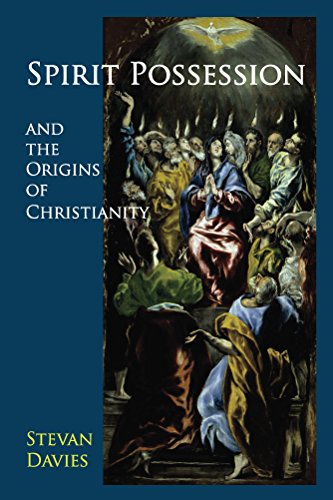
Stevan Davies argues that the historical Jesus of Nazareth had little to do with the initial foundation and spread of Christianity, rejecting the standard views that the Christian movement was initiated by the teachings of Jesus, or by stories that Jesus had been seen alive after his death. It was Jesus’ experience of Holy Spirit possession, and then the Holy Spirit possession experiences of Jews and Gentiles throughout the Roman empire, that gave rise to the Christian religion. In addition to the entire text of Jesus the Healer this book contains important new essays on the Pentecostal origins of Christianity, and the apocryphal Odes of Solomon as evidence of a pre-Christianity.Praise for Jesus the Healer:“Stevan Davies offers a fascinating reading of the Gospels that takes serious account of their description of Jesus as a spirit-filled exorcist and healer.” Elaine Pagels, Princeton University, author of The Gnostic Gospels“The Jesus-quest has spawned a number of seminal studies of late, but none more brilliant, surprising, and engaging than this one. Purely on the basis of secular anthropology and psychology, Davies makes a persuasive case for Jesus as a Spirit-possessed healer and exorcist . . . The work is a tour de force that opens a whole new vista on Jesus and the forces he unleashed.” Walter Wink, Auburn Theological Seminary“Jesus emerges not only as a healer and exorcist of demon-possessed sufferers, but as one who is, at times, himself spirit-possessed. The resulting picture brings Jesus and his people into a world of healers and prophets, sufferers and followers consistent with what we know of colonial peasant societies.” Erika Bourguignon, Ohio State University, author of Religion, Altered States of Consciousness, and Social Change“What about Stevan Davies’s recent hypothesis that Jesus was an ecstatic healer who taught others how to meet God in ecstasy? Jesus himself spoke Johannine-like when in ecstasy and synoptic-like when not in ecstasy. That explains both these traditions as equally primitive and also explains that wide swath of Spirit-possessed trance in the primitive church.” John Dominic Crossan, author of Jesus: A Revolutionary Biography and The Historical Jesus.
User’s Reviews
Reviews from Amazon users which were colected at the time this book was published on the website:
⭐This book is an excellent addition to 21st century scholarship on Christian origins. The only one I would compare it to for depth and originality is James Tabor’s “Paul and Jesus” (2012).Davies’ thesis is that the original impetus behind early Christianity, prior to the mid 2nd century CE, was neither the specific personality of Jesus, nor the reports of his resurrection from the dead, but rather the experience of spirit possession. Jesus receives the Holy Spirit at the beginning of Mark. Luke’s 12 apostles receive the Holy Spirit at Pentecost. The Gospel of John presents the Paraclete as an abiding presence of the Christ after the Son returns to the Father. And so forth. Particularly central in the early decades are Paul’s letters, in which believers participate in a risen Christ whose spirit they receive at baptism, and which dwells within them both at the individual and at the group level. Davies grounds his account of spirit possession in cross-cultural anthropology, and relates the spirit-filled early Church to modern expressions such as Pentecostalism.This all amounts to a fascinating interpretation. But it was not until I reached the end of the book that I realized how explosive Davies’ thesis really is. He provides a translation of a seldom read and poorly understood text, the Odes of Solomon, which falls under the category of “apocrypha” (literally, things hidden away). The Odes of Solomon is traditionally categorized by scholars such as James Charlesworth as a late 1st or 2nd century Christian hymnal, even though it contains ZERO mentions of Jesus, and even though it was transmitted alongside a more traditionally Jewish text from the 1st century BCE called the Psalms of Solomon. What it does contain are extensive and moving expressions of personal transformation by the spirit into “sons of God” and “messiahs.” This may have been the original Christ cult that Paul first persecuted and then joined, which he only later (Galatians 1:17!) associated with the Jesus movement led by James and Peter and the other apostles. Both Paul and John combine an Odes-of-Solomon-style spirituality of Christ/Spirit possession with a Jesus faith handed down from the disciples, and it is only with the triumph of the bishop system of the emerging Rome-friendly Church of the 2nd century that the spirit-led energy of primitive Christianity is snuffed out. The “Holy Spirit” is converted by the Church into a person of the Trinity, an extrinsic concept rather than a vital experience. Those who persisted in being one with the spirit and receiving new revelations were simply condemned as heretics, along with what we today would call the Gnostics.A great and original book that deserves attention.
⭐An excellent, although controversial interpretation, of the origin of Christianity. He thinks that Paul believed that what made a person a Christian was not simply belief in Jesus, but actual possession of the person by the Spirit of Christ. The early Church was very Pentecostal in nature. Includes a good discussion of the Odes of Solomon, and a modern translation of the Odes. He writes well and the book is very readable. He has good footnotes and a bibliography of all of his sources. Even if you do not accept all of his ideas, he will give you a different perspective on the origin of Christianity.
⭐good
⭐*I would like to express my thanks to the Bardic Press for supplying me a review copy of this book.*Spirit Possession and the Origins of Christianity represents Stevan Davies’s revamping of his 1995 work, Jesus the Healer, featuring new articles on the Pentecostal origins of Christianity and a study on the Odes of Solomon as evidence for a “pre-Christian” form of early Christianity. For the most part, Davies’s view is that the figure of the historical Jesus had little to nothing to do with the foundation of Christianity. As suggested by the title, Davies suggests that it was rather the experience of “spirit possession” that played the more influential role within the beginnings of Christianity, not the life and teachings of the historical JesusDavies begins the work by establishing that despite the debates and differences produced by the Quest for the Historical Jesus over the last century, the vast majority of scholars all agreed that the Historical Jesus was some kind of great and profound teacher. Davies describes his model as the “Jesus the Teacher” and it is this school of thought that continues to dominate scholarship. From Davies’s point of view, despite how scholars reconstruct the historical Jesus, whether as a Torah-rebellious magician or as a peasant social reformer or as a violent revolutionary Zealot; the life and teachings of Jesus remain crucial to the birth of Christianity. However Davies obverses that the opposite seems to be the case. Given how little is revealed about the life of Jesus within the letters of Paul and even within the Gospel accounts, Davies views that the life and teachings of Jesus could not have been the central tenant to early Christianity, but rather to the development of the faith. For Davies, “The question is not what was it about the life of the historical Jesus that gave rise to the Christian movement, but what was it about the Christian movement that gave rise to narratives of the life of Jesus (pg. 22).”What Davies offers instead is the model of “Jesus the Healer.” In this view, Jesus was primarily an exorcist, healer, and casual-prophet, who believed he had experienced possession by the Holy Spirit of the God of Israel and invited others to share in this experience. For Davies, Jesus had no set program nor formula to his teachings, but was rather casual and informal. In short, Jesus did not have a central aim, idea, or message, but rather a core activity, namely exorcising demons and healing the sick. In making this reconstruct viable, Davies relies heavily on a mixture of Biblical, psychological, and anthropological studies and the result for him is a figure and movement that all demonstrate the typical traits of “possession behavior.” What is important to Davies, is that this thesis offers a secular, sociological, psychological, and anthropological account for the birth of Christianity, and does not need any appeal to “the supernatural” to account for Christianity’s early popularity and growth.While Davies’s endeavors and originality should be commended, there are several major problems with his thesis. The biggest issue with his Davies’s work his is disregard for the political climate of Palestine within the early first century and views these poor social and political conditions would have had little to no affect on the Christian faith. It is for this reasons I am highly skeptical about Davies’s attempted comparisons between the Christian movement of the 1st century and the Pentecostal movements of the 20th century within South America, Africa, and China. Davies also does not supply a clear methodological approach to his studies, and while he stresses the dating of Mark over against Matthew, Luke, and John, he freely quotes from them all to illustrate his arguments. The other problem is Davies’s lack of study on the life of Jesus has presented by the Apostle Paul, while there certainly is a lot of mystery surrounding the life of Jesus, for Paul, the “figure” or “being” of Jesus is absolutely paramount and that is stressed time and time again by Paul’s references to Jesus’s death and resurrection. However it should be stressed that Davies’s criticisms of the current state of the Quest for the historical Jesus are completely on point and he presents his thesis in a way that is easy to process and utterly engaging.Overall, while Davies’s thesis is very thought provoking and original, it is simply unconvincing but still well worth the read.
⭐Thoroughly enjoyed the book except for the assumption that JC was an historical! person. The book would have been better if it focused on JC as a mystical symbolic literary figure.
Keywords
Free Download Spirit Possession and the Origins of Christianity in PDF format
Spirit Possession and the Origins of Christianity PDF Free Download
Download Spirit Possession and the Origins of Christianity 2014 PDF Free
Spirit Possession and the Origins of Christianity 2014 PDF Free Download
Download Spirit Possession and the Origins of Christianity PDF
Free Download Ebook Spirit Possession and the Origins of Christianity