Ebook Info
- Published: 2019
- Number of pages: 163 pages
- Format: PDF
- File Size: 4.39 MB
- Authors: Stuart A. Kauffman
Description
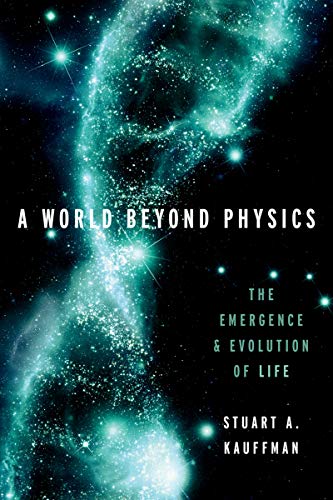
How did life start? Is the evolution of life describable by any physics-like laws? Stuart Kauffman’s latest book offers an explanation-beyond what the laws of physics can explain-of the progression from a complex chemical environment to molecular reproduction, metabolism and to early protocells, and further evolution to what we recognize as life. Among the estimated one hundred billion solar systems in the known universe, evolving life is surely abundant. That evolution is a process of “becoming” in each case. Since Newton, we have turned to physics to assess reality. But physics alone cannot tell us where we came from, how we arrived, and why our world has evolved past the point of unicellular organisms to an extremely complex biosphere.Building on concepts from his work as a complex systems researcher at the Santa Fe Institute, Kauffman focuses in particular on the idea of cells constructing themselves and introduces concepts such as “constraint closure.” Living systems are defined by the concept of “organization” which has not been focused on in enough in previous works. Cells are autopoetic systems that build themselves: they literally construct their own constraints on the release of energy into a few degrees of freedom that constitutes the very thermodynamic work by which they build their own self creating constraints. Living cells are “machines” that construct and assemble their own working parts. The emergence of such systems-the origin of life problem-was probably a spontaneous phase transition to self-reproduction in complex enough prebiotic systems. The resulting protocells were capable of Darwin’s heritable variation, hence open-ended evolution by natural selection. Evolution propagates this burgeoning organization. Evolving living creatures, by existing, create new niches into which yet further new creatures can emerge. If life is abundant in the universe, this self-constructing, propagating, exploding diversity takes us beyond physics to biospheres everywhere.
User’s Reviews
Reviews from Amazon users which were colected at the time this book was published on the website:
⭐This is one of the briefer books by this author (SK), and it is well worth the couple of afternoons it takes to read it. Much of it seems to recapitulate themes from SK’s earlier, lengthier and denser books such as “Investigations” (2000) and “Humanity in a Creative Universe” (2016), but here those arguments are augmented by some more recent theoretical research that makes SK’s ideas more plausible. Among its strengths, aside from its brevity, is a very lovely argument against the the idea that a description of life can be reduced to physics. On the other hand, the discussion is at times a bit too theoretical, and some arguments seem a little rushed in a couple of spots. Plus, the conclusion’s attempt to extend the biological paradigm to “the economy” is very weak, though fortunately this doesn’t detract from the main theme of the book.One of SK’s nicest points about life is captured in a single, albeit awkward, word: the biosphere evolves in ways that are ‘unprestatable’ (@2; the ‘pre’ rhymes with ‘free,’ not ‘press’). This is in contrast to the view, identified with the early mathematical physicist Pierre-Simon Laplace (1749-1827), that if you know the equations of physics, the relevant boundary conditions for the equations, and the initial positions and momenta of all particles in the universe, the equations will enable you to predict/prestate everything that happens in the future, as well as to know everything that happened in the past. (SK doesn’t make the difference between predicting and prestating so clear, but I gather the nuance is something like: unpredictable = we don’t know what will happen, unprestatable = unpredictable + we don’t even know what CAN happen. If my guess is correct, then prestatability would be anterior to predictability: in order to be able to predict an outcome, you necessarily must be able to prestate that outcome as well, i.e., you must know that the particular outcome is in the realm of possible outcomes.) Subject to some modification for the uncertainties of quantum mechanics, the Laplacian point of view is still held by many physicists and other scientists today. According to SK, though, this view is simply, and unequivocally, wrong. (@11.)Among the unprestatable things in the universe is that stuff should come to matter to organisms. For example, finding glucose matters to a glucose-eating bacterium, even if we don’t attribute consciousness to it: without glucose it dies. In contrast, “rocks are matter, but nothing matters to rocks” (@13). The question of “How did the universe get from matter to mattering?” occupies much of the book. Another example is organs, such as hearts. The Laplacian explanation would be that organs exist because of cells, cells because of proteins and other biomolecules, those molecules because of atoms, etc. But in fact, we don’t find organs like hearts lying around on their own: a heart exists in order to sustain a larger whole, an organism that has a heart. Such organisms need hearts in order to exist and proliferate; and hearts exist by virtue of this functional role. Function, too, is a concept that can’t be derived from reductivist physics.Most of these themes are not new in SK’s work. What seems to have inspired him to write this book was the publication of a paper in 2015 by a couple of researchers based in France, Maël Montévil and Matteo Mossio (M&M). In their paper “Biological organisation as closure of constraints,” which is available as a free preprint online, they start from the notion, apparently first expressed by Peter Atkins, that thermodynamic work is a release of energy directed by a constraint. E.g., the work done in a piston is energy constrained by the walls of the cylinder in which the piston moves, and the flat surface of one end of the piston itself. M&M propose an explanation of how a biological system can undergo a series of processes wherein the result of work done by, say, process N becomes a constraint for process N+1. The constraints don’t have to be mechanical, as in a piston: they can be chemical instead, for example. Such processes and constraints can be linked in a chain, and then the chain can be turned into a cycle. To make a cycle entails that there is a process or set of processes analogous to, to use SK’s image, taking the billiard balls out of the side pockets or ball return and racking them up again to start a new game. Note that some energy input is required at each step: we’re not talking here about perpetual motion (nor equilibrium thermodynamics at all), but rather, at least indirectly, about the fact that you need to eat stuff. Note too that the notion of a ‘constraint’ makes sense only in relation to a process. For example, suppose a certain chemical is created in step N; participates in a process that does work during step N+1, during which the chemical is more or less unchanged; and then is degraded in step N+2. In this scenario, the chemical would be considered a constraint only in step N+1. (Many enzymes in your body fit this scenario; so do many other catalysts, to bring back a concept from high school chemistry.) M&M’s explanation of how these combinations of processes + constraints can be built into a closed cycle suggests a path to get from a bunch of chemicals to a primitive organism that could stay alive and even do the work to reproduce itself.SK takes this fundamental insight, and connects it to some of the structures he has discussed over decades of work, such as networks of self-catalyizing chemical reactions and the “button thread phase transition” in random graphs. (Despite the formidable terminology, SK makes the ideas understandable with some good diagrams.) From there he spends a couple of chapters speculating how such a bunch of chemicals might have come together and then become encapsulated in a lipid membrane, such as during repeated wetting and drying cycles on the fringes of ponds, to form a “protocell.” To his credit, SK does acknowledge that his speculative explanation may be “rather facile” (@84).Once one reaches the level of organisms, SK emphasizes how the biosphere doesn’t cause, but rather *enables* opportunities for new developments — new organisms, new functions, new ecological niches, etc. SK’s poetic term for this is “expansion into the adjacent possible.” However, his exposition is kept at the level of a very schematic parable, about protocells named Patrick, Rupert, Sly and Gus. Here I began to get disappointed. During the past couple of decades there has been a tremendous amount of non-theoretical biological research on the interactions between organisms, their environments, and organismal development (a/k/a “eco-evo-devo”), including topics like epigenetic inheritance, phenotypic plasticity and niche construction. For excellent overviews of this research see, e.g. Jablonska & Lamb’s “Evolution in Four Dimensions” (Revised ed. MIT Press 2014) and Sonia Sultan’s “Organism and Environment” (OUP 2015; I’ve reviewed this on Amazon). SK doesn’t mention any of these phenomena, however. This not only leaves him to use cute and simplistic stories to illustrate the application of his theories, but it makes one wonder whether SK is still stuck in the DNA-sequence reductivism of the Modern Synthesis view of evolution — a view that eco-evo-devo is doing much to subvert.The final chapter is entitled “Epilogue: The Evolution of the Economy.” I’m sorry to say, this is nonsense, though fortunately it doesn’t damage the arguments that preceded it. Here’s a brief summary of why it fails: First, SK seems to identify new inventions with species, but most mechanisms of evolution, even in SK’s own parables, are based on selection of individuals. Moreover, biological individuals can reproduce themselves, but inventions don’t reproduce without human choice. Second, he seems to believe that once new inventions are created they enter the economy — but this isn’t at all reality. An invention might never be put on the market, because the older alternatives are just as good and are cheaper. The inventions also might never be patented, which means they would not operate as a constraint on future invention. (An idea developed in “Investigations,” but not in the present book, is that the constraints on the economy are created by laws, such as patent law.) Third, prices are arbitrary and psychological, not subject to any “physical law” sort of regularity. Since it is the price system that determines whether it will be profitable or not to commercialize the invention, this means that many of the constraints on whether products enter the economy are psychological and arbitrary, too. Fourth, the model doesn’t take any account of such disruptive factors as the financial economy that exists apart from the economy of goods and services, and power, which is ignored by all economic theories. If we give credence to the laws-as-constraints idea, then both finance and power affect constraints via, e.g., lobbying. Finally, and perhaps most fundamentally, SK never inquires whether the tendency of modern product and service development to “expand into the adjacent possible” is a cultural phenomenon peculiar to only a few forms of economic organization, such as capitalism.In trying to blend biological evolution and economics, SK is following in the footsteps of several of his colleagues from the Santa Fe Institute, an institution famous for its theory of “complex adaptive systems.” Eric Beinhocker’s “The Origin of Wealth” (OUP 2006) and various works by Brian Arthur have similar aspirations. One gets the feeling at times, though, that SFI is in the racket of providing cover to tech billionaires by creating a narrative whereby the octopoid expansion of their businesses can be seen as simply a natural phenomenon.The book has a few rough edges, suggesting that neither author nor publisher gave the manuscript a thorough edit. Some of SK’s numerical calculations seemed a bit off, such as his estimate of the time it would take to make an example of each of the 10^260 linear arrangements of a 200 amino-acid-long polypeptide (@2-3: he seems to underestimate the time required by > 10^80 times the present age of the Universe), and his count of linear polymer chains made from 2 building blocks (@62: here the problem is ambiguously stated, and he also seems to ignore symmetry effects). A couple of times he refers to a particular paper not listed in the references at the end; it’s not possible to tell whether he just got the name wrong, or whether he means a paper that really isn’t listed. And the economics section relies on a supposed anecdote about a Tokyo entrepreneur that lacks any supporting cite (and which sounds implausible to me as a 10+ -year resident of Japan). Fortunately, these glitches shouldn’t have a big impact on your enjoyment of the book.In sum, this book is an efficient and accessible introduction to SK’s theoretical work on the nature and origin of life. If you’ve ever been intrigued by the question of whether life really is reducible to the laws of physics, then regardless of what you think the answer is, you’ll find plenty to interest you here. I also recommend reading the M&M paper, whose exposition is comparable to SK’s in wearing its mathematics lightly.
⭐Physics envy is the belief of many scientists that their work would be more respectable if it emulated the reductionism and predictability of physics. In A World Beyond Physics, Stuart Kauffman demonstrates that this belief is a delusion. He shows convincingly that the laws of physics cannot account for the diversity and complexity of living systems.Kauffman’s main thesis is that biological development is not causal but enabling. One stage of evolution enables the next stage, but does not directly cause it to happen.Much of Kauffman’s argument is devoted to the issues involved in the origins of life. Where many commentators consider the origin of life to be an event, Kauffman shows that it is a process involving many steps with many issues to be resolved at each step. Each step is made possible by what went before, but is not determined by it. The outcome is unprestatable at each step, unlike physical change, which is completely determined.Kauffman’s ideas are consistent with what we observe in nature, a world of enormous biological diversity and abundance. As Kauffman says, “If you’re not sure what I’m talking about, look out the window”. The good news that Kauffman brings, is that if we want to understand the biological world, our world, then algorithms are not sufficient and miracles are not necessary.
⭐The author takes on as his straw man the supposed assertion of the science of physics that if the location and momentum of every particle in the universe were known, the entire future of the entire universe could be foretold. His context is the origin of life and its early evolution, and in those parts of the book hie forays and explanations are interesting and helpful. But the book’s main thrust — that biology (and, oddly, economics) do not satisfy physics’ reductionism or determinism, is an exercise in examples rather than proof. He notes, correctly, that in biological and evolutionary systems the emergence of advancements and new forms is not “prestatable,” and indeed that even the space within which new forms may emerge is not knowable. But these assertions are never validated as matters of principle. They are recognized, though the author would contest this, only as matters of empirical reality. That is not the same as a proof. I do not recall who it was, but it was a very wise person, who once said that “The difference between a difference in kind and and a difference in degree is usually a difference in degree.” That bon mot describes more satisfyingly why biology does not look like physics. This book doesn’t come nearly as close.
⭐This is a short but lively book, full of important concepts, building up from the very simple to a more complex scenario. There is some negative opinions in the list naming the book as something obvious, may be that is true for the specialists in the field, but that does not rest clarity. Also, this book represents a great door for young minds wanting to learn more on the topic, in short “it is inspiring”
⭐Here in the early part of the 21st century there exist a void in our knowledge and understanding of the appearance of the most simplest of life bacteria/archaea from basic inorganic matter. How can matter without the benefit of the process of evolution freely organise itself to become the complexity of that of a cell all the while with the Second Law continuously working away to wash away any organisation that may fortuitously appear.The probability for the appearance of the most simplest of cell by chance has been compared to a tornado sweeping over a junkyard and serendipitously leaving in its wake a fully functioning 747 jumbo jet. A living cell can be compared to the complexity of a city.Nobody tackles these problems, at least in the public domain, better than Stuart Kauffman. He is always a fascinating read. I had before read ‘Investigations’ and ‘At Home in the Universe’ by Kauffman which are also excellent books. However ‘A World beyond Physics’ feels the most complete of his works to date. While previous books of his left me in awe and wonder this book covers every aspect of his research and theory. It highlights the way for further experimental work for testing these ideas.He explains how it might be possible where a source of simple types of inorganic matter residing in a volcanic rock pool in the earths environment billions of years ago where the weather periodically evaporates the pool could be the crucible for matter to form Kantian wholes.Kauffman discusses chemical reactions that succeed in closure. He mathematically describes the chances of these reactions taking place in the environment stated above. In a non-equilibrium chemical process when chemical reactions are constrained through reaction systems, formation of a protocell (a Kantian whole) is possible. It involves three types of closure – Constraint, work task, and catalytic.”It is a ‘Machine’ that does work cycles to build and assemble its own working parts. Cars do NOT do this! Reproducing cells do this!”Further experimental research is needed to test the theory and ideas. With more information it may be possible to predict the frequency of simple life forms within the current state of our universe. For example what is the chance of finding life on one of the moons of Jupiter or Saturn given the age and conditions of these environments?Are we able to produce a protocell from inorganic matter in the laboratory when we provide the chemical system with optimal conditions according to theory?The second part of the book discusses ‘World beyond physics’ where a complex environment may serendipity open up ‘a new way of living’ and that new way opens up more degrees of freedom for other ‘new ways of living’. These new ways of living are not pre-stateable. Hence as Kauffman suggests are Beyond Physics. This is the source of complexity and creativity in nature.Here I feel we are on more shaky ground. It really comes down to how you define physics which Kauffman does not go into in much detail.I think that we can say that physics is as yet not complete (if completion is even possible).We currently only have theories which most likely will get updated as we learn more about nature. Perhaps either quantum field theory or general relativity will remain intact but is unlikely that both of them will remain the same as we perceive them today. There are currently no true ‘Laws’ of physics,Kauffman explains quite clearly how non-algorithmic the process of complexity is. However the functioning of the brain may also be non-algorithmic and these non-algorithmic process may be completely describable by new physics of the future.I do not necessarily think that its Physics job to predict how all things will exactly behave into the future. Only to describe mathematically the nature of different phenomena.Although the weather system is an algorithmic process we cannot predict with certainty what the weather today will do in the future but we can predict the behavior of generic weather systems and therefore get better forecasts on what may lie in the future.If we have a non-algorithmic process with new physics we may not be able to predict exactly how a system will evolve but we may be confident that we understand the nature of the system at a mathematical level and predict/simulate what types of futures could possible come about perhaps using a non-algorthmic information processor.It is interesting that animals in all the continents have naturally developed similar physical attributes even though the continents have been separated for millennia. Eg the kangaroo in Australia and the gazelle in Africa, the deer in Europe. The dog in Europe and the Thylacine in Australia. There is a convergence on how to make a living and the physical appearance/make up of the organisms that take on these same ways in vastly separated areas of the world. The separate evolution of the eye is another example.However one aspect that would be interesting to contemplate on predicting pre-adaptations is the feathers and flight of birds. Feathers on dinosaurs was possibly an adaptation for insulation. It has been conjectured that these feathers initially evolved for warmth then became a symbol for sexual selection (like the peacock). After time these feathers developed through sexual selection then found a purpose in flight. That route may be how birds managed to take to the skies.Try to solve that one with your non-algorithmic information processor. What attributes go into making a sexy feather?
Keywords
Free Download A World Beyond Physics: The Emergence and Evolution of Life 1st Edition in PDF format
A World Beyond Physics: The Emergence and Evolution of Life 1st Edition PDF Free Download
Download A World Beyond Physics: The Emergence and Evolution of Life 1st Edition 2019 PDF Free
A World Beyond Physics: The Emergence and Evolution of Life 1st Edition 2019 PDF Free Download
Download A World Beyond Physics: The Emergence and Evolution of Life 1st Edition PDF
Free Download Ebook A World Beyond Physics: The Emergence and Evolution of Life 1st Edition