Ebook Info
- Published: 2010
- Number of pages: 336 pages
- Format: PDF
- File Size: 3.12 MB
- Authors: Stuart A Kauffman
Description
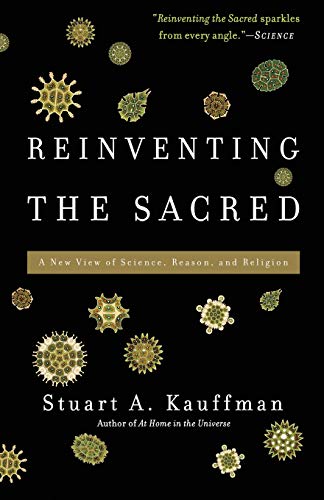
Consider the woven integrated complexity of a living cell after 3.8 billion years of evolution. Is it more awe-inspiring to suppose that a transcendent God fashioned the cell, or to consider that the living organism was created by the evolving biosphere? As the eminent complexity theorist Stuart Kauffman explains in this ambitious and groundbreaking new book, people who do not believe in God have largely lost their sense of the sacred and the deep human legitimacy of our inherited spirituality. For those who believe in a Creator God, no science will ever disprove that belief. In Reinventing the Sacred, Kauffman argues that the science of complexity provides a way to move beyond reductionist science to something new: a unified culture where we see God in the creativity of the universe, biosphere, and humanity. Kauffman explains that the ceaseless natural creativity of the world can be a profound source of meaning, wonder, and further grounding of our place in the universe. His theory carries with it a new ethic for an emerging civilization and a reinterpretation of the divine. He asserts that we are impelled by the imperative of life itself to live with faith and courage-and the fact that we do so is indeed sublime. Reinventing the Sacred will change the way we all think about the evolution of humanity, the universe, faith, and reason.
User’s Reviews
Editorial Reviews: About the Author Stuart A. Kauffman is Visiting Professor at Harvard Divinity School and Professor at the University of Calgary. He is the founding director of the Institute for Biocomplexity and Informatics. He is the author of The Origins of Order and At Home in the Universe. He lives in Calgary, Canada, and Cambridge, Massachusetts.
Reviews from Amazon users which were colected at the time this book was published on the website:
⭐”Faced with a new mutation in an organism, or a fundamental change’FITNESS– in its living conditions, the biologist is frequently in no position whatever to predict its future prospects. He has to wait and see. For instance, the hairy mammoth seems to have been an admirable animal, intelligent and well-accoutered. Now that it is extinct, we try to understand why it failed. I doubt that any biologist thinks he could have predicted that failure. Fitness and survival are by nature estimates of past performance.” George Wald, Nobel Prize winner.This book has two main general ideas: One is that reductionism, although an extremely successful philosophy of science, does not suffice to explain reality. The other is that the ceaseless creativity of the universe, that part that escapes reductionism, should be revered as “the sacred”. Kauffman calls this “God” in an effort of “rapprochement” between agnostics and religious people, since he envisages a future global civilization.The first idea is developed mainly in the context of evolution in the chapter titled “The Nonreducibility of Biology to Physics”, although some physicists, such as Laughlin, are also mentioned, temperature being a classical example of emergent physical phenomena. Kauffman claims that evolution cannot be predicted and, as we see in the citation above, he is not alone. He makes similar claims for the economy, human mind, human history, our legal system, etc.The second idea is not that new either and Kauffman himself admits that his idea of God is similar to Spinoza’s.Kauffman tries to search for some general laws for emergent phenomena and he hints some of them, including some mathematics of graph theory and random Boolean networks and the use of some concepts such as “minimal molecular autonomous agent”. He says, for example: “This raises the fascinating but unproven possibility that , due to natural selection, life achieves a maximization of the product of total work done multiplied by the diversity of work done by being dynamically critical. Then cells would be maximally efficient in carrying out the widest variety of tasks with the maximum total work accomplished, given energy resources available”.The author also suggests that the origin of life might have been systems of autocatalytic molecules and thinks that “self-organization, order for free, is as much a part of evolution and natural selection as historically frozen accidents”.The most controversial chapter, as Kauffman readily admits, is the one about the quantum brain in which he takes the idea of Penrose, which has not had many followers so far. Kauffman believes that the human mind is not algorithmic. Euler’s creation of topology by solving the Könisberg’s bridges problem is an example, according to Kauffman, of the non algorithmic operation of the human brain. He ads that computations are devoid of meaning, they are purely syntactic. This flies in the face of the strong artificial intelligence theory of consciousness. Kauffman says that meaning derives from agency. Although a controversial idea, a quantum brain, however, would help to solve such hard problems as free will since quantum mechanics is an acausal theory.The author believes that the conscious mind is a persistently poised quantum coherent-decoherent system, forever propagating quantum coherent behavior, yet forever also decohering to classical behavior. Recent studies seem to prove that chlorophyll maintains a quantum coherent state for a very long time compared to chemical-bond-vibration frequencies. So may be this hypothesis of the quantum brain is not so far fetched.The last chapters are dedicated to ethics and to an effort to reach out to religious people and Kauffman is aware that convergence of agnostics and religious people can take generations and that we may never fully agree.
⭐This is a hard book. A work of generative genius that is almost a sustained prose poem on the subject of how reductionism is not really a good way of looking at how the universe works.I found the early part of the book which shows how the operation of biological processes cannot be determined by or derived from the laws of physics understandable and convincing. This is his home territory from his work on autocatlytic sets described in his previous book At Home in the Universe that I really liked. But then Kauffman proceeds to build less convincingly and somewhat more opaquely a super structure on top of this to accomodate culture, the economy, consciousness and indeed the role of quantum theory in consciousness. In this process he frequently lost me at the detailed level, even when directionally his arguments made sense at the macro level: they were interesting and suggestive, but they were like a large flip chart report out of a brainstorm and the clarity of understanding that should have been central to his case was lost. And like a poem he repeated his mantra of the laws of physics not predicting biological processes, adding a little more to the chorus each time. I suspect Kauffman’s genius and fast processing brain intimidated his editors, who were simply not tough enough with him. If perhaps 50 times during this book, they had said to him: ‘Stuart exactly what do you mean here? Tell us and we will put it in words that your audience will understand’. Then this book would have reached its full potential. My editor uses the wonderful term ‘muddy’: too much of this book is muddy.It’s great interesting mud but mud is mud. His closing pleas for a different take on ethics are heartfelt, appealing but are not as well connected with the foregoing framework as they could easily have been. Ultimately I preferred his previous book At Home in the Universe. But hard as this book is, it is worth some trouble and maybe like Gregory Bateson’s work, someone will write a commentary on this book that makes it all clear. And yes ultimately I believe he has the beginnings of the reinvention of the sacred in his sights. He did begin to shift how I see things, and that was worth the journey.
⭐Reinventing the Sacred by Stuart Kauffman describes a scientific worldview that embraces the reality of emergence.[1] We live in a universe, biosphere, and human culture that are not only emergent but radically creative. Kauffman attempts to lay out the scientific foundations for agency and therefore value in the biological world.[2] He has a great deal to say about organized processes, for they are less understood than we might think.[3] We have as yet not theory for systems that do work to build their own boundary conditions, and thereafter modify the work that is done, and then modify the boundary conditions as they propagate organization of process.[4]” An organized being is […] not a mere machine, […] but it possesses in itself formative power of a self-propagating kind … “—Immanuel Kant[5]We live our lives forward, often without knowing, which requires all our humanity, not just “knowledge.”[6] Much of what we do when we intuit, feel, sense, understand, or act is non-algorithmic.[7] Stuart Kauffman emphasizes that the human mind need not act algorithmically,[8] nor is it merely computational.[9] A central failure of the “mind as a computational system” theory is that computations, per se, are devoid of meaning.[10] Agency, meaning, value, and doing are real parts of the universe.[11] Astonishingly, “order for free,” does exist.[12] Life itself seems to maximize self-propagating organization of process. It’s a thought-provoking book!Notes:[1] Stuart A. Kauffman, Reinventing the Sacred (Basic Books, 2010), p.5.[2] Ibid., p.11.[3] Ibid., p.35.[4] Ibid., p.92.[5] Ibid., p.88.[6] Ibid., p.89.[7] Ibid., p.235.[8] Ibid., p.77.[9] Ibid., p.195.[10] Ibid., p.192.[11] Ibid., p.78.[12] Ibid., p.106.
⭐There is now a whole library of books on the Cosmos, conscience and the origins of life by scientists,looking to somehow bridge the divide between science on one hand, and religion, or at least mysticism, on the other. These books of varying quality, and some simply take the existence of quantum mechanics is a license to speculate about absolutely everything and anything, no matter how improbable.Stuart Kauffman’s book is in a different category. Kaufmann is not only a very distinguished scientist, an expert in biocomplexity and Informatics, he is also a philosopher and seems to be just as much at home in literature as in quantum physics. The result is a book which argues elegantly and persuasively for a view of the universe as an essentially self-constructing exercise in complexity, perceived through human consciousness which is itself a quantum phenomena. For Kauffman, this is a new and defensible meaning of the term “sacred”, distinct at once form organised religion and from what he understandably sees as the sterile and meaningless universe constructed according to classical Newtonian principles. It is difficult to do justice to a book of this kind in a short review, and others have already summarized much of the argument. Here, it is enough to say that this is an erudite and extremely well written book, which makes extremely complex issues as simple to understand as is probably feasible. My only concern is that the book covers such an enormous field that it is easy to lose the argument, as the text moves from one complex and difficult subject to another. This is a book that you really have two read twice, at least, if you are to get real benefit from it.
⭐Challenging read but worth the effort. Quite thought provoking . Book delivered in good condition.
⭐Kauffman thinks the complexity of biology cannot be deduced from particles in motion and their governing laws. He argues that there is an infinite number of ways in which quanta can be arranged, and organisms are only a small subset of these possibilities.Life is viewed as introducing agency into the universe. Choosing between different behaviours is seen as requiring agency, which involves meaning and values, and these in turn require consciousness. Kauffman does not consider that information can explain the functioning of the cell. He argues that an agent is required to give meaning to information. The advantage of an agent is that there is not just one response to one stimulus, but a choice of different responses according to context. The ability to discriminate between stimuli is argued to be a ‘poised state’ between order and chaos, where order always gives the same answer for particular stimuli, despite varying outcomes in the past, and chaos gives a random outcome that is of no value.Kauffman argues that consciousness derives from such a ‘poised state’ between the classical order of decoherence and the ‘chaos’ of quantum coherence. The ‘poised state’ is suggested to span both systems that are mainly coherent and systems that are partly coherent, and this is suggested to provide the brain with greater flexibility than either order or ‘chaos’.The flow of information into cells is seen as a means by which recoherence can be induced, and coherence thus maintained, with quantum possibilities effecting classical systems, while classical systems can influence recohering quantum systems. He views this as being supported by recent research on photosynthetic organisms, which shows that their efficiency of energy transfer depends on longer than previously predicted maintenance of quantum coherence in these organisms.
⭐The main message of the book – that reductionism is not capable of explaining everything – is a good start. Yet, instead of providing a good new view, the book is an endless interation of the same critisism over and over again and the praise of “creativity” – a term that is never defined or at least carefully described within the whole 300 pages so that it remains totally vague and also mystic. The whole content of the book could have been expressed on five pages.
Keywords
Free Download Reinventing the Sacred: A New View of Science, Reason, and Religion in PDF format
Reinventing the Sacred: A New View of Science, Reason, and Religion PDF Free Download
Download Reinventing the Sacred: A New View of Science, Reason, and Religion 2010 PDF Free
Reinventing the Sacred: A New View of Science, Reason, and Religion 2010 PDF Free Download
Download Reinventing the Sacred: A New View of Science, Reason, and Religion PDF
Free Download Ebook Reinventing the Sacred: A New View of Science, Reason, and Religion