Ebook Info
- Published: 2008
- Number of pages: 400 pages
- Format: PDF
- File Size: 26.07 MB
- Authors: Herman H. Goldstine
Description
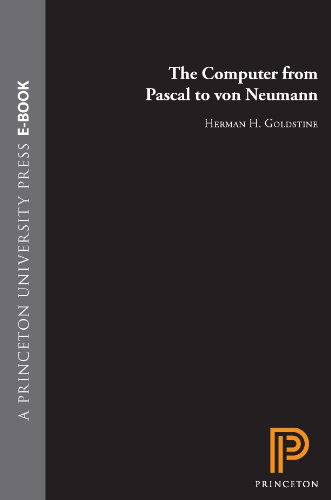
In 1942, Lt. Herman H. Goldstine, a former mathematics professor, was stationed at the Moore School of Electrical Engineering at the University of Pennsylvania. It was there that he assisted in the creation of the ENIAC, the first electronic digital computer. The ENIAC was operational in 1945, but plans for a new computer were already underway. The principal source of ideas for the new computer was John von Neumann, who became Goldstine’s chief collaborator. Together they developed EDVAC, successor to ENIAC. After World War II, at the Institute for Advanced Study, they built what was to become the prototype of the present-day computer. Herman Goldstine writes as both historian and scientist in this first examination of the development of computing machinery, from the seventeenth century through the early 1950s. His personal involvement lends a special authenticity to his narrative, as he sprinkles anecdotes and stories liberally through his text.
User’s Reviews
Reviews from Amazon users which were colected at the time this book was published on the website:
⭐The absolute best book out there for very early computer history. I can’t recommend it enough.
⭐Great book by one of the pioneers who built one of the first computers during WWII.
⭐I received this text on time. This a great historical resource on the history of the COMPUTER AGE!!!
⭐The book is used. It was in a US library, but now it’s withdrawn. It came with a library label on it spine and stamped by the librarian. Well, the book content is ok. No underline text, no notes. The book is worth it.
⭐Readers interested in Computer History should not skip this book of Herman Goldstine.It is full of fascinating details and praise for people who contributed to the innovations and developments in the area of computer technology.Goldstine, a fine scientist and technology manager in his field starts with historic contributions of Wilhelm Schickard, Blaise Pascal and Gottfried Wilhelm Leibniz, then he explains the contributions of scientists and early computer technology experts in the 19th century, e.g. Maxwell and Boole, Charles Babbage combined with critical remarks about his performance, analog computing instruments – forerunners of digital computers – etc. etc. In chapter 8 he explains the fruitful cooperation of Herman Hollerith with Dr. Billings to automate the USA census in 1890, the beginning of Hollerith’s success with his Tabulating Machine Company (TMC) which was merged into Computing Tabulating Recording Corporation on June 16th, 1911, the forerunner of IBM under the leadership of Thomas Watson Sr.Chapter 10 is dedicated to Bush’s Differential Analyzer and Other Analog Devices.In Part Two we read about the very important Wartime Developments: ENIAC and EDVAC when John von Neumann contributed significantly to the development of the EDVAC by Eckert and Mauchly.In Part Three Goldstine describes “The von Neumann Machine” and the development work at the Institute for Advanced Study and “The Early Industrial Scene” with focus on UNIVAC, IBM, Burroughs, etc.He emphasizes “In my opinion it was Thomas Watson, Jr. who played the key role in moving IBM into the electronic computer field.”Despite the fact that there are excellent books available describing the time “Before the Computer” by Cortada, and the Computer History by Ceruzzi, Campbell-Kelly and Aspray, Alfred D. Chandler, Emerson Pugh etc. etc. it his highly recommendable to study this work of the computer expert Goldstine who provides an authoritative insight into the field of computer developments with focus on the scientific fundamentals and the early computers of the first generation.
⭐Herman Goldstine was there when modern computers were born, that is at Princeton’s IAS working under the great John von Neumann, who he had met while working on the development of another computer for Aberdeen Proving Ground.Goldstine recounts the history of computers, from Pascal to Babbage to Hollerith and others. It quickly becomes apparent that he is wary of lacing the book with the sort of technical detail that would appeal to hard-core computer scientists, lest the average reader be turned off, but also that he was reluctant to write in the sort of entertaining style that authors of scientific books aimed at lay audiences generally adopt.The result is a book that probably appeals largely to those who need the book for academic purposes, such as to write a term-paper.I cannot speak to the controversy about who first invented programming a computer electronically other than to say that von Neumann, the man generally deemed to have invented it, was known to be very generous with his ideas, and not known to appropriate others’ ideas.The few truly wonderful pages in this book are Goldstine’s reminiscences of what it was like to work with John von Neumann, one of the most interesting people there ever was.
⭐The Computer from Pascal to Von Neumann Herman H. GoldstineA review by Frederick A. WareThis book contains a great deal of computer history, particularly of the period during and shorty after World War II when the critical details of stored program digital computers were finally worked out and implemented. Goldstine also has a unique perspective on these developments because of his work as a senior programmer on the ENIAC.Unfortunately, major areas of controvesy arose once the ENIAC was completed. One had to do with the credit for the concept of placing a computer’s program in the main store along with the data it was to use. This would permit a program to be easily and quickly modified – the ENIAC required cables to be moved in order to change the sequencing of its arithmetic units when a new set of ballistic tables were to be generated. This would also permit a program to process other programs, leading to the development of assemblers and compilers.History gives sole credit for this idea to John von Neumann because most people prefer history to be simple and events to be tied to single individuals. The details of the ENIAC project support the position that Mauchly and Eckert (the ENIAC developers) should be given equal credit for the stored program concept. Other historians (and computer scientists of the period) share this view.Goldstine professes to be neutral, but in fact is significantly biased toward von Neumann in this matter (the title of the book speaks for itself), and that detracts from what is otherwise a very readable and very entertaining book.The book divides computer history into three eras – pre-WWII, WWII, and post-WWII. Again, this division is probably due more to the fact that the period in which the author made his most significant contributions was World War II.The first section begins with the development of mechanical adding machines. Pascal invented one of the first such machines, hence the rest of the book’s title. Other computing intruments included the planimeter, built from the two-disk integrator.Some of the first section is also devoted to Babbage’s difference engine, designed to the generation of tables from difference equations, and of his analytical engine. Boole and his development of boolean algebra (with its eventual application to digital computer design) is also covered.Beginning in about 1900, significant computing machines were developed. The book describes Hollerith’s card tabulating machines, first used in the 1890 census. It also covers the differential analyzer, an analog computer used to solve ordinary differential equations developed by Vannivar Bush at MIT in the 1930s.The Automatic Sequence Controlled Calculator (also called the Harvard Mark I) is a digital computer with mechanical arithmetic units and a paper tape driven sequencer. Of all the early machines, this one is probably comes closest to implementing the Babbage’s analytical engine.Stibitz of Bell Labs built a series of digital computers using relays as the logic elements. The largest has 9000 relays. These machines are about six times faster than the mechanical machines.The second section is principally a discussion of the ENIAC development. All of these early computers were really just souped-up calculaters with some kind of automatic sequencing capability). The ENIAC was the first vacuum tube digital computer. The Eniac was the most significant because of its blinding speed – the electronic components gave it a 1000x performance advantage over the other technologies. The key contribution of Mauchley and Eckert was to prove that large numbers of vacuum tubes could be operated reliably. The architecture of the machine was not significant, except to serve as an example of how not to do it in the furure.The third section covers the post-war era. The development of large, fast main storage is the critical problem to be addressed in the late 1940s. The two principle alternatives to vacuum tube flipflops are mercury delay lines and electrostatic storage on a CRT . Both are volatile and require refreshing techniques. Both go on to be used in a number of computers in the next five years until ferrite core memory is developed.
⭐Despite the fact that the book was written by one of the pioneers in the field, it lacks details. There are other books of similar theme written by historians that does better job. It’s not that much of a technical exposition either which is something I didn’t expect since the book comes from one of Von Neumann’s colleague who played important role in the development of both ENIAC & EDVAC.There are still no thorough history of computers that comes in a single volume. Some focuses on the mechanical development others on the logical/mathematical development. A book that takes both into account in a single book is very much needed specially for the specialised readers.
⭐Readers interested in Computer History should not skip this book of Herman Goldstine.It is full of fascinating details and praise for people who contributed to the innovations and developments in the area of computer technology.Goldstine, a fine scientist and technology manager in his field starts with historic contributions of Wilhelm Schickard, Blaise Pascal and Gottfried Wilhelm Leibniz, then he explains the contributions of scientists and early computer technology experts in the 19th century, e.g. Maxwell and Boole, Charles Babbage combined with critical remarks about his performance, analog computing instruments – forerunners of digital computers – etc. etc. In chapter 8 he explains the fruitful cooperation of Herman Hollerith with Dr. Billings to automate the USA census in 1890, the beginning of Hollerith’s success with his Tabulating Machine Company (TMC) which was merged into Computing Tabulating Recording Corporation on June 16th, 1911, the forerunner of IBM under the leadership of Thomas Watson Sr.Chapter 10 is dedicated to Bush’s Differential Analyzer and Other Analog Devices.In Part Two we read about the very important Wartime Developments: ENIAC and EDVAC when John von Neumann contributed significantly to the development of the EDVAC by Eckert and Mauchly.In Part Three Goldstine describes “The von Neumann Machine” and the development work at the Institute for Advanced Study and “The Early Industrial Scene” with focus on UNIVAC, IBM, Burroughs, etc.He emphasizes “In my opinion it was Thomas Watson, Jr. who played the key role in moving IBM into the electronic computer field.”Despite the fact that there are excellent books available describing the time “Before the Computer” by Cortada, and the Computer History by Ceruzzi, Campbell-Kelly and Aspray, Alfred D. Chandler, Emerson Pugh etc. etc. it his highly recommendable to study this work of the computer expert Goldstine who provides an authoritative insight into the field of computer developments with focus on the scientific fundamentals and the early computers of the first generation.
Keywords
Free Download The Computer from Pascal to von Neumann in PDF format
The Computer from Pascal to von Neumann PDF Free Download
Download The Computer from Pascal to von Neumann 2008 PDF Free
The Computer from Pascal to von Neumann 2008 PDF Free Download
Download The Computer from Pascal to von Neumann PDF
Free Download Ebook The Computer from Pascal to von Neumann