Ebook Info
- Published: 2016
- Number of pages: 336 pages
- Format: Epub
- File Size: 0.88 MB
- Authors: Scott Stambach
Description
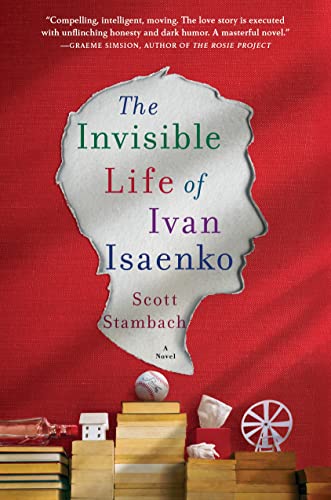
Seventeen-year-old Ivan Isaenko is a life-long resident of the Mazyr Hospital for Gravely Ill Children in Belarus. For the most part, every day is exactly the same for Ivan, which is why he turns everything into a game, manipulating people and events around him for his own amusement.
Until Polina arrives.
She steals his books. She challenges his routine. The nurses like her.
She is exquisite. Soon, he cannot help being drawn to her and the two forge a romance that is tenuous and beautiful and everything they never dared dream of. Before, he survived by being utterly detached from things and people. Now, Ivan wants something more: Ivan wants Polina to live.
User’s Reviews
From School Library Journal The story of 17-year-old Ivan Isaenko’s tragic existence is revealed through an abandoned notebook. He was born with severe disabilities as a result of the Chernobyl disaster and uses a wheelchair. Abandoned by his parents at birth, Ivan has lived his entire life at the dismal Mazyr Hospital for Gravely Ill Children in Belarus, where meals consist of watered-down cabbage soup. Human contact is limited to the nursing staff and other “mutant” patients in the hospital. Despite his limited physical abilities and small world, Ivan is extremely bright and imaginative. He spends his days observing those around him, reading, and spying on the hospital staff. The protagonist’s inner voice and crafty dealings with the hospital personnel bring levity to the narrative—particularly when he pretends to slip into a comalike sleep so that he can better eavesdrop. Ivan longs for a connection to a mother he never knew. He falls in love with a clever leukemia patient named Polina, a bittersweet experience, and his inevitable heartache will resonate with readers. Many teens will appreciate the humor and the realistic interactions between Ivan and Polina. Unlike many of the characters in YA novels, who appear confident and wise beyond their years, these adolescents are awkward and self-conscious until they develop a comfortable rapport. VERDICT Highly recommended. Though the setting may be unfamiliar to readers, teens will be charmed by this most unusual protagonist who remains hopeful despite his bleak situation.—Sherry J. Mills, Hazelwood East High School, St. Louis Review Praise for The Invisible Life of Ivan Isaenko:One of BookPage’s “Top 50 Books of 2016″Winner of the Alex Award“Compelling, intelligent and moving. The love story is executed with unflinching honesty and dark humor. A masterful novel. ” ―Graeme Simsion, author of The Rosie Project”The Invisible Life of Ivan Isaenko is comic and staggeringly tragic, often both in a single sentence… Ivan Isaenko is one of the most surprising narrators I have encountered―witty, adolescent, well-read, at times quite vulgar, and confined to a life that seems nearly unlivable, until he discovers that even at Mazyr Hospital, love is possible. A grittier, Eastern European, more grown-up The Fault in Our Stars.” ―Eowyn Ivey, author of The Snow Child”An extraordinarily brave and original debut. Ivan is an unforgettable narrator, and his story ripples with intelligence, humor, heartbreak, and humanity.” –Carolina De Robertis, author of The Gods of Tango“Only a writer with considerable heart and imagination could transform a hospital for post-Chernobyl fallout kids into a captivating, complex, nearly magical world. Scott Stambach has done exactly that. And in the character of Ivan Isaenko he has created an irresistible narrator, just what one would hope for in a seventeen-year-old raised on Nabokov and Dostoyevsky: by equal measures self-aware, hilarious, quick-witted, and profane. He is an original in every sense of the word, and his story is a marvelous one.” ―Sarah Shun-lien Bynum, National Book Award Finalist and author of Madeleine Is Sleeping“It would be an easy injustice to spackle Ivan Isaenko with a bunch of clichéd praise: hilarious, poignant, heart-warming, heart-wrenching. While these are true, Ivan is so much more. It’s an enchantingly acerbic and endearingly charming story about love, hope and humanity in the face of death; truly a tender and thoughtful reflection on our universal malady.” ―Bradley Somer, author of Fishbowl“Ivan Isaenko is a beautiful, heartbreaking, and hilarious novel whose closest literary relative might be One Flew Over the Cuckoo’s Nest…A highbrow literary comic book of a novel that will appeal to any reader with a beating heart – a true gem.” –Nickolas Butler, author of Shotgun Lovesongs
Reviews from Amazon users, collected at the time the book is getting published on UniedVRG. It can be related to shiping or paper quality instead of the book content:
⭐ 5★The Foreword from the “editor” and the Epilogue (at the end, of course) refer to Ivan’s real story and the dates that this took place, so it must be real, mustn’t it?Just to be sure, when I finished this remarkable book, I had to go back and read the disclaimer again. You know, the one we skim over at the beginning of a novel: “This is a work of fiction . . . “But it’s a work of fiction the same as M*A*S*H is fiction. Raw, hilarious, sad, fist-shakingly frustrating! The same kind of far-fetched characters and situations that are not really as far-fetched as we’d like to think. Trauma, injustice and humour. How is it possible?I just loved it.Frankly, I’d be perfectly comfortable never thinking about the human fall-out of the Chernobyl nuclear disaster, but that is a terrible attitude. The truth is, there must be plenty of damaged children like Ivan who have been hidden, so Scott Stambach has created such an engaging character that it’s impossible to look away.A baby is apparently deposited at the Mazyr Hospital for Gravely Ill Children–those kids who are seriously ill or deformed from radiation poisoning. Boys are given a name beginning with I, hence Ivan Isaenko. The hospital files have no record of his birth date or parents, but as Ivan grows up, he imagines conversations with his mother, a slightly bossy woman who pipes up now and then in his head, warning him to be careful or not to make a fool of himself.He decides to write a journal to share his past (what little there is of it) and his secrets. He has plenty of those. He steals vodka (from offices, linen cupboards) that helps him sleep, and regularly gets up to mischief during “anarchy hour” between 5am and 6am when he discovers the hole in the hospital roster that means no nurses are on duty. He’s got full run of the place, although “run” is hardly appropriate for a boy with no legs who’s stuck in a wheelchair he can roll using only his one arm.Nurse Natalya is motherly. Others are unsuitable to varying degrees—drinkers, bullies, having an affair with the boss . . . and so on. He plays the staff mercilessly, pretending to be catatonic so he can eavesdrop and then devising ways to use the information to his advantage. But he didn’t fool them all.“Early on, Nurse Natalya caught on that I was faking my comas and gently made me aware of her acuity in a way that resonated perfectly with her. she put a picture of a famous (and very naked) Belarusian actress in my field of vision and said tauntingly:‘Pretty girl, huh, Ivan? Such a beautiful naked woman, eh?’And then while my attention was firmly embedded in that picture, glued by every ounce of my helplessly horny, adolescent, sex-deprived being, she yanked it out into my peripheral. Inevitably, my supposedly comatose eyes lustfully followed the image, and my game was revealed.”He’s a child when we first meet him, but as you can see from the above, he becomes an older teenager, with all the growing pains and joys of puberty that that entails.Polina is a pretty new leukaemia patient, and Ivan becomes fascinated with her. His various ploys to ignore people so they won’t notice him don’t always work on her—she’s a pretty smart cookie—and their interaction is a lot of fun, in spite of the deformities and deadly disease. Yeah, I know. Who’d have thought it possible to make it funny?As I said, I find a lot of the same appeal as M*A*S*H, in that the suffering is man-made and life goes on no matter what, sadness, pain, love and humour.Wonderful story.Thanks to NetGalley and St. Martin’s Press for the review copy from which I’ve quoted. (Quotes may have changed in the published edition)
⭐ How can you both hate and love a character? I found Ivan Isaenko very difficult to like in the first half of the book, and then hard to dislike by the end. Mostly limbless and “mutant” (his own words) due to the Chernobyl fallout, Ivan seems nothing more than a very intelligent, darkly humorous 17 year-old jerk as he harshly describes his fellow asylum patients. Hate turns to love when Polina enters the picture. Ivan and Polina’s love story has been compared to the tragic romance in John Green’s “The Fault in Our Stars”, but I have to disagree. Stambach’s is much better. The grit, awkwardness, and urgency of Ivan and Polina’s love story makes Green’s tale seem cheesy and trite in comparison. In fact, that’s why I liked this book– there is no cheese anywhere to be found throughout the 300 pages. Some reviewers have criticized Ivan Isaenko for being inappropriate for teens and too insensitive to handicapped kids. I disagree again. Parts of this story are funny. The dark humor and irony in Ivan’s narration reminded me of Kurt Vonnegut. His line “So it goes” was not meant to be insensitive to, say, the thousands of innocents that died in the bombing of Dresden. Vonnegut was actually re-affirming the victims’ humanity by pointing out the absurdity of so many dying in a world where such massive tragedies should be avoidable. I think Stambach does something similar with Ivan’s story. Bravo to the author!
⭐ The imaginative scenario that the author uses is very clever for developing several themes, some of which are of obvious appeal to a popular audience. There is the symbolic significance of the Chernobyl incident with respect to the collapse of the Soviet empire and its idealistic image of the evolution toward a “worker’s paradise” under communism. The sad facts proved otherwise, and the book is in no small measure a satiric fantasy related to this. There is also a kind of twisted “beauty and the beast” tale of love and death in the book that is pretty powerfully drawn: Certainly the main attraction of the book. Lastly, we have a theme of a dystopian “mind in a vat”, with the world reduced to a destitute picture of basic human functioning as an image of such an abstract life dedicated to pathetic sensuality under harsh and starkly difficult conditions. The book shows quite a bit of cleverness on the part of the author, and appeal for certain segments of modern readers who will be attracted by the themes developed. I found the book, overall, to be rewarding, original and deep.
⭐ Fortunately, I started reading this book on a day I had no other obligations because I didn’t stop until I had finished it. Stambach’s writing is vivid enough to create clear images, imaginative enough to give pause and honest enough to induce laughter or tears. Years ago I met Stambach and can testify that his humorous and insightful writing reflects his genuine self. I would highly recommend this book with only one caveat. If the reader has recently dealt with a life-threatening illness, he may need to temporarily distance himself from the accurate descriptions and emotions in this novel.
⭐ This was an amazing story – grippingly sad, but Ivan is a funny guy – also very sarcastic and cynical, but who wouldn’t be in his situation. As he is a teenager, his pranks are funny, his growth as a young man heartwarming. This book will be in your thoughts far after reading. This book also brings to the forefront the Chernobyl devastation.
⭐ This book was engaging and so different than other books that I have read. It provided a first hand account of a young boy born into a unique situation. The crafting of the story was excellent. It was a book that had me thinking about the characters long after I had finished reading. I recommend it strongly.
⭐ I was surprised at the quality of writing. The plot is exactly what you expect of a YA novel with a few twists but ultimately it was the way in which the story was told that kept me reading.
⭐ I loved , loved this book! When it started I didn’t know how to feel about Ivan. But as the story progressed , he became a character I will always remember and love. If you want a great book that tugs at your heart but with sarcasm this is for you .
⭐ Absolutely loved the way Scott Stambach created such a vivid mood. The characters felt so completely fictional and yet so utterly real at the same time. I look forward to more books by this talented author.
⭐ This was such a compelling, funny, and hopeful story. As one woman in my book club stated, this should be required reading for everyone. It is a story of the human spirit. I can’t recommend it enough.
Keywords
Free Download The Invisible Life of Ivan Isaenko: A Novel in Epub format
The Invisible Life of Ivan Isaenko: A Novel Epub Free Download
Download The Invisible Life of Ivan Isaenko: A Novel 2016 Epub Free
The Invisible Life of Ivan Isaenko: A Novel 2016 Epub Free Download
Download The Invisible Life of Ivan Isaenko: A Novel Epub
Free Download Ebook The Invisible Life of Ivan Isaenko: A Novel