Ebook Info
- Published: 2019
- Number of pages: 256 pages
- Format: PDF
- File Size: 3.14 MB
- Authors: James Waterson
Description
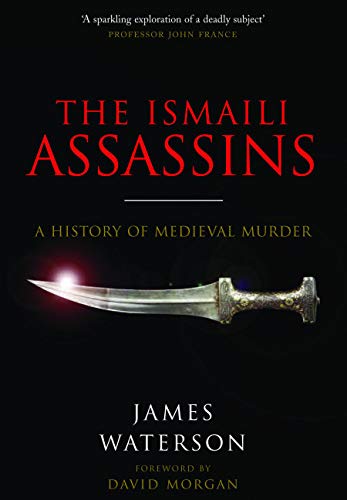
The Ismaili Assassins were an underground group of political killers who were ready to kill Christians and Muslims alike with complete disregard for their own lives. These devoted murderers were under the powerful control of a grand master who used assassination as part of a grand strategic vision that embraced Egypt, the Levant and Persia and even reached the court of the Mongol Khans in far away Qaraqorum. The Assassins often slayed their victims in public, cultivating their terrifying reputation. They assumed disguises and their weapon of choice was a dagger. The dagger was blessed by the grand master and killing with it was a holy and sanctified act poison or other methods of murder were forbidden to the followers of the sect.Surviving a mission was considered a deep dishonor and mothers rejoiced when they heard that their Assassin sons had died having completed their deadly acts. Their formidable reputation spread far and wide. In 1253, the Mongol chiefs were so fearful of them that they massacred and enslaved the Assassins women and children in an attempt to liquidate the sect. The English monarch, Edward I, was nearly dispatched by their blades and Richard the Lionheart’s reputation was sullied by his association with the Assassins murder of Conrad of Montferrat.The Ismaili Assassins explores the origins, actions and legacy of this notorious sect. Enriched with eyewitness accounts from Islamic and Western sources, this important book unlocks the history of the Crusades and the early Islamic period, giving the reader entry into a historical epoch that is thrilling and pertinent.
User’s Reviews
Editorial Reviews: Review An inherently fascinating, deftly written, and impressively informative read from beginning to end, “The Ismaili Assassins: A History of Medieval Murder” will prove to be an enduringly popular addition to both community and academic library Medieval History collections and supplemental curriculum studies lists.Midwest Book Review About the Author James Waterson was born into a London family of Royal Marines and Paratroopers. Fatherly advice however steered him away from a military career and into academia and teaching. He is a graduate of the School of Oriental and African Studies, University of London and received his Masters degree from Dundee University. He worked and taught in the United States and China for a number of years and now divides his time between the Middle East and Italy whilst trying to makes ends meet. The Ismaili Assassins is his second book and grew out of his travels in Iran. His first book, The Knights of Islam, a history of the slave soldiers of Islam, was published in 2007 by Greenhill Books. He continues to work at producing a life of the Crusader Bohemond of Taranto but knows it will never be finished.
Reviews from Amazon users which were colected at the time this book was published on the website:
⭐Legend has it that high inn the hills of Persia there existed lush castles with fragrant gardens and beautiful women. The fountains and water falls spouted forth milk and wine. Potential assassins were supposedly drugged with Hashish and when they awoke , it was in one of these pleasure gardens surrounded by beautiful women. This was paradise and the assassin would do anything to get back there. To die while assassinating your target wass the quickest way there. Of course all for this is lies it did not really go down that way, although there was proselytizing on the part of the old man of the mountain . To be surre the assassins enjoyed a reputation of being able to kill any one at anywhere and any time. Even the European leaders were spooked. The book gives an excellent history of this secretive group. Going all the way to the beginning of Islam when there was a dispute about succeeding Mohammed after his death all the way through to the Turkish invasions and the mongol hordes. You got both the past and the context. This will help you understand who the assassins were and why and how they were forced to change.Starting with the death of Mohammed there was a controversy about who should succeed him. Should they choose his cousin and son in law Ali or should they choose Abu Bakr. In the end Abu Bakr was chosen. Ali would become a caliph after Abu Bakr passed on and two more would take his place and die. Ali himself died violently. As Islam itself spread they conquered Syria,Babylon and Persia. Their goal was not to convert people but rather let them be infidels and live off the tax or jizzya money. Many people did convert. Many converts were not happy with the way they were treated especially in Persia. This would help give rise to the Abbassid dynasty, a rival to the Sunni Ommayad Dynasty. Indeed many smaller non arabic groups would adopt Islam, or variations there of as a way to bolster ethnic identity. With in Persia there would rise many independent statelets trig to run their own show,As Islam spread and the conflict between Sunni and Shiite got worse. Islam would take over North Africa, and Egypt along with the Holy Land and al thew way to the border with China. Ismael, son of Ali would die in the battle of Karballa. THe arabs would also resort to employing Turkish warrior slaves to fight their battles for them. Among these groups were the Seljuks and the Mamelukes. Shia Islam would break off into more sercts likes the twelve’s and the nizari. THe assassins were connected with the Nizari.The Seljuks would eventually adopt Islam, Sunni Style and begin oppressing the Persians. Hassan Ibn Sabbah would proselytize and gather people form minority groups and eventually assume control after Alamut. Other fortresses were soon to follow. THe Sunni establishment strove to wipe out the assassins as did the Turks. The Assassins would kill one or more leaders and throw everything into chaos. They even managed to kill Nizam al Malk.Turkish power was not falling and the Mongols entered the scene. They would fight with the Khwarazim Turks and the assassins were allies with the mongols at first. Later when the Khrarazin were destroyed and the Mongoils made their way to Baghdad, under Helegu Khan , would later betray the assassins and force them to leave their castles, in Persia. After that they remained in Syria as vassals to the Turkish warlord there. Eventually when they lost their forts they fled to places like Afghanistan, Pakistan and India.One of the least known groups that is shrouded with mystery . This book does a good job of guiding you throuhg it and demystifying everything. This book is well researched and very absorbing .
⭐Although the subject matter is a timely and riveting topic in today’s age of terrorist suicide assassins, this work on the origins and medieval impact of the Ismaili sect of assassins somehow doesn’t provide the punch and information one might expect. The author includes a useful timeline and lists of rulers in the Middle East, and the presentation of the origins of the Assassins in the Shia-Sunni conflicts is valuable in assisting the reader in obtaining good background, but then the book meanders and the lack of continuity works against its theme. I was left with a sense of having read a tome that went on and on, but never really got into the details of what really happened. Perhaps some of this is due to the lack of source material, but if so, there was no such indication. The Ismaili Assassins rose to a position of power in the Middle East before the 1st Crusade, actually even enabling the 1st Crusade’s conquest of Palestine. The Assassins were suicide assassins whose normal weapon was a dagger, and the assassin was expected to die following a successful assassination. That this type of action can be considered a model for current events is beyond question, but scholars (such as the author) are loath to develop the political heritage from the Assassins to the modern suicide bombers. Most of the Assassins’ murders were of other Muslims for various and sundry reasons, and clearly many were political (as differentiated from religious) acts to foster the growth and power of the sect. The power of the Assassins was broken by the Ilkhan Mongols who adopted a policy of complete eradication of the sect and who captured a number of the Assassins’ strongholds, exterminating all those found within. Only a remnant survived to become the forerunners of the modern and peaceful Ismaili sect today headed by the Aga Khan (Ali Khan became the husband of Rita Wayworth.) In political terms, the Assassins were only brought down by application of the harshest means — something modern Western powers cannot and will not be able to stomach. The discussion of the interplay between the Assassins and Saladin was important and interesting, but lacking in many details. Fortunately I possessed sufficient knowledge of the period to put the author’s coverage into perspective, but doubt that will be the case for the casual reader. Even so, the scanty treatment of many events in the Middle East at the time left a certain unconsolidated feeling and sense of incompleteness. Compared to Lewis’s 1967 work, this volume suffers somewhat. It is difficult for me to put my finger on exactly the cause, but perhaps the book was simply too short for its subject and given the range of 600 years it covers, quite possibly another 150 pages were needed. In short I recommend this book to any reader interested in Islam and the modern conflict between radical Islam and the West. The work takes a little bit of “slogging through”, but the information contained within is worth the effort. Then I recommend reading Lewis, “The Assassins: A Radical Sect in Islam”, Daftary, “The Ismailis: Their History and Doctrines”, and Al-Tabari, “The Early Abbasid Empire.”
⭐Interesting topic, with plenty of information, but the writing style, the presentation of the information, and lack of flow was very off-putting. I really wanted to like this book, but as I struggled to ignore the distractions, I had to admit that while the information was good, the writing was not a flaw that I could surmount.
⭐An interesting history of the Assassins and the history swirling about them. Not all that different from Bernard Lewis’ some five decades ago but still interesting for all of that.Recommended for those interested in Medieval Eurasian History and Religious HistoryRating 4 out of 5 stars.
⭐A fascinating exclamation of an area of middle eastern history that actually explains a great deal of the turmoil that still exists
⭐interesting easy to read
⭐This item has met my desired needs, and has been greatly useful to me.Thank you very much.William Arnold
⭐excellent
⭐Considering the literature surrounding the Assassins, this is pretty good.
⭐The book is really good. I admire simple language, in wich this book is written. You don’y have to be historian to understand what is happening and what the book is about. I’m not from UK or USA so I don’t know very well the language and I have to translate some words, but it isn’t boring. That’s because of the writing style. I recommend this book to the fans of historical Assassin’s.
⭐Really interesting read. Well researched and very clearly written. Not finished it yet but anticipate reading it again & again.
⭐Very enjoyable.
⭐Well researched, well written, well worth reading.
Keywords
Free Download The Ismaili Assassins: A History of Medieval Murder in PDF format
The Ismaili Assassins: A History of Medieval Murder PDF Free Download
Download The Ismaili Assassins: A History of Medieval Murder 2019 PDF Free
The Ismaili Assassins: A History of Medieval Murder 2019 PDF Free Download
Download The Ismaili Assassins: A History of Medieval Murder PDF
Free Download Ebook The Ismaili Assassins: A History of Medieval Murder