Ebook Info
- Published: 2013
- Number of pages: 242 pages
- Format: PDF
- File Size: 1.49 MB
- Authors: Raymond M. Smullyan
Description
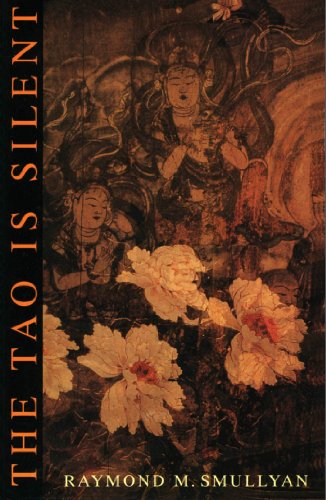
The Tao Is Silent Is Raymond Smullyan’s beguiling and whimsical guide to the meaning and value of eastern philosophy to westerners.”To me,” Writes Smullyan, “Taoism means a state of inner serenity combined with an intense aesthetic awareness. Neither alone is adequate; a purely passive serenity is kind of dull, and an anxiety-ridden awareness is not very appealing.”This is more than a book on Chinese philosophy. It is a series of ideas inspired by Taoism that treats a wide variety of subjects about life in general. Smullyan sees the Taoist as “one who is not so much in search of something he hasn’t, but who is enjoying what he has.”Readers will be charmed and inspired by this witty, sophisticated, yet deeply religious author, whether he is discussing gardening, dogs, the art of napping, or computers who dream that they’re human.
User’s Reviews
Reviews from Amazon users which were colected at the time this book was published on the website:
⭐I was skeptical as I first began to read the short story (or perhaps essay) ‘Is God a Taoist’. But it hit me like a ton of bricks with a few simple words ‘Where do you end, and the rest of the universe begin?’. And by the time I had finished reading the essay i began to see the world differently then my Catholic School Boy eyes had ever seen it. I immediately rushed out to buy the book, to learn more about this mysterious religion called ‘Taoism’. After I read the rest of ‘The Tao is Silent’ I rushed out to get and to read ‘The Tao Te Ching’ and other books on the subject.Now several years later I can not tell you how much differently I see the world. This book taught me the most important lessons that you will ever need to know.Embrace simplicity, Love the way thing are, and listen to your dog.
⭐I didn’t finish reading this. I found the first couple chapters trite and saccharine. The author tries too hard to package the ineffable into bite-size morsels of yummy delight for an American palate
⭐This book is simultaneously hilariously witty and disarmingly profound. It’s easy and fun to read effortlessly expands my sense of wisdom
⭐This is a lovely book. It explores Taoism with the a lighthearted playfulness which is just a joy to read. I’ve laughed out loud a number of times already. My only criticism is that the author gets a bit combative with his imaginary conversations with idealized people. You can tell he loves to argue (but he does it playfully).
⭐My favorite book. Probably hands down one of my favorite book of all time.
⭐I’d like to preface with two caveats. First, a 4.5/5 rating would have been more accurate as to my opinion on the book, but there being no option, I went with a 4. Second, I have only made my way through the first section, but have acquired enough of an opinion in the process that I believe a review is justified.Anyhow, I will begin with the bad and work toward the good.I only have a few very minor quibbles with the book. First, there is a relatively high rate of typos in this book, enough to be distracting. This includes a misspelling of “Taoist”, misplaced commas in relation to quotes, and inverted quotation marks (rightward facing when they should be leftward and vice versa).Second, while usually very witty and smooth with his words, Smullyan occasionally slips into awkward phrasings; sometimes, too, his Spartan writing style seems taken too far, and a point or two seems to be missing. In the chapter, “The Tao Does Not Talk”, for example, he begins by stating that the Tao, indeed, does not talk. Later, though, he explains that, his actions and words being caused or coming from the Tao, when he talks to the Tao it is really the Tao talking to itself. Thus, it both does and does not talk. Meant to appear as a clever, if sophistic, paradox, the effect is instead rather muted. This is because he never actually explains why or in what way the Tao is silent (after all, his words come from it), only that it is, making the paradox decidedly uneven and not very remarkable at all (contrary to his claim).The third point I am hesitant to include, because I am not sure whether I view it more as a drawback to the book or a drawback to myself. Namely, some of Smullyan’s arguments are weak or insufficiently explained. Yes, I know, I know, this is not a book of arguments. However, I find that, although Smullyan emphasizes that the Tao cannot be proven to exist or strictly analyzed, he still presents much of the book in a way that tries to convince the reader of something or other about Taoism. Indeed, in some places, he openly and explicitly admits to presenting an argument, usually against logical positivism or Western ways of thinking in general. All that to say, his arguments, persuasions, explanations — what have you — sometimes come across as weak. While I may be “missing the point” in thinking about the ideas he presents in such a way, it still leaves the book unsatisfactory at moments. An example: in, “The Tao is Not Arrogant”, Smullyan kindly disagrees with those who label “arrogant’ any who make a claim as to how others ought to act, stating that never does the person making such a claim admit to following his own advice. This does not take away the fact that a good portion of the people who would call such a person “arrogant” do so because he claims to have absolute knowledge on the matter, not because he claims to follow his own advice perfectly. This Smullyan does not address.Now, to the good.The Tao is Silent is a delight to read. It is witty, clever, profound, discursive as in the best of daydreams, full of self-reference and paradox, redolent of a more Eastern, Taoist style yet still suggestive of a Western writer, with quips and quotes, objections and thoughts from both traditions. Its chapters range from very short to short, each building on the last but wandering just far enough to seem like a separate thought. Cohesive in tone and spirit, yet diverse in subject matter, the book is not quite a thesis and not quite a compendium, but more an almost-interdependent and very much webbed series of mini-essays and essays that together amount to a wonderful picture of Taoism, and all of its various manifestations and impacts.While not a discourse on Taoism, the book gives a good taste of it, and provides interesting comparisons and connections to other traditions and schools of thought. Never lacking in fictional dialogues, interesting anecdotes, wonderful allusions, or relevant quotes, The Tao is Silent provides a layered, vibrant, often humorous and ironic presentation about the ideas of Taoism. Always ready to repudiate narrow-minded Western thinking, yet still delightfully fond of it, Smullyan is one both supremely logical and averse to logic-ifying anything and everything under the sun. Never judging, but always challenging, Smullyan always leaves the reader guessing as to what subject or concept he will next give a fresh and insightful perspective on.Don’t mistake the book for a foolproof argument, an apologetic dissertation, in support of Taoism. Indeed, it is full of holes and unfinished thoughts, but in a fully intentional way, delighting in paradox and mystery rather than extinguishing or discounting them. As a whole, it is a book of suggestion — suggestion of ideas, that is — one that gets the reader to entertain initially foreign but surprisingly rewarding ways of thinking about life, the universe, and everything. It is trying to knock a hole in the false ceiling of logical scrutiny in the reader’s mind, allowing the sunlight of unrealized appreciation and perspective on life to stream in.I am only a third of the way through the book, but I can already count it a favorite. Highly recommended.
⭐Professor Smullyan is a great writer. It is captivating the way he writes. He is funny, clever, witty. A joy to read. This book is his personal account on the Tao. This book is a great way to want to learn less about the Tao and want to experience it more.
⭐Smullyan has written a superb introduction to Chinese Taoist thought, that also has important things to say about some of the philosophy of religion issues that we worry about here in the West. Smullyan is occasionally a bit too “cute” for my taste in his writings, so I gave this 4 stars instead of 5. A marvelous, kind-hearted, gentle book!
⭐Can’t remember where I saw this as described as essential reading, perhaps a stoicism resource or a practical self-help site. In a way it puts a book under unfair pressure when it’s been singled-out as being particularly good or revolutionary, since you can find yourself halfway through it wondering when it’s going to suddenly become so incredible and life-changing.This however didn’t really move me either way and was a bit of a slog to get through. Doesn’t take the author long to “describe” the notion of Tao (as much as you can describe it anyway) so after the initial interest of such a curious thing wore off, each of the short chapters just seemed to be the author being a bit indulgent on as many different aspects of it as he could think up.
⭐Smullyan’s book on the Tao is probably one of the best introductions of Taoism for those who have a more intellectual predisposition. It is a good and entertaining book, and the author has clearly grasped the fundamentals of Taoism. Yet the book is lacking in one of the fundamental issues of Taoism, which is spirituality. Although Taoism may give the impression being a fairly loose philosophy, the spiritual goal is very much present and is fundamental for its full appreciation. The author tackles this side of the Tao recurring frequently to Zen, which although influenced by Taoism, is a very different approach to spirituality.
⭐Lightweight.
⭐I really appreciate the efforts of the author to publish a book about taoism but this was the first book in my life that I stopped reading after first few pages. I bought this book with the hopes of learning something new and deepening my understanding of the Tao but it turned out to be nothing more than personal immature writings of a man who is very enthusiastic of what he describes as “Tao”. He spends pages describing what Tao is and how Western culture is bad and terrible and so on, which is actually totally against the idea of Taoism. The writing is poor and the book is full of sentences with exclamation marks, that could as well be written in all capital letters like in instant messaging. The author is apparently trying to prove something to others or probably himself but fails to do so by throwing ideas, thoughts and personal judgements all over the place.I believe the following paragraph opening the chapter of The Tao is a Mysterious Female would summarize what I mean:”So! The Tao is a mysterious female! No wonder I love it so much! What could be more enthralling than a mysterious female? A mysterious female is delightfully enchanting for two reasons: (1) She is a female; (2) she is mysterious. …. Good God, what could be more divine? … That is to say, a mysterious female is more than twice as attractive as either a female who is not mysterious or a mysterious something which is not female. So it is no wonder I love the Tao so much!”And he ends the chapter by concluding that his mother is a mysterious female as well…YAY, good for you! (*Facepalm*)Read for fun but certainly not as an introduction to Taoism. It could be worth reading to see “how Taoism should never be explained and understood”.
⭐
⭐Somewhat mystical philosophy clearly explained in a practical sort of way.
Keywords
Free Download The Tao Is Silent in PDF format
The Tao Is Silent PDF Free Download
Download The Tao Is Silent 2013 PDF Free
The Tao Is Silent 2013 PDF Free Download
Download The Tao Is Silent PDF
Free Download Ebook The Tao Is Silent