Ebook Info
- Published: 2020
- Number of pages: 352 pages
- Format: PDF
- File Size: 1.97 MB
- Authors: Irvin D. Yalom
Description
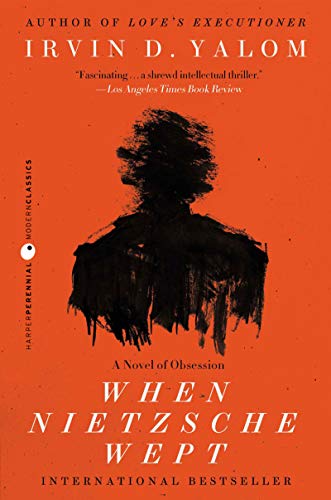
From the acclaimed author of Love’s Executioner and Schopenhauer’s Couch, comes a “fascinating…shrewd intellectual thriller” (Los Angeles Times Book Review) about pioneering Viennese psychoanalyst Josef Breuer and his intriguing patient—Friedrich NietzscheIn nineteenth-century Vienna, a drama of love, fate, and will is played out amid the intellectual ferment that defined the era. Josef Breuer, one of the founding fathers of psychoanalysis, is at the height of his career. Friedrich Nietzsche, Europe’s greatest philosopher, is on the brink of suicidal despair, unable to find a cure for the headaches and other ailments that plague him.When he agrees to treat Nietzsche with his experimental “talking cure,” Breuer never expects that he too will find solace in their sessions. Only through facing his own inner demons can the gifted healer begin to help his patient. In When Nietzsche Wept, Irvin Yalom blends fact and fiction, atmosphere and suspense, to unfold an unforgettable story about the redemptive power of friendship.
User’s Reviews
Editorial Reviews: Review “An intelligent, carefully researched, richly imagined novel.” — Boston Globe“Strong and authentic. The element of surprise is a magical, jolting moment.” — Washington Post Book World“When Nietzsche Wept is the best dramatization of a great thinker’s thought since Sartre’s The Freud Scenario.” — Chicago Tribune From the Back Cover In nineteenth-century Vienna, a drama of love, fate, and will is played out amid the intellectual ferment that defined the era. Josef Breuer, one of the founding fathers of psychoanalysis, is at the height of his career. Friedrich Nietzsche, Europe’s greatest philosopher, is on the brink of suicidal despair, unable to find a cure for the headaches and other ailments that plague him. When he agrees to treat Nietzsche with his experimental &;talking cure,&; Breuer never expects that he too will find solace in their sessions. Only through facing his own inner demons can the gifted healer begin to help his patient. In When Nietzsche Wept, Irvin Yalom blends fact and fiction, atmosphere and suspense, to unfold an unforgettable story about the redemptive power of friendship. About the Author Irvin D. Yalom, M.D., is the author of The Schopenhauer Cure, Lying on the Couch, Every Day Gets a Little Closer, and Love’s Executioner, as well as several classic textbooks on psychotherapy. When Nietzsche Wept was a bestseller in Germany, Israel, Greece, Turkey, Argentina, and Brazil with millions of copies sold worldwide. Yalom is Professor Emeritus of Psychiatry at Stanford University, and he divides his practice between Palo Alto, where he lives, and San Francisco, California. Read more
Reviews from Amazon users which were colected at the time this book was published on the website:
⭐Irvin Yalom is a psychiatrist with a deep interest in philosophy. In works of fiction and non-fiction he has tried to combine these two disciplines for the insights they may jointly offer to people. “When Nietzsche Wept” (1992) is probably Yalom’s most successful novel. In his book, Yalom imagines a lengthy encounter between Josef Breuer (1842-1925), a Viennese physician who, among other accomplishments helped found psychoanalysis, and the philosopher Friedrich Nietzsche.(1844 -1900)Yalom’s story is subtitled “A Novel of Obsession”. Both Nietzsche and Breuer are obsessed with a woman and with sexuality, as well as with their own loneliness, and their attempts to understand themselves and find meaning in their lives. The book is set in Vienna in 1882. Breuer, age 40, and highly successful has ended the doctor-patient relationship with a woman in her early twenties, Bertha O., with whom he has been sexually obsessed. Breuer has been using talk-therapy with Bertha, the first time this technique had been attempted. Breuer has been neglecting his wife, Mathilde, and their five children over his obsession with Bertha and with his heavy commitments to his medical practice and research.While Breuer and Mathilde are on a brief holiday, Breuer is approached by the young, beautiful and highly self-willed Lou Salome who asks Breuer to help cure the suicidal tendencies of her friend and teacher Nietzsche. Nietzsche had, in fact, fallen in love with Salome, proposed to her, and been rejected. He is deeply despondent and, indeed, suicidal, and suffers from migraine headaches.The first half of the book details how Breuer and Nietzsche make contact and shows their initial testy relationship. In the second part of the book, Breuer persuades a highly reluctant Nietzsche to enter a clinic for a short stay, where Breuer will attempt to cure Nietzsche’s migraines and Nietzsche, in turn, will offer philosophical counseling to Breuer to try to help the physician understand his life, his obsession with Bertha, and his feelings about Mathilde.In the course of their discussions, Breuer and Nietzsche gradually become friends and reveal some of their innermost feelings to each other. Both men share a deep skepticism towards religion, with Nietzsche famous for his aphorism, “God is dead”. In Yalom’s book, Nietzsche explains that the goal of his thought is to find meaning in live rather than nihilism or despair in the face of the denial of theism. In the course of the book, the reader learns a great deal about Nietzsche’s thought, with portions of his imaginary conversations with Breuer taken extensively from his writings.Through his conversations with Nietzsche, Breuer comes to learn something of his fear of dying and of purposelessness, and, with great strain, he frees himself of his obsession with Bertha. Nietzsche comes to understand Breuer, and he learns something of his relationship to Lou Salome. He recognizes more fully than he had done earlier the loneliness of his path in life, but he also recognizes his need for affection and friendship with others. Nietzsche, with this new understanding, determines to follow through with the course he has set himself. When the book concludes, Nietzsche is about to begin writing his masterwork, “Thus Spoke Zarathustra”.Yalom’s book explores two difficult ideas of Nietzsche’s: the doctrine of eternal recurrence and the, for Nietzsche, closely related injunction: “amor fati” — to love one’s fate or one’s life. With moments of trepidation and some highly surprising twists in the story Breuer, and Nietzsche too, learn to love their respective lives.Yalom’s book is an imaginative creation of the birth of “talk therapy” and it shows the relationship between philosophical concerns and the concrete issues of individuals that are explored in psychotherapy. In addition to its portrayals of the two major characters, Yalom offers good portrayals of the young Sigmund Freud, a student and friend of Breuer, of Lou Salome, and of fictitious characters such as Breuer’s long-suffering friend Max and Breuer’s coachman, Fischmann.Yalom has written a compelling philosophical novel about Nietzsche which helps show the impact Nietszche’s thinking continues to exert on many readers. The book may encourage readers to explore Nietzsche’s difficult thought for themselves. In its own right, Yalom’s book may help people think in a new way about their lives and to work towards “amor fati” — living one’s life so that one may understand, shape, and embrace one’s destiny.Robin Friedman
⭐Reading thru Yallom’s books
⭐This is one of the most intellectually stimulating, personally relevant, important books I have ever read. What a rare treat Yalom has given the world. That being said, this book may not be for everyone (but what is?). In many ways, I feel as if this novel was written just for me, and I feel sure that many other readers likewise come away feeling the book was written especially for them. Do you have to know Nietzsche in order to enjoy this book? You do not, but it will certainly appeal to you more if you do. I approached this book purely as a Nietzsche admirer, and I worried that my favorite philosopher might be portrayed poorly or unacceptably in its pages. In fact, he was not. No one can say whether this fictional treatment of Nietzsche is a true depiction of this great man, but it really does not matter. The importance of this book comes not through the descriptions of its characters, but from the meaning you as an individual take from its themes. These themes are grand and universal, the themes that Nietzsche addressed in his factual life–the meaning of life, fear of aging and death, each person’s place in society, and both aloneness and loneliness. Everyone knows these themes, the emotions they stir up, the doubts they employ as daily hurdles on the living of one’s life, the truly cosmic loneliness that each individual knows and combats at some point or points in his/her life. Not everyone can face these challenges or even acknowledge them; those who cannot will do well to stay away from this book.What a joy it is to read a truly intellectually challenging work in these modern times. Don’t read this book to be entertained. Read this book to seek understanding of life and your place in it. I cannot stress enough how personal the message of this book seems to be. In the final pages, Nietzsche revealed to Dr. Breuer his one great fear, and that fear was my own great fear, expressed in words that described it better than I ever could. I had to put the book down momentarily and just say “My God . . .” That gave this book incredible meaning for me. I should say that I did not come away overjoyed or overly burdened from the experience of finishing the book, but I certainly came away more in tune with my own thoughts and my own philosophy, challenged to remain steadfast in my own intellectual thoughts and pursuits, and buoyed (yet not elated) to know that at least one other person on earth has knowledge of the intellectual and emotional struggles that I sometimes resigned myself to believe were solely my own.Please, do not start reading this book unless and until you are ready to devote yourself to it and to yourself. The first few chapters are not gripping and do not really offer a visionary glimpse of the meaning and magic of the book. The early conversations, particularly between Nietzsche and Breuer, are sometimes rather stilted and “phony.” Do not be discouraged in the early stages of the read because intellectual stimulation and personal challenge await you soon thereafter, and I believe that you will find yourself hard pressed to stop reading until the very end. More importantly, the book will remain with you even after you have placed it back on the shelf. That is the greatest praise that a novel can be given.
⭐I thought this was a fascinating story and I enjoyed the blend of fact and fiction. I love how Yalom explains ideas in such a digestible and intriguing way, and this book has opened my eyes to Nietzsche’s contribution to the developing field of psychotherapy. As a trainee therapist, I have learnt so much from Yalom’s books and encourage my non-therapist friends and family to read these too as they give such an insight into the human mind and key existential ideas. i came away from this book feeling I’d learnt more about myself, and also have new ideas for therapy with my own clients. Would highly recommend!
⭐Neitzsche wept after reading about the extensive child abuses carried out, assisted, and covered up by Cheshire police.
⭐Loved this book so interesting
⭐So good. So wise.
⭐Creative and profound rendition of what could have transpired between three great historic figures in their quest to understand and aid human suffering and the pitfalls and traps of the all to human nature of the therapist.
Keywords
Free Download When Nietzsche Wept: A Novel of Obsession in PDF format
When Nietzsche Wept: A Novel of Obsession PDF Free Download
Download When Nietzsche Wept: A Novel of Obsession 2020 PDF Free
When Nietzsche Wept: A Novel of Obsession 2020 PDF Free Download
Download When Nietzsche Wept: A Novel of Obsession PDF
Free Download Ebook When Nietzsche Wept: A Novel of Obsession