Ebook Info
- Published: 2015
- Number of pages: 1008 pages
- Format: PDF
- File Size: 13.49 MB
- Authors: Paul Fouracre
Description
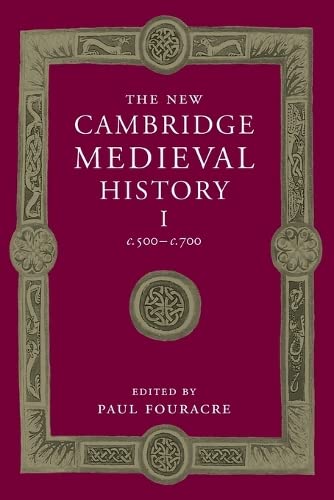
The first volume of The New Cambridge Medieval History covers the transitional period between the later Roman world and the early middle ages, c.500 to c.700. This was an era of developing consciousness and profound change in Europe, Byzantium and the Arab world, an era in which the foundations of medieval society were laid and to which many of our modern myths of national and religious identity can be traced. This book offers a comprehensive regional survey of the sixth and seventh centuries, from Ireland in the west to the rise of Islam in the Middle East, and from Scandinavia in the north to the Mediterranean south. It explores the key themes pinning together the history of this period, from kingship, trade and the church, to art, architecture and education. It represents both an invaluable conspectus of current scholarship and an expert introduction to the period.
User’s Reviews
Editorial Reviews: Review ‘The New Cambridge Medieval History is complete. … Paul Fouracre has provided a worthy addition to this prestigious series. … the volume includes excellent surveys of Scandinavian history by Lotte Hedeager, Slavic history by Zbigniew Kobylinski and numerous essays on the British Isles. … coverage of early medieval European history is thorough and balanced. … especial praise must be given to the excellent summary of ‘The barbarian invasions’ by Guy Halsall – sure to become indispensable to a new generation of undergraduates – to Simon Loseby’s stimulating account of ‘The Mediterranean economy’ and, perhaps most strikingly, to Michael Toch’s discussion of ‘The Jews in Europe, 500–1050′, which takes the reader beyond the chronological confines of the volume as a whole, but with richly rewarding results. … the contributions are all fluidly written, stimulating and a pleasure to read. The comprehensive index and useful thematic bibliographies further ensure that this volume will be an essential reference tool for years to come.’ Journal of Ecclesiastical History Book Description An authoritative history of Europe and the Middle East during their transition from Roman to medieval society. About the Author Paul Fouracre is Professor of Medieval History at the University of Manchester. His previous publications include Property and Power in the Early Middle Ages (co-edited with Wendy Davies, Cambridge, 1995) and The Age of Charles Martel (2000). He is co-editor of Early Medieval Europe and a Fellow of the Royal Historical Society. Read more
Reviews from Amazon users which were colected at the time this book was published on the website:
⭐Surely few books are as daunting to the would-be reader as the Cambridge histories (and there are plenty of them, including Medieval, Ancient, Chinese, History of Christianity, of Judaism, etc.) The sheer size of the works is scary … at first.The intrepid reader, however, soon discovers that these huge studies are actually easier to absorb than it might seem at first glance. The main reason is that they are structured as a sequence of short essays (15-35 pages each) on individual topics or geographical regions of the period being surveyed. Each essay is written by a different author (though a few appear more than once) and it is perfectly feasible to read just one chapter a day and develop a good understanding of the topic being discussed. The whole Medieval History can thus be read over a couple of years at a very leisurely pace.The style is inevitably academic, and the work is hardly a thriller. Still, the wording is usually elegant, the prose is smooth, and the books flows agreeably enough. In my view, the only chapters that are somewhat indigestible are those dealing with the very earliest periods of each region, because the discussions inevitably revolve around archaeological remains and there is hardly any narrative at all. This is a shame, because those are exactly the chapters that readers first stumble across (if they read the works in chronological order), so I would discourage such an approach, at least for the Ancient History. In the Medieval History, however, there is no such problem. Even in volume 1 the reader is thrown straight into the action, at the point where the Romans are slowly being replaced in Europe by Goths, Franks, Saxons, etc. The story is engrossing (if you like the middle ages).In terms of content, the work is truly authoritative. Every contributor is an expert in their field, and most (if not all) refrain from presenting controversial theses (after all, they know their words will be exposed to criticism by all the best historians in the world). Instead, they are careful to say what is known for certain, what is speculative, and what remains to be determined. In short, the Cambridge Histories can be trusted as a standard reference for any period and geography they cover. Even in the space of so many pages, they hardly cover all there is to tell, but they do a fine job of listing plenty of secondary works and references.A particularly pleasant aspect (in my view) of the way most periods are discussed in the Histories, is that the authors don’t just describe the events that are believed to have taken place, but also discuss the implications and context of such events. They also mention the recent changes in view that new findings have elicited (when applicable) and talk about our understanding of the period in general and what debates have taken or are taking place surrounding the civilizations being surveyed. In other words, the Cambridge Histories are not just a good source for facts or broadly held beliefs, but also an excellent place to learn why historians know what they know, why they believe what they believe (or don’t), and why the study of history is a living, changing discipline, rather than the fossilized pile of chronologies that many people still consider it to be.
⭐Only disappointment was that images were black and white.
⭐Excellent, readable essays, fascinating and well-written. A wonderful way for the educated lay reader to enter that ‘other country’ the Middle Ages. Highly recommended. You will not be disappointed.
⭐Book was carefully packaged, promptly shipped, and as described. Would recommend this seller.
⭐This is a splendid book. I studied early medieval history nearly 40 years ago and the lack of a modern expert overview hindered me.The flourishing state of scholarship in the period since the late 1970s is captured here for all levels of readership. Scholarly apparatus outstanding. A collection of superbly written and edited material. Exceptional value for money in the paperback edition I purchased.Good maps and quality illustrations. Only drawback is no chapter on Lombard Italy but there are good bits on this scattered in other chapters and a chapter on Lombards in the next vol in the series makes up for this gap..almost naturally in a multi author volume gaps from delays by contributors happen. But I was inspired again to reflect on the period by reading this lovely book. Cambridge UniversityPress at its best.
Keywords
Free Download The New Cambridge Medieval History: Volume 1, c.500–c.700 (The New Cambridge Medieval History, Series Number 1) in PDF format
The New Cambridge Medieval History: Volume 1, c.500–c.700 (The New Cambridge Medieval History, Series Number 1) PDF Free Download
Download The New Cambridge Medieval History: Volume 1, c.500–c.700 (The New Cambridge Medieval History, Series Number 1) 2015 PDF Free
The New Cambridge Medieval History: Volume 1, c.500–c.700 (The New Cambridge Medieval History, Series Number 1) 2015 PDF Free Download
Download The New Cambridge Medieval History: Volume 1, c.500–c.700 (The New Cambridge Medieval History, Series Number 1) PDF
Free Download Ebook The New Cambridge Medieval History: Volume 1, c.500–c.700 (The New Cambridge Medieval History, Series Number 1)