Ebook Info
- Published: 2000
- Number of pages: 208 pages
- Format: PDF
- File Size: 6.02 MB
- Authors: Paul Fouracre
Description
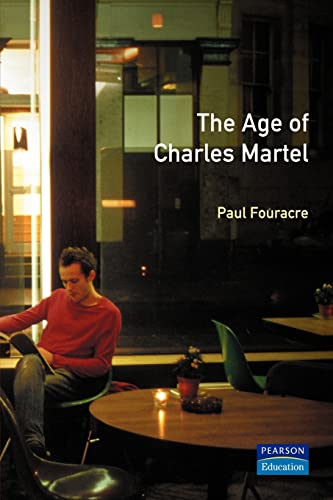
First glorified as the Saviour of Christendom and then vilified as an enemy of the Church, Charles Martel’s career has been written and rewritten from the time of his descendents. This important new study draws on strictly contemporary sources to assess his real achievements and offers new insights into a fascinating period.
User’s Reviews
Reviews from Amazon users which were colected at the time this book was published on the website:
⭐This book will expand your knowledge of Charles Martel, I would think, but I’m not a deep Martel scholar.
⭐This book is not exactly a biography of Charles Martel, the mayor of the palace and the real power in the lands of the Merovingian Kingdoms simply because not enough is known about the man to write such a book. Instead, this is about the times of a very successful and determined warrior and how he spent a quarter of a century campaigning almost every year against all of his enemies, both within and outside of the realm.The story told by the author, an expert and scholar on the Merovingian dynasty, is particularly interesting as he shows how the Frankish Realm was evolving. He also explains the mixed and undeserved reputation of Charles Martel.He was not the great seculariser of the Church’s possessions. However, like others before and during his times, he did remove abbots and bishops that had sided against him and gave some of the land of their abbeys and bishoprics as rewards to his followers.According to the author, he did not revolutionise the Frankish army and make it into an army of heavy cavalry and an all-cavalry force. However, the scope and number of his campaigns was such that it became a force of mounted warriors capable of fighting on foot or on horseback, and of covering great distances to campaign across the realm. Above all, Paul Fouracre shows Charles Martel to have been an extremely capable soldier and general who only lost one battle – his first one – and was never beaten again.What he also shows is the evolution of Frankish society and the power of assimilation it had over military elites, whether Frankish or not, when lead by such a successful warlord whose campaigns brought tremendous booty. The author also mentions the military organisation that backed such a militarised regime and how this regime had evolved after decades of civil war pitting one faction against another.Charles Martel’s survival against the odds – he was a bastard son who was not intended to reign – and triumph is perhaps the most remarkable feat of his warlike career, given the opposition he had to face and vanquish from all sides. Placed in such a context, the battle of Poitiers is just one small episode among others, although he and his successors made the most of the credit that such a defeat could bring them.One of the most interesting aspects was that he spent the last four years of his rule without nominating a Merovingian King and without being challenged, given how powerful and feared he had become. However, he did not proclaim himself or one of his sons as king, for reasons that the author explains rather well. It would in fact take another decade of revolts and warfare within the realm after his death before his sons managed to be secure and before the youngest one, Pepin had himself crowned King by the pope.Although not always easy to read, especially the first chapter on the Merovingian Kings, this is a great and illuminating piece of scholarship worth five stars. I would have rated it 4.8 out of five, had this been possible. Since this is not the case, I will settle for five.
⭐Why is the Kindle version so expensive?
⭐Since there is little biographical info on Martel,except for church propoganda(ala Medieval style),this book looks at the age as well as the man.After the breakup of the Roman Empire western Europe was even more destabilized with warring factions competing for the spoils.Martel emerges as the “strong man”.He was never a king but a “mayor of the palace” which means he was the top Warlord of western Europe.He cut deals with the popes that were beneficial to the church as well as the Frankish kingdom. The book refutes the propoganda that Martel stole church property and is currently “burning in hell”in fact he helped the church grow and as far as his bad qualities go he is as”good as the best and no worse than the worse”. So we need not worry about the “Hammer” going ouch(in hell) every time someone reads an an acoount of him stealing church property.I don’t think anyone suffers anyway from the self justifying abstaction of the “verdict of history”.One has to be aware of the times the person lived in and this book gives a 5 star account of Charles and his times.His victory as Tours is represented in the book as just another battle not much different than his numerous ones with the (christianized?) Saxons.In fact Tours may have been small scale compared to them.
⭐This book is not exactly a biography of Charles Martel, the mayor of the palace and the real power in the lands of the Merovingian Kingdoms simply because not enough is known about the man to write such a book. Instead, this is about the times of a very successful and determined warrior and how he spent a quarter of a century campaigning almost every year against all of his enemies, both within and outside of the realm.The story told by the author, an expert and scholar on the Merovingian dynasty, is particularly interesting as he shows how the Frankish Realm was evolving. He also explains the mixed and undeserved reputation of Charles Martel.He was not the great seculariser of the Church’s possessions. However, like others before and during his times, he did remove abbots and bishops that had sided against him and gave some of the land of their abbeys and bishoprics as rewards to his followers.According to the author, he did not revolutionise the Frankish army and make it into an army of heavy cavalry and an all-cavalry force. However, the scope and number of his campaigns was such that it became a force of mounted warriors capable of fighting on foot or on horseback, and of covering great distances to campaign across the realm. Above all, Paul Fouracre shows Charles Martel to have been an extremely capable soldier and general who only lost one battle – his first one – and was never beaten again.What he also shows is the evolution of Frankish society and the power of assimilation it had over military elites, whether Frankish or not, when lead by such a successful warlord whose campaigns brought tremendous booty. The author also mentions the military organisation that backed such a militarised regime and how this regime had evolved after decades of civil war pitting one faction against another.Charles Martel’s survival against the odds – he was a bastard son who was not intended to reign – and triumph is perhaps the most remarkable feat of his warlike career, given the opposition he had to face and vanquish from all sides. Placed in such a context, the battle of Poitiers is just one small episode among others, although he and his successors made the most of the credit that such a defeat could bring them.One of the most interesting aspects was that he spent the last four years of his rule without nominating a Merovingian King and without being challenged, given how powerful and feared he had become. However, he did not proclaim himself or one of his sons as king, for reasons that the author explains rather well. It would in fact take another decade of revolts and warfare within the realm after his death before his sons managed to be secure and before the youngest one, Pepin had himself crowned King by the pope.Although not always easy to read, especially the first chapter on the Merovingian Kings, this is a great and illuminating piece of scholarship worth five stars. I would have rated it 4.8 out of five, had this been possible. Since this is not the case, I will settle for five.
Keywords
Free Download Age of Charles Martel, The 1st Edition in PDF format
Age of Charles Martel, The 1st Edition PDF Free Download
Download Age of Charles Martel, The 1st Edition 2000 PDF Free
Age of Charles Martel, The 1st Edition 2000 PDF Free Download
Download Age of Charles Martel, The 1st Edition PDF
Free Download Ebook Age of Charles Martel, The 1st Edition