

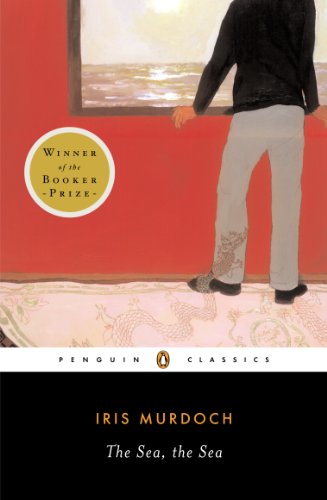
Ebook Info
- Published: 2001
- Number of pages: 530 pages
- Format: PDF
- File Size: 2.34 MB
- Authors: Iris Murdoch
Description
Winner of the prestigious Booker Prize—a tale of the strange obsessions that haunt a playwright as he composes his memoirs Charles Arrowby, leading light of England’s theatrical set, retires from glittering London to an isolated home by the sea. He plans to write a memoir about his great love affair with Clement Makin, his mentor, both professionally and personally, and amuse himself with Lizzie, an actress he has strung along for many years. None of his plans work out, and his memoir evolves into a riveting chronicle of the strange events and unexpected visitors-some real, some spectral-that disrupt his world and shake his oversized ego to its very core.For more than seventy years, Penguin has been the leading publisher of classic literature in the English-speaking world. With more than 1,700 titles, Penguin Classics represents a global bookshelf of the best works throughout history and across genres and disciplines. Readers trust the series to provide authoritative texts enhanced by introductions and notes by distinguished scholars and contemporary authors, as well as up-to-date translations by award-winning translators.
User’s Reviews
Reviews from Amazon users which were colected at the time this book was published on the website:
⭐Hold on and keep yourself afloat for a stormy ride on the northwest coast of England. Shakespearean Actor and Director Charles Arrowby has left the glamorous theater world of London to retire in a damp drafty home by the sea, presumably to write his memoir. As the narrator/protagonist, Charles Arrowby rants with the tireless exasperation of a self-obsessed madman. He craves solitude, yet a surreal cast of characters from his former life in theater appears and reappears, coming and going like the ebb and flow of a churning sea. The people who inhabit Charles’ life include his loathsome cousin James, an English Military Intelligence Officer, numerous love interests from the theater crowd and their male sidekicks who play supporting roles with startling aplomb. The surreal weaving of these characters within this loose, rambling story takes emotional violence to its highest level. Every character, it seems, has, at one time or another, been very angry with Charles and has an axe to grind. Two former gal pals, Lizzie and Rosina will do anything to win over Charles and make him her husband, at last! His response is to exact bombastic revenge upon them.The plot thickens and human entanglements grow more gnarly and grim when Charles discovers that Hartley, the love of his life from an unconsummated childhood crush, happens to live only minutes away in a charming cottage with her husband. Charles decides that his youthful love for Hartley is what kept him from getting married all these years and he is determined to win her back. The only problem is Hartley is married and is not interested in being rescued by the eager, adoring Charles. Still, he persists in his pursuit with passionate entreaties and declarations of love, launching into ridiculous soliloquies that go on and on and on. To make the matter even more improbable, Hartley has aged, albeit not well, and is not alluring intellectually, emotionally or physically. If anything, she lives up to the moniker assigned to her as the bearded lady. Charles kidnaps Hartley and imprisons her in a small stuffy upstairs bedroom in his cottage. Down below the four men who are visiting Charles, squatting no less, in the semi-squalor of the cottage, implore Charles to release Hartley. The bandying about of the four men who try to talk reason to Charles is among the most ludicrous and long-winded scenes to have ever appeared in literature.The Sea, the Sea is an astonishing work in that Iris Murdoch’s genius as a writer shines forth as surely as the warm sun that appears in full force above the darkening sea. No other writer uses adjectives as rhythmically as Murdoch, rarely inserting anything as mundane as a comma in between her endless description of the clouds and the water. Her repetitive use of words for emphasis is often tedious, but hardly distracts from her masterful storytelling that unmasks all of the characters for who they really are with remarkable precision and fluency. Everyone is thoroughly unlikeable. The author does little to reveal goodness in anyone. Huge irreconcilable flaws overtake their humanity. Every attempt to be civil or courteous is cutthroat, steeped in verbal violence. But none of this matters. Murdoch succeeds in creating a story that compels, shocks and mesmerizes the reader to be riveted by the insanity until the bitter end. You might find yourself drowning in the endless details and unnecessary detritus, but don’t give up. Murdoch wisely imparts a powerful caveat to creative talents, especially actors, to never abandon the ability to work in live theater. Never stop acting! Never stop directing! In his quest to retire by the sea, Charles Arrowby creates his own personal theater, a dramatic hell replete with childish subplots and the pathetic ministrations of fools. Arrowby’s life becomes the theater of the absurd, where no one finds redemption. Ultimately, there is much ado about nothing. Ballyhoo!!
⭐Even though I gave this five stars, that does not mean that everyone will like this book.You are more likely to enjoy this book if you can enjoy a book with long, wandering descriptions, stream of consciousness such as Ulysses, or a meandering through someone else’s life,. . I think that older people will understand the book better than younger people.If you need a plot, excitement, or need to understand what is going on at all times, this is not the book for you.I had to interrupt my reading of this book several times. I read it on Kindle and highlighted, not the great passages, but items that seemed significant in terms of understanding the characters and what was going on. In fact, after reading about 100 pages, I went back and skimmed/highlighted. This was helpful, especially since my reading was interrupted. I read the last 10% after a break of almost 5 months and was able to pick right up on the story. It seems that this would be a good way to read the book: read a bit and put it aside, then go back and read a bit more, or flip through the earlier parts and re read. If you are the type of person who thinks about life, and meaning, then you will enjoy this. I don’t think I would have enjoyed this when I was younger, although, who knows? I have gone back and read many books that I read in my 20s and they seem to be different books. Maybe this book would be the same: one book for a young person and another for an older person. If a young person can get through it, it might be very educational and even helpful- not as a moral guide, but to put perspective on one’s own life as it is lived.I’m going to make a stab at saying what this book is about. There are several summaries of the “plot”. The interesting thing is that many of them vary except in the basic outlines. That is because one’s reaction to this book is going to vary according to the level at which one reads it. I have only a superficial acquaintance with philosophy or mythology and several other areas of knowledge. I sense that there are many levels of understanding this book and no one will have access to all of them. What I do have is a broad experience of life, so that is what I was able to understand in this book.What I think is going on here is that Charles is talking about parts of his life, with an emphasis on his obsession with Hartley, a woman whom he loved as a young man, and whom he may still love. That is the superficial story. Meanwhile, other people come and go in his life. Many of them are also obsessed, often with him. Sometimes they are obsessed with other aspects of life: the theater, Buddhism, patriotism. Each time they come into his life, he thinks differently about them and often they are thinking differently about him. Unlike many novels, in this book, many of the “minor” characters have a character arc. The the arc is not like one that is satisfying in a Hollywood movie, it is an arc that is more closely aligned with the arc of one’s life. It can be satisfying, or surprising, or stupid.As different things happen in his life, he reflects upon his relationship with Hartley differently,which serves to inform us,not so much about Hartley, as about the lead character and his own development. In the same way, the sea is not an objective inanimate object, but Charles’ relationship with the sea reflects his mood and his thoughts. Charles also has many relationships with others. They start out at one point and continue to grow and develop in their own, separate lives. As they develop, they relate to him differently and he also changes his opinion about them, sometimes based on a re-thinking of past events, and sometimes in reaction to changes in that person. In the end, perhaps there is an answer, or perhaps it is random and doesn’t make a neat story-like life.Nabokov once said something along the lines of that one needs to read a novel at least twice to truly understand it. This is one of the books that will bear re-reading and will probably give gifts on a second, third, or even fifth reading. It is great literature, and a great experience, but not for everyone.
⭐We chose this as a recent book club title following a radio programme celebrating Murdoch’s literary achievements. ‘The Sea The Sea’ was heralded as one of her best – a Booker Prize winner no less. Surprisingly, none of us managed to wade beyond the first 100 pages or so.I assume the author intended her protagonist to be seen as a tiresome, vain misogynist who had far too high an opinion of himself. Unfortunately, having the hero describe in gruesome detail the act of writing his autobiography paragraph by paragraph whilst rambling on ad infinitum about his romantic exploits and his complete lack of social graces does not make for an enjoyable read.The humour is sparse and hardly worth the effort of ploughing through pages of tedious drivel in search of an amusing line about lettuce or the perils of living beyond suburbia. The main character is pretentious to the point of absurdity – and sadly this is the lasting impression I shall carry with me whenever anyone mentions Iris Murdoch again.Avoid unless you’re a literary pseud who admires the emperor’s new clothes because other admirers think they are marvellous. This Booker prize winner stinks.
⭐Very dull stuff. Intellectual masturbation at its worst. All the characters are ugly inside or out (or both), the protagonist the worst of all. Murdoch cannot write as a man so Charles the narrator comes across as a querulous lesbian. Certainly his love for Hartley his dull, aging and desperately unsexy first love is unconvincing – men don’t think that way. And Murdoch’s tendency to stress ‘random’ words with ‘inverted’ commas is just ‘irritating’. Avoid.
⭐Wow! What a spectacular book. I found it difficult to enjoy this book for the first ten- fifteen percent as it is not an easy read by any manner or means and Iris Murdoch intersperses her psychological drama with much philosophising which sets the scene for her plot but requires stamina to proceed through the first few chapters. However once the plot is underway the book becomes spellbinding and the reader becomes engrossed in the life of Charles, a famous newly retired theatre director who moves to a remote, eerily atmospheric old house set on a promontory overlooking the sea. Charles is a famous director who has had a successful, theatrical life and lived with many women whose hearts he has broken but he is unable to forget his first teenage love, Mary Hartley who rejected him after their first, young and innocent love affair. The book explores the themes of jealousy, passion, vanity, magic, mysticism and spirituality as seen through the eyes of the selfish Charles whose capacity for self delusion is overwhelming and capacity for accurate self analysis is non existent.There are some moments of coincidence in the book which stretch credulity, for example, Charles left London to lead a quiet retirement and chose a place to live in a secluded house in a remote area of northern England where his first true love Mary Hartley just happened to live and whom he bumps into on his arrival in his creepily atmospheric house. Mary is now married to Ben, her husband of many decades but Charles convinces himself that she is unhappily married and deludes himself into thinking that he should release her from her supposedly desolate situation and captures her against her will so that they can start a new life together.Charles is insanely jealous of Ben but he is also irrationally jealous of his cousin James whom he has felt inferior to since their childhood. Murdoch examines and explores the psychology behind the different types of jealousy and Charles’ inability to face up to and identify the truth preferring to delude himself into concocting all sorts of scenarios and hypothetical reasons to justify his appalling behaviour in capturing the hapless Mary and under estimating his loyal cousin.Filial jealousy is also explored with regard to Ben and his adopted son Titus and again the strength and passions of such emotions are laid bare and include exploring the theme of vanity as well as jealousy which ultimately leads to Titus’s tragic death.There is much imagery and mysticism within the book, for example the powerful description of the sea serpent of jealousy and the house itself which seems to come to life and reflect the behaviour of Charles; it creaks, leaks, groans and freezes in response to some of the appalling behaviour of Charles. One can feel the terror of the house when he saw a shadow through the glass and thought that there was someone in there and as for the inner room… I was also on the verge of struggling through her philosophies in the last ninety percent of the book or thereabouts when she suddenly produced that startling climax/ twist regarding James which was so unpredicted and kept me spellbound to the end; in this she further explores the theme of magic which led to a poignant and mystical end.Lest this all sounds too heavy Murdoch manages to lighten the darkness of the themes in the book with many humorous moments; she mocks the behaviour of the theatrical characters with many comic cameos and her descriptions of Charles’s food choices are hilarious.Finally Murdoch’’s description of the sea itself is integral to the lyricism of the novel; she paints a picture so vivid that we imagine ourselves at Shruff End hearing, seeing and smelling the backdrop of the overpowering ocean.A great book, beautifully written and it is well worth persevering through the philosophical outpourings to enjoy the picture she paints.
⭐Iris Murdoch was an extraordinary writer and woman and this is an extraordinary book.Intricate detail and plot; Charles, who at first appears merely pompous and conceited, is soon obviously a monster. For me, this is balanced by the portrait of his amiable cousin James, who also has hidden depths; the incident of the tulpa will give you goosebumps.A glorious mix of characters, from banal to fascinating, tragic to complacent. Incidents varying from the everyday to the occult; dramatic to ‘world of celebrity’ but even the latter is never boring.I’ve been reading this book for years; I’m just re-reading it again as I’ve bought a replacement after my old copy fell to bits (I seem to be saying this a lot lately) but to me that’s a test of a good book. Every time I revisit old scenes with pleasure and always discover some new aspect.Like another reviewer, I too feel cynical about Booker Prize hype; ‘The Sea, The Sea’ in my opinion, is far too good for the Booker.The only details I can’t stomach are those of Charles’s dreadful cooking …
⭐I usually read six books a month. This book had taken me seven weeks to read. It is very very dull. The characters are ridiculous, the plot is nonsense and it drags on and on and on and on and on. I honestly thought that I would end up reading it for all eternity. Think hard about the length of time you have left to live before reading this dreadful book.
Keywords
Free Download The Sea, The Sea (Penguin Twentieth Century Classics) in PDF format
The Sea, The Sea (Penguin Twentieth Century Classics) PDF Free Download
Download The Sea, The Sea (Penguin Twentieth Century Classics) 2001 PDF Free
The Sea, The Sea (Penguin Twentieth Century Classics) 2001 PDF Free Download
Download The Sea, The Sea (Penguin Twentieth Century Classics) PDF
Free Download Ebook The Sea, The Sea (Penguin Twentieth Century Classics)