Ebook Info
- Published: 2013
- Number of pages: 142 pages
- Format: PDF
- File Size: 0.48 MB
- Authors: T. M. Scanlon
Description
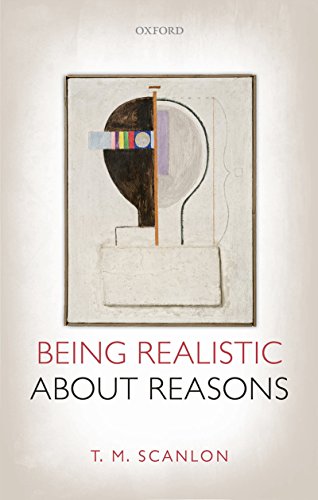
T. M. Scanlon offers a qualified defense of normative cognitivism—the view that there are irreducibly normative truths about reasons for action. He responds to three familiar objections: that such truths would have troubling metaphysical implications; that we would have no way of knowing what they are; and that the role of reasons in motivating and explaining action could not be explained if accepting a conclusion about reasons for action were a kind of belief.Scanlon answers the first of these objections within a general account of ontological commitment, applying to mathematics as well as normative judgments. He argues that the method of reflective equilibrium, properly understood, provides an adequate account of how we come to know both normative truths andmathematical truths, and that the idea of a rational agent explains the link between an agent’s normative beliefs and his or her actions. Whether every statement about reasons for action has a determinate truth value is a question to be answered by an overall account of reasons for action, in normative terms. Since it seems unlikely that there is such an account, the defense of normative cognitivism offered here is qualified: statements about reasons for action can have determinate truthvalues, but it is not clear that all of them do. Along the way, Scanlon offers an interpretation of the distinction between normative and non-normative claims, a new account of the supervenience of the normative on the non-normative, an interpretation of the idea of the relative strength of reasons, and adefense of the method of reflective equilibrium.
User’s Reviews
Reviews from Amazon users which were colected at the time this book was published on the website:
⭐The notion that ethical judgment is not any kind of pursuit of truth has dominated analytic philosophy for more than a century.Scanlon has very likely put an end to that sorry chapter. His ‘reasons fundamentalism’ allows that we speak truly (or falsely) when we assert of someone’s conduct that it is wrong or right or all right. We are not when so speaking(and thinking) attributing weird qualities to bits of human behaviour. Scanlon accomplishes this without having to get stuckwith the idea that actions are always ascertainably right or wrong. The reasons which ground our judgments aboutthe acts and decisions of others and ourselves may be such as to leave us in (possibly tragic) uncertainty. But uncertaintybecause of complexity obtains in any region of enquiry and judgment. It is a metaphysical confusion to maintain, as many have, that right and wrong (et. al) have to be very peculiar features or qualities of our actions and decisions in order that our judgments about them be susceptible to truth.So the book is as (if not more) interesting as metaphysics than it is as ethical theory.
⭐This is a slim volume of 5 wonderfully dense and interesting lectures. The lectures build on each other until lecture 5, my favorite. I first heard about T.M. Scanlon while reading work related to Derek Parfit. I appreciated his contributions and wanted to hear more from him. This was an excellent and stimulating introduction to his thought. I want more.
⭐I strongly recommend this book. It has a very well-thought out content and a lucid style of writing. Besides, the author wastes no time to tackle the most important points, with good success.
⭐No complaints
Keywords
Free Download Being Realistic about Reasons in PDF format
Being Realistic about Reasons PDF Free Download
Download Being Realistic about Reasons 2013 PDF Free
Being Realistic about Reasons 2013 PDF Free Download
Download Being Realistic about Reasons PDF
Free Download Ebook Being Realistic about Reasons