

Ebook Info
- Published: 2003
- Number of pages: 368 pages
- Format: PDF
- File Size: 9.20 MB
- Authors: Antonio Damasio
Description
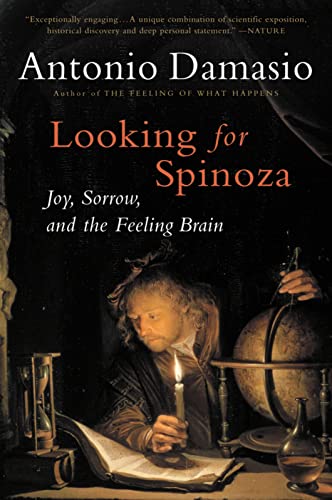
A “clear, accessbile” investigation into the philosophical and scientific foundations of human life, from one of the world’s leading neuroscientists (San Francisco Chronicle).Joy, sorrow, jealousy, and awe—these and other feelings are the stuff of our daily lives. In the seventeenth century, the philosopher Spinoza devoted much of his life’s work examining how these emotions supported human survival, yet hundreds of years later the biological roots of what we feel remain a mystery. Antonio Damasio—whose earlier books explore rational behavior and the notion of the self—rediscovers a man whose work ran counter to all the thinking of his day, pairing Spinoza’s insights with his own innovative scientific research to help us understand what we’re made of, and what we’re here for.
User’s Reviews
Editorial Reviews: Review PRAISE FOR THE FEELING OF WHAT HAPPENS”One of the best brain stories of the decade . . . This is a must-read book for anyone wanting a neurologist’s perspective on one of the greatest unsolved mysteries.”–The New York Times Book Review”The first truly compelling neurobiological account of the self . . . A remarkable work of intellectual daring.”–Nature”What makes his views so noteworthy is that they’re grounded not in theoretical musings but in years of clinical research.”–Time”The book’s clear, beautiful language, its fascinating case studies and the way in which it brings difficult scientific issues to life . . . may actually make it a landmark in the interdisciplinary project of consciousness research.”–Scientific AmericanPRAISE FOR DESCARTES’ ERROR”A tour de force of sheer reflective imagination.”–The Times Literary Supplement”In Descartes’ Error, he brings all these gifts together in a fascinating exploration of the biology of research and its inseparable dependence on emotion.”–Oliver Sacks — From the Inside Flap Joy, sorrow, jealousy, and awe–these and other feelings are the stuff of our daily lives. Thought to be too private for science to explain and not essential for understanding cognition, they have largely been ignored. But not by Spinoza, and not by Antonio Damasio. Here, in a humane work of science, Damasio draws on his innovative research and on his experience with neurological patients to examine how feelings and the emotions that underlie them support human survival and enable the spirit’s greatest creations.Looking for Spinoza reveals the biology of our sophisticated survival mechanisms. It rediscovers a thinker whose work prefigures modern neuroscience, not only in his emphasis on emotions and feelings, but also in his refusal to separate mind and body. Together, the scientist and the philosopher help us understand what we’re made of, and what we’re here for. Based on laboratory investigations but moving beyond those to society and culture, “Looking for Spinoza” is a master work of science and writing. Antonio Damasio, widely recognized as one of the world’s leading neuroscientists, has for decades been investigating the neurobiological foundations of human life. In “Descartes’ Error” he explored the importance of emotion in rational behavior, and in “The Feeling of What Happens” he developed the neurobiology of the self. Damasio’s new book on feeling and emotion offers unexpected grounds for optimism about our survival and the human condition. From the Back Cover “In clear, accessible and at times eloquent prose, Damasio is outlining nothing less than a new vision of the human soul, integrating body and mind, thought and feeling, individual survival and altruism, humanity and nature, ethics and evolution.” -SAN FRANCISCO CHRONICLEJOY, SORROW, JEALOUSY, AND AWE-these and other feelings are the stuff of our daily lives. Thought to be too private for science to explain and not essential for understanding cognition, they have largely been ignored. But not by Spinoza, and not by Antonio Damasio. In Looking for Spinoza, Damasio, one of the world’s leading neuroscientists, draws on his innovative research and on his experience with neurological patients to examine how feelings and the emotions that underlie them support human survival and enable the spirit’s greatest creations. Looking for Spinoza rediscovers a thinker whose work prefigures modern neuroscience, not only in his emphasis on emotions and feelings, but in his refusal to separate mind and body. Together, the scientist and the philosopher help us understand what we’re made of, and what we’re here for.”Exceptionally engaging and profoundly gratifying . . . Achieves a unique combination of scientific exposition, historical discovery and deep personal statement regarding the human condition.” -NATUREAntonio Damasio is the Van Allen Distinguished Professor and head of the department of neurology at the University of Iowa Medical Center and is an adjunct professor at the Salk Institute in La Jolla, California. The recipient of numerous awards, he is a memberof the Institute of Medicine of the National Academy of Sciences and a fellow of the American Academy of Arts and Sciences. Damasio’s books are read and taught in universities worldwide. About the Author ANTONIO DAMASIO is the David Dornsife Professor of Neuroscience and Director of the Brain and Creativity Institute at the University of Southern California. He is also an adjunct professor at the Salk Institute for Biological Studies in La Jolla. He is a member of both the Institute of Medicine of the National Academy of Sciences and the American Academy of Arts and Sciences. Descartes’ Error was an international bestseller. The Feeling of What Happens has been translated into seventeen languages. Excerpt. © Reprinted by permission. All rights reserved. CHAPTER 1Enter FeelingsEnter FeelingsFeelings of pain or pleasure or some quality in between are the bedrock of our minds. We often fail to notice this simple reality because the mental images of the objects and events that surround us, along with the images of the words and sentences that describe them, use up so much of our overburdened attention. But there they are, feelings of myriad emotions and related states, the continuous musical line of our minds, the unstoppable humming of the most universal of melodies that only dies down when we go to sleep, a humming that turns into all-out singing when we are occupied by joy, or a mournful requiem when sorrow takes over.*Given the ubiquity of feelings, one would have thought that their science would have been elucidated long ago-what feelings are, how they work, what they mean-but that is hardly the case. Of all the mental phenomena we can describe, feelings and their essential ingredients-pain and pleasure-are the least understood in biological and specifically neurobiological terms. This is all the more puzzling considering that advanced societies cultivate feelings shamelessly and dedicate so many resources and efforts to manipulating those feelings with alcohol, drugs of abuse, medical drugs, food, real sex, virtual sex, all manner of feel-good consumption, and all manner of feel-good social and religious practices. We doctor our feelings with pills, drinks, health spas, workouts, and spiritual exercises, but neither the public nor science have yet come to grips with what feelings are, biologically speaking.I am not really surprised at this state of affairs, considering what I grew up believing about feelings. Most of it simply was not true. For example, I thought that feelings were impossible to define with specificity, unlike objects you could see, hear, or touch. Unlike those concrete entities, feelings were intangible. When I started musing about how the brain managed to create the mind, I accepted the established advice that feelings were out of the scientific picture. One could study how the brain makes us move. One could study sensory processes, visual and otherwise, and understand how thoughts are put together. One could study how the brain learns and memorizes thoughts. One could even study the emotional reactions with which we respond to varied objects and events. But feelings-which can be distinguished from emotions, as we shall see in the next chapter-remained elusive. Feelings were to stay forever mysterious. They were private and inaccessible. It was not possible to explain how feelings happened or where they happened. One simply could not get “behind” feelings.As was the case with consciousness, feelings were beyond the bounds of science, thrown outside the door not just by the naysayers who worry that anything mental might actually be explained by neuroscience, but by card-carrying neuroscientists themselves, proclaiming allegedly insurmountable limitations. My own willingness to accept this belief as fact is evidenced by the many years I spent studying anything but feelings. It took me awhile to see the degree to which the injunction was unjustified and to realize that the neurobiology of feelings was no less viable than the neurobiology of vision or memory. But eventually I did, mostly, as it turns out, because I was confronted by the reality of neurological patients whose symptoms literally forced me to investigate their conditions.Imagine, for example, meeting someone who, as a result of damage to a certain location of his brain, became unable to feel compassion or embarrassment-when compassion or embarrassment were due-yet could feel happy, or sad, or fearful just as normally as before brain disease had set in. Would that not give you pause? Or picture a person who, as a result of damage located elsewhere in the brain, became unable to experience fear when fear was the appropriate reaction to the situation and yet still could feel compassion. The cruelty of neurological disease may be a bottomless pit for its victims-the patients and those of us who are called to watch. But the scalpel of disease also is responsible for its single redeeming feature: By teasing apart the normal operations of the human brain, often with uncanny precision, neurological disease provides a unique entry into the fortified citadel of the human brain and mind.Reflection on the situation of these patients and of others with comparable conditions raised intriguing hypotheses. First, individual feelings could be prevented through damage to a discrete part of the brain; the loss of a specific sector of brain circuitry brought with it the loss of a specific kind of mental event. Second, it seemed clear that different brain systems controlled different feelings; damage to one area of the brain anatomy did not cause all types of feelings to disappear at once. Third, and most surprising, when patients lost the ability to express a certain emotion, they also lost the ability to experience the corresponding feeling. But the opposite was not true: Some patients who lost their ability to experience certain feelings still could express the corresponding emotions. Could it be that while emotion and feeling were twins, emotion was born first and feeling second, with feeling forever following emotion like a shadow? In spite of their close kinship and seeming simultaneity, it seemed that emotion preceded feeling. Knowledge of this specific relationship, as we shall see, provided a window into the investigation of feelings.Such hypotheses could be tested with the help of scanning techniques that allow us to create images of the anatomy and activity of the human brain. Step by step, initially in patients and then in both patients and people without neurological disease, my colleagues and I began to map the geography of the feeling brain. We aimed at elucidating the web of mechanisms that allow our thoughts to trigger emotional states and engender feelings.1Emotion and feeling played an important but very different part in two of my previous books. Descartes’ Error addressed the role of emotion and feeling in decision-making. The Feeling of What Happens outlined the role of emotion and feeling in the construction of the self. In the present book, however, the focus is on feelings themselves, what they are and what they provide. Most of the evidence I discuss was not available when I wrote the previous books, and a more solid platform for the understanding of feelings has now emerged. The main purpose of this book, then, is to present a progress report on the nature and human significance of feelings and related phenomena, as I see them now, as neurologist, neuroscientist, and regular user.The gist of my current view is that feelings are the expression of human flourishing or human distress, as they occur in mind and body. Feelings are not a mere decoration added on to the emotions, something one might keep or discard. Feelings can be and often are revelations of the state of life within the entire organism-a lifting of the veil in the literal sense of the term. Life being a high-wire act, most feelings are expressions of the struggle for balance, ideas of the exquisite adjustments and corrections without which, one mistake too many, the whole act collapses. If anything in our existence can be revelatory of our simultaneous smallness and greatness, feelings are.How that revelation comes to mind is itself beginning to be revealed. The brain uses a number of dedicated regions working in concert to portray myriad aspects of the body’s activities in the form of neural maps. This portrait is a composite, an ever-changing picture of life on the fly. The chemical and neural channels that bring into the brain the signals with which this life portrait can be painted are just as dedicated as the canvas that receives them. The mystery of how we feel is a little less mysterious now.It is reasonable to wonder if the attempt to understand feelings is of any value beyond the satisfaction of one’s curiosity. For a number of reasons, I believe it is. Elucidating the neurobiology of feelings and their antecedent emotions contributes to our views on the mind-body problem, a problem central to the understanding of who we are. Emotion and related reactions are aligned with the body, feelings with the mind. The investigation of how thoughts trigger emotions and of how bodily emotions become the kind of thoughts we call feelings provides a privileged view into mind and body, the overtly disparate manifestations of a single and seamlessly interwoven human organism.The effort has more practical payoffs, however. Explaining the biology of feelings and their closely related emotions is likely to contribute to the effective treatment of some major causes of human suffering, among them depression, pain, and drug addiction. Moreover, understanding what feelings are, how they work, and what they mean is indispensable to the future construction of a view of human beings more accurate than the one currently available, a view that would take into account advances in the social sciences, cognitive science, and biology. Why is such a construction of any practical use? Because the success or failure of humanity depends in large measure on how the public and the institutions charged with the governance of public life incorporate that revised view of human beings in principles and policies. An understanding of the neurobiology of emotion and feelings is a key to the formulation of principles and policies capable of reducing human distress and enhancing human flourishing. In effect, the new knowledge even speaks to the manner in which humans deal with unresolved tensions between sacred and secular interpretations of their own existence.Now that I have sketched my main purpose, it is time to explain why a book dedicated to new ideas on the nature and significance of human feeling should invoke Spinoza in the title. Since I am not a philosopher and this book is not about Spinoza’s philosophy, it is sensible to ask: why Spinoza? The sho… Read more
Reviews from Amazon users which were colected at the time this book was published on the website:
⭐Damasio, a neuroscientist, attempts to demonstrate how brain and body work in concert to produce the concept of the mind. He cites the 17th century philosopher and early proponent of the role feelings (affect) plays in human behavior, Baruch Spinoza as the key figure in the repudiation of Descarte’s mind-body dualism. Demasio’s text is largely scientific but philosophical as well. Often times, he prefaces his theories with a warning stating that his ideas are not based on rigorous scientific scrutiny. Ultimately, Demasio attempts to biologically distinguish between emotions and feelings (pleasure and pain) as well as describe their innate evolutionary functionality to man. This is no small task considering the seemingly intangible nature of feelings and the general belief in science that feelings are impossible to examine empirically. Demasio’s concepts, while rooted in neuroscience and philosophy, are quite helpful to mental health professionals trying to make sense of their patient’s feelings and how they contribute to maladaptive behaviors. I am writing this review from this perspective.Demasio, with a great illustration from Shakespeare, contends that emotions are observable actions or movements rooted in our physiology while feelings are the private meaning we ascribe to this phenomenon. Emotions automatically occur in our brains and bodies in response to environmental stimuli. Emotions prelude the feelings that arise privately in our mind. Often emotions serve the evolutionary purpose of promoting our survival and maintaining homeostasis (balance). Homeostasis is based on a system of autonomic functions, pain and pleasure behaviors, drives and motivations, emotions and ultimately feelings. Demasio does a nice job of discussing the neurology behind emotions citing the amygdala, the ventromedial prefrontal cortex, and the cingulate as emotional triggering sites.Emotions are our physiological responses to the environment. Our feelings are our responses to emotions in order to create mental images. Our feelings provide us information in order to best manage our lives. Again, this serves a self-perserving purpose. What we do with the information our feelings provide is up to us. I took this section to mean that some people are better than others at recognizing and utilizing their feelings, in the short-term these people endure less suffering and mental illness. In the long term, these people are better adapted in the evolutionary sense. I think these insights are very relevant to mental health.For example, the constant tension and hypervigilence a patient with Post Traumatic Stress Disorder experiences is their body’s natural use of emotions gone awry. The patient with PTSD is in a constant state of unbalance due to a pervasive fear of harm stemming from an unprocessed trauma. The subsequent feeling is some variant of sorrow. As Demasio points out, a change or problem in the environment prompts self-perserving behavior in the organism.In the case of depression, or the “common cold” of clinical psychology, one may lack the ability to adapt to intense feelings of sorrow stemming from the physiological changes (emotions) their body produces in response to environmental stimuli. The depressed individual fails to adapt to the environment in order to regain homeostatic balance. More and more negative feelings emerge as adaptation is continuously avoided. I think this is why so many depressed patients lack energy and feel overwhelmed by life. One or two triggering events that are not adapted to can lead to landslide of negative life circumstances that seem unbearable.I also believe that some people pay far too much attention to their feelings. In the case of certain personality disorders (histrionic and borderline), the feelings themselves are given far greater value than the cognitive appraisals they elicit. Ultimately, an inability to cope with and utilize feelings in functional manner is implicated in suffering. Spinoza, seemingly the world’s first Cognitive Behaviorist, encouraged people to overcome intense negative feelings by eliciting stronger positive feelings through their cognitions. Although, this is a crude way of conceptualizing cognitive-behavioral therapy, I do think mentally overcoming negative feelings serves as the basis of CBT. While I don’t necessarily think this is revolutionary, I do think it is interesting considering how far back Spinoza lived. The clinical utility of this book resides primarily in what Damasio does with his knowledge of Spinoza’s philosophy.I really enjoyed learning the science behind feelings and how Damasio assigns them an evolutionary function. I think that many people who are suffering with depression, substance abuse and anxiety have difficulty making sense of and learning how to utilize their emotions. Feelings are transient states indicating that something is going right or wrong in our environment. They elicit action on our part to either maintain or change the environment. The failure to act on feelings is at the heart of many psychological issues. Our role as mental health professionals is to help clients learn how to recognize, label and adaptively act on their feelings.I feel compelled to also mention Damasio’s final chapter where he seemingly attempts to offer a solution for those struggling to find meaning in the tragic human condition. What do those who do not turn to religion or earthly possessions turn to find meaning? Damasio contends that finding the “spirit” is the key to finding meaning. Spirit does not refer to any type of religious entity but rather a drive towards knowledge and immersion in some sort of discipline be it art, science, or badminton (it can be anything really). This drive ideally goes on to somehow positively impact the lives of others. I tend to mostly agree with Damasio. I think religion offers an easy explanation to a complex question that many fear to even ask. For those who seek more than a mere pacifier, they must turn to some activity or cause that is engrossing and subjectively meaningful. I think this is the source of so many people’s internal struggles, the meaning they find in life is based not on what they believe in their heart of hearts but what others tell them is meaningful or worse yet what they think they should find meaningful. These are essentially false selves living false lives. While meaning can be influenced by the environment, a person’s chief task in life if to engage in the struggle to determine their own meaning. The outcome is not as important as the process. I know, there may be no salvation in this prescription, but then again what if there were no such thing as salvation?
⭐Damasio’s (2003) Looking for Spinoza: Joy, Sorrow, and the Feeling Brain is a delightful combination of philosophical musings, neurobiological science, and creative writing – three subjects one does not often see intermingled within the same work. Regarding the philosophical genre, Damasio chooses Spinoza, a 17th century philosopher, as the main character in the midst of his discourse on defining the differences and relatedness of emotions and feelings. According to the author Spinoza is especially relevant to the topic since he had already made some important discoveries related to the mind/body connection defying the popular thought of the day, dualism, or the mind/body split, as originally developed by Descartes. Damasio’s incorporating Spinozoa into his text in no way minimizes his rich, contemporary scientific explanation of neuroscience and the overall scientific premise from which he writes. Furthermore, the author manages this incorporation in the midst of excellent writing in some places bordering on prose and maintains a refreshing humanistic approach throughout. This is perhaps seen least in the middle of the book when he goes into further explanation of the neurological processes of the human body; however, one never loses site of his brilliantly organized and stated writing.As a psychologist in training one of the greatest utilities I see within this work is the potential for it to become a bridge between the disciplines of psychology and psychiatry. Let me explain. As briefly alluded to above, Damasio sees emotions and feelings as different yet related taking on a more holistic perspective than is often expressed within the realm of neuroscience and the field of cognition in general. In summary Damasio sees emotions as directly related to one’s bodily responses and feelings as that which is connected to these emotions and derived from human beings having the ability to reflect on themselves and the world around them – the uniquely human ability for rational thought. He says the following:The gist of my current view is that feelings are the expression of human flourishing or human distress, as they occur in mind and body. Feelings are not a mere decoration added on to the emotions, something one might keep or discard. Feelings can and often are revelations of the state of life within the entire organism – a lifting of the veil in the literal sense of the term (p. 6).This concept is especially relevant to psychiatrists and psychologists in that the former, in very general terms, tends to think mostly only of the physical and biological processes, whereas the latter can make an equally reductionistic mistake in thinking of only the feeling and thought processes apart from the physical. For both psychiatrists and psychologists to come to a better understanding of each perspective and the value inherent within each, this could lead to much better care of the human person, acknowledging the complicated dance between the physical and psychological. Damasio even highlights this premise toward the end of the book when he speaks of future biological discoveries combined with psychological treatment “correcting specific impairments of a normal process rather than merely attacking symptoms in a general way” (Damasio, 2003, p. 287).In the midst of my high praise for this work, I do have one critique. Overall in considering emotions and feelings Damasio implies that the most basic need of human beings is to make meaning of their lives and to embark on this process of discovery through the very discernment of emotions and feelings. In general, I agree with the author in that human beings do seem to be inherently endowed with a sense of the necessity to make meaning. However, this becomes a bit more complicated when one considers those living in an ongoing state of poverty, which includes a large part of the world. He at least acknowledges this fact in the midst of defining what I would call his highest virtue yet he seems to somewhat downplay the pervasiveness of this condition. One quote in which his sensitivity to this topic arises is as follows, “If we do not exist under oppression or in famine and yet cannot convince ourselves how lucky we are to be alive, perhaps we are not trying hard enough” (p. 271). Undoubtedly this is a very powerful statement for those of us who do not live under an ongoing state of oppression and/or famine, yet what about those who do? I think that this could be a worthwhile discussion to lend further credibility to Damasio’s proposal.As clearly stated in the beginning of this review, I believe Damasio’s presentation of the importance of knowing the differences and relatedness between emotions and feelings is brilliantly illustrated. It is an extremely worthwhile read to those interested in the biological, intellectual, and emotional makeup of human beings, as well as considering an overall ethos of humanity. I highly recommend this book!
⭐In this book the author discusses a historic theory of emotion in the context of his own research and ideas. According to the theory, known as the James-Lang theory of emotion, our emotions derive from the perception of our body’s response to an emotionally charged stimulus. The classical argument ran as follows. We see a bear and our heart starts to beat fast, our breathing becomes shallow and fast and we run away, we then feel fear. The other theory of emotion; dismissed by the author of this book, agues the opposite. We see the bear, feel fear, and then have then our body reacts.In the book Damasio presents some convincing evidence for the James-Lang theory of emotion. He makes a distinction between emotions on the one hand and feelings on the other. He defines emotions as the person’s response to some emotional situation that can be observed by an outsider, and feelings as the person’s subjective reaction that cannot be seen by an outsider. He then goes on to argue that feelings are the perception of our body’s responses to internal and external stimuli. We feel happy when we are balanced physiologically. We feel frightened when our body shows a physiological response to, say the bear. The evidence that he presents comes mostly from his own research, and it is convincing. He expands on the theory, arguing that feelings play an important role in our lives, that they enable us to interact with others smoothly and that they are crucial for decision making. Here he draws his evidence from his work with his patients who have suffered brain damage to specific brain regions.I bought this book because I enjoyed his book ‘Dascartes Error’ so much. However, I found ‘Looking for Spinoza’ long-winded in parts and sometimes boring. The sections devoted to Damasio’s own research were very interesting, though I suspect one would have to have a background knowledge of brain and behaviour to fully appreciate them. He mentions brain regions as if he is discussing the pub next door with a neighbour. I also had difficulties in seeing the relevance of Spinoza to his arguments, and the penultimate chapter body brain and mind was frankly dull.
⭐It did not come with a cover… but aside from that it
Keywords
Free Download Looking for Spinoza: Joy, Sorrow, and the Feeling Brain in PDF format
Looking for Spinoza: Joy, Sorrow, and the Feeling Brain PDF Free Download
Download Looking for Spinoza: Joy, Sorrow, and the Feeling Brain 2003 PDF Free
Looking for Spinoza: Joy, Sorrow, and the Feeling Brain 2003 PDF Free Download
Download Looking for Spinoza: Joy, Sorrow, and the Feeling Brain PDF
Free Download Ebook Looking for Spinoza: Joy, Sorrow, and the Feeling Brain