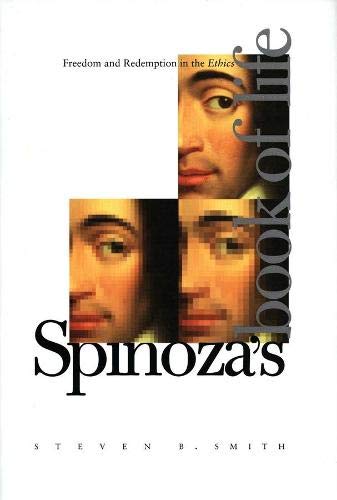
Ebook Info
- Published: 2003
- Number of pages: 256 pages
- Format: PDF
- File Size: 1.04 MB
- Authors: Steven B. Smith
Description
Most readers of Spinoza treat him as a pure metaphysician, a grim determinist, or a stoic moralist, but none of these descriptions captures the author of the Ethics, argues Steven B. Smith in this intriguing book. Offering a new reading of Spinoza’s masterpiece, Smith asserts that the Ethics is a celebration of human freedom and its attendant joys and responsibilities and should be placed among the great founding documents of the Enlightenment.Two aspects of Smith’s book distinguish it from other studies. It treats the famous “geometrical method” of the Ethics asa form of moral rhetoric, a model for the construction of individuality. And it presents the Ethics asa companion to Spinoza’s major work of political philosophy, the Theologico-Political Treatise, each work helping to explore the problem of freedom. Affirming Spinoza’s centrality for both critics and defenders of modernity, the book will be of value to students of political theory, philosophy, and intellectual history.
User’s Reviews
Editorial Reviews: Review “This important book dispels a number of major misunderstandings about Spinoza and shows his importance for an understanding of modernity.” From the Back Cover “This important book dispels a number of major misunderstandings about Spinoza and shows his importance for an understanding of modernity.”-David Novak, University of Toronto About the Author Steven B. Smith is Alfred Cowles Professor of Political Science at Yale University. Excerpt. © Reprinted by permission. All rights reserved. Spinoza’s Book of LifeFreedom and Redemption in the EthicsBy Steven B. SmithYale University PressCopyright © 2003 Steven B. SmithAll right reserved.ISBN: 978-0-300-10019-8ContentsPreface…………………………………………………..xiA Note on the Texts………………………………………..xviiIntroduction………………………………………………xixCHAPTER 1. Thinking about the Ethics…………………………1What Kind of Book Is the Ethics?…………………………….4In More Geometrico…………………………………………8How Many Spinozas?…………………………………………14The Style Is the Man……………………………………….19An Ethic of Responsibility………………………………….24CHAPTER 2. Thinking about God……………………………….31Deus sive Nature…………………………………………..32Pantheism or Atheism?………………………………………37Morale par Provision……………………………………….43The Constitution of the Imagination………………………….48On Teleology………………………………………………53CHAPTER 3. Thinking about Thinking…………………………..62Parallelism……………………………………………….63The Identity of Mind and Body……………………………….69Freedom and Determinism…………………………………….72Rationality and Human Agency………………………………..78The Odyssey of the Mind…………………………………….86CHAPTER 4. Thinking about Desire…………………………….94The Conatus as Power……………………………………….96The Conatus as Rationality………………………………….100An Ethic of Joy……………………………………………104The Heroic Ideal…………………………………………..113CHAPTER 5. Thinking about Politics…………………………..123Spinoza’s “Eccentric” Hobbesianism…………………………..123Spinoza’s Machiavellian Moment………………………………130″An Idea of Man”…………………………………………..134Rational Nature……………………………………………137″There is Nothing More Useful than Man”………………………144Spinoza, Tocqueville, and Lincoln……………………………150CHAPTER 6. Thinking about Love………………………………154Metaphysical Masochism?…………………………………….155The One True Plan of Life…………………………………..158The Ladder of Love…………………………………………161The Satisfactions of Mind…………………………………..175CHAPTER 7. The Authority of Reason…………………………..183Jacobi’s Affirmation of Faith……………………………….185Strauss’s “Theologico-Political Predicament”………………….190Philosophy as a Way of Life…………………………………199Notes…………………………………………………….203Index of Passages Cited from Spinoza’s Ethics…………………217General Index……………………………………………..219Chapter OneThinking about the Ethics Spinoza’s Ethics is by general consensus one of the most difficult books ever written. This is so in part because the ideas that Spinoza sought to convey are inherently difficult. The themes of substance, attribute, necessity, and eternity are not such as to allow easy access. But Spinoza’s work is made doubly difficult by the method by which he attempted to communicate these ideas. As a work written in more geometrico, the Ethics consists of formal propositions, definitions, scholia, and corollaries, all of which are said to follow from one another in the manner of a formal geometrical proof. Philosophy means for Spinoza reasoning in a deductive manner. Taking Euclid’s Elements as its model, his work is set out as a moral geometry intended to lead the reader from a condition of moral confusion and chaos to the one true way of life. Its theme, as Leon Roth claimed years ago, is not just the True but the Good. The difficulties with the Ethics do not end here. Not only are there inherent difficulties with reading the book, but Spinoza’s thought has proven peculiarly resistant to classification. What, exactly, has been Spinoza’s achievement? Was he a medieval or a modern or, as Harry Wolfson believed, a modern with one foot still in the medieval world? Was he a soulless materialist and atheist as Bayle and Hume believed or a mystical pantheist and “God intoxicated man” as Goethe, Novalis, and Emerson laid claim? Was he a ruthless determinist who believed that nothing, not even our innermost thoughts and beliefs, escaped the causal order of nature or an apostle of human freedom whose philosophy sought to liberate the mind from bondage to false beliefs and systems of power? A forerunner of German Idealism or Marxian materialism? An individualist or a communitarian? The answer is to some degree all of the above. Perhaps we can gain some clarity by examining Spinoza’s major influences. But even here we find ourselves on no firmer ground. Like his older contemporary Thomas Hobbes, Spinoza is remarkably sparing with references to his predecessors, and when he does mention them, it is often brusquely to dismiss their various errors and fallacies. This has not stopped readers of the Ethics from attempting to situate the work within different intellectual contexts and traditions. According to Wolfson, Spinoza’s philosophy is a kind of mlange of the works of the great Judeo-Arabic philosophers of the Middle Ages. For some, notably Edwin Curley, Spinoza belongs entirely to the world of modern philosophy, especially the Cartesian aspiration to create a “unified science” of man and nature bringing together metaphysics and morals. For others, Spinoza was a product of the Marrano culture of Spain and the Iberian Peninsula who still utilized the forms of expression characteristic of a people living under the threat of persecution. And for still others, Spinoza’s philosophy constitutes a reworking of certain ancient Stoic moral positions. However much we can learn from historical studies of Spinoza’s background, there is a sense in which he cannot be reduced to his various intellectual and cultural contexts. These may be useful for explaining this or that aspect of the Ethics, but all such attempts must necessarily fail in trying to make sense of the work as a whole. Spinoza was neither a renegade Maimonidean, a Cartesian, a Marrano, nor a Stoic. His work incorporates even as it transcends these various descriptions. His formal education both began and ended in the world of the Talmud Torah. This was a world deeply hostile to philosophy. The conflict between philosophy and religion, “Athens and Jerusalem,” forms one of the essential motifs of his thought. Spinoza was himself a philosophical autodidact whose work drew on but was essentially independent of any particular tradition or school of thought. His readings in the philosophical literature were extensive but eclectic. He was an original who in the deepest sense of the term was a product of his own making. To the extent that it is possible to classify the Ethics, it is as one of the great monuments to the modern enterprise. To be sure, modernity is an almost endlessly porous term. It can mean many things to many people. It has been defined by the rise of a scientific worldview often associated with mathematical physics, a skeptical disposition regarding religion and other traditional sources of authority, the emergence of the secular state, and the assertion of the autonomous individual as the primary locus of agency and moral responsibility. Spinoza endorses all of these features of modernity to varying degrees, although the aspect of his work to be emphasized here is his reading of human life as an adventure of self-discovery. The Ethics is nothing if not a testimony to the powers of human agency and the self-direction of the mind. The Ethics is a singular achievement written by someone who valued his own singularity. Its supreme achievement is to explore the moral and psychological postulates of freedom in a world that had been stripped, partly by Spinoza himself, of its previous theological, cosmological, and political moorings. His questions is: what place is there for human freedom in a world radically divested of divine purpose, devoid of telos, and in which human beings no longer occupy a “kingdom within a kingdom” but are rather fully articulated within a single self-contained system of nature? In this abyss of loneliness-the proverbial night in which all cows are gray-what conceivable grounds are left for the assertion of human dignity and moral responsibility? Despite its claims to geometrical certainty and mathematical truth, the Ethics conceals a deeply personal, even existential, work written out of an author’s confrontation with his own solitude. In spite of its apparently selfless style and the author’s injunction to rise above the limited human standpoint and embrace the perspective of eternity, the work is a celebration of freedom and life with all of its legitimate joys and pleasures. Above all, Spinoza taught us to appreciate and value life-both our own and that of others. Accordingly he repudiated the classical depreciation of life as “mere” life. He also rejected the messianic emphasis on the world to come at the expense of the here and now. What is to be appreciated is not just the biological fact of existence, although this is not to be despised, but the consciousness of ourselves as rational beings who strive to increase our power and freedom even as we create obstacles that serve to frustrate those ends. The Ethics is a celebration of life, of joy and laughter, of sociability and friendship. Spinoza’s philosophy culminates not in the grim and remorseless recognition of necessity, as is often portrayed, but in the enjoyment of the pleasures of mind and body working together as a unified whole that helps to secure the conditions for human autonomy. He is a tireless advocate of individual liberty in its moral, psychological, and metaphysical dimensions, and these taken together form a pendant to his liberal politics. What Kind of Book Is the Ethics? The kinds of questions raised above are made even more problematical when we ask what kind of book this is and who is its intended audience. Spinoza himself gives little by way of introduction. The title page announces only that it is a work in five parts which treats of the following subjects: 1. Of God 2. Of the Nature and Origin of the Mind 3. Of the Origin and Nature of the Affects 4. Of Human Bondage, or of the Power of the Affects 5. Of the Power of the Intellect, or of Human Freedom Spinoza’s relative taciturnity on the purpose of the Ethics and its readership stands in marked contrast to the TTP, his major work of political philosophy. In the preface to the TTP he is remarkably candid about the larger aims of the work. It was written to separate the claims of philosophy from theology and to put them on entirely different footings (TTP, pref, 27; III/10). Philosophy is concerned with the realm of truth, theology with moral practice and obedience to God. Spinoza presents himself as protecting philosophy from those who would make reason bow to the claims of Scripture, and also protecting the sanctity of religion from the philosophical systematizers and rationalizers. Furthermore, this distinction is said to serve a political end. The goal of the TTP is not merely to protect theology from false systems of philosophy but to demonstrate that freedom to philosophize can be granted without any injury either to piety or to the peace and security of the state. In addition Spinoza tells us a great deal about the intended audience for the TTP. In a letter written to Henry Oldenburg five years before the book was published he spoke frankly about whom he was trying to reach: I am now writing a Treatise about my interpretation of Scripture. This I am driven to do by the following reasons: 1. The prejudice of the theologians; for I know that these are among the chief obstacles which prevent men from directing their minds to philosophy; and to remove them from the minds of the more prudent. 2. The opinion which the common people have of me, who do not cease to accuse me falsely of atheism; I am also obliged to avert this accusation as far as it is possible to do so. 3. The freedom of philosophizing, and of saying what we think; this I desire to vindicate in every way, for here it is always suppressed through the excessive authority and impudence of the preachers. (Ep 30) The distinction Spinoza draws here between the “prudent” reader (prudentiorum) and the “common people” (vulgus) is repeated in the preface to the TTP, where he refers to the “philosophical reader” (philosophe lector) and the “multitude” (multitudo) (TTP, pref, 33; III/12). Yet, while claiming to address the philosophical reader, in the very next breath Spinoza notes that everything to appear in the work will be “more than adequately known to philosophers.” He seems to be positioning his audience between the “vulgar” or the “multitude” who live under the sway of superstition and prejudice and the true philosophers who already know what he is saying and for whom the book will be redundant. The audience seems to comprise not philosophers in the strict sense but potential philosophers, philosophers in the making, who still remain under the partial sway of theological prejudice but who can be induced by reason to reflect critically on the source of prejudice. It is a book written by a philosopher for potential philosophers out of a love for them and indeed out of a love for philosophy itself. The TTP is a book addressed to those who, in the words of Leo Strauss, “love to think.” If the TTP is a work addressed to potential philosophers in order to cure them of their prejudices, the Ethics is a work that takes no prisoners. “I do not assume that I have discovered the best philosophy,” he confidently asserts, “but I know that I understand the true one” (Ep 76). This sense of confidence pervades the work as a whole. The Ethics is addressed to philosophers pure and simple. What Spinoza means by a philosopher is addressed in a letter to William van Blyenbergh in which he alludes to his correspondent as “a pure philosopher who … has no other touchstone of truth than the natural intellect and not theology” (Ep 23). To be a philosopher means to accept the authority of reason pure and simple. A work of philosophy, as Spinoza understands it, is a work that can be understood by reason or the “natural intellect” alone. It makes no concession to time, place, and circumstance. It requires only a reader who can follow a chain of reasoning and accept unflinchingly what is found there. It will accept no argument that is not acceptable to reason. Spinoza’s silence about his audience expresses the anonymity of reason itself. The Ethics is in the literal sense not Spinoza’s philosophy at all; it is the philosophical biography of the idea of reason. In this respect the Ethics can truly be called a book for everyone and for no one. Yet the impersonality of the book and its audience can be overstated. Even if the intended audience for the Ethics is smaller, perhaps infinitesimally smaller, than for the TTP, Spinoza still wrote the book with a practical intent in mind. The perfect philosopher, like the ancient sage, is at best an ideal, a heuristic, against which any actual reader should be judged. In the preface to part four of the Ethics he speaks of “a model of human nature to which we may look” (IV pref/208). Although he never uses this expression again, it is clearly the idea of the philosopher or the philosophic life that he is thinking of. Presumably for such an exemplar of human nature a book like the Ethics would be unnecessary, but for the less-than-perfect readers who actually exist, it might actually prove useful. Spinoza’s purpose was to liberate the mind from bondage to the passions and to encourage certain traits of character that he believes will increase the stock of human happiness. Among the virtues he recommends are the qualities of animositas and generositas-tenacity and nobility-both of which are described as aspects of the comprehensive virtue of fortitudo or strength of character (IIIp59). This is the highest of the moral virtues to which the book aspires. The point or purpose of the Ethics as a whole is clearly a pedagogic one, that is, to foster an ideal state of human character. Its goal is precisely to lessen emotional distress, or what Spinoza calls fluctuatio animi, vacillation of mind, which is the principal cause of so much misery and human conflict. The Ethics is intended as a work of moral therapy in which the reader is simultaneously analyst and patient. In More Geometrico Perhaps the single greatest obstacle to entering the world of the Ethics is cracking the style of the book. The work is presented in the form of a moral geometry. This has led many readers to wonder what is the purpose of the geometrical form and what is its relation to the content of the work as a whole. Is the axiomatic method in some sense required by Spinoza’s philosophy or is it a matter of choice or convenience, much like a poet’s decision to write in iambic pentameter? There were certainly many styles of philosophical communication open to him-the dialogue (Plato), the treatise (Aristotle), the autobiography (Augustine), the disputed question (Aquinas), or the essay (Montaigne). Why, then, present oneself in the manner of a geometer? There has been a variety of answers to this question. The standard view of Spinoza, the textbook image of him passed down in countless introductory courses of philosophy, is that of a relentless rationalist who sought to prescribe how the human mind could achieve clear and distinct ideas by means of the unaided intellect. The mathematical method of reasoning seemed best suited to this pursuit of truth unencumbered by reference to revelation, history, or imaginative experience. Spinoza was among the first to present his philosophy as a “system” in which all problems-moral, metaphysical, political-could be deduced from the axioms and premises of pure reason alone. The Ethics gives classic expression to the view of philosophy as an activity carried out sub specie aeternitatis, from the aspect of eternity. It consists of taking a God’s-eye view of the human condition, a position sometimes diminished by its detractors as the “view from nowhere.” (Continues…) Excerpted from Spinoza’s Book of Lifeby Steven B. Smith Copyright © 2003 by Steven B. Smith. Excerpted by permission. All rights reserved. No part of this excerpt may be reproduced or reprinted without permission in writing from the publisher.Excerpts are provided by Dial-A-Book Inc. solely for the personal use of visitors to this web site. Read more
Reviews from Amazon users which were colected at the time this book was published on the website:
⭐This book draws out a handful of specific themes (God, thinking, love, politics, and the self-proclaimed authority of Reason) from Spinoza’s Ethics in the attempt to show the relevance of Spinoza to contemporary life and democratic citizenship. It makes much of Spinoza’s radical new idea of fortitude, for example — the capacity to face the human situation without metaphysical illusions — as the “first virtue of the new democratic individual.” Such a reading is typical in that it downplays the rational content of Spinoza’s definition of fortitude (see the Scholium to P 59, Part 3 of Ethics). The author sometimes writes as if after Nietzsche everyone must concede that Reason is just another mask.So the weakness of this accessibly written book lies in its sacrifice of a sense of Spinoza’s unflinching objectivity to its desire for an edifying contemporary teacher. The author can even say that “Mathematics was for [Spinoza] not so much the ultimate form of knowledge as an expression of human creativity and the moral imagination.” We glimpse the reasons for his curiously qualified enthusiasm when he reviews Leo Strauss’s critique of Spinoza’s presumption to speak the Truth as such about human beings: philosophy and biblical theology must both be sustained as challenges to each other.
⭐Professor Smith’s book is a good general introduction to Spinoza’s great work of metaphysics, Ethics Demonstrated in a Geometrical Order. However, the emphasis is on the moral rather than the metaphysical implications of the work. For more traditional treatments on the topic, Lloyd’s commentary in the Routledge Guidebook series and the new book by Nadler are to be recommended. Bennett’s study of the Ethics is still the best, in my opinion, but it is definitely not for beginners.The strength of this book is in how it relates Spinoza to other important philosophers. There are excellent discussions of Spinoza vis-a-vis Descartes, Hobbes, Jacobi, Machiavelli, and especially Leo Strauss. I don’t know if Smith is a “Straussian,” but his book is dedicated to Joseph Cropsey, so I suspect that he is at least a fellow traveler.I would have preferred more discussion and analysis of Spinoza’s metaphysics, but this is not the book Smith chose to write. Freedom is a highly contentious concept in Spinoza’s philosophy, and Smith is a lot more sympathetic to Spinoza than I would be. Smith makes a valiant effort to defend Spinoza, but for me Spinoza’s avowed hardcore determinism makes the whole idea of real freedom somewhat dubious.I do side with Smith contra Bennett regarding Spinoza’s atheism. It is not intellectually honest to take a common word like “God” and twist the meaning to suit one’s purposes. If one is to do this, then it becomes mandatory to give strong reasons for the new definition. Spinoza does not do this. His notion of God is misleading, and he should have used the word “nature” in every instance. I suspect the obvious accusations of atheism from his fellow citizens may have dictated his choice. But this doesn’t really explain it, since he knew he would be dead when the Ethics was published. Maybe Spinoza was a mystic. But a “rationalist mystic” is surely an oxymoron! Greater thinkers than I will have to solve this conundrum.
⭐”Spinoza’s Book of Life” leads the reader through the basic teachings of Spinoza’s Ethics and his Theological-Political Treatise. It demonstrates that Spinoza’s intention was to free people from their unconscious and irrational passions so that they could learn to truly be themselves. Spinoza shows people how to live rationally rather than being run aground by uncontrollable emotions like hope, fear and anger. He wanted people to live life fully, by exercising their “active” intelligence rather than being controlled “passively” by events and things around them. This highest form of active freedom also leads people to love God and to be useful to one another. Politically, it encourages the growth of a well-designed commonwealth run by ordered reason. In a world where people increasingly think “freedom” just means letting unreason and passion run riot, Spinoza’s way of freedom is needed now more than ever. This book does an excellent job of describing how Spinoza envisioned the operation of that freedom, both individually and in the operation of a political commonwealth.
Keywords
Free Download Spinoza’s Book of Life: Freedom and Redemption in the Ethics in PDF format
Spinoza’s Book of Life: Freedom and Redemption in the Ethics PDF Free Download
Download Spinoza’s Book of Life: Freedom and Redemption in the Ethics 2003 PDF Free
Spinoza’s Book of Life: Freedom and Redemption in the Ethics 2003 PDF Free Download
Download Spinoza’s Book of Life: Freedom and Redemption in the Ethics PDF
Free Download Ebook Spinoza’s Book of Life: Freedom and Redemption in the Ethics