Ebook Info
- Published: 2006
- Number of pages: 318 pages
- Format: PDF
- File Size: 1.30 MB
- Authors: David Crystal
Description
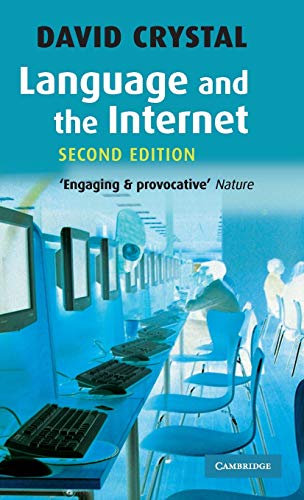
In recent years, the Internet has come to dominate our lives. E-mail, instant messaging and chat are rapidly replacing conventional forms of correspondence, and the Web has become the first port of call for both information enquiry and leisure activity. How is this affecting language? There is a widespread view that as ‘technospeak’ comes to rule, standards will be lost. In this book, David Crystal argues the reverse: that the Internet has encouraged a dramatic expansion in the variety and creativity of language. Covering a range of Internet genres, including e-mail, chat, and the Web, this is a revealing account of how the Internet is radically changing the way we use language. This second edition has been thoroughly updated to account for more recent phenomena, with a brand new chapter on blogging and instant messaging. Engaging and accessible, it will continue to fascinate anyone who has ever used the Internet.
User’s Reviews
Editorial Reviews: Review “This book provides an important look at how the Internet has affected our use of language. To my knowledge, there are no other comparable books available on this subject. Issues of language are certainly treated in many other books about the Internet, but this one features linguistics as its main topic. The book will be an important contribution.” Patricia Wallace, Ph.D., Director, Information Services and Instructional Technologies Center for Talented Youth, The John Hopkins University Author, The Psychology and the Internet Book Description A revealing insight into the language of the Internet, looking at e-mail, chat, the Web, instant messaging and blogging. About the Author Honorary Professor of Linguistics at the University of Wales, Bangor. Read more
Reviews from Amazon users which were colected at the time this book was published on the website:
⭐Our digital world requires an equally adaptable language that bridges the gap between real world communication and our digital counterparts. Language and the Internet suggests that that gap is narrowing into a universal global entity. Like the telegraph, television, newspaper and other broadcasting inventions to appear within the last few centuries, the advent of the Internet takes the prefix “tele” to a whole new communicative level. “To broadcast over a distance” may be using the Grecian combining form a little too lightly. In today’s Twitterverse, Facebook culture and blogosphere, conventional linguistic style and use have been transformed into what David Crystal has adeptly termed “Netspeak.” Crystal acknowledges that linguistic consequences exists within the net, (which is by now a dated term) but the focus of Language and the Internet aims to investigate how the internet has impacted our perception and use of language on a global scale. The technologized language we use to communicate is constantly being augmented, dissected, invented and re-invented. These practices, in the eyes of many are a disastrous force especially in the wake of the “texting” age.What I find most interesting about Crystal’s approach to the early netspeak of chatrooms and electronic conferencing is that his research aims to reclaim the usefulness of linguistic adaptation. Through his scholarly citations, he discusses the formations of digital communities known as hyperpersonal vs. interpersonal or (face to face.) The use of these speech communities work to form an inclusive realm of “Netizens” or net/web users. The language expressed is comparable to regional dialects in that they are only accepted by certain people in certain locales. As chatrooms, e-mail and chat clients began as an early medium for hyperpersonal interactions, they have since blossomed into a cultural psycho-social phenomenon in which creativity is at the heart. Sure there is a lack of linguistic structure, form and spelling but is that necessarily a bad thing amongst new studies that suggest children may be less creative and less stimulated than ever before. For those who choose to embrace the digital era, there are might be more to say in terms of social progress than for those who reject it.Yes, like many of the other reviews mentioned Language and the Internet can feel dated even though many of these studies have taken place within the last two decades. However many ways to interpret the material that Crystal presents, it is important to understand that the culmination of research highlights in one way or another the progressive tendencies of human nature. The only reason this serves as an introductory piece because of the principles of Moore’s Law which states that the amount of processors on affordable CPU’S will double every two years. Within the past 10 years, the number of transistors in CPU’S has gone from 37.5 million to over 2.5 billion. While this type of tech speak is not contained in Crystal’s account of digital language, it is an intriguing arena for debate. While written language has only gone though 3 revolutions over thousands of years, the digital revolution changes almost daily. The juxtaposition of language and digital technology opens up an intriguing discussion that begins more than a decade ago in Language and the Internet.To add fuel to the fire, as I write this review, many of the commonly used terms we use today that pertain to the Internet are highlighted for spell check. As dictionaries add nearly 800 words a year, the majority of them will most certainly be Internet related.My one major concern for this text is that as Moore’s Law continues its reign on enabling better, faster and more efficient technologies, the terminology and certain examples will be obsolete and incredibly distant to even the current generation of young Internet users. For those who have been around during the dotcom era, this is a must read exploration into the technologized and digital direction that global language is taking.
⭐Crystal is not only one of the most important authorities in this field, but also one of the few to seriously analyze the impact of the Internet from a linguistic perspective. In Language and the Internet we feel that we have his most important relevant book insofar as the Internet is concerned. While the book is relatively old (2001) we did not find it dated because of the strength of his original analysis. Part of the strength of the work is its breadth. Crystal points out that the Internet is not, in fact, a single medium, but the technology through which a number of linguistically distinguishable dialects such as email and chat rooms are conveyed to the reader…For a full review see Interface, Volume 5, Issue 1.
⭐Für jeden der sich für Linguistik interessiert und dafür wie sich die Sprache seit der entwicklung des Internets entwickelt hat ist dieses Buch sehr informativ.
⭐Not found.
⭐Joa kann man mal lesen und ist recht informativ aber bei Büchern ist das ja immer eine sehr subjektive Meinung.Aber hat mich jetzt nicht um die Socken gehauen. Versandt zügig. Super
⭐Not found.
Keywords
Free Download Language and the Internet 2nd Edition in PDF format
Language and the Internet 2nd Edition PDF Free Download
Download Language and the Internet 2nd Edition 2006 PDF Free
Language and the Internet 2nd Edition 2006 PDF Free Download
Download Language and the Internet 2nd Edition PDF
Free Download Ebook Language and the Internet 2nd Edition