Ebook Info
- Published: 2002
- Number of pages: 210 pages
- Format: PDF
- File Size: 1.33 MB
- Authors: David Crystal
Description
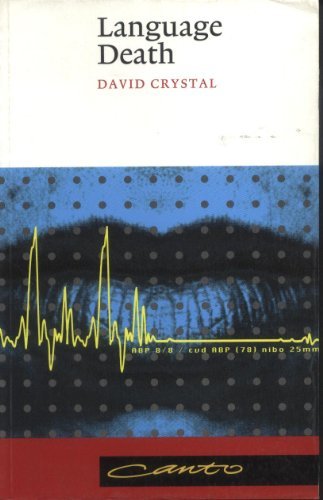
The rapid endangerment and death of many minority languages across the world is a matter of widespread concern, not only among linguists and anthropologists but among all concerned with issues of cultural identity in an increasingly globalized culture. By some counts, only 600 of the 6,000 or so languages in the world are ‘safe’ from the threat of extinction. A leading commentator and popular writer on language issues, David Crystal asks the fundamental question, ‘Why is language death so important?’, reviews the reasons for the current crisis, and investigates what is being done to reduce its impact. This 2002 book contains not only intelligent argument, but moving descriptions of the decline and demise of particular languages, and practical advice for anyone interested in pursuing the subject further.
User’s Reviews
Reviews from Amazon users which were colected at the time this book was published on the website:
⭐I think that this is an extremely important book that should be read by politicians and concerned citizens in every country around the world. The mass extinction of languages that is occurring, and will continue to occur, from now on is a terrible tragedy in every respect. This book seeks to enlighten the reader by giving reasons why languages die, why people should be so concerned, and suggests ways to keep minority languages alive and well. The thought that more than 50% of the world’s six thousand or so languages are going to die by the year 2100 should be enough to get many people motivated about preserving languages (and cultures), but the word needs to get out. That’s why a book like this is so vitally important. Governments, as a general rule, need a good shove when it comes to projects like saving languages, which some cynics would dismiss as trivial or a luxury. The simple, straightforward manner in which this book is presented can be read and appreciated by anyone, not just linguists. What I liked very much about the book was that it never went overboard in blaming the so-called “language killers” like English, Spanish, Russian, Mandarin, and German. It offered concrete answers and laid a good portion of the blame on the people themselves, not just their oppressors. Incidentally, English is unique in that it is actually killing the other “language killers” in addition to minority languages, and (if current trends continue) may be the only language left on Earth by the year 2500!!A book like this has a particular resonance for me because I have been studying Irish Gaelic for the last six months and I am determined to be fluent in the language within the next couple of years. But Irish is a threatened language that has less than fifty thousand fluent speakers worldwide, and the forecast is not good for the language unless something drastic is done in Ireland. A strong majority of the Irish people want the language to thrive, but government incompetence, underfunding, and English encroachment even into the Gaeltacht (Irish-speaking areas) are still happening. It makes me so sad and angry that this problem isn’t being given due concern! And this only my particular situation; the story is the same for so many other languages! Unless people start taking action and making an effort (reading a book like “Language Death” is an excellent start to get an idea of what’s at stake), the voices of so many of our ancestors will disappear in the coming century.
⭐In his 2000 book Language Death, linguist David Crystal relates the story of a Johannesburg taxicab driver who was conversant in all eleven official languages of his country. Crystal was impressed, but the driver saw nothing unusual about his language abilities–nor any great value to them, either. Rather, his goal in life was to earn enough money to ensure that his children could learn English, the only language worth knowing in his opinion. Crystal recognizes the benefits of a global lingua franca such as English; however, in a world where multilingualism has always been the norm, the rise of global English also threatens the survival of the vast majority of the world’s six thousand languages.Native speakers of English have a strong tendency to be monolingual. They also tend to assume that everyone else in the world speaks English, even if not as a first language. This assumption gains support when English speakers travel to non-English speaking countries and encounter locals who do indeed speak English (never considering that these locals have gotten jobs in the tourist industry of their country precisely because they speak English). Crystal sees this attitude as a sort of linguistic imperialism that threatens the linguistic diversity of the world.It is true that languages are dying out at an accelerated rate, due largely to huge advances in communication and transportation since the second half of the twentieth century. But language death is not a new phenomenon, and Crystal considers a number of the historical reasons for languages to become extinct. One reason languages die is because their speakers die. For most of the history of humanity, people have lived in small isolated communities, each with its own language. Imagine the people in the next town speaking a language unintelligible to you, and likewise those in every other community surrounding yours speaking a different language. This has been the linguistic landscape for most of human history. A natural disaster, such as a tsunami or earthquake, a disease or famine, could conceivably wipe out a whole community, and the language of that community would cease to exist.Another reason for language death is political. Any advance in technology or military organization could give one speech community an edge that they would use to conquer neighboring communities. This has happened repeated throughout history on larger and larger scales. Usually, the conquerors impose their language on those they conquer. Thus, the domestication of the horse led to the spread of Proto-Indo-European across vast expanses of Eurasia, as speakers of that language, or its daughter languages, extended their conquests. The territorial range of Romance languages, daughters of Latin, maps roughly onto the extent of the Roman Empire. And in China, concentration of political and military power in Beijing for many centuries has led to the acceptance of the courtly Beijing dialect (known as Mandarin) as the standard language in a large area of East Asia where dozens of mutually unintelligible dialects are also spoken.However, linguistic imperialism is not the major cause of language death in the twenty-first century. Rather, like the Johannesburg taxicab driver, more and more people around the world are choosing not to teach their native language to their children and are teaching them English instead. The driving force here is economics. Those who can speak English fluently have the opportunity to participate in the global marketplace for jobs and goods. Parents, raised in another language and only speaking English with difficulty, want better for their children and attempt to raise them as native speakers of English. Thus, languages can also die because their speakers abandon them.And this, in Crystal’s view, is a dangerous situation. Using terms such as diversity, endangered, extinction, ecology and even “green linguistics” (p. 32), Crystal tries to build an argument for the dire consequences of language death that is parallel to the argument concerning the loss of biodiversity. However, Crystal’s claims are untenable. Species are interdependent, and so biologists speak of ecological systems. The more complex the system, the better able it is to withstand disruption. If, through human encroachment, the species of the world were reduced to a few dozen domesticated plants and animals, a disease that decimated even one of these species could have a ripple effect through the entire ecosystem, setting off other extinctions and threatening human survival. Therefore, it is in the best interests of humans to preserve as much biodiversity as possible.Despite Crystal’s claim that “the arguments which support the need for biological diversity also apply to language” (p. 32), this is in fact not the case. Ecological diversity is the product of biological interdependence; linguistic diversity, on the other hand, is a product of social, political and economic isolation. In a time when each village was a self-sufficient unit, each village had its own language. As smaller social units integrate into larger social units, the language of the dominant group tends to take over, whether by force or by choice. As the globe becomes a single “village,” the same process of linguistic unification is taking place. Crystal’s anguish as a linguist witnessing the rapid demise of most of the world’s languages–before they are even properly studied and archived–is understandable. As a fellow linguist, I feel the same thrill for learning new languages, for immersing myself in the polyglot throng; nevertheless, I disagree with Crystal’s assessment that human welfare depends on linguistic diversity and that something needs to be done soon to revitalize the world’s languages before it is too late.In fact, top-down attempts at language maintenance generally fail. One exception is the renewal of Hebrew as a national language for the state of Israel. However, Hebrew had been maintained over the centuries as a religious language as well as–to a certain degree–in the “Yiddish” dialects of the national languages in the countries where Jewish people lived. Other attempts at language revival, such as Irish and Welsh in the British Isles, or Maori in New Zealand, have generally been met mostly with disinterest by those who were supposed to start speaking those languages again. Furthermore, pressure on speakers of moribund languages to maintain their languages can also be viewed as a sort of reverse linguistic imperialism, a deliberate attempt by the powers that be to isolate minorities and hinder their access to the benefits of participating in the larger society.Crystal’s language is eloquent and passionate, and no doubt some readers will be persuaded by the emotion of his prose. Some may even be convinced to make a generous donation to the Endangered Languages Fund (p. 21). But the underlying logic of his argument is seriously flawed, as can be easily discerned by the dispassionate reader. Humanity faces a number of threats to its very survival–environmental degradation, endangered species, overpopulation, and global warming, to name a few. Language death is real, but hardly worth fretting over. Learn a language, just for the fun of it. But also plant a tree, and help save the world.
⭐This slim book is perhaps the best one in which to start reading about the danger of massive extinction of languages in our world.The author, who claims to care much about this worrying issue despite admittedly never having spent longer periods in any endangered language environment, does a pretty good job systematically examining the causes of language death and what could be done to halt the process. He not only points out the fact that often communities themselves are to blame for not doing enough to pass on their native tongues to the following generation, but also examines what may have lead them to do so.One shortcoming of the book is that very few actual “real-life” cases are mentioned to illustrate his points and breathe life into the subject, and those few cases that are mentioned only get a few lines – this leaves the text somewhat dry and academic.He has also devoted one chapter to “Why should we care?”, and as usual in books about this issue, that is where his writing is weakest. I found his arguments rather unconvincing, but also unnecessary – I personally don’t feel the need to have practical arguments to care about preserving languages, which I think should be considered valuable in their own right.A valuable extra in the book is the appendix listing organizations devoted to the preservation of endangered languages worldwide.
⭐Great book, but it arrived with grubby finger marks that won’t come off. I don’t know whose finger prints they are or what they had on their hands that has left the stain but it’s pretty gross.
⭐I made a perfect deal for very little money ,all went as promised
⭐Referred to this book many times for college work. Interesting and informative.
⭐The book is a very incisive and passionate defence of the right of minority languages and cultures to remain alive just like the majority ones. I love it.
⭐It sounds as a serious and scientific analysis of the scenarios and reasons why languages may be in danger or even going to die, but at the same time it is a clear and fascinating discourse on how language influences our everyday life and affects our sense of identity. All of us are deeply involved in the question of language death as it is our society and culture which may disappear with it! And the more languages die the more we get really impoverished and homogeneous…I suggest this book to the people who are particularly interested in communication and language studies, but also to those who really care about the future of cultures and societies.
Keywords
Free Download Language Death (Canto) in PDF format
Language Death (Canto) PDF Free Download
Download Language Death (Canto) 2002 PDF Free
Language Death (Canto) 2002 PDF Free Download
Download Language Death (Canto) PDF
Free Download Ebook Language Death (Canto)