Ebook Info
- Published: 2011
- Number of pages: 160 pages
- Format: PDF
- File Size: 1.47 MB
- Authors: Owen Davies
Description
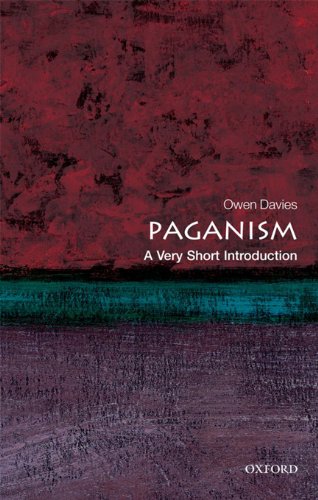
Paganism’ is an evocative word that, even today, conjures up deep-seated emotions and prejudices. Until recently, it was primarily a derogatory term used by Christians to describe the non-Christian cultures confronted and vanquished by their Churches. For some it evokes images of sacrifice and barbaric behaviour, while for others it symbolises a peace-loving, nature-worshipping spiritual relationship with the earth.This Very Short Introduction explores the meaning of paganism – through a chronological overview of the attitudes towards its practices and beliefs – from the ancient world through to the present day. Owen Davies largely looks at paganism through the eyes of the Christian world, and how, over the centuries, notions and representations of its nature were shaped by religious conflict, power struggles, colonialism, and scholarship.Despite the expansion of Christianity and Islam, Pagan cultures continue to exist around the world, whilst in the West new formations of paganism constitute one of the fastest-growing religions. Focussing on paganism in Europe, but exploring the nature of paganism globally, Davies looks at how Europeans discovered new cultures through colonial expansion, missionary work, and anthropological study. Contemporary social paganism can be a liberating and social force, and the idea of a globalPagan theology is now on the religious map.ABOUT THE SERIES: The Very Short Introductions series from Oxford University Press contains hundreds of titles in almost every subject area. These pocket-sized books are the perfect way to get ahead in a new subject quickly. Our expert authors combine facts, analysis, perspective, new ideas, and enthusiasm to make interesting and challenging topics highly readable.
User’s Reviews
Reviews from Amazon users which were colected at the time this book was published on the website:
⭐I got about 2 chapters through this book. I was looking for an introduction, but found it very scholarly and detailed.
⭐Also see Julius Ceasar.
⭐This focuses necessarily on Christianity, as that force has for very long defined what it is not as pagan. For the other side, we lack a lot of trustworthy information. For the enemies of the “pre-Christian indigenous religions,” if that slippery phrase itself not wholly supported by Owen Davies is any guide, rallied to denigrate their opponents. Pagans under Rome did not always live in the “sticks,” but in cities, furthermore, often.The opposition faded, but held out among the Balts, Slavs, and Scandinavians. Yet these places also betray influences by Christians. The archaeological record finds temples were probably more political sites than places of worship. And the common appeal popularized by Augustine of Canterbury to build on pagan places the Christian sacred spaces was a clever conversion move, to ease and entice those reluctant to baptism.While such holdouts in many realms lingered, the claims of continuity from some unbroken underground lineage as advanced by Margaret Murray and Gerald Gardner early last century give way to harsh reality. I wish Davies had included those who from Italy or Iceland assert such sustaining practices, but in such a short primer, this shifts rapidly from European to New World and African and Eastern intrusions, as who was pagan grew alongside Christian missionaries’ attempts to overcome such beliefs, demonized by Augustine of Hippo and leading to much persecution and death.I also wondered about Islamic attitudes towards polytheists. Glimpses can be gleaned, but again, this concentrates on Christian promulgations and prohibitions against magic, sorcery, idol worship, sacrifice animal or human, and many gods. Even the term polytheism gains suspicion, for Philo of Alexandria invented it to differentiate those who went after false deities instead of the One True God of the Torah. So, deep within monotheism rests a fundamental distrust and an active determination to root out those who defy the core message of unity and faith, by belief in many powers.Davies has a lot to compress, so the pace is rapid. The suggested reading list is briefer than many volumes in this series, But the bibliography, even if it is not tied to the chapters that tightly, is in-depth. A necessary corrective to romanticizing or fearing this common belief system, one that in an ecologically threatened reality seeks to restore some semblance of connection to earth, and the spirits and forces that may swirl around us.
⭐This is exactly what it claims to be: a very short introduction to the concept of paganism. Davies’s take a historical view on the development of the concept from early Christian antiquity unto the modern neo-pagan movement. This means Davies must take the broadest overviews and focus on a few key historical facts and anecdotes to make his points. Davies makes it abundantly clear that Christianity has been the primary definer of the pagan, even in modern terms and the distinctions around the neo-pagan movement. This also means that one with no historical context would be a bit lost. If one wants more information on the topic, the work of Ronald Hutton is highly relevant and oft-cited by Davies.
⭐The best very short introductions bring a period of hisory to life or teach you new perspectives. This one is more of a list of facts and dates, and the main takeaway is that we know very little about indigenous religions. It lacks the passion and punch that other books on the series have.The first 2/3rds could be titled: “the christianization process: a very short introduction.” It is a general summary of the spread of the christian faith and how christians viewed with and interacted with the religions they encountered. It’s filled with generalizations and isn’t very interesting.While the first 2/3rds of the book are pretty ho-hum, the final third about the interest in modern paganism from the late 19th century onwards does get interesting. If this in particular is what interests you, then I would recommend getting this book from a library and starting around chapter 5.
⭐Early on in the book, the author admits that historically, there’s not much “there” there regarding paganism; it’s an essentially negative concept which defines something as being non-Christian (and was sometimes seriously applied to kinds of Christianity considered by the historical writer to be heterodox). The religions identified as paganism in antiquity and after it were not all polytheistic, nor indigenous, nor pre-Christian.So, since there’s very little real common ground among the ‘pagan’ religions, the author says that his book is a history of the ‘concept’ of paganism down the centuries. And while there is some interesting material on the evolution of the term and its applications near the beginning and especially in the last two chapters of the book, the middle chapters drag, and consist largely of a chronicle of who converted to Christianity when. I think the book suffers from this. It would have been better, I think, to omit most of the historical material and focus on the way the concept was formed in antiquity, and how it was appropriated by those who began to self-identify as pagans in the late 19th and early 20th centuries (the final two chapters, which I have already mentioned, treat this topic and are by far the most interesting part of the book).
⭐I think these small books are great for ppl reading online or buying the book.They gives you exactly what it says, a great Knowledge of something I’m interested in and gives you important information that you might not learn about for weeks if it’s a thick book. These books are s 10 of 10 for me.
⭐Very deep, insightful and very encouraging to rediscover myself
⭐A great book. Small and easy but detailed and informative.
⭐Dry uninspiring. Really struggled to drag myself through this book. I would assume that there are more informative books on the market.
⭐I think this is a worthwhile purchase. Its not a short introduction. Its a comprehensive overview of what we know. The bottom line being that all modern paganism is a modern invention as we have no idea what people believed 2000 years ago apart from what was recorded by non pagan(Christian) sources. This is because their writings were destroyed or they were non literate societies. Well worth investigating to gain an idea of what we do actually know of paganism. And the next time someone tells you they believe in Wicca or such like, laugh in their face and ask them which ancient Wiccan texts they follow
Keywords
Free Download Paganism: A Very Short Introduction (Very Short Introductions) 1st Edition in PDF format
Paganism: A Very Short Introduction (Very Short Introductions) 1st Edition PDF Free Download
Download Paganism: A Very Short Introduction (Very Short Introductions) 1st Edition 2011 PDF Free
Paganism: A Very Short Introduction (Very Short Introductions) 1st Edition 2011 PDF Free Download
Download Paganism: A Very Short Introduction (Very Short Introductions) 1st Edition PDF
Free Download Ebook Paganism: A Very Short Introduction (Very Short Introductions) 1st Edition