Ebook Info
- Published: 2016
- Number of pages: 304 pages
- Format: PDF
- File Size: 4.33 MB
- Authors: Owen Davies
Description
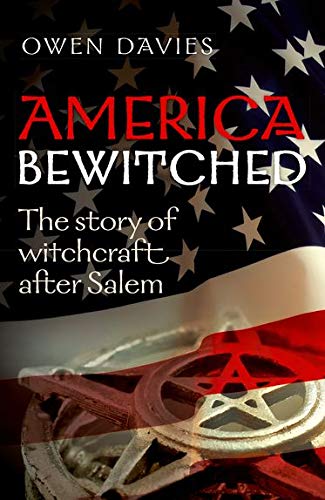
America Bewitched is the first major history of witchcraft in America – from the Salem witch trials of 1692 to the present day. The infamous Salem trials are etched into the consciousness of modern America, the human toll a reminder of the dangers of intolerance and persecution. The refrain ‘Remember Salem!’ was invoked frequently over the ensuing centuries. As time passed, the trials became a milepost measuring the distance America had progressed from its colonial past, its victims now the righteous and their persecutors the shamed. Yet the story of witchcraft did not end as the American Enlightenment dawned – a new, long, and chilling chapter was about to begin. Witchcraft after Salem was not just a story of fire-side tales, legends, and superstitions: it continued to be a matter of life and death, souring the American dream for many. We know of more people killed as witches between 1692 and the 1950s than were executed before it. Witches were part of the story of the decimation of the Native Americans, the experience of slavery and emancipation, and the immigrant experience; they were embedded in the religious and social history of the country. Yet the history of American witchcraft between the eighteenth and the twentieth century also tells a less traumatic story, one that shows how different cultures interacted and shaped each other’s languages and beliefs. This is therefore much more than the tale of one persecuted community: it opens a fascinating window on the fears, prejudices, hopes, and dreams of the American people as their country rose from colony to superpower.
User’s Reviews
Editorial Reviews: Review “Owen Davies tells a fascinating tale that has never been told before with all the skills of a true craftsman. Its sheer breadth of coverage amazes from the start.”–Ronald Hutton, author of The Triumph of the Moon: A History of Pagan Witchcraft”An extraordinary achievement….I was frankly staggered at the range of Davies’s research.”–Professor H. C. Erik Midelfort, University of Virginia”Davies tells a highly original story, yet one that makes instant sense….This is a vivid, arresting, insightful book, written with sympathy and human understanding. It extends Davies’s reputation as an original thinker in the field, when so much work is derivative or merely illustrative of well-established ideas.”–Malcolm Gaskill, Fortean Times”Davies’s catholic approach has produced a volume densely packed with fascinating material. Along with detailed excurses into folklore–there are sustained discussions of hairballs, hag-riding, and skin shedding–the author presents a trove of historical anecdotes and case studies drawn from his wide research into local histories, obscure newspapers, and other neglected byways.”–Nova Religio About the Author Owen Davies is Professor of Social History at the University of Hertfordshire. He has written extensively on the history of magic, witchcraft, ghosts, and popular medicine, including The Haunted: A Social History of Ghosts (2007), Grimoires: A History of Magic Books (2009), Paganism: A Very Short Introduction (2011), and Magic: A Very Short Introduction (2012). He is also the editor of The Oxford Illustrated History of Witchcraft and Magic, which is forthcoming from Oxford University Press.
Reviews from Amazon users which were colected at the time this book was published on the website:
⭐I thought that this book was well researched and as a historian, I thoroughly enjoyed the perspective given. I thought that the author did a good job of introducing to readers how accusations of witchcraft evolved from the explosion of the Salem Witch trials. There were, however, several issues that I’ve found with the book.I think the organization left a little be desired. I understand that he was breaking it up into laws, medical, etc., but jumping around geographically and chronologically made the entire thing a little disjointed.Additionally, I think that the last chapter of the book is in need of an update and/or expansion. The author addresses modern neopaganism with an air of superiority and writes it off entirely, condemning it and passing it off as a sham. While I think that this is an entirely valid viewpoint, I think it is also important, as a historian, that the author address the cultural phenomenon that neopaganism has become. Admittedly, neopaganism has developed quite a bit in the five years that the book was published, but I believe that he fails to address the sects of the neopagan community that address that modernity of their religion. Instead of casting modern pagans as disillusioned, I think the author would do well to revisit the cultural expansion of neopagnism and perhaps spend more time investigating, instead of writing it off as an afterthought and grouping all pagans in the with the likes of Gardner and Crowley (especially considering the pentacle on the cover).The book was very informative, but the cover was misleading and I think Davies could expand the audience of readers by spending more time addressing modern practitioners of “witchcraft.”
⭐I am still reading it. The writing style is a little confusing. Full of facts and it’s okay, just very hard to get through.
⭐So! You thought witchcraft fears ended with the shameful acts of Salem in 1692?Not so fast. In this highly readable and exhaustive book, Davies fills in much that has been forgotten from the time of Salem, all the way to the 21st century. Although people were not legally hanged anymore, fear of witches persisted among many people. This unfortunately tore up communities and led to the murder of many people by those who believed they were bewitched.Filled with many fascinating stories about the witchcraft beliefs of Europeans, Native Americans and African Americans, this is a rewarding addition to the library of those interested in early American superstitious beliefs.
⭐I’ve often wondered what happened to witchcraft in America after Salem. This book is an excellent analysis of just that question. Witchcraft and other supernatural beliefs didn’t disappear. They “reinvented” themselves with the waves of immigrants of the 18th and early 20th centuries. Owen Davies does a wonderful job of documenting that process.
⭐This is a great book. I’d especially recommend it to those who think that witchcraft started with Gerald Gardener. I originally took this out of the library, but thought I should own a copy.
⭐thank you! thank you! great book!!!
⭐Most everyone is familiar with the infamous Salem witch trials. Innocent people were accused and convicted of being witches and around 20 people were executed as a result. But this was far from the end of American obsession with black magic, and this history is explained for all to hear in the pages of America Bewitched.Witches and laws against them were on the books for centuries. This book uncovers many of the accusations, the ensuing trials, and the convictions of people accused of being a witch or warlock. Oftentimes, the accused were murdered outright and their slayers sometimes managed to avoid legal conviction by citing existing laws and/or their own religious beliefs. Anyone could be accused of witchery. It could be something as simple as begging for food, boiling certain plants, or touching someone who later became sick. Women were the most likely to be accused of witchcraft and the burden of proof, apparently, was on the accused to prove that they were not witches- something that was next to impossible. And if you were poor, well, that only magnified the chance someone would accuse you of being a witch. The many instances of this dark chapter in American history are captured in this book and the fact that so many people got away with destroying others’ lives is an outrage. Let little is ever mentioned about this in American history textbooks or elsewhere.America Bewitched is a well- written and well- researched book. The author really went out of his way to uncover the history and untold stories of witchcraft in America and as you read, you will find yourself in a state of disbelief. I cannot imagine living in an America like the one described in this book; an American where irrationality, prejudice, and blatant stupidity ruled the day. You had to watch everything you did, lest someone might accuse you of bewitching them and then try to attack or even kill you. It’s shocking and I find it hard to believe that the idea of witches and casting spells lasted as long as it did. Well into the 1900’s, people were still using the suspicion of witchcraft as an excuse to go after people they didn’t like.America’s past is muddied with eras we would like to forget. The Salem witch trials were only the beginning of an ugly era that lasted for far too long. America Bewitched is an excellent book about witchcraft and the thousands of people who fell victim to false accusations. American history textbooks and public leader often try to gloss over this like it never happened, but it did happen and it something we need to educate ourselves and young people about, for a better tomorrow. Read America Bewitched, and discover a dark epoch of America’s past that, hopefully, will never be repeated.
⭐First complaint – why did the publisher choose such a small font size with such little separation between the lines? I found this book very uncomfortable to read. Second complaint – what I did read (I gave up two-thirds through) was exceptionally dry and dull. The author’s style makes the history of witchcraft in America as exciting as a town parking ordinance. I have read many other equally scholarly books on fringe religion and the occult in America and they were far more enlightening and entertaining. The author assembled masses of facts but lacked the ability to compose those facts into a compelling narrative. Fascinating subject. Shame about the treatment.
⭐good
⭐This is a well researched reference book on witchcraft in America. Although it uses the Salem Witch Trials in 1692 as a reference point, it considers witchcraft both before and after this time. The text is peppered with examples and points out that there were numerous deaths of supposed witches subsequent to Salem, but these were almost exclusively extra judicial with people taking the law into their own hands. This has a lot to do with the liberal or lax, depending which way you view it, gun laws in the United States.The book makes some good parallels in demonstrating that accusations of witchcraft were often linked with racism towards both the slave population unwillingly brought in, and the native Indian population. These had their own customs which it was easy to decide was witchcraft, when viewed by superstitious immigrants. It is interesting that examples of violence towards `witches’ took place right up to nearly the modern day.The final part of this study deals with attitudes towards witchcraft in modern day America. There has been a sea change in attitudes towards the supernatural fuelled by TV programmes such as Bewitched, Charmed and Buffy the Vampire Slayer. Many young people have been tempted to dabble with a little attempted spell making in ways which would have got them into serious trouble in days gone by. However, since the introduction of Gardnerian Wiccan practices in the 1940s, it is fair to say that Wicca and Pagan practices have become fairly widely accepted as an alternative religion in a way which would have been hard to predict.This is an interesting academic study which comes down to 225 pages – the rest is notes and references. However, it is fairly dense and not the sort of text which is easy to read cover to cover.
⭐This is a well-researched and scholarly review on witchcraft in the USA. Say witchcraft and America in the same breath and immediately the name Salem springs to mind. The Salem trials in 1692 are known for the savagery with which the accused were dealt with and most people believe that this was the end of the matter. However, this wasn’t the case and as the author describes, the persecution of alleged witches continued into the twentieth century just not as vocally. Davis also points out that whilst Salem was a particularly gruesome example it wasn’t the only one, just the most famous or I should say notorious.Sometime after Salem the offence that witches were hauled into court over changed from being a criminal offence to a civil one: i.e. from a capital offence of `bringing forth the devil’ to committing fraud by `claiming to perform witchery’. Davis’s contention is that witchcraft didn’t disappear from America after 1692 just that there is a gradual change in perception. To do this Davis uses decade’s worth of court, census records and newspaper reports to provide background and understanding of the belief in witchcraft in America and how it developed and was treated after Salem, interestingly how details of lurid crime reported in newspapers was a front for charging someone believed to be a witch with an actual indictable crime.Another argument that Davis explores is that as different immigrant groups arrived in America some of their religious practices were viewed by other immigrant groups as witchery. To a certain extent this allowed ethnic groups to be demonised as devil worshippers and therefore different to the god-fearing majority population and a way to keep them in check. Examples given are of the use of `folk’ remedies used in treating illness. Even indigenous Americans were viewed with suspicion and accusations of witchcraft against them were commonplace.This is a fascinating, well researched book on the history of witchcraft in America from Salem to the present day.
⭐I have learned much more from this book than I thought likely at the outset; it contains a wealth of information, it explains a great deal about the USA, its inhabitants, their origins and how witchcraft has affected the language and culture. It’s a broad history covering a wide geographic area, about four hundred years and the major ethnic groups from European settlers and African-American slaves to Mexicans, Hispanics and various Native American peoples. Bizarrely and disappointingly it does stop towards the end of the twentieth century and entirely ignores the recent rise of witches, wizards and the like in US popular culture.`America Betwitched’ is, unfortunately, a good history wrapped in a not very good book. Context is severely lacking; it tells you about places, products and cash amounts without explaining where, what or how much they are in modern day equivalent. There are no maps, pictures are few and far between, odd words are used with little or sometimes no explanation and medicinal plants and products referred to with no explanation as to what they do. If you don’t know what kind of places the panhandle of Alaska or the Ozarks are you might find some of the chapters confusing.The topic is wonderful, the tales told thought provoking and fascinating but the writing lets it down quite badly. Paragraphs are huge and meandering, the author often flips back and forth between topics, the subject index is dire, the chapters not well organised and there are some sections that are simply dull. You will learn a great deal from this book though maybe not as much as you’d have thought.
Keywords
Free Download America Bewitched: The Story of Witchcraft After Salem in PDF format
America Bewitched: The Story of Witchcraft After Salem PDF Free Download
Download America Bewitched: The Story of Witchcraft After Salem 2016 PDF Free
America Bewitched: The Story of Witchcraft After Salem 2016 PDF Free Download
Download America Bewitched: The Story of Witchcraft After Salem PDF
Free Download Ebook America Bewitched: The Story of Witchcraft After Salem