

Ebook Info
- Published: 2011
- Number of pages: 216 pages
- Format: PDF
- File Size: 38.76 MB
- Authors: David O’Connor
Description
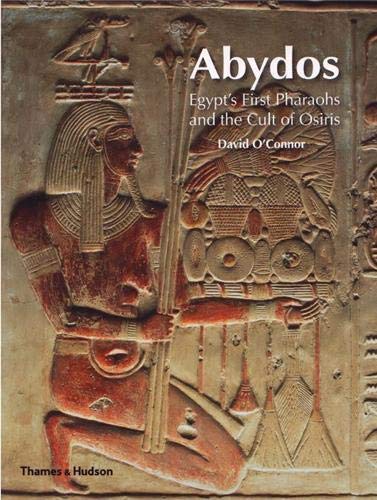
“O’Connor presents the rich fruits of his long labors in this volume certain to appeal to scholars and Egyptophiles alike.”―KMT The ancient site of Abydos lies between the towering cliffs of the Egyptian high desert and the lush green floodplain of the Nile. As both the burial place of the first kings of Egypt and a cult center for Osiris, god of the dead, this sacred area has long tantalized archaeologists with incredible finds. With over forty years’ experience of excavation and research at Abydos, David O’Connor is in an unrivaled position to provide the most authoritative and up-to-date account of this unique Egyptian site. Here, for the first time, Professor O’Connor not only explains the complex history of Abydos but also vividly evokes the power that the sacred landscape held for contemporary Egyptians. This beautifully illustrated book will be of interest to anyone who has ever wondered about the origins of one of the greatest civilizations in world history. 11 color and 102 black-and-white illustrations
User’s Reviews
Editorial Reviews: Review “In a masterly fashion… does justice to one of ancient Egypt’s most significant archeological sites. Highly recommended” – Choice“…the appearance of an up-to-date book on the site is most welcome.” – Historian“A superbly organized and impressively illustrated history of this seminally important site…The culture, the history, and archeological discoveries superbly presented.” – Midwest Book Review About the Author David O’Connor is Professor of Ancient Egyptian Art, Institute of Fine Arts, New York University.
Reviews from Amazon users which were colected at the time this book was published on the website:
⭐David O’Connor has been excavating at Abydos since 1967 — probably his most famous find is the series of boats near the enclosures of Khasekhemwy (Shunet el Zebib) and the Western Mastaba — and so is well-qualified to author this valuable and comprehensive work on the site. O’Connor pulls together the history of the development of the site and its excavation, as well as discussing the significance of various discoveries. It is an excellent, and well thought out compendium. The book is easy to read and well written, but intended for those with at least some knowledge of the subject matter, not absolute beginners.Especially valuable, and sometimes difficult to find elsewhere, is the information on more recent discoveries and theories. To provide a few examples: he discusses the excavations by Stephen Harvey at the Ahmose complex, Janet Richards at the North and Middle Cemeteries, Josef Wegner at the Senwosret III complex, Mary-Ann Pouls Wegner’s survey of the cultic landscape, the Akhenaten talatat found at the Ramesses II temple, and the theories of Gunter Dreyer regarding the early hieroglyphic signs from Tomb U-j. This is almost priceless information – much of it is only available in more expensive, subscription or foreign language publications. The discussions here are, of course, often much briefer than are available elsewhere, and O’Connor does supply a bibliography for further reading (and I’ve added a few links at the end of this review).O’Connor deals with many theories (tomb development, the meaning of various symbolic elements such as mounds and pyramids, etc.), and he is one of the few Egyptologists who seems willing to say that in many cases the limited data available is sometimes open to more than one interpretation. He fairly treats competing theories, but this is also quite a personal work by him, and he is not hesitant to offer his opinion. He also points out that excavations are ongoing and there is still much work to do, and so it is only proper to expect new information to change many ideas.The subtitle of the book refers to “Egypt’s First Pharaohs and the Cult of Osiris.” O’Connor deals extensively with those topics, but makes it clear to the reader how the later history of the site adds to our understanding of the earlier history. In fact, much of the information on the first kings comes later in the book, after the groundwork is laid. That may sound confusing, but it makes perfect sense in the context of the book.Below is a list of the chapters and, in parentheses, my notes on some topics discussed in each.1. The Discovery of Abydos (early excavations).2. Osiris – Eternal Lord Who Presides in Abydos (the Osiris mythology).3. The Temple of Seti I (the history of the beautiful temple and the Osireion).4. The Rediscovery of Abydos (the second wave of excavations, including those of O’Connor himself).5. The Evolution of a Sacred Landscape (the Old Kingdom and the First Intermediate Period).6. The Expanding Landscape of the Middle Kingdom (Abydos in the Middle Kingdom, including the Senwosret III complex and the memorial chapels).7. The Landscape Completed: Abydos in the New Kingdom (the Ahmose complex, Thutmose III, Akhenaten (who may have had a structure at Abydos), the “Portal” Temple of Ramesses II).8. The Climax of the Osiris Cult (the Late Period).9. The Royal Tombs of Abydos (The Dynasty 0 and Early Dynastic tombs at Umm el Qa’ab).10. The Mysterious Enclosures of Abydos (a fascinating chapter on the Shunet el Zebib and other enclosures – with some equally fascinating theories).11. Boat Graves and Pyramid Origins (how the finds at Abydos relate).12. Abydos: Summing-Up.O’Connor ends with useful and current information on visiting Abydos.Let me finish by thanking the publisher, Thames & Hudson, for another excellent work at a reasonable price. I have an extensive Egyptology library (over 700 books) and I am shocked at how many recent Egyptology books cost $100-$500, and so many are out of my price range. Of course, I understand that more people will buy a book like this than a specialized report, but still, the price tags on many other new books, and some reprints, are beyond explanation.By the way, some other current publications referenced, available at Amazon, include Janet Richards’
⭐and Josef Wegner’s
⭐. Also invaluable is
⭐.
⭐One would wish to like this book, but it can hardly be described as well written. Mostlyit reads like an expansion of an after-dinner speech fulsomely praising the author’s formerand present colleagues, with little asides about their achievemets. It is impossible toread very far without one’s train of thought being interrupted by an incomplete personal reference that distracts without informing. Really,the prospective audience could likely handle footnotes and endnotes! After all, we areassumed to know (and do know) who Khasekhemwy was!I note the problems with this book with particular sensitivity because I am also readingMartin Veltman’s book on particle physics, in which he attempts something similar, with complete success. Veltman uses a layout in which personal information and anecdotes areplaced in boxes independent of the main text.But it is the man, not the method, that solves the problem. I have read numerous bookson Egyptology which mix the subject and the excavators in a manner which is bothagreeable and informative. Michael Hoffman, in particular, achieved this in his”Egypt before the Pharaohs: the Prehistoric Foundations of Egyptian Civilization”, which ismy favorite book on Egyptology.However, the graphical material – photographs, computer graphics, drawings, maps – istruly excellent. I would suggest that a second edition be prepared, in which all of thecurrent text is stripped out and rewritten by a capable graduate student or post-doctoralfellow, with the graphics and images maintained “as is”.My three stars are mainly given for the imagery.
⭐David O’Connor gives a broad view of the history and discoveries, of a so important place as ancient Abydos and the cult of Osiris, in ancient Egypt. Many revealing insights and possible interpretations about the discoveries. Beautiful drawings and maps everywhere. The book does not go into all the details but gives a realy informative oversight of the place and its long history. The writing is very compact and needs much attention though without being unnecessary technical. I enjoyed it very much. There is a lot of information that you can find nowhere else. I liked also the short information at the end about how to visit the place and see the most important with your own eyes. Some general knowledge about the history of ancient Egypt however is advisable.
⭐the stars are enough
⭐I recently had the pleasure of traveling to Abydos and visiting the Temple of Seti I. This book is an excellent record of that experience. I wish I could have had it with me.
⭐Very well written and explained, excellent illustrations supplied, helped me better to understand the development and history of ancient Egypt.
⭐Finally a very detailed and comprehensive book about Abydos. I feel everything was covered.Great!!
⭐I sent the book back for a refund. Not scholarly work.
⭐Good insight into this subject
⭐This book is a great resource for my research into ancient Egypt.
⭐The last book on the first two dynasties was by the late prof.W B Emery in the 1960s and this could have been a badly needed update especially as considerable re -excavation has now taken place in the area since prof. Emery’s expeditions.The general area of Abydos is explored in great detail but at the expense of the archaeoligical area. Prof Emery devoted far greater detail to the actual burial areas and tombs and I learned a lot more from these details.The book quality of the paper, diagrams and photographs are excellent and deserve credit but would like to have seen more detail of the “recycled” tomb that was used as the supposed burial place of Osiris by later generations of ancient Egyptians. What could it have looked like prior to rediscovery and in later use as the official burial place?Even the binding of the book seemed baffling. The New Kingdom was dealt with in the first chapter, the Middle Kingdom in the second with the Archaic period last. I would have thought that the reverse order more useful.
⭐Unlike other books in this series (by Thames and Hudson) this one is a bit tedious – as is the author if you listen to him speaking. Abydos is a fascinating venue with incredible significance Dynasty 0/1 and then for Dynasty 19, plus other great stuff. The book never really captures the mystery and essence. However, it’s a decent attempt to outline key aspects of this fascinating site.
⭐Abydos was the sacred city of Egypt where his first rulers were buried. Very interesting read for anyone who loves Ancient Egypt and Archeaology
Keywords
Free Download Abydos: Egypt’s First Pharaohs and the Cult of Osiris (New Aspects of Antiquity) in PDF format
Abydos: Egypt’s First Pharaohs and the Cult of Osiris (New Aspects of Antiquity) PDF Free Download
Download Abydos: Egypt’s First Pharaohs and the Cult of Osiris (New Aspects of Antiquity) 2011 PDF Free
Abydos: Egypt’s First Pharaohs and the Cult of Osiris (New Aspects of Antiquity) 2011 PDF Free Download
Download Abydos: Egypt’s First Pharaohs and the Cult of Osiris (New Aspects of Antiquity) PDF
Free Download Ebook Abydos: Egypt’s First Pharaohs and the Cult of Osiris (New Aspects of Antiquity)