Ebook Info
- Published: 2010
- Number of pages: 284 pages
- Format: PDF
- File Size: 2.89 MB
- Authors: Norman L. Cantor
Description
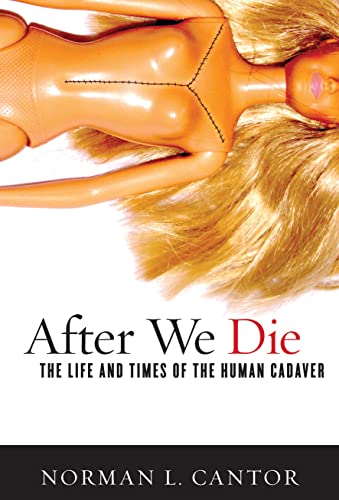
What will become of our earthly remains? What happens to our bodies during and after the various forms of cadaver disposal available? Who controls the fate of human remains? What legal and moral constraints apply? Legal scholar Norman Cantor provides a graphic, informative, and entertaining exploration of these questions. After We Die chronicles not only a corpse’s physical state but also its legal and moral status, including what rights, if any, the corpse possesses.In a claim sure to be controversial, Cantor argues that a corpse maintains a “quasi-human status” granting it certain protected rights―both legal and moral. One of a corpse’s purported rights is to have its predecessor’s disposal choices upheld. After We Die reviews unconventional ways in which a person can extend a personal legacy via their corpse’s role in medical education, scientific research, or tissue transplantation. This underlines the importance of leaving instructions directing post-mortem disposal. Another cadaveric right is to be treated with respect and dignity. After We Die outlines the limits that “post-mortem human dignity” poses upon disposal options, particularly the use of a cadaver or its parts in educational or artistic displays. Contemporary illustrations of these complex issues abound. In 2007, the well-publicized death of Anna Nicole Smith highlighted the passions and disputes surrounding the handling of human remains. Similarly, following the 2003 death of baseball great Ted Williams, the family in-fighting and legal proceedings surrounding the corpse’s proposed cryogenic disposal also raised contentious questions about the physical, legal, and ethical issues that emerge after we die. In the tradition of Sherwin Nuland’s How We Die, Cantor carefully and sensitively addresses the post-mortem handling of human remains.
User’s Reviews
Editorial Reviews: Review “Although death is a universal experience, few of us have looked beyond the simple choice between burial and cremation. For those who share the author’s curiosity, Mr. Cantor has provided an informative, thorough, and often entertaining explication of the fate of our bodies.”―New York Journal of Books”Norman Cantor has taken a subject that could be dull and dry and written an extensive and interesting account of the various customs and practical questions that might arise concerning the care of a corpse. . . . Cantor’s ingenuity is manifested by his ability to present lively examples and intriguing anecdotes.”―Health Progress”A fascinating book, written in a lively, accessible style.”―Choice”Highly readable and offers several examples of Cantor’s wry sense of humor. It also reveals an extraordinary depth and breadth of research and advances a number of serious conclusions.”―Journal of Legal Medicine”Cantor’s curiosity about the dead is catching. A moment’s dip into this book can easily turn into an afternoon as he brings together―with clarity, insight, and, dare we admit, some entertaining value―all of the current major legal, ethical, and social issues regarding death.”―Lois Shepherd, professor of law and biomedical ethics, University of Virginia”After We Die is an honest, insightful, and informative look at how the body is handled after death and how much of this handling can be preplanned by those who wish to control their own fate. It challenges our aversion to the corpse, or more specifically our thoughts about our own corpsehood, and convinces us that the moral of the story is to articulate in advance our preferences for its disposition.”―Christine Quigley, author of The Corpse: A History and Modern Mummies: The Preservation of the Human Body in the Twentieth Century About the Author Norman L. Cantor is a distinguished professor emeritus at Rutgers Law School, Newark, who taught in the fields of constitutional law, contracts, and bioethics. He has published widely in legal and medical journals on the topic of the legal handling of dying medical patients, and is the author of three books: Making Medical Decisions for the Profoundly Mentally Disabled, Advance Directives and the Pursuit of Death with Dignity, and Legal Frontiers of Death and Dying.
Reviews from Amazon users which were colected at the time this book was published on the website:
⭐No original research. Short on adequate research in spite of bibliography of 17 pages. A totally disorganized regurgitation of others’ writings. Better to read Iserson or Roach or Mitford or any of the others directly. A lot of stating the obvious–having sex with a corpse is unacceptable. Blatant errors, probably from copying others’ errors. For example–“Without proper disposal, a corpse not only gives sensory offense, it poses some danger of contagion to the living.” Not unless it was contagious prior to death. Or, in reference to the mummies in Guanajuato, Mexico,” Residents disinterred dozens of such mummified bodies and displayed them as tourist attractions.” No, they were disinterred when the families no longer paid the grave rent. Or, “When Kennedy’s ashes were scattered from a naval ship at sea, the wind blew the remains back on board the vessel.” The Catholic church is against scattering. The entire box was tossed into the sea which is why it was considered “burial at sea” and acceptable to the Catholic church. Or, “Metal remnants may be left among the ashes. These include gold or silver tooth fillings . . . ” Nope! They vaporize, according to a U. of Minnesota study. And a niche is for cremated remains, not caskets. The blunders go on and on.
⭐This is not a legal text, nor is it comprehensive or complete. But it is entertaining & interesting reading, and touches on a variety of issues that you may not have previously considered. The book is respectful, not comical. I could hardly put it down. I learned about it in a review in Columbia University (alumni) magazine, which recommended it.
⭐I didn’t think a book on this subject would be interesting or humorous, but I was surprised. It made me aware that if I want to have any say in what happens to me after death, I’d better do something aboutr it.The humor was also enjoyable.
⭐I am at a loss as to the previous reviewer’s negativity. – this was a really good read – funny, interesting, at times compelling. I didn’t read it as a textbook; I read it as the informative, interesting book that it is. I recommend it because this is a topic that is usually found in scholarly, dry tomes and rarely discussed in public. Yet it is a topic that certainly affects us in a myriad of ways, as the author adroitly points out, from providing medical hospitals with a most needed teaching tool, allowing researchers to advance their own forensic knowledge, and adding to our knowledge of history, to name just a few. It whetted my appetite and expanded my knowledge base AND was amusing. A really good read!!!
⭐OK
Keywords
Free Download After We Die: The Life and Times of the Human Cadaver 1st Edition in PDF format
After We Die: The Life and Times of the Human Cadaver 1st Edition PDF Free Download
Download After We Die: The Life and Times of the Human Cadaver 1st Edition 2010 PDF Free
After We Die: The Life and Times of the Human Cadaver 1st Edition 2010 PDF Free Download
Download After We Die: The Life and Times of the Human Cadaver 1st Edition PDF
Free Download Ebook After We Die: The Life and Times of the Human Cadaver 1st Edition