Ebook Info
- Published: 2012
- Number of pages: 412 pages
- Format: PDF
- File Size: 3.32 MB
- Authors: Elizabeth Perry
Description
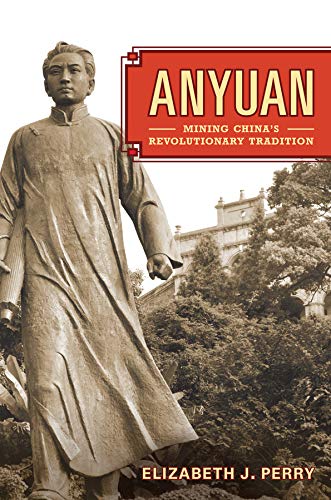
How do we explain the surprising trajectory of the Chinese Communist revolution? Why has it taken such a different route from its Russian prototype? An answer, Elizabeth Perry suggests, lies in the Chinese Communists’ creative development and deployment of cultural resources – during their revolutionary rise to power and afterwards. Skillful “cultural positioning” and “cultural patronage,” on the part of Mao Zedong, his comrades and successors, helped to construct a polity in which a once alien Communist system came to be accepted as familiarly “Chinese.” Perry traces this process through a case study of the Anyuan coal mine, a place where Mao and other early leaders of the Chinese Communist Party mobilized an influential labor movement at the beginning of their revolution, and whose history later became a touchstone of “political correctness” in the People’s Republic of China. Once known as “China’s Little Moscow,” Anyuan came over time to symbolize a distinctively Chinese revolutionary tradition. Yet the meanings of that tradition remain highly contested, as contemporary Chinese debate their revolutionary past in search of a new political future.
User’s Reviews
Editorial Reviews: Review “Meticulously researched and elegantly narrated. . . . It is a book well worth reading.” — Carla Nappi ― New Bks In East Asian Stds Published On: 2013-03-05″This is Elizabeth Perry at her best: the book achieves its aims and is a pleasure to read.” — Timothy Cheek ― Journal of Asian Studies Published On: 2014-02-01″Theoretically stimulating, empirically rich, and analytically penetrating . . . essential reading for students of Chinese Communism.” ― The China Journal Published On: 2014-08-01 From the Inside Flap This book is classic Perry — elegantly and clearly written, based on rich and previously unexplored source material, full of human detail on political actors at the local level, presenting a gripping narrative and a clear analytical thrust. Perrys account of Anyuan is fresh and original, making a convincing case for the areas enduring contribution to the revolution. – Joseph W. Esherick, UC San Diego, author of Ancestral Leaves From the Back Cover “This book is classic Perry — elegantly and clearly written, based on rich and previously unexplored source material, full of human detail on political actors at the local level, presenting a gripping narrative and a clear analytical thrust. Perry’s account of Anyuan is fresh and original, making a convincing case for the area’s enduring contribution to the revolution.” – Joseph W. Esherick, UC San Diego, author of Ancestral Leaves About the Author Elizabeth Perry is Henry Rosovsky Professor of Government at Harvard University and Director of the Harvard-Yenching Institute. She is the author of many books, most recently: Mao’s Invisible Hand: The Political Foundations of Adaptive Governance in China and Patrolling the Revolution: Worker Militias, Citizenship and the Modern Chinese State. Read more
Reviews from Amazon users which were colected at the time this book was published on the website:
⭐Professor Perry, my supervisor’s supervisor, is an expert in Chinese revolution and the history of the CCP. Her work on Anyuan, or we can say on the early development of the CCP in working class, is an excellent, thought-provoking, and empirically-solid research on both the history of the CCP and the sinification process of Marxism-Leninism, both of which has become more and more important in China study field abroad and domestically.
⭐Quick service and item as described. Would recommend and use this provider again.
⭐Elizabeth Perry’s work, “Anyuan: Mining China’s Revolutionary Tradition”, is striking not only because of its topic, but also because it approaches Perry’s argument – that cultural positioning was the key to the success of the Chinese Communist Party – in such a way as to craft a narrative rich in explanations, cultural examples, and illustrative analysis that allows not only her argument, but her array of examples, as well as the history of Chinese communism, to be accessible and interesting to those outside of her area of expertise. This book is able to clearly present a fairly complex argument framed in a unique way – around the town of Anyuan – complete with all of the relevant political and cultural history necessary to understand it, many examples to support it, and to do so while including – but not getting bogged down with – details that make it enjoyable and understandable even to historians with no firm basis in Chinese history or culture. I would argue that this accessibility makes “Anyuan” as valuable a resources as its content does.After reading this book, I now have a mechanism for understanding how communism – “an alien import both ideologically and institutionally” (284) in China – was able to last where its Soviet counterpart could not. Arguably the most memorable line of the book, Perry asserts that “successful cultural positioning and patronage renders the foreign familiar; a Russian recipe can be made to taste Chinese” (287). After reading her book, she had convinced me – who has very little knowledge of Communist China and relied on her explanations and descriptions – that cultural positioning was key not only to the acceptance, but also the transformation and longevity, of the Chinese Communist party-state.Overall, the idea of cultural positioning is an interesting one and it seems like it could be a useful possibility to considering when trying to understand the lifespans of different regimes – regardless of whether they are communist or not.
⭐Perry has written a fascinating account of Anyuan – the location of a famous miner’s strike in 19xx, and a place closely associated with mao Zedong that once held a central place in the history of the CPC; and which briefly in the 1920s was known as “Little Moscow”. The changing fortunes and perceptions of Anyuan, subject not only to fluctuations in economic conditions but also to policy and personnel changes in distant Beijing are explained in detail and supported by interviews with long-term residents of the town and some of the major political actors. This book is strongly recommended to anyone interested in the longue duree of recent Chinese history.
Keywords
Free Download Anyuan: Mining China’s Revolutionary Tradition (Volume 24) in PDF format
Anyuan: Mining China’s Revolutionary Tradition (Volume 24) PDF Free Download
Download Anyuan: Mining China’s Revolutionary Tradition (Volume 24) 2012 PDF Free
Anyuan: Mining China’s Revolutionary Tradition (Volume 24) 2012 PDF Free Download
Download Anyuan: Mining China’s Revolutionary Tradition (Volume 24) PDF
Free Download Ebook Anyuan: Mining China’s Revolutionary Tradition (Volume 24)