Ebook Info
- Published: 2019
- Number of pages: 248 pages
- Format: PDF
- File Size: 2.39 MB
- Authors: Dan Hooper
Description
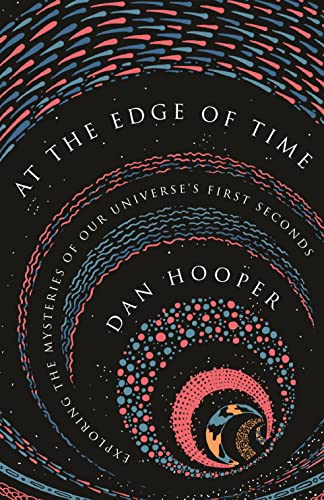
A new look at the first few seconds after the Big Bang―and how research into these moments continues to revolutionize our understanding of our universeScientists in the past few decades have made crucial discoveries about how our cosmos evolved over the past 13.8 billion years. But there remains a critical gap in our knowledge: we still know very little about what happened in the first seconds after the Big Bang. At the Edge of Time focuses on what we have recently learned and are still striving to understand about this most essential and mysterious period of time at the beginning of cosmic history.Delving into the remarkable science of cosmology, Dan Hooper describes many of the extraordinary and perplexing questions that scientists are asking about the origin and nature of our world. Hooper examines how we are using the Large Hadron Collider and other experiments to re-create the conditions of the Big Bang and test promising theories for how and why our universe came to contain so much matter and so little antimatter. We may be poised to finally discover how dark matter was formed during our universe’s first moments, and, with new telescopes, we are also lifting the veil on the era of cosmic inflation, which led to the creation of our world as we know it.Wrestling with the mysteries surrounding the initial moments that followed the Big Bang, At the Edge of Time presents an accessible investigation of our universe and its origin.
User’s Reviews
Editorial Reviews: Review “Beginning with Carl Sagan’s Cosmos in 1980, Big Bang books have become a genre that curious readers should check out every few years to keep up with breakthroughs (gravity waves being the latest). They can’t go wrong with Hooper’s. A lucid account that is neither dumbed down nor overly difficult.” ― Kirkus, starred review”I found myself getting wonderfully lost in this book, and swapping my usual pre-bedtime read for this. This is not something that has ever happened to me before with a popular science book!. . . I love that the book does not shy away from controversial or tough concepts. . . . This is essential reading for any cosmology enthusiast.”—Dr. Laura Nuttall, BBC Sky at Night”[At the Edge of Time]’s enthusiasm for its subject is contagious. From Einstein’s theories and Edwin Hubble’s discoveries to the Large Hadron Collider, the text presents scientific advancement as an exciting odyssey―if one that is, for the time being, often characterized by questions, to be answered at a future date to the satisfaction of all.”—Rebecca Foster, Foreword Reviews”[An] informed introduction to ‘the mysteries of our universe’s first seconds’.”—Andrew Robinson, Nature”Hooper takes the reader on a tour of our collective ignorance about the early universe. . . . Science is a messy endeavor, with dead ends and false alarms and backtracking; that can still be an interesting story, and this book succeeds in explaining both what we do know about the universe’s origins and what remains unknown.”—Jeff Foust, The Space Review”Scientists know precious little about what happened when the universe got its start: many cosmologists think space and time underwent an extremely rapid expansion called inflation, yet this theory raises as many questions as it answers. . . . Hooper takes readers on a mind-bending expedition through these questions and shows how they all connect to the beginning.”—Clara Moskowitz, Scientific American”If you’re mystified and curious about the mysteries of the Universe, including dark matter, dark energy, and cosmic inflation, and want a unique take on all of these puzzles with a peek behind how science-in-action works, you won’t want to miss this book.”—Ethan Siegel, Forbes”Hooper’s writing style has an almost palpable sense of excitement, which creates an incredibly engaging read as we travel back in time.”—Matthew Hodgson, Astronomy Now”This is definitely a book that will leave you musing on what might be the next big cosmological discovery.”—Deb Farkas, California Classroom Science”I thoroughly enjoyed reading this book. . . . [At the Edge of Time is] a brief but comprehensive account of the general development of current cosmological knowledge, written by an enthusiastic expert in the field and easy for the layman to follow.”—Colin Cooke, The Observatory Review “What a journey, from the very birth of the universe to its ultimate future. In accessible fashion, Hooper’s book does a great job explaining the fundamental laws of physics and showing how they play out in cosmic evolution.”―Sean Carroll, author of Something Deeply Hidden: Quantum Worlds and the Emergence of Spacetime”Where Weinberg’s The First Three Minutes left off, Hooper’s At the Edge of Time picks up. A riveting tour of modern cosmology told by one of its savviest guides, Hooper’s book takes us on a journey from our universe’s formerly inscrutable past to mesmerizing possible scenarios in its far future. A fascinating story that is to be savored.”―Brian Keating, author of Losing the Nobel Prize: A Story of Cosmology, Ambition, and the Perils of Science’s Highest Honor”A clear and engaging tour of the mysterious birth of our universe, At the Edge of Time will keep you at the edge of your mental seat.”―Daniel Whiteson, coauthor of We Have No Idea: A Guide to the Unknown Universe”At the Edge of Time is a gripping tale of the monumental discoveries and unsolved mysteries in cosmology. Well-written and exciting, Hooper’s book leads us from the early days of Einstein to the puzzles of the modern era, as well as through the author’s own adventures in the search for answers. He lays out these challenges in a way that will inspire a future generation of young scientists.”―Katherine Freese, author of The Cosmic Cocktail: Three Parts Dark Matter”This book convincingly guides readers through some of the hottest topics in modern physics and astronomy: Big Bang theory, dark matter, dark energy, and gravitational waves. Bringing a fresh perspective, Hooper effectively captures the feelings of the community of scientists working to solve the greatest mysteries and demonstrates that a scientific revolution might be around the corner.”―Gianfranco Bertone, author of Behind the Scenes of the Universe: From the Higgs to Dark Matter “At the Edge of Time clearly and cogently lays out our current understanding of the very early universe, and the prospects for future progress. In one particularly exciting section, Hooper describes the process of identifying and studying a candidate dark matter signal from the perspective of its discoverer. This is a fascinating first-hand account of an ongoing scientific debate.”―Tracy Robyn Slatyer, Massachusetts Institute of Technology About the Author Dan Hooper is a senior scientist and the head of the Theoretical Astrophysics Group at the Fermi National Accelerator Laboratory and a professor of astronomy and astrophysics at the University of Chicago. He is the author of Dark Cosmos and Nature’s Blueprint (both Smithsonian/Harper Collins). He lives in Oak Park, Illinois. Twitter @DanHooperAstro Read more
Reviews from Amazon users which were colected at the time this book was published on the website:
⭐This is an outstanding book, a story of everything that is known today about how the universe came to be, what it’s made of, how we know what we know, and what we are still trying to find out. The writing is easily accessible to an intelligent and interested layperson – no math at all – using clear language and useful analogies. This is not to say that the material is in any way “dumbed down” for the reader. It’s not. It’s real science, well written, understandable, and – at least to me – a page turner.The first 3 chapters cover how Einstein’s general relativity leads inevitably to the conclusion that the universe began with the big bang. There’s a lot to say about this topic, but I’m going to be brief here because it’s been covered elsewhere. At the Edge of Time does a better job explaining it than most, much better than Hawking’s “A Brief History of Time”. The book starts out well enough.And then it gets GOOD. Really good. Chapter 4 includes a great discussion of so called “big bang nucleosynthesis”, or how the big bang created the lighter elements, and provides the only reasonable explanation for how much Helium there is in the Universe. Chapter 5 explains how physicists probe the conditions of the very early universe, a small fraction of a second after the big bang itself, using the worlds’ most powerful particle accelerator, the famous Large Hadron Collider. Chapter 6 addresses why any matter exists in the universe at all. Hint, this is beyond the “Standard Model” of particle physics, which predicts that matter and anti-matter would be created in equal parts in the early universe, and the two would annihilate one another and leave no matter behind at all.Chapters 7, 8, and 9 hit on the author’s personal field of expertise – he’s a leading Dark Matter theorist – beginning in chapter 7 with a discussion of how we know dark matter exists, and a pretty easy answer for what it might be. A “WIMP miracle” explanation, not a new kind of gravity or something ghostly and mysterious that we are all supposed to feel in awe of. This is how physicists actually think about it, a problem that is probably pretty well understood, and simply awaiting experimental discovery. That’s not normal for a popular science book, but it’s true. I couldn’t stop reading. Then in Chapter 8, the author discusses his personal discovery of an excess of gamma rays in the center of the Milky Way, and how that looks a lot like annihilating dark matter. If it actually is, then an answer for dark matter might actually be at hand. Now I really couldn’t stop reading! And then in Chapter 9 he challenges everything from the previous 2 chapters with a “radical rethinking of dark matter”, that suggests it might be part of a “hidden sector” inaccessible to ordinary matter in any way other than through its gravitation. So it might be something ghostly and mysterious after all!Those 3 chapters remind me why I think science is great.Moving on, Chapter 10 is the best explanation of cosmic inflation, and why something like it probably HAS to be true, that I have ever read. If you have heard of it but don’t quite get it, this is for you. And if you think you understand it, well, read it anyway, it will help you explain it to your friends. In chapter 11 the author takes on the anthropic principal in the context of Weinberg’s anthropic explanation of Dark Energy. Chapter 12 is a grab bag of topics for future discovery, and something that I could have done without, personally, though maybe that’s really just because the rest of the book is so darn good.This is a really good book. I’ve asked myself what it is that makes me like it so much more than other science books I’ve read, and some of the usual explanations are front and center. The subject matter is profoundly interesting, the author is obviously an expert, the book is fast paced and explains everything well and without dumbing anything down. It’s really well written, and like I said, it’s a page turner.But I think I have to add one more point to that. At the Edge of Time conveys something really unusual in a popular science book, if not unique, in my opinion. This is how theoretical physicists themselves think about the subject, at least as much as is possible without the math. If you want to understand it the way they do, this is the book that does that.
⭐I read a lot of different books during any given year, and this one was interesting in that it provided me a novice understandable explanations regarding the origins of our Universe, where it is going and what it is made of. It almost makes me think I should be 55 years younger and be studying Particle Physics.
⭐This book by Dan Hooper is one of the most complete popular science books on Cosmology with emphasis on the very early stages after the Big Bang. Hooper describes in elegant detail all we currently know about our universe and it’s evolution. It is a very nice read for anyone wanting more detail about what we know and how we know it along with some interesting thoughts on what we might learn in the near future.
⭐We need to read more books from Dan Hooper. This one I would recommend to people who’d like to learn about everything we’ve achieved concerning cosmology. Due to the fact that this book is relatively new, written in 2017, tackles issues concerning dark matter, dark energy and quantum gravity. Loved it.He explains major breakthroughs in science, specially all of those derived from Eistein’s equations, so, we get to learn about space-time geometry, DeSitter’s equations, and the nature of both QED and QCD, having noticed at last the quantum gravity conundrum nowadays.This book manages to explain these difficult issues in a general language, letting people understand the nature of the Universe while entertaining us. Awesome book.
⭐Great book …. Dan’s an outstanding scientist and communicator. I understand he even has his own rock band …. got all bases covered. Back to the book – he’s one of the leading thinkers about dark matter, dark energy and it’s fascinating to see some of the inner workings of the scientific community at the edges of science. Dan – thanks for taking us there.
⭐This book a good detailed understanding in laypersons terms of cosmology and the origin of the universe. I strongly recommend.
⭐In terms and language all can understand, This book takes us from the big bang to a universe that is expanding at an accelerated rate. Multi-verses and string theory are discussed as well as cosmic inflation and other aspects of the universe that are still not fully understood and may never be.
⭐Very interesting book. I’d love to ask the author about changes in what we think is time and space in conditions of extreme gravity at the instant of creation.
⭐I decided to look in on cosmology because I’d never studied it before. However the text was so liberally sprinkled with words such as: possibly, conceivably, perhaps and maybe, that it indicated even cosmologists are still in the dark about what happened at the time of the big bang, or if they will ever discover whether Dark Matter exists or not.A bit of a disappointment
⭐This was a great read for anyone interested in cosmology, well written and clear (though, yes, there are concepts here that are difficult to get your head around!), the author’s informed speculations are as interesting as the more factual content which is very up to date. Enjoyed – recommended.
⭐Introducción a la cosmología con énfasis en lo que se sabe sobre la formación de los primeros átomos, diferencia entre cantidad de materia y antimateria, materia oscura y experimentos en su búsqueda y el papel que pudo representar en el inicio para la expansión y evolución, inflación cósmica, energía oscura, etc.Deja un capítulo final para la especulación en el tema de la posible existencia de otros universos, quizás esta parte es la menos convincente, además intenta responder algunas preguntas sobre cómo pudo haber surgido el universo de la nada y el papel de la mecánica cuántica en su aparición.Bien explicado, bastante completo y accesible.
⭐
⭐I like to document myself on cosmology and this book was very well written and to the point. I like his choice of words, he made these hard physics concepts easy to understand and it gives a general picture of where we’re at when it comes to our findings on the Universe.
⭐This book is one of the very few that I have read which actually simply explains all the physics principals that are mentioned – you do not really geed to use GOOGLE for more information.The print is large hence physically easy to read.Very up to date information.
Keywords
Free Download At the Edge of Time: Exploring the Mysteries of Our Universe’s First Seconds (Science Essentials, 31) in PDF format
At the Edge of Time: Exploring the Mysteries of Our Universe’s First Seconds (Science Essentials, 31) PDF Free Download
Download At the Edge of Time: Exploring the Mysteries of Our Universe’s First Seconds (Science Essentials, 31) 2019 PDF Free
At the Edge of Time: Exploring the Mysteries of Our Universe’s First Seconds (Science Essentials, 31) 2019 PDF Free Download
Download At the Edge of Time: Exploring the Mysteries of Our Universe’s First Seconds (Science Essentials, 31) PDF
Free Download Ebook At the Edge of Time: Exploring the Mysteries of Our Universe’s First Seconds (Science Essentials, 31)