

Ebook Info
- Published: 2013
- Number of pages: 152 pages
- Format: PDF
- File Size: 0.56 MB
- Authors: Katharine Eisaman Maus
Description
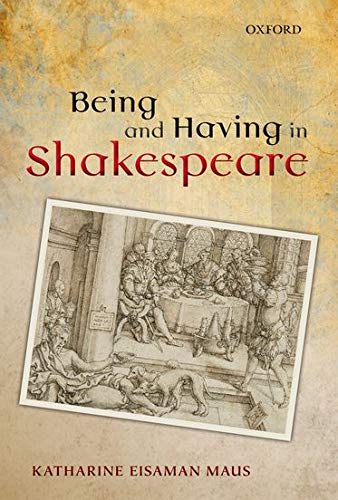
What is the relation between who a person is, and what he or she has? A number of Shakespeare’s plays engage with this question, elaborating a ‘poetics of property’ centering on questions of authority and entitlement, of inheritance and prodigality, and of the different opportunities afforded by access to land and to chattel property. Being and Having in Shakespeare considers these presentations of ownership and authority Richard II and the Henry IV plays construe sovereignty as a form of property right, largely construing imperium, or the authority over persons in a polity, as a form of dominium, the authority of the propertyholder. Nonetheless, what property means changes considerably from Richard’s reign to Henry’s, as the imagined world of the plays is reconfigured to include an urban economy of chattel consumables. The Merchant of Venice, written between Richard II and Henry IV, part 1, reimagines, in comic terms, some of the same issues broached in the history plays. Itfocuses in particular on the problem of the daughter’s inheritance and on the different property obligations among kin, friends, business associates, and spouses. In the figure of the ‘vagabond king’, theoretically entitled but actually dispossessed, Henry VI, part 2 and King Lear both coordinate problems of entitlement with conundrums about distributive justice, raising fundamental questions about property relations and social organization.
User’s Reviews
Editorial Reviews: Review “We should view Maus’s study as a vital addition to current examinations on early modern property rights and materialism.” –ixteenth Century Journal”Recommended.” –Choice About the Author Katharine Eisaman Maus is James Cabell Professor of English at the University of Virginia. She has published widely on English Renaissance literature, especially drama. Maus has held fellowships from the Guggenheim Foundation, National Endowment for the Humanities, American Council of Learned Societies, and Leverhulme Foundation. One of her previous monographs, Inwardness and Theater in the English Renaissance, won the Roland Bainton Prize from the Sixteenth Century Association.
Reviews from Amazon users which were colected at the time this book was published on the website:
⭐This book takes a legal-historical and economic approach to the problem of property and identity in the history plays, “The Merchant of Venice,” and “King Lear.” Maus argues that property relates persons to persons through things, according to shifting economic and legal arrangements that are fundamentally social in nature. Always remaining close to the texts, Maus’s “poetics of property” is attuned to the difference between dramatic works and the reality of daily economic transactions; the context never overwhelms the plays, which instead are allowed to establish the terms of their own propertied analyses.
⭐Being and Having in Shakespeare is an academic study of the relationship between people and property in Shakespeare. Far from being a sterile examination, this reveals rich new vistas on the complex cultures about which Shakespeare was writing, and strengthens rather than weakens our sense of him as a master writer presenting us with the whole of life.As the author points out, aside from rather esoteric studies into imponderables like authorship and hidden structures, most Shakespeare criticism is based on characterisation, rather than things. Before moving to her own thesis, which explores the multi-layeredness of the many types of ownership which were vital to society in Shakespeare’s day, and which are largely ignored outside legal circles today, she takes time to distance herself from the rather more extreme, quasi-Marxist, position that thing are all there is, and that the subject is merely another version of the object. Some readers may find this excursus into politico-linguistics rather esoteric, but it is mercifully brief, and does not impact greatly on the substance of the book.The real meat is in the quotation from Machiavelli right at the beginning, to the effect that depriving people of their goods will destroy the reign of a prince more swiftly than any other action he may take. Building from this, Eisaman Maus demonstrates the depth of attachment of Bolingbroke to his duchy in Richard II, the importance of the pound of flesh in the Merchant of Venice, and the state of King Lear once he is deprived of his property and, in effect, his reason for existence.This is a nuanced work, and it is hard to describe it in a short review without caricature. Eisaman Maus is always conscious that we are seeing a play, not a sociological critique. She points out early on that it is exactly the extremeness and unlikeliness of the pound of flesh and other property incidents which make them good drama. Shakespeare is not showing us buying and selling as it really is, but rather a larger than life version which, nonetheless, the audience recognises because it is the same in kind, being merely different in degree, as their own experiences.I found this an enriching and rewarding book. To some extent, once the question has been raised, it is blindingly obvious that property is of intense importance in Shakespeare. However, Eisaman Maus goes far beyond this insight as she explores with detailed reference to the text and to analogues the impact in her three key plays, and across the canon as a whole.For literature academics, an important contribution.
⭐This is a slender volume, only 130 pages, based on 5 lectures given by Maus on the interactions between property and people in a small selection of Shakespeare’s plays. Maus, a US Renaissance professor, is an acute and careful critic – but it needs to be said upfront that this is not a book aimed at a popular audience, and is a sophisticated work of scholarship which speaks to postgraduates and researchers in the field.The last 15 years or so has seen a burgeoning of research into the materiality of the Renaissance world, and this book is especially responsive to work by de Grazia, Quilligan, Stallybrass and Jones. Through a set of close and detailed readings, Maus exposes some of the complexities that reside in early modern constructions of the relationships between subject and object, property and personhood.The most productive pieces for me are the two essays on The Merchant of Venice which explore questions of what can – and can’t – be bartered, bought and contracted for, and how property concerns map onto, and overlap with, intimate relationships between lovers, parents/children, and male friends.So a thoughtful, rich and stimulating read for anyone working on early modern culture and/or drama – but if you’re looking for another
⭐1599
⭐or
⭐Shakespeare’s Restless World
⭐this won’t be it.
⭐This interesting book comprises a selection of essays on the subject of ownership in all its forms in Shakespeare’s plays. This is an area of study which has grown since the mid 90s and was therefore never around when I studied Shakespeare. A largely new idea to me, this is rather more than an introduction to the subject.This book is undoubtedly academic and aimed at such an audience. It is therefore a little challenging for a general read. That said, Maus’s text is engaging and makes her subject most interesting. She also usefully recaps the plotlines of the relevant plays where it helps her narrative, so whilst this is clearly a book for people with a stronger than average interest in Shakespeare’s plays, it isn’t necessary to research them before reading.Quite a brief book but with a lot of detail and learning, it naturally has quite a specific audience. Well written enough for general readers but really too academic, even obscure, to appeal widely. Having said that it’s an enjoyable read.
⭐This slim volume comprising a series of lectures given by Katherine Maus, centres on being and having Shakespeare’s plays. Of how a person was viewed by society dependent on what they had and who they were. Ms Maus investigates property in the guise of kingship and how power and the entitlement to, and distribution of, wealth is central to Richard II and in King Lear. In addition property in terms of friendship, debt and justice are considered in the Merchant of Venice. Katherine Maus has a great deal of interest to say about this obscure bye-way of Shakespearean scholarship, but in such an easily readable way, that both scholar and layman, interested in the subject will learn much from her erudite approach.I found this book a most interesting read and can recommend it to anyone with a more than general interest in Shakespeare’s plays.
⭐The author raises some very good, well referenced and considered points in this book; reading it will certainly broaden your understanding of the subject and give you plenty to think about. It’s a neat little hardback, well printed, with good references (printed, regrettably, at the end of each chapter rather than as footnotes,) no pictures, maps or tables to distract you from the words and ideas and it’s a pleasure to hold. It’s just a shame its not a pleasure to read: the writing style seems a little convoluted, quite clearly academic, and some of the expression requires more thought to decipher than it perhaps should. It is worth it if you’ve got a genuine interest in the topic, but probably not for the general reader.
Keywords
Free Download Being and Having in Shakespeare 1st Edition in PDF format
Being and Having in Shakespeare 1st Edition PDF Free Download
Download Being and Having in Shakespeare 1st Edition 2013 PDF Free
Being and Having in Shakespeare 1st Edition 2013 PDF Free Download
Download Being and Having in Shakespeare 1st Edition PDF
Free Download Ebook Being and Having in Shakespeare 1st Edition