

Ebook Info
- Published: 2015
- Number of pages: 240 pages
- Format: PDF
- File Size: 53.66 MB
- Authors: Jean Manco
Description
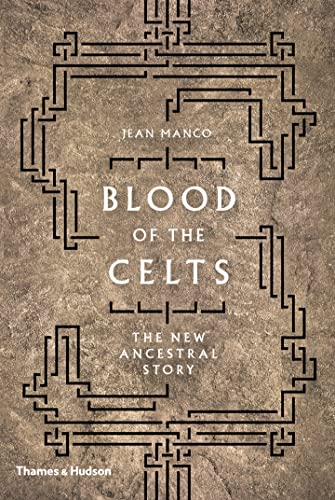
From prehistory to the present day, an unrivaled look deep into the contentious origins of the CeltsBlood of the Celts brings together genetic, archaeological, and linguistic evidence to address the often-debated question: who were the Celts? What peoples or cultural identities should that term describe? And did they in fact inhabit the British Isles before the Romans arrived? Author Jean Manco challenges existing accounts of the origins of the Celts, providing a new analysis that draws on the latest discoveries as well as ancient history. In a novel approach, the book opens with a discussion of early medieval Irish and British texts, allowing the Celts to speak in their own words and voices. It then traces their story back in time into prehistory to their deepest origins and their ancestors, before bringing the narrative forward to the present day. Each chapter also has a useful summary in bullet points to aid the reader and highlight the key facts in the story. 102 illustrations
User’s Reviews
Editorial Reviews: About the Author Jean Manco was a building historian who trained within an archaeological unit and applied an interdisciplinary approach to her work. Her other books include Ancestral Journeys and The Origins of the Anglo-Saxons.
Reviews from Amazon users which were colected at the time this book was published on the website:
⭐Worthwhile, alone, for the DNA analysis. I was particularly interested in the connection between I-M223 (my Y-DNA haplogroup) and the Cruithne, who were Brittonic invaders into SE Ulster from SW Scotland before the development of surnames.The Cruithne, themselves, might not have even been Brittonic, but might be traceable to Germanic auxiliaries (the Suebi?) who accompanied the Romans into Britain and perhaps were ultimately resettled (as the Novantae) in Galloway (north of Hadrian’s Wall). The Suebi could be traceable from central Germany/Bohemia to northern Sweden (“sue” = “svi”), where Osterbotten (West Bothnia) is a hotspot for I-M223.
⭐I was taking just a small risk with a subtitle “The New Ancestral Story”, which was published in 2015. The field of DNA on ancient human remains has been revolutionized in the last several years. This book’s coverage is already out-of-date.The coverage of Celtic archaeology and history is a somewhat disjointed overview. Yet, there is some worth in that. And the many maps and figures are very good.
⭐This book is not written for regular review. It is meant to help those looking for connections of family ancestors to much earlier migrations of peoples. This is attempted through DNA results as well as language cores, or foundations. As any such work, one must rely on what is currently known as that could change somewhat, or much more, according to what is learned in the future.I enjoyed it tremendously as I am an old female with ties to Ireland and Scotland. We have a long heritage for being of strong will with the ability to use our own minds and take our own actions with and without males.
⭐Product was as described and arrived quickly
⭐This is an excellent book helping delve into a group of people enigmatic to Europe. A very good addition to ancestral journey. A book by the same author. They help get into more about how Europe really formed and operated
⭐This book is a good addendum to the earlier “Ancestral Journeys: The Peopling of Europe” because it updates later DNA findings. It does repeat some of what’s in the earlier book. Although at times I felt like I was studying for final exams, it is an excellent reference to keep on hand and I do have a better understanding of how current DNA analysis is arrived at.
⭐Just finished reading this book. It filled in many gaps that I have in my ancient Celtic ancestors. From the table of Archeological DNA from various digs, I have found some relatives from the Mesolithic age and the Copper age using SNP information. Very interesting read for anyone whose ancestors are from the Ancient Celtic peoples.
⭐If you’re interested in understanding your European roots and the intersection between language, migrations, cultures and DNA, this is the place to start. I hope Manco continues to write compelling and very readable accounts of the rapidly changing story of human history.
⭐As with Manco’s previous book, Ancestral Journeys, this is an incredibly detailed, intelligent and well-written book. Anyway who has had a long-term interest in where our ancestors came from will find this fascinating and convincing. Her great talent is the ability to look beyond one discipline and examine the evidence of archaeology, linguistics and DNA to arrive at a synthesis. Do I have any gripes? Not really. Personally, I could have done without the later chapters because what is new here is the account of Celtic prehistory and that’s what I bought the book for. I am less interested in the recent history of the Celtic peoples because this is well-trodden territory and her account is necessarily sketchy. However, this book is wonderful and I will be reading it again soon, as I did with Ancestral Journeys. This is a ten-star book.
⭐I bought and read this book because I wanted an up-to-date summary of archaeological, genetic, linguistic and other evidence on the Celts. I ended up disappointed. Far from being a “new ancestral story”, this book pushes all its evidence into the old view that the Celts came from Central Europe. The “Celts from the West” arguments of Barry Cunliffe and others are quickly dismissed. The magisterial “Origins of the British” by Stephen Oppenheimer is completely ignored.Jean Manco argues that haplogroup R1b is Celtic. By contrast, Oppenheimer argues that R1b came to Britain via an Ice Age enclave in Northern Spain, and that Celtic DNA is different and arrived later. Some have criticised Oppenheimer for assuming excessively slow mutation rates. This important controversy is ignored in Banco’s book. Instead, she offers highly selective DNA evidence that is said to confirm her argument.I am open-minded enough to want to understand different views. But this book doesn’t help.
⭐It’s great to see a measured summary of the century-long discussion of what ‘Celtic’ really means, updated with the details of DNA research. There are bits and bobs missing from this discussion, I think, but there is no point in dwelling on them – they are minor issues. The book is well-written and conveniently structured; it can interest a non-professional reader, too, and that is what really counts.
⭐An enjoyable read, at once educational and almost novel-like in parts. Although some may find it a little technical in parts along with the many, difficult to pronounce Celtic names the author manages to make the book appealing to a general audience. I enjoyed the read and would recommend it to anyone with an interest in Celtic culture.
⭐The book successfully draws together linguistic and genetic analysis with the review of archaeological finds. I was impressed by the amount of detail reviewed in a concise and comprehensible manner. Man I manages to maintain a clear narrative without smoothing over contradictions and gaps. I also appreciated Mancos approach of viewing the celts in the context of European evolution rather than portraying them as a fixed unit that remains the same over time.
Keywords
Free Download Blood of the Celts: The New Ancestral Story in PDF format
Blood of the Celts: The New Ancestral Story PDF Free Download
Download Blood of the Celts: The New Ancestral Story 2015 PDF Free
Blood of the Celts: The New Ancestral Story 2015 PDF Free Download
Download Blood of the Celts: The New Ancestral Story PDF
Free Download Ebook Blood of the Celts: The New Ancestral Story