Ebook Info
- Published: 2003
- Number of pages: 352 pages
- Format: PDF
- File Size: 4.89 MB
- Authors: Richard Bird
Description
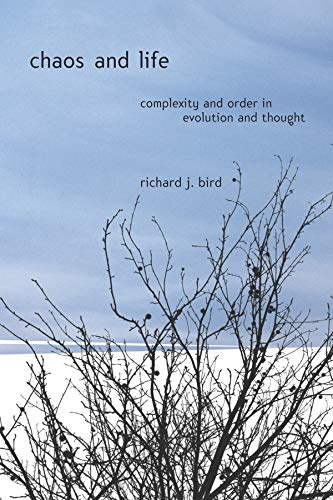
Why, in a scientific age, do people routinely turn to astrologers, mediums, cultists, and every kind of irrational practitioner rather than to science to meet their spiritual needs? The answer, according to Richard J. Bird, is that science, especially biology, has embraced a view of life that renders meaningless the coincidences, serendipities, and other seemingly significant occurrences that fill people’s everyday existence. Evolutionary biology rests on the assumption that although events are fundamentally random, some are selected because they are better adapted than others to the surrounding world. This book proposes an alternative view of evolving complexity. Bird argues that randomness means not disorder but infinite order. Complexity arises not from many random events of natural selection (although these are not unimportant) but from the “playing out” of chaotic systems―which are best described mathematically. When we properly understand the complex interplay of chaos and life, Bird contends, we will see that many events that appear random are actually the outcome of order.
User’s Reviews
Editorial Reviews: Review This thought-provoking work will be valuable reading for students and for professionals trained in ecology and evolution…. it should be required reading for advanced undergraduates, for graduate student seminars, and for discussion courses on the nature of organic evolution. Recommended [for] general readers, upper-level undergraduates and above. ― ChoiceBird reveals his philosophical, almost mystical, inclinations… Bird’s book is a product of this creative imagination that grapples with the very process itself. — Martin Lockley ― The Scientific and Medical NetworkBird’s explanation of how organisms tap the universe of archetypes is… radically ingenious. ― Times Literary SupplementChaos and Life…literally challenges many of our accepted views of reality…it’s extremely well-written, so that if readers are willing to make the effort, they can tread new paths of thought. — Robin Robertson ― Cybernetics and Human KnowledgeThis is a formidable piece. — Paul Johnson ― Richmond Times-DispatchWell written and clear, makes a strong case. ― Northeastern Naturalist About the Author Richard J. Bird is visiting scholar and sometime senior lecturer at Northumbria University in Newcastle Upon Tyne, UK. He is past president of the Society for Chaos Theory in Psychology and Life Sciences.
Reviews from Amazon users which were colected at the time this book was published on the website:
⭐The title “Chaos and Life” implies a model of how chaos is at the core of life. The core of life in this book, on the other hand, is a throwback model: the Turing machine. That’s not to say that the topic of chaos is absent from this book – merely that it is not at its ultimate center.Bird suggests that each living cell is a computer. I’ll buy that. But then he goes on to suggest that since DNA resembles the symbol tape in a Turing machine that it in fact *is* the symbol tape in a cellular Turing machine. More than that, the symbols in DNA represent *numbers* and so addition, subtraction, multiplication, and so on, are taking place in each cell. RNA is used as registers in this model. I call this a throwback model in the sense of cognitive science, in which the Turing machine is the “classical” but largely discredited model of cognition, having subsequently been replaced in favor of connectionist and embodied dynamics models.Is it unreasonable to argue that each living cell is a Turing machine carrying around its program in its DNA and storing data in its RNA? No. It’s merely unexpected in a book that purports to be establishing a fundamental connection between chaos and life. Where is a proposal that the computation going on in each cell is a result of the complex network of non-linear interactions going on between the cell’s genes, proteins, and environment? Where is a proposal that the computational states in each cell are a result of a series of leaps from strange attractor to strange attractor? Those are the kinds of ideas I would have expected to be at the heart of this book – unfortunately, at its core this book is more along the lines of “Turing Machines and Life”.
⭐Chaos and Life: Complexity and order in evolution and thought, by Richard J. Bird, Columbia University Press, 2003, 334 ff.The author is sometime lecturer at Northumbria University in Newcastle upon Tyne, UK. He was formerly president of the Society for Chaos Theory in Psychology and Life Sciences and it is this role that makes him well qualified to write on the subject of this book.The opening chapter introduces us to the basic ideas of chaotic systems that are generated by iteration within non-linear systems. Such systems can be represented mathematically by fractals, geometric patterns in which each section develops added complexity, which goes on to create a more complex pattern, and so on – what are called Mandelbrot sets. There are some very clear illustrations using the Lorenz attractor, a Koch curve and a Hilbert curve as examples. The important point about the iterative process is that, although the procedure is essentially a repetition, at each stage the system develops a slightly increased complexity, the output of each step being used as input for the next step. The process is like that used in high school mathematics, also called `trial-and-improvement’, to find the roots of equations. Bird sees iteration as `the most basic process that can be found in the world’ resulting in `the universality of chaos’.This process, the author believes, is the key to understanding the mechanism of biological evolution. Most biologists have long since rejected the idea of Intelligent Design being necessary for the creation of `irreducible complexity’ in biological structures. Instead, they favour the progressive emergence of complexity, possibly by processes similar to those described here by Bird. The point that Bird makes is that chaos does not imply randomness – on the contrary, chaos can lead to its own kind of order. While accepting the importance of adaptation to environment in neo-Darwinism, he criticizes several aspects of the current theory of evolution, especially the role of `random selection’. Richard Dawkins has similarly criticized Jacques Monod’s `Chance and Necessity’ scenario for evolution. There is also some discussion of how these ideas of chaos reflect on social issues of truth.Bird also criticizes the fact that biology has currently very largely been reduced to chemistry, and that the language, deterministic concepts and techniques of chemistry are not adequate to address biological or psychological problems. The fact that the public have now turned in large numbers to alternative therapies and psychic healers is because conventional biological and medical sciences, based on a materialistic and deterministic philosophy, are not able to address their needs. Bird often calls on quotations from the Greek philosopher Heraclitus to illustrate his points: when we step into the river, is it the same river as we stepped into yesterday – or not? A similar issue arises in the human body subjected to transplants – are we the same person?. There is no numerical maths in the book other than a few equations defining factorials. There are detailed Notes and an Index at the end.This book is well illustrated and it’s written at a high academic level. Whether or not all the biological references are accurate or not, I am not qualified to say. I think the readership will be mainly graduates in biology or philosophy who are not intimidated by the conceptual mathematics of chaos theory.Howard Jones is the author of The Tao of Holism
⭐The author of this book might be an expert on chaos, but he clearly has no formal training in biology. This book is full of mistakes that imply a poor understanding of the current state of biological research, or a deliberate misrepresentation of that research. For example Bird denigrates the contribution of molecular biology by suggesting that the chemistry of life isn’t actually biology (it is), and that molecules can’t be connected to the formation of organisms (they can and have been). Furthur, Bird argues that natural selection can’t explain diversity because it would take too long for chance to create a protein, dna molecule, or cell. However Bird misunderstands the theory when he implies that life came about by chance. While chance may produce variation, it is selection that preserves good variants and eliminates bad. Selection IS the organizing principle that Bird calls out for.Additionally, there are clear logical errors in the arguments in the text (e.g. argument through false analogy, appeal to authority, begging the question, etc…). The author should have consulted with one or more practicing researchers before sending this to press.There are also factual errors, and incorrect citations (e.g. Bates, not Bateson, proposed the theory of mimicry).This book is a typical autodidact’s “theory of everything” and you will be disappointed if you expect better.For those who want to learn about chaos theory, fractals, and how they might tie in to biology, Wolfram’s “A new kind of science” is much more compelling.
⭐This fascinating voyage braiding evolutionary thinking with chaos theory starts with a cogent critique of current Neo-Darwinism in a fashion reminiscent of Robert Wesson’s _Beyond Natural Selection_. Students of evolution are seldom aware of the criticisms of Darwin springing from scientists themselves, or of the attempts to really grapple with the problems without the distractions of the current Darwin debate, which is mostly propaganda.
⭐Chaos and Life: Complexity and order in evolution and thought, by Richard J. Bird, Columbia University Press, 2003, 334 ff.How biological order emerges from chaotic processesBy Howard JonesThe author is sometime lecturer at Northumbria University in Newcastle upon Tyne, UK. He was formerly president of the Society for Chaos Theory in Psychology and Life Sciences and it is this role that makes him well qualified to write on the subject of this book.The opening chapter introduces us to the basic ideas of chaotic systems that are generated by iteration within non-linear systems. Such systems can be represented mathematically by fractals, geometric patterns in which each section develops added complexity, which goes on to create a more complex pattern, and so on – what are called Mandelbrot sets. There are some very clear illustrations using the Lorenz attractor, a Koch curve and a Hilbert curve as examples. The important point about the iterative process is that, although the procedure is essentially a repetition, at each stage the system develops a slightly increased complexity, the output of each step being used as input for the next step. The process is like that used in high school mathematics, also called `trial-and-improvement’, to find the roots of equations. Bird sees iteration as `the most basic process that can be found in the world’ resulting in `the universality of chaos’.This process, the author believes, is the key to understanding the mechanism of biological evolution. Most biologists have long since rejected the idea of Intelligent Design being necessary for the creation of `irreducible complexity’ in biological structures. Instead, they favour the progressive emergence of complexity, possibly by processes similar to those described here by Bird. The point that Bird makes is that chaos does not imply randomness – on the contrary, chaos can lead to its own kind of order. While accepting the importance of adaptation to environment in neo-Darwinism, he criticizes several aspects of the current theory of evolution, especially the role of `random selection’. There is also some discussion of how these ideas reflect on social issues of truth.Bird also criticizes the fact that biology has currently very largely been reduced to chemistry, and that the language, deterministic concepts and techniques of chemistry are not adequate to address biological or psychological problems. The fact that the public have now turned in large numbers to alternative therapies and psychic healers is because conventional biological and medical sciences are not able to address their needs. Bird often calls on quotations from the Greek philosopher Heraclitus to illustrate his points. There is no numerical maths in the book other than a few equations defining factorials.This book is well illustrated and it’s written at a high academic level. I think the readership will be mainly graduate biologists who are not intimidated by the conceptual mathematics of chaos theory.Dr Howard A. Jones is the author of The Thoughtful Guide to God (2996) and The Tao of Holism (2008), both published by O Books of Winchester, UK.
⭐Chaos: Making a New Science
⭐How the Leopard Changed Its Spots: The Evolution of Complexity (Princeton science library)
Keywords
Free Download Chaos and Life: Complexity and Order in Evolution and Thought 1st Edition in PDF format
Chaos and Life: Complexity and Order in Evolution and Thought 1st Edition PDF Free Download
Download Chaos and Life: Complexity and Order in Evolution and Thought 1st Edition 2003 PDF Free
Chaos and Life: Complexity and Order in Evolution and Thought 1st Edition 2003 PDF Free Download
Download Chaos and Life: Complexity and Order in Evolution and Thought 1st Edition PDF
Free Download Ebook Chaos and Life: Complexity and Order in Evolution and Thought 1st Edition