

Ebook Info
- Published: 2014
- Number of pages:
- Format: PDF
- File Size: 1.42 MB
- Authors:
Description
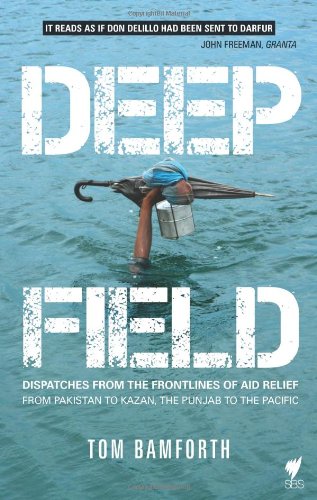
Deep Field’ is a UN term for humanitarian operations that take place in extremis – amid the destruction caused by war and natural disaster, beyond the boundaries of what is controllable and known. This book takes the reader ‘deep field’ in the footsteps of Tom Bamforth, an aid worker responding to the challenges of delivering humanitarian aid under extreme circumstances to some of the most dangerous and difficult regions of the world. Full of amazing real life characters as well as Tom’s insightful commentary of events, sense of irony and reflection. It is an intensely human story, not only of the people in need, but also of Tom himself and how one’s life can change so completely overnight when you find yourself in the wrong place at the wrong time (or is that the right time). Whilst certainly the book deals with tragic events occurring around the world it is not a relentlessly tragic read, nor does it preach or lecture. Deep Field is an inspiring adventure story and a unique and humanising view of the events that hit our headlines.
User’s Reviews
Reviews from Amazon users which were colected at the time this book was published on the website:
⭐The author – Tom Bamforth – has here compiled a number of stories of his time as an emergency aid worker in a number of hotspots around the world. His initial experiences were in Pakistan but he then found himself in other areas – most specifically in Darfur and also the Philippines. There are snippets of his involvement in other places but those three are the core of the book in terms of tales of his work. The authors style is fairly flowing though he does like flexing his vocabulary sometimes and that’s usually in a good way. There were a couple of times I thought the editing could have picked things up but overall it is very readable and at 220 pages (paperback version) it’s not a long read so doesn’t outstay its welcome.One aspect of the work I wasn’t expecting when picking it up was the amount of time it spends talking about the history of humanitarian work and there are some very interesting passages – that run for several pages – where the author looks at the humanitarian field and some of its pitfalls as well as its goals. The way in which agencies have been viewed as force multipliers and how the subject of aid has become more politicised. These are exceedingly interesting and thought provoking and it really doesn’t matter what your own politics are on the subject these passages are very worthwhile reading. They are not however what I expected – anticipating the work would consist solely of anecdotes from the actual disasters themselves. There are also a few vignettes included in the book about his involvement in tsunami recovery in Tonga and some work he did in Kazan, Russia. The problem is that they don’t particularly add anything to the overall narrative nor do they even work as anecdotes in that they are tacked somewhat unceremoniously at the end of the book. When you’ve spent several passages seemingly summarising to tack these onto the end to pad out the book seems somewhat pointless.Outside of the above issues there is a lot to be gleaned here in terms of his stories of working in the Philippines post cyclone where some of the issues were different to the problems in areas of remote Pakistan. The authors love of the deserts and raw beauty of such places shines through and it is in the earlier stories centred on his Pakistan and Darfur experiences where we really see the author as a human, lost in a massive tragedy and doing his best with what he has to get things done. The book really provides a thumbnail style insight into the politics of the aid agency world and good on the author for talking about it. We see the way governments give funding and the issues of trying to get the aid to where it is needed most.Another bonus of the work is the way the author gives some background to some of the disasters and what led to the situation on the ground in some of them – again mostly especially Pakistan and Darfur. It is entertaining to watch him shy away from laying the blame for the disaster that was partition where it actually lay (that would go against his politics and the views of his tribe) but his drivel about the evils of the ‘nation state’ are amusing. But bravely he gives an excellent run down of the situation in Darfur and references other works that the interested reader could source to learn more. I say bravely because to paraphrase an Australian journalist the reason Darfur never became a ’cause’ amongst a certain set was that the reasons for it could in no way be sourced back to the ‘west’. Yet the author gives a run down of it and I really respected him for facing up to it.The downside here is that the author does spend too much time ticking off his social/political sets ‘Key Performance Indicators’. He has to make sure we know he was decidedly not one of the drone worker bees in the financial sector (despite the fact that to any outsider he would have looked just like them) and outside of his mewling about nation states he very much wants to make sure we’re all aware that anyone in a position of overall authority etc has no idea. None of them. The inference his readership is supposed to glean is that only the martyrs on the ground do. No doubt the powers that be often don’t have much of a clue. But it seems convenient that Geneva or whoever else is in charge always have no idea. And unlikely. After all people rise in organisations for reasons and only a naïve dupe would suggest it was always for bad reasons. Hence we get him pointing out the how a conservative politician, upon being told some people were still in a refugee camp as they had no houses to go to declared it sounded like a case of aid dependency. I went for that, but when we’re supposed to believe that the head of the World Food Program declared ‘Where’s my yoghurt…’ during an impromptu meet ‘n’ greet I had to call BS. Now perhaps she did say it, I’m not going to call the author a liar. But does anyone think that was the most important thing that occurred during her visit? Again and again the actions of these people are only included if a silly sound-bite can be attributed to them, there is so often nothing about what occurred as part of their visit unless it can be denigrated. It’s tiresome and tedious and detracts from the value of the book. But probably makes good copy.Overall a book that has some very interesting stuff in it – both the on the ground observations of the obviously passionate and committed author and the background information is compelling. To be on the ground in one of these disasters would be an experience not easily forgotten one imagines. So to read some thoughts from a chap who’d actually been there was most valuable. And having travelled to some fairly poor areas of the world myself some of what he was saying really resonated with me personally. If only some of it didn’t come across as containing ‘crankiness by numbers’. If you have an interest in humanitarian missions this is probably a good book to get hold of and hopefully the world will continue to produce people like the author who are willing and able to get in on the ground and help in impossible situations.
⭐
⭐The sub-title of Australian humanitarian aid worker Tom Bamforth’s book neatly defines its contents: “dispatches from the front line of aid relief from Pakistan to Kazan, the Punjab to the Pacific”. The dispassionate way he writes of tragedy, both natural and man-made, makes the telling all the more graphic. The author devoted his life to aid-working more or less by chance. He was holidaying in north-west Pakistan on an archaeological tour when an earthquake in Kashmir killed more than 80,000 and left three million homeless. The holiday ended abruptly when he joined the Norwegian Refugee Council’s rescue and reconstruction team. Thence it was to Africa and the horrors of civil war and close encounters with terrorists in Darfur. The Pacific provided a different set of crises, every bit as pressing. Deep Field reveals some of the harsh realities of some of the less privileged parts of the world. It’s informative without being depressing. An absorbing read.
⭐
⭐This is a perfect length book. Tom manages to give you just enough insight into the complexity of the the humanitarian, it’s challenges, the conundrums, the juxtapositions. There is just enough there to make you shift uneasily in your chair, stop and reflect without it being rammed down your throat. It is also grounded with a very wry sense of humour. You also never lose sense of his humanity, and why he is there. A perfect read.
⭐
⭐Starting from page one and finishing strong, Tom’s story interweaves his personal challenges from some of the toughest humanitarian locations of the past 15 years together with the robust analysis of each context and the aid sector generally. Sucking one deep into the text, every humanitarian will be left reflecting on the world within which we operate. A captivating read for aid workers and a fantastic insight for anyone interested in the topic.
⭐
Keywords
Free Download Deep Field in PDF format
Deep Field PDF Free Download
Download Deep Field 2014 PDF Free
Deep Field 2014 PDF Free Download
Download Deep Field PDF
Free Download Ebook Deep Field