

Ebook Info
- Published: 1994
- Number of pages: 295 pages
- Format: PDF
- File Size: 5.95 MB
- Authors: Martinus Veltman
Description
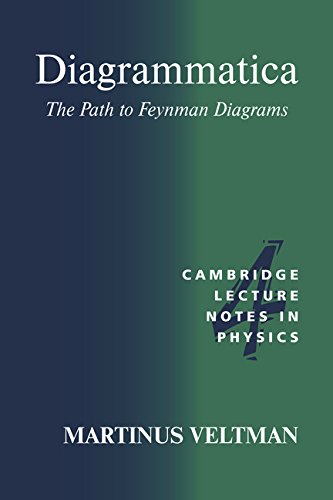
This author provides an easily accessible introduction to quantum field theory via Feynman rules and calculations in particle physics. His aim is to make clear what the physical foundations of present-day field theory are, to clarify the physical content of Feynman rules. The book begins with a brief review of some aspects of Einstein’s theory of relativity that are of particular importance for field theory, before going on to consider the relativistic quantum mechanics of free particles, interacting fields, and particles with spin. The techniques learnt in the chapters are then demonstrated in examples that might be encountered in real accelerator physics. Further chapters contain discussions of renormalization, massive and massless vector fields and unitarity. A final chapter presents concluding arguments concerning quantum electrodynamics. The book includes valuable appendices that review some essential mathematics, including complex spaces, matrices, the CBH equation, traces and dimensional regularization. An appendix containing a comprehensive summary of the rules and conventions used is followed by an appendix specifying the full Lagrangian of the Standard Model and the corresponding Feynman rules. To make the book useful for a wide audience a final appendix provides a discussion of the metric used, and an easy-to-use dictionary connecting equations written with different metrics. Written as a textbook, many diagrams, exercises and examples are included. This book will be used by beginning graduate students taking courses in particle physics or quantum field theory, as well as by researchers as a source and reference book on Feynman diagrams and rules.
User’s Reviews
Reviews from Amazon users which were colected at the time this book was published on the website:
⭐This book takes any engineer with a feel for Maxwell’s equations and a little common sense about Schroedinger’s equation into the promissed land of quantum field theory.Veltman spends a lot of time helping the reader get his or her head wrapped around the idea of Hilbert space. This cleared my head for what was to follow.It is one of the few books that does not assume you already know the subject. I recommend it for electrical engineers like myself. No idea is hard to understand when the author values communicating notions over notation!Five stars for Martinus Veltman!
⭐This is a book
⭐very clearly written in an easy to understand approach,this is a fascinating area important to particle physics. The understanding of a complex topic
⭐In Memoriam:Martinus Veltman(27 June 1931- 4 January 2021)Martinus Veltman, how to characterize his work ? As with Richard Feynman, meaningful characterizations always fall short of the mark. That mark falls between the text of Mandl & Shaw on one hand, Peskin & Schroeder on the other ! I quote Martinus Veltman: “…to make it clear which principles are behind the rules, and to define clearly the calculational details.” Let us read from Martinus Veltman:(1) “Perturbation theory means Feynman diagrams.” (first page of the Introduction).(2) “Apparently, in Quantum Mechanics, the potential becomes something like the photon wave function.” (page 11).(3) “What is a physical state ?…A physical state is simply a possible physical situation.” (page 33).(4 )”A particle with four states is really nothing else but four different particles…” (page 71).(5) “The important thing is how fields transform,we will define locality as a mathematical property.” (page 80-81).(6) “The physically important quantities,however, are not the fields, but the interaction Hamiltonian.” (page 84).(7) “Pion decay and PCAC make up one of the most interesting subjects of particle physics, it has played a very large role in the discovery of gauge theories.” (page 124).(8) “The choice as to what kind of field describes an observed particle is really a matter of choice; try what kind of field describes best the observed data.” (page 169).(9) “The limit of zero mass of a massive graviton is not equal to the zero mass case; and from the experimental observations one may actually deduce that the massless graviton is what nature uses.” (page 177).(10) ” keep this in mind: A theory with massless vector particles, such as quantum electrodynamics, or quantum chromodynamics, must have gauge invariance else the theory is not Lorentz Invariant.” (page 179).(11) “For all practical purposes, the Feynman rules represent the true content of a theory.” (page 183).This book is intended as an introduction. Plenty of intermediate steps are included in calculations. The exercises are straightforward: Exercise #6.4, Page 148 is typical (routine, short, calculation left to the devices of the reader, here, the section on Power Counting. Hints provided to help with those solutions. An Appendix provides mathematical supplement pertaining to matrices. Another Appendix provides a basic introduction to dimensional regularization. “Feynman’s trick” for Integrals: Somewhat surprisingly, Veltman supplies details (page 139) for what amounts to a rather elementary exercise for the reader ! Earlier in the book, contour integral techniques are utilized (for an example, page 64 regarding bound states). Also, one must (not unusual at this level) be conversant with Fourier transforms (page 66).The brief book is a favorite: At 200 pages, Martinus Veltman unravels the physics behind the “Feynman Rules.”Careful study will be rewarded. The book is replete with words of wisdom plus technical tools of the trade.Follow-up with Veltman’s Quantum Theory of Gravitation,1975 Methods In Field Theory: ” In these lectures we will approach the theory of Gravitation from the point of view of quantum field theory.”Martinus Veltman makes a nice complement to Peskin and Schroeder.
⭐This is a QFT book written by a physicist (Veltman is one of the1999 Physics Nobel prize winners) for physicists. Mathematicalrigour was definitely not one of Veltman’s major concerns when hewrote this book. However clarity was indeed a big issue for himand that is most unusual if you take into account that most Nobelprize awarded physicist, are usually much more concerned about”image”, “posterity” and “mathematical rigour” than bypedagogical matters.This book is a very good one to start with if you want to learnQFT. It makes no use of the path integral formalism (which is theprefered one by “modern” QFT theorists) . The canonicalformalism (the one used in this book) makes explicit the localnature of QFT; this is an important issue since locallity stemsfrom Lorentz invariance and QFT is nothing but the physicaltheory resulting from quantum mechanics and restrictedrelativity. I fully agree with the statement that the pathintegral method should be sistematically discarded inintroductory QFT books like this one.As its title indicates, Feynman diagrams are the central issue ofthis book. Veltman explains in the introduction: “This is thenthe aim: to make it clear which principles are behind the(Feynman) rules and to define clarly the calculation details”.This seems to be the natural choice for such an introductorytext; quoting Veltman again: ” … the theory (meaning QFT), orrather the succesful part (of it), is perturbation theory …Perturbation theory means Feynman diagrams “.This book provides a clear logical frame that supports thecalculation machinery of perturbative QFT’s and should berecommended to any person willing to introduce himself/herself inQuantum Field Theory as a first choice course book.Taking into account that this is an introductory book, itsshort extension (200 pages) its scope is limited to QED and noserious attempt is made to treat non-abelian theories.One minor (for me it is minor, since my english is also ratherpoor) annoyance: Even I (my mother tonge is spanish) can seethat the writing style is not very good and that some of the usedexpressions are nothing more that literal translations from dutchinto english.
Keywords
Free Download Diagrammatica: The Path to Feynman Diagrams (Cambridge Lecture Notes in Physics Book 4) 1st Edition in PDF format
Diagrammatica: The Path to Feynman Diagrams (Cambridge Lecture Notes in Physics Book 4) 1st Edition PDF Free Download
Download Diagrammatica: The Path to Feynman Diagrams (Cambridge Lecture Notes in Physics Book 4) 1st Edition 1994 PDF Free
Diagrammatica: The Path to Feynman Diagrams (Cambridge Lecture Notes in Physics Book 4) 1st Edition 1994 PDF Free Download
Download Diagrammatica: The Path to Feynman Diagrams (Cambridge Lecture Notes in Physics Book 4) 1st Edition PDF
Free Download Ebook Diagrammatica: The Path to Feynman Diagrams (Cambridge Lecture Notes in Physics Book 4) 1st Edition