

Ebook Info
- Published: 2015
- Number of pages: 235 pages
- Format: PDF
- File Size: 57.81 MB
- Authors: Alexander Unzicker
Description
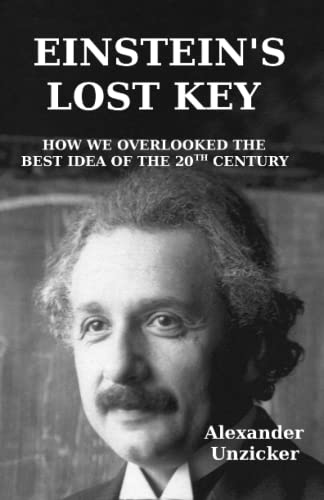
Updated edition 2022!One hundred years after the completion of the General Theory of Relativity, conferences, meetings, and celebrations are taking place all around the world.Yet a decisive consideration on the subject by Albert Einstein has completely fallen into oblivion. Already in 1911, he held the key to an even greater discovery in his hands: a theory concerning the variable speed of light that would have explained the origin of gravity by referring to distant masses in the universe. Eventually, the consequences for modern cosmology would be revolutionary: the picture of an expanding universe and the Big Bang would need to be revised. Sadly, Einstein’s ingenious idea came twenty years too early. For it took until the 1930s before the true size of the universe was revealed, which would have confirmed his formula about the variable speed of light. Due to a series of accidents, the theory remained practically unknown, although the Nobelists Erwin Schrödinger and Paul Dirac had worked on similar ideas.Einstein’s Lost Key is a description of relativity comprehensible for lay people, a vividly exposed history of science, and a serious, though controversial input for modern research.Dr. Alexander Unzicker is a German physicist and award-winning science writer. His books Bankrupting Physics and The Higgs Fake have generated controversy in the physics community. With Einstein’s Lost Key, Unzicker gives an account of his long-lasting pursuit of Einstein’s ideas.KIRKUS REVIEWS:…the author’s ideas are engaging and he presents them well. […] turns into a screed against the scientific establishment.
User’s Reviews
Reviews from Amazon users which were colected at the time this book was published on the website:
⭐”Einstein’s Lost Key: How We Overlooked The Best Idea of the 20th Century” is an ambitious title, sure, but not entirely overstated. In the book, Unzicker starts with a little-known paper published by Einstein in 1911 in which he proposes a variable speed of light (VSL). It was an idea he used to predict the bending of light as it passed through a gravitational field (GF). The tragically condensed synopsis of how this played out is this:Einstein’s equation to estimate the amount light would bend when passing through a GF involved variables for both time (seconds) and length (meters). His earlier thought experiments had led him to understand that a GF will slow time down, thus impacting the frequency/speed of light passing through the GF and causing a deflection. This is analogous to the deflection of light passing from air to water. But he overlooked the GF’s impact on wavelength. Just as the GF *slows the clock* that defines light’s frequency, it also *shortens the ruler* that defines light’s wavelength. This Einstein had not taken into account. His calculated value of light’s deflection was exactly half of what was observed, leading him to apparently abandon the idea and pursue the geometrical formulation of relativity that rules today.If he had accounted for this wavelength change, his VSL equation would have correctly predicted the amount light bends when passing close to the sun or through other GFs. Even more importantly, he would have realized that, *as light travels,* its frequency and wavelength both change. In other words, the longer it has traveled, the redder it looks to our observations.The red shift of light coming from the far reaches of the cosmos is used as evidence of stars receding from us, i.e. the expansion of the universe. But in fact light shifts to the red as it propagates through space. The longer it has traveled by the time it reaches us, the more red-shifted it is. That is exactly what we see when looking at the heavens, but it is now *interpreted* as cosmic expansion. In truth, there is no cosmic expansion! The cornerstone of Big Bang cosmology – the cosmological redshift – is an artifact of light’s properties as it propagates.What happens to cosmology without expansion as a cornerstone? Bye bye dark matter and dark energy, as well as the theory of cosmic inflation, to name just a few, all of which were proposed as ad hoc explanations for various anomalies in the expansion model.Had Einstein realized that both frequency *and wavelength* change with propagation, then Hubble’s discovery about 2 decades later of a red-shifted universe vastly beyond our own Milky Way (remember the Milky Way was the extent of the known universe until the 1930s) would likely have been correctly interpreted.The book up to that point would be worth the read for anyone willing to think outside the current cosmological box. But Unzicker’s ability to follow Einstein’s VSL idea beyond this to its implications for the gravitational constant G, the mass of particles and of the universe, and even the fundamental constants h and c, is quite astounding. Contrary to the modern trend in cosmology, where free parameters are used to prop up anomalous data and observations on a regular basis, Unzicker’s eminently sensible extension of Einstein’s 1911 idea allows constants such as G to be derivative. It brings us ultimately to a universe where only matter and light are fundamental. Maybe.Could those, too, be derivative? That is a question unlikely to be pursued in the era of big science, an era, he notes, that is profoundly lacking in the curiosity that was a prime motive for Einstein and his contemporaries.If there is a strong conceptual rebuttal to Unzicker’s thesis, I hope someone will put it in writing. To dismiss the book based upon its conflict with the reigning cosmological model is to miss the point of the book entirely. I highly recommend this book. It is not a light read. Unzicker clearly wanted this book to appeal to readers without a deep background in cosmology or mathematics. On this point he only partially succeeded. I have a background in neither, and it is only with my third slow read through that I feel I have been able to grasp a majority of his major points. For this reason, I think the book will be most relevant to those with a background in relativity and its mathematics.
⭐This is an excellent book on several fronts, great review of: a] physics over the last 100 years; b] Einstein’s 1911 article with respect to the nature of the speed of light; c] how the red shift of distant galaxies has been incorrectly interpreted and that the universe may not be expanding; and d] description of current cosmology and limitations in the creation of new ideas. Everyone in the fields of engineering and science should read this book.
⭐Alexander Unzicker is a radical revolutionary. Because he worked in the particle smashing business, and found it to be totally bogus.And this is why everyone loves to hate on A.U.’s books. They represent the ultimate threat to contemporary theoretical physics. Also known as the endless money train.For myself, as I have come up with Spring-And-Loop Theory, a new and better model of physics that resolves virtually every known unsolved problem in physics, “Einstein’s Lost Key” is another spectacular read. You will very rarely run across someone who is right…sentence after sentence after sentence.E.L.K. leads off with the point that Einstein was highly intuitive, and how important this quality is. Today physics does the opposite — endlessly recording things and coming up with wacky theories to “explain” things. Unzicker notes that intuition is related to critical thinking, and this simply doesn’t exist in theoretical physics today. In fact you get the opposite, with a swarm of critics of Unzicker himself…attacking the messenger.If you haven’t done so already, I heartily recommend the purchase of all 3 Unzicker books. Simply put, you are either driving down the wrong road and investing your time in the wrong theories. Or you love A.U.’s books.Over my sixty years I have bought hundreds and perhaps thousands of books but, pound for pound, A.U.’s are among my favorites. Nothing else in physics comes close. I would easily trade every one of the four dozen physics books I own for the three Unzicker books. That is how important a revelator is.
⭐Unzicker shows that a theory of a variable speed of light in a gravitational field gives the same observational results as General Relativity (including accounting for stellar red shifts and the anomalous precession of the orbit of Mercury). Seems on the surface to be an equivalent way to view Gravitational theory.But is it? Where does this leave the idea of the expansion and contraction of space? Where does this leave the theory of the Big Bang? Do they become unnecessary? If true, current ideas of cosmolgy seem to be turned upside down. Needs a response from the Standard Model advocates because its implications are mind blowing!
⭐A brilliant book, a voyage that will enrich and take you to the edge of time and universe. Very Well Written.
⭐Is not sharp and clear in the conclusions
⭐Still reading it. Like it so far.
⭐Fantastic book, although it’s incredibly shocking and alarming that even though a Physicist, such as Unzicker among others, have realised correctly that gravity affects the speed of light, – that this is still generally ignored and instead the field continues to repeat and spread the absurd fallacy of a supposed magically invariable speed of light. It’s great to have all of the background about how this happened that the mainstream has been barking up the wrong tree for a century!…
⭐Dr. Unzicker is an excellent science history writer. His insight into Einstein’s less known work is an eye-opening invitation to further this research.Unlike some young physicists trying to show they are better than Einstein, Dr. Unzicker understands Einstein’s work while looking at his social network which influenced him. He also had the advantage of reading Einstein in original since he wrote only in German.Einstein’s example should be followed in the sense that he was fully honest and sincere in communicating his scientific thoughts and doubts, unlike most of us today.
⭐My idle curiosity in reading this unconventional offering was well rewarded. It is true that I had to go back and read it a second time, this after realizing, only near the end, that there were some rather beautiful ideas that I had given short shrift. The author invites us – in the spirit of Mach, Einstein, Schrodinger, Dirac and Robert Dicke – to indulge in thought of fundaments; of resurrecting the foundational epistemology of natural philosophy…and thereby rescuing modern physics, from itself.
⭐Absolutely brilliant book. Unzicker has brought to light a most astonishing, yet simple idea from 1915 that – if it had been accepted – would’ve completely changed the course of cosmology over the past century. This well researched, easy to read, fascinating insight into the history of relativity, highlights the fundamental problems with current mainstream science while at the same time offering a solution that brings everything back to a common sense, properly scientific perspective.
⭐In Einstein’s lost key, the author explains how modern physics can do to recover the quest for uncovering the true secret of nature. He considers worthwhile to excavate old ideas that existed before modern physics became lost at sea. He claims that around 1911, Einstein held the key to a theory concerning the variable speed of light that would have explained the origin of gravity by referring to distant masses of the universe. He writes that not only Einstein’s ingenious idea needs to be re-evaluated, but also other profound ideas from Mach, Dirac, Schrödinger, Sciama and Dicke, that are closely related to it. He conceives that Dicke gave Einstein’s formula a revolutionary meaning by recognizing that the theory of variable speed of light describes the solar system as well as the conventional formulation, but leads to a different cosmology where there is a Big Bang without expansion of the universe, only light spreads out, nothing else. I agree with this combination of ideas that could fit together like a puzzle and could revolutionize our current understanding of the universe, but I disagree with Dicke cosmology.I have not necessarily the same opinion as this informed author on every argument but I recognize with him that contemporary physics is in the midst of a crisis, that there is a large dismissal of modern theoretical physicists in profit of a struggle for power and money among high priests of the mainstream. In his other books Bankrupting Physics and The Higgs Fake, A. Unzicker has described in detail how the method of finding laws of nature through excessive calculations has nothing to do with reality and facts. He has captured the frustrations of physicists while laying out a provocative plea for a reality check in modern meta-fancies such as «string theory», «cosmic inflation» and «multiverses». Einstein’s lost key, by exposing an overlap of ideas of prominent physicists which made well-grounded science, is also a plea for physical reality. I like very much this book about cosmology. Russell Bagdoo
Keywords
Free Download Einstein’s Lost Key: How We Overlooked the Best Idea of the 20th Century in PDF format
Einstein’s Lost Key: How We Overlooked the Best Idea of the 20th Century PDF Free Download
Download Einstein’s Lost Key: How We Overlooked the Best Idea of the 20th Century 2015 PDF Free
Einstein’s Lost Key: How We Overlooked the Best Idea of the 20th Century 2015 PDF Free Download
Download Einstein’s Lost Key: How We Overlooked the Best Idea of the 20th Century PDF
Free Download Ebook Einstein’s Lost Key: How We Overlooked the Best Idea of the 20th Century