

Ebook Info
- Published: 2005
- Number of pages: 288 pages
- Format: PDF
- File Size: 6.70 MB
- Authors: Thomas B. Jones
Description
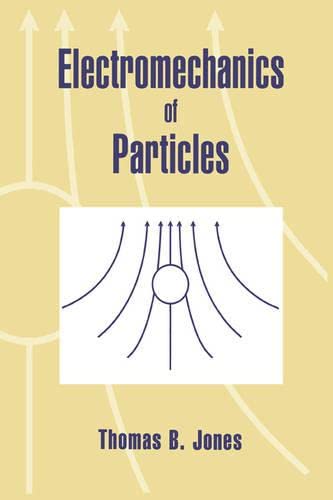
The focus of this book is on the interactions of small particles, in the size range of microns to millimeters, with electric or magnetic fields. This field has particularly useful practical applications, for instance in photocopier technology and lately in the characterization and manipulation of cells and DNA molecules. The author’s objective is to bring together diverse examples of field-particle interactions from many areas of science and technology and then to provide a framework for understanding their common electromechanical phenomena. Using examples from dielectrophoresis, magnetic brush xerography, electrorheology, cell electrorotation, and particle chain rotation, Professor Jones introduces a general model–the effective dipole method–to build a set of predictive models for the forces and torques responsible for the important electromechanical effects. In the last part of the book, the author covers the ubiquitous phenomenon of particle chaining. This book will be highly useful to material engineers and scientists, chemists, and biologists who work with particles, powders, or granular materials.
User’s Reviews
Editorial Reviews: Review “A definitive account…of the electromechanical interactions that govern the behavior of single particles and aggregates of particles…” Mechanical Engineering Book Description A lucid account of the electromechanical interactions that govern the behaviour of particles when an electric or magnetic field is present. From the Back Cover Electromechanics of Particles is the first book to describe field-particle interactions in diverse areas of science and technology and to show that these quite different technologies are based on similar electromechanical phenomena. It is written in a clear and engaging style and includes numerous real-world examples and a general, easy-to-use predictive model useful to engineers and scientists who work with particles or powders and granular materials. Read more
Reviews from Amazon users which were colected at the time this book was published on the website:
⭐This book is very good starting point for studying influence of electric and magnetic fields on the particles. Book has everything you need to get acquainted with the subject and can point you in right direction for the next steps.Would recommend it to the graduate students and researches if they need quick introduction to the subject.
⭐This book basically talks about the calculation of dielectrophoretic force and torque by effective moment method, which uses simpler math and are feasible for more different situations than Maxwell tensor. So people who want to calculate the electric field-induced force and/or torque of dielectric materials. This one is a good reference. This book also talks about the magnetic field-induced force and torque. But I don’t read it so I have no comment on this part.
⭐Professor Jones, renowned author of numerous scientific papers on this topic and the Editor-in-Chief of Journal of Electrostatics, presents us with the monograph on the interaction of the electric or magnetic field with non-charged small, but nevertheless macroscopic particles. The force or torque exerted on particles by the field can result in migratory movement in a non-homogeneous field (dielectrophoresis), rotation of particles in a rotating electric field, orientational change of non-spherical particles, and formation of aggregates of particles known as pearl chains. The tome is a collection of important results in this field, many of them are direct results of Professor Jones and his coworkers.Throughout the book, only classical electrostatics and magnetostatics are employed, i.e. particles are modelled as bodies and shells with given (complex) dielectric permittivity (magnetic permeability in the magnetostatic case), immersed in a homogeneous medium with different electric (or magnetic) properties. This is not a particular drawback, since there is an abundance of literature catering for readers interested in mezzoscopic phenomena.It is clear that Professor Jones’ intention was to make the book accessible not only to physicists, but first and foremost to the intended audience of engineers and scienctists from different branches of science. Thus, for instance, Chapter 2 introduces the effective moment model, which is used throughout the book rather than mathematically more complex the Maxwell tensor formalism. Even though the book is a scientific monograph, mathematics used as a rule does not exceed the standard repertoire of any textbook on electromagnetism, such as multipolar expansion. In addition, experimental scientists will probably appreciate numerous results presented as simple formulas, suitable for comparing with experimentally obtained values.Investigation of the interaction of electric and magnetic field with particles is gaining importance, in particular in biotechnology. As standard textbooks on electromagnetism rarely proceed beyond Clausius-Mossotti law, it is difficult for someone new to this field to find where to start. This monograph could therefore serve as a valuable introduction and reference to this field for a working researcher or a graduate student.
⭐The book is easy to read and understand.
Keywords
Free Download Electromechanics of Particles in PDF format
Electromechanics of Particles PDF Free Download
Download Electromechanics of Particles 2005 PDF Free
Electromechanics of Particles 2005 PDF Free Download
Download Electromechanics of Particles PDF
Free Download Ebook Electromechanics of Particles