Ebook Info
- Published: 2018
- Number of pages: 316 pages
- Format: PDF
- File Size: 5.63 MB
- Authors: Craig Benjamin
Description
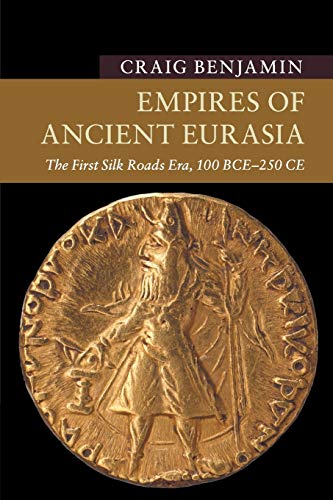
The Silk Roads are the symbol of the interconnectedness of ancient Eurasian civilizations. Using challenging land and maritime routes, merchants and adventurers, diplomats and missionaries, sailors and soldiers, and camels, horses and ships, carried their commodities, ideas, languages and pathogens enormous distances across Eurasia. The result was an underlying unity that traveled the length of the routes, and which is preserved to this day, expressed in common technologies, artistic styles, cultures and religions, and even disease and immunity patterns. In words and images, Craig Benjamin explores the processes that allowed for the comingling of so many goods, ideas, and diseases around a geographical hub deep in central Eurasia. He argues that the first Silk Roads era was the catalyst for an extraordinary increase in the complexity of human relationships and collective learning, a complexity that helped drive our species inexorably along a path towards modernity.
User’s Reviews
Editorial Reviews: Review ‘Craig Benjamin places the pastoral nomads of Central Asia – and their horses – at the center of the story of the First Silk Road Era, convincingly arguing that the Yuezhi and Xiongnu, two militarized nomadic confederations rarely even mentioned in surveys of world history, are responsible for this dramatic period of trade and cultural exchange.’ Merry Wiesner-Hanks, Editor-in-Chief, Cambridge World History’A lucid, original, expert and up-to-date account of the emergence and evolution of the silk roads that began to weave together all the major civilizations of Europe, both by land and sea, early in the first Millennium CE. A great introduction to one of world history’s most important themes.’ David Christian, Macquarie University, Sydney’Craig Benjamin’s Empires of Ancient Eurasia, [is] an enthralling introduction to this ‘First Silk Roads’ era of long-distance exchange by land and sea. Benjamin begins his tale with the migration of pastoral Steppe nomads in the second century BC that traced out the first route west, and then charts the rise of the Chinese Han dynasty who controlled the business end, producing silk and other luxury goods.’ Josephine Crawley Quinn, The Times Literary Supplement Book Description Introduces a crucial period of world history when the vast exchange network of the Silk Roads connected most of Eurasia. About the Author Craig Benjamin is Professor of History at Grand Valley State University in Michigan. He is the author of several books and numerous chapters and articles on ancient history, including Volume 4 of The Cambridge History of the World (Cambridge, 2015). Craig has filmed programs and courses for the History Channel and The Great Courses. He is a Past President of the World History Association and Vice President of the International Big History Association. Read more
Reviews from Amazon users which were colected at the time this book was published on the website:
⭐I pretty much like it all, but it’s written in high school level English, which is surprising for Cambridge Press.
⭐This is an attempt to write a history of the “First silk road era”, that is, the period from the first Chinese penetration of the Tarim Basin which opened trade in Chinese silk to the Roman empire. It ends with the decline of the Roman and Chinese empires and the Sassanid conquest of the Parthian and Kushan empires that linked them. The truth seems to be that there is not enough surviving information to write a proper history. Either that of the matter has not been sufficiently studied. He supports the traditional view that the Romans paid for silk by exporting coin and cannot explain what the Chinese got in return. He claims that the main trade went south from Kashgar to Bactria and the Indus and then by ship across the Arabian and Red Seas. In a few places he mentions a ‘second silk road era’ when the expanding Tang met Dar-al-Islam. In this period trade went overland through Bukhara. This implies that he is planning a second book.
⭐A good general study that appeals to my interests in comparative perspectives based on actual societal systems where one has available at least some information on what was happening in areas of non-trivial size and over time periods spanning several generations. This study is in the spirit of the approaches of Jared Diamond in the collection of essays called “Natural Experiments of History”.
⭐It’s a very good look at Silk Road history of the era, but somewhat dry. Having read practically every book on the Silk Roads, I found what I expected to find, but no strong surprises or new ideas. There doesn’t seem to be an overall thesis; it’s more of a textbook survey. Each chapter even has an introduction that states the questions it will ask and at the end a summary of the answers it discussed.On Valerie Hansen’s burning question of whether there was trade or just government shipments it seems to want it both ways. At first talks about it being only from the government, but later on there is talk of merchants as well with little to no discussion of how they fit into the picture. By the way, it does not include Hansen’s book in the bibliography.The Parthian chapter is uncharacteristically problematic. I found several errors there. It also “cheats”, using it mainly to discuss the Romans.The style is often terse and dry, even when a good story is available. The story of Ban Chao’s conflict with the Kushans, for example, has many more facets and is much more interesting than what is given.Overall, I prefer the books by Raoul McLaughlin — which it does quote at times — to this more academic work. But if those books did not exist, this would be a very good effort. This would probably work well as the starting text for a Silk Roads course.Some specific notes:The Han- Calls the Yumen Pass the Yunmen Pass.- Spells the name of a desert sometimes Taklimakan, other times Taklamakan. Both are correct, but is a little consistency with this too much to ask, Editor?The Parthians- The chapter has almost nothing about the Parthians. Instead, chapter space is used to discuss Alexander the Great and also, the Romans. What kind of history is this? One can learn more about the Parthians on Wikipedia.- Calls Sulla the “virtual dictator” of Rome. He wasn’t just the virtual dictator; he was the dictator. Rome is where we get the term from.- The dates for Mithridates II are twice given as 121-91 CE, which obviously should be BCE.- Strange gratuitous references to Jewish history. Mentions, for example, that Titus presided over the destruction of the Temple in Jerusalem even though it has absolutely nothing to do with the history being explained.- Two maps, one of which is impossible to read because of everything being too small, the other hard to read because the area of interest – Parthia – is given a very dark gray color while all the stuff of interest outside Parthia has an easy to read white background.The Kushans- The story of Ban Chao’s conflict with the Kushans has many more facets and is much more interesting that what is given here. Why retell an interesting story in such a cursory and dull way?- Uses the term “Middle Iranian” and gives several examples, but doesn’t explain the term. Is it Middle because it’s neither Northern nor Southern Iranian or is it Middle because it’s neither Old nor Modern Iranian? Something an editor should have caught.
⭐This book (Cambridge paperback edition) presents a good deal of information; unfortunately, it is not as well presented as we would wish. It suffers first of all from the manuscript’s never having been properly revised and distilled, as a consequence of which circumlocution is pervasive, there is an abundance of needless repetition, and there is a considerable amount of essentially extraneous matter.And whatever editing was attempted by CUP is an utter travesty:p. 6: Humboldt traveled in Central Asia in 1829, not “1929”!p. 7: “…every other species on the planet, which are….”p. 7: “Huang He and Yellow Rivers” (!)p 16: “…defeat of the Yuezhi by the Xiongnu in c. 166 CE….” Make that 166 (or 167) BCE.p. 23: Omits Armenian from a list of the major branches of the Indo-European language family.p. 26: “…the camel was also important for groups dwelling in desert environments like the Sahara, the Arabian Peninsula….” Indigenous North African camels became extinct during the Stone Age; Arabian camels were introduced during the Iron Age, but did not become common in North Africa until the 9th century CE.The author repeatedly refers to “Afro-Eurasia” in the context of his Silk Roads text, but it’s effectively about Eurasia.P. 36: “Others [of the Saka] were forced into Bactria (the northern part of modern Afghanistan), where they settled for a while in Sakastan (present-day Seistan Province)….” Sakastan (later called Sistan) was in the southern, not northern, part of present-day Afghanistan. There is no present-day “Seistan Province” of Afghanistan. The Sistan physiographic (not political) province is an endorhetic basin, mostly in southern Afghanistan, but lapping over into Iran.p. 43: “2 meters (60 inches)”p. 44: “…the tectonic collision of the Indian and Eurasian Plates has produced tremendous mountain ranges like he Himalaya, Karakoram and Tien Shan.” The Tien Shan range predates the plate collision, actually, and is at a considerable distance to the north of the collision zone.Benjamin would have us believe that Zhang Qian was a man who made the times, blazing a wilderness trail that would become the Silk Roads, finally linking China with western Central Asia. Benjamin even intimates that ZQ brought back to Chang’an information about the “town-states” (as Benjamin calls them) of the Tarim Basin; however (as I have it from a Silk Roads authority), there is in fact essentially no written record of ZQ’s experiences or routes between his Gobi Desert captivity and Ferghana. Did he or did he not traverse the Tarim Basin? And if the people of Ferghana (as Benjamin relates) were already aware of the Han empire, and if the oasis towns of the Taklamakan Desert margins were already in place — doubtless connected by caravan roads and trade — then the heart of Silk Roads already was functioning, directly linking westernmost China at the Gansu Corridor with Ferghana, and indirectly to points farther west and south.In his promotion of ZQ as a man who made the times, Benjamin indulges in senseless alternative-history hypothecating. Alternative histories are nothing more than someone’s imaginings of things they themselves consider plausible. Needless to say, such imaginings vary almost infinitely among individual humans, including historians. The careful (credible) historian must not confuse what’s merely plausible from what’s actually possible, and in historical hindsight, we must assume that what actually was, or happened, was the sum total of what was possible — though our discernment of such things will forever be incomplete and highly imperfect. What’s more, the notion of a man making the times implies an impossible compromise between “free will” (itself an illusion) and determinism. Hard science vindicates determinism, and the times making the man.p. 74: Zhang Qian said to have arrived at the Yuezhi court in 128 BCE, but earlier in the text we were told that he was imprisoned by the Xiongnu for over 10 years from 138 BCE.p. 77: “…the first Sumerian imperial ruler Sargon of Akkad….” Sargon of Akkad was an Akkadian who conquered Sumer, establishing the Akkadian Empire. Sumerian and Akkadian are distinct languages.p. 84: “…Tarim Basin town-states such as Loulan and Turfan….” Turfan (also spelled Turpan) is not in the Tarim Basin; it is in the geographically distinct Turfan Basin, to the northeast of the Tarim Basin and separated from it by some 150 miles of mountains.p. 86: “northern Tarim city-state of Turfan” (See above.)p. 86: …”the Han attempted to kill the king of Loulan and replace him with a puppet of HIS [my caps] own.”p. 87: “Map of Han campaigns…” None are shown!p. 93: We are told that the Yuezhi traded in white jade with the Zhou dynasty as early as the 7th century BCE. The white jade comes from Khotan, on the southwestern border of the Tarim Basin. Thus, trans-Tarim trade into China was already active some four centuries or more before the expedition of the excessively extolled Zhang Qian.p. 98: “…storage of WATER DEPOSITS [my caps] from melting snow and ice.” I don’t think “water deposits” is a bona fide (or meaningful) hydrographic term.p. 99: “oases that sprang up” Rather, it was the oasis towns that “sprang up” (slowly, that is).p. 99: “Taklamakan” Was before (and is later) “Taklimakan”.. Both are in use in the literature, but this text should have been made uniform.p. 99: “The oases…around the Tarim Basin…developed…irrigation systems that depended on…underground distribution.” No literature citation for this. The book mentions such specifically only in the case of the Turfan Depression, which is not part of the Tarim Basin.p. 99: “Turfan Hollow of the Tarim Basin” The Turfan Depression (not “Hollow”) is, to say again, separated from the Tarim Basin by some 150 miles of mountains!p. 101: On the route map, no direct route from Dunhuang to the northern Tarim Basin route is shown, but there was one, through Loulan.p. 102: “terracotta tomb of Qin Shi Huangdi” The actual tomb is beneath an unexcavated earthen mound. The terracotta warriors are part of the burial complex, but at some distance from the tomb.p. 103: “Hexi Corridor” Earlier in the text, it was “Gansu Corridor”. Both are correct (they are one and the same thing), but the identity is not explained, and the two terms are indexed separately, with no cross-reference.p. 103: “…another important route…led from India…through Tibet…through Dunhuang to Mongolia….” Not shown on routes map, and no literature citation.pp. 103=104: We are told unequivocally that “Dunhuang” means “blazing beacon”. Perhaps, but the etymology and meaning of the term are debated by scholars.p. 106: The discussion suddenly jumps to “later” Silk Roads. Did the author have sufficient sources to write a book about the “First Silk Roads Era’, or not?p. 111: The Han Shu annals of the Early Han were introduced on p. 35, and afterward simply referred to as the Han Shu, but now we are told again that it’s “Han Shu (Annals of the Early Han).p. 115: The formal zoological name of the Bactrian camel, Bombyx mandrina Moore, is here entirely italicized, including the surname of the author of the species in the zoological literature; however, only the Latin terms for genus and species are to be italicized — authors’ names are not to be italicized (see International Code of Zoological Nomenclature; the same is true of formal botanical names). In any case, it is inappropriate to include the author’s name in non-taxonomic literature.p. 122: If Rome hadn’t withstood Hannibal’s invasion, world history would have been dramatically altered. Another absurd excursion into fanciful alternative history. We might say, on the same ridiculous grounds, that if Phillip II of Macedon had pulled out, or if the queen had had a headache that night, history would have been dramatically altered! It’s nonsense to engage in such malarkey!p. 127: Caesar’s Civil War was not the second Roman civil war — several preceded it.pp. 132,134: “Erythraean” is misspelled; subsequently, in part, it is spelled in archaic fashion (as found in Schoff, 1914).p. 133: Petra is called an “agricultural” town. They did grow crops, but Petra was a quintessential interregional trade entrepot.p. 135: “Periplus” — used as a contraction of the title of a written work — should be italicized.P. 136 (top): Subject and verb separated by a comma.P. 138: Roman coins in Central Asia as evidence of thriving overland East-West trade. The number of Roman coins found in the region of Gandhara is small, perhaps a hundred; whereas, thousands of Roman coins have been found across southern India. Roman coins found in China, also limited in number, almost all came from Byzantium.p. 139: Idle speculation about the itinerary of Maes is not usefully informative and is essentially extraneous.p. 149: Greco-Macedonian (not “Greco-Macedonia”).p. 149: “seriously large empire” A rather ludicrous phrase.p. 149: Caucasus misspelled as “Caucuses”.p. 149: The Iranian Plateau is not bounded by the Persian Gulf to the south. The plateau is separated from the Persian Gulf by the Zagros Mountains along the entire length of the Gulf. And it is not bounded on the east by the Indus River Valley, ending some 400 miles to west of it (the width of Balochistan intervening). Furthermore, it is not a “natural crossroads between west and central Eurasia”, that being the steppes to the north.p. 157: “…common culture, such as the use of composite bows….” Common culture is not defined so narrowly!p. 160: “…Parthian…imperial state…stretched from the Caspian Sea in the northeast….” No. The Caspian Sea bounded the Parthian Empire on the north, roughly halfway between the empire’s eastern and western limits.p. 168: Herat misspelled as “Heart”.pp. 168=169: Herat and Tiazhi not indexed.p. 170: Sparked by (not “through”).p. 172: On the map, Damascus is misspelled as “Damasous”.p. 184, index: “Takht-i Bahi” Requires a second hyphen.pp. 185, 221: “…into the Kabul Valley….continuing south into Kashmir and the Swat Valley….” The way to Swat from the Kabul Valley is more or less due north. Kashmir is due east of the Kabul Valley.p. 186: “back into Central Asian” Asia, not Asian.p. 188: “Soter Megas” means great savior, not “great king”.p. 191: “Chinese Buddhists sources” Buddhist, not Buddhists.p. 191: “whose reliability needs to be handled carefully” Poor choice of words.p. 192: “Xinjiang in the west” Xinjiang was not west of Kushan territory.p. 194, 196: Discussion of schist and sandstone in relation to metamorphism is entirely extraneous.pp. 203, 212: “Indian Ocean and Arabian Sea” “Arabian Sea and Indian Ocean”p. 208: No source(s) cited for Sumer-Indus trade.p. 208: “animal products such as monkeys and panthers” Poor choice of words.p. 229: “including during”p. 231: Nabataean misspelled.p. 238: “something like twenty-five emperors” On p. 255 this is flatly stated as twenty-six emperors.p. 244: “Sinotized” Should not be uppercase.p. 251: “Sassanians” Elsewhere in the book, it is “Sasanians”.p. 255: Severus Alexander given as “Alexander Severus”.p. 255: “…Germanic tribes…incursions across the northeastern borders…crossing the Rhine….”p. 259: “After 268CE the emperors gradually restored order….” It was stated on pp. 254-255 that the third-century crises continued until Diocletian became emperor in 284CE.p. 266: The Battle of Milvian Bridge took place in 312CE, not 313, which is the date of the Edict of Milan, by which tolerance of Christianity is declared jointly by Constantine and Licinius, not unilaterally by Constantine.p. 266: If Constantine was baptized at all (it is legend only), it was on his deathbed in 337 (see Stephenson, 2010).p. 267: “Ohrmazd” It is given elsewhere in the book as the standard “Ahura Mazda”.p. 273: “Emperors” Should not be uppercase.p. 275: “vital importance” No more vital than anything else in the continuum of historical causality.The book is very poorly indexed. A number of significant names are not indexed at all; others are indexed to only a single page, whereas they appear on multiple pages.
⭐This is a very good, in fact fascinating overview of what the author rightly calls the First SilkRoads. It is particularly nice to see attention paid not just to the Roman Empire in the west and the harm dynasty Chinese Empire in the east as instrumental for the establishment of the silk roads, but also the Parthian and Kushan empires as well as the nomadic peoples that were perhaps equally important. There is also a fascinating chapter on the Maritime contacts which were more important than is generally accepted. The book could have benefited from better proofreading, there are some annoying misspellings and strange sentences.
Keywords
Free Download Empires of Ancient Eurasia: The First Silk Roads Era, 100 BCE – 250 CE (New Approaches to Asian History) 1st Edition in PDF format
Empires of Ancient Eurasia: The First Silk Roads Era, 100 BCE – 250 CE (New Approaches to Asian History) 1st Edition PDF Free Download
Download Empires of Ancient Eurasia: The First Silk Roads Era, 100 BCE – 250 CE (New Approaches to Asian History) 1st Edition 2018 PDF Free
Empires of Ancient Eurasia: The First Silk Roads Era, 100 BCE – 250 CE (New Approaches to Asian History) 1st Edition 2018 PDF Free Download
Download Empires of Ancient Eurasia: The First Silk Roads Era, 100 BCE – 250 CE (New Approaches to Asian History) 1st Edition PDF
Free Download Ebook Empires of Ancient Eurasia: The First Silk Roads Era, 100 BCE – 250 CE (New Approaches to Asian History) 1st Edition