Ebook Info
- Published: 2008
- Number of pages: 384 pages
- Format: PDF
- File Size: 5.60 MB
- Authors: Bryan Michael Stoller
Description
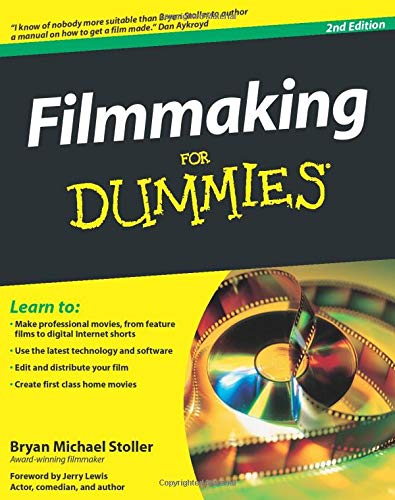
Now updated–the step-by-step secrets to capturing great moments on filmWith all the recent advancements in filmmaking technology, more people than ever are trying their hand at filmmaking. Keeping up with the newest information in this booming field, this updated edition of Filmmaking For Dummies features up-to-the-minute coverage of the latest and greatest hardware, software, accessories, and trends–including high-definition technology and new outlets for films such as YouTube and MySpace. It demystifies the nuts-and-bolts of filmmaking, from developing a project and securing financing to hiring a cast and crew, editing, and getting distribution. This new edition also provides new movie examples and updated contacts and resources. Whether people want to become professional filmmakers or simply shoot quality home movies, this practical guide has all the advice and tips needed to succeed.
User’s Reviews
Editorial Reviews: From the Back Cover “I know of nobody more suitable than Bryan Stoller to author a manual on how to get a film made.”Dan AykroydLearn to:Make professional movies, from feature films to digital Internet shortsUse the latest technology and softwareEdit and distribute your filmCreate first class home moviesNow updated! Your step-by-step guide to turning your filmmaking dreams into realitySo you want to make movies? Whether you’re looking to go pro or create quality home movies, renowned filmmaker Bryan Michael Stoller shares his extensive hands-on experience in shooting a successful film. From developing a script and securing financing to editing and working in high definition, he reveals secret tips for capturing great moments on film ― even on a tight budget! Tell your story ― explore the different genres and write (or find) a screenplayGear up and start production ― choose the right camera and format, scout a location, and hire the right cast and crewAdd the finishing touches ― edit your scenes, set your movie to music, incorporate sound effects, and moreGet your film in front of an audience ― enter film festivals and find a distributorGrasp the latest technology ― understand the advancements in digital and HD; upload your movies to such sites as YouTube and MySpaceExclusive new interview ― gain invaluable insights from Alan Horn, President and COO of Warner Bros.”From ‘Fade In’ to ‘Fade Out,’ from ‘Action’ to reaction, Bryan Stoller gives us a comprehensive understanding of the art and science of making movies. Filmmaking For Dummies is the smartest book I’ve read on the subject.” ―Peter Saphier, co-producer ofScarfaceOpen the book and find:Filmmaking tips and secrets not found anywhere elseExpert advice on choosing the best equipment and format to useNew movie examples, photos, and figuresThe latest on new digital technology, including affordable HD camcordersWays to generate publicity for your filmUnique Web sites for the independent filmmakerCost-saving tips for film stock and softwareUpdated contacts and resources About the Author Bryan Michael Stoller is an international-award-winning filmmaker who has produced, written, and directed over 80 productions, including short comedy films, half-hour television shows, music videos, commercials, and feature films. He has worked with some of the biggest names in Hollywood, including actors and studio presidents.
Reviews from Amazon users which were colected at the time this book was published on the website:
⭐This book is helpful for anyone wanting to know how the movie industry works, but is a little too in-depth for someone just starting out. The legal and labor related information in particular is likely to seem daunting for a first timer. I suggest pairing this book with another that is more focused on the craft of filmmaking. That’s not to say Filmmaking For Dummies doesn’t contain some helpful tips or advice.
⭐This is a very detailed reference book. It takes a person from the beginning phases of Filmmaking to the intricacies of the process of negotiations and the final Wrap up. Very valuable guidance, direction and you can tell Bryan Michael Stoller has walked his talk. He is very knowledgeable in this business of Filmmaking and shares his knowledge with clear delivery and wit–which helps to remember the steps to a Filmmaking Success. In this book he walks the reader though the process from the birth of an idea and story, pre-production, financing, all the technical matters involved in bringing the project to fruition and later post-production. He also goes into detail to perhaps the most important phase…promotion and marketing.This book is a very valuable resource which needs to be in everyone’s bookshelf from the beginning actor to the accomplished director/producer. Show business and Filmaking is a business and this book educates and implements the workings of a highly and successful business venture as well a great Creative delivery of a vision.
⭐Surprisingly, a nice condensed collection of pertinent information. By no means does this book replace hands on experience, but if you’re about to step into filmmaking for the first time, or just want a broader knowledge of the terms, equipment, and processes of filmmaking, this is a well detailed manual that gives trimmed down information and takes the guesswork out of how things are done on set.
⭐Ok book a lot of outdated info on using film. If the book is for dummies or novices then they are not going to invest in the expense of anything other than digital. It’s time for a revised edition.
⭐I’m working on a novel in which the hero is an independent filmmaker. Although I do have some knowledge of the industry, I didn’t feel sufficiently informed to accurately include details in the book. However, since I don’t plan to turn the book into a movie, I didn’t need a technical manual. Dummies to the rescue.This book provided precisely the information I wanted in the usual easy-to-comprehend style for which this series is famous. I suspect it would be equally valuable for someone considering making a film. I would suggest other books on the subject be acquired before proceeding with the latter, but as a source of basic information, Filmmaking for Dummies is an excellent resource.
⭐Lots of great tips for would be filmmakers
⭐Good for beginnersTeaches what to think aboutWhat works bestValid and relevant despite some tech advances since its printing
⭐This is a wonderful book, especially if you are a one-woman/man show, this is all you need! I learned things in here that I didn’t learn in film school, that I further investigated on the internet. I will never let this book go!
⭐The title, Filmmaking For Dummies, kind of says it all. How to make a film if you know little to nothing about filmmaking. Bryan Michael Stoller seeks to impart some valuable information to you, the beginning filmmaker, that will help you along in the process and, hopefully, help you avoid some of the most common and detrimental mistakes along the way.Stoller takes us from the very beginning: finding/writing a story all the way to distribution. He covers everything in between and offers many helpful insights and tips along the way.If you know little to nothing about the process of filmmaking and yet still have an uncontrollable desire to make a film…you need to check this book out. However, be forewarned, that some of the things he discusses or suggests that you need will require a larger budget than most of us have at our disposal when we get started.ComprehensionStoller writes in such a way that the most novice among us can grasp what he’s saying. For the more technically proficient, he offers little technical insights, too. The good news is that even if you’re not technically proficient and don’t understand technical jargon, you can skip over these technical tidbits and still not lose any pertinent information about making your first film.Depth of InformationIf the amount of information in this book came in the form of an avalanche, you’d be buried with no hope of ever being found. Even though that seems to be a bit of a negative analogy, it is actually meant to be positive.There is such a wealth of helpful information contained in this book that, if you apply it, it will put you far ahead of the learning curve that most of us independent filmmakers started on. Granted, there are some things in the book that your modest budget will not allow you to do (i.e. deciding whether or not to shoot in the U.S. or in Canada; for most of us, our country of origin is the only viable option). That notwithstanding, applying the things that are within your power and budget to apply will help you create an outstanding first film…and subsequent ones for that matter.Even with this wealth of information, keep in mind that this is one book that is meant to give you a thorough overview (which is clear and the author makes no attempt to mislead you). Stoller himself even states that you may need to go to a specific resource to find more in-depth information on a particular subject.Interest LevelI will make the assumption, and I feel it’s a rather safe one, that if you’re considering purchasing this book that you have a fairly strong interest in making a film. If that assumption is correct then you will find this book most interesting, as well as helpful.Some of the tech speak can get a bit dry, although Stoller tries to explain it well, and can at times be hard to follow if the technical aspects are new to you. But, like I said earlier, much of the technical jargon is integrated in such a way that you can skip it and not miss the essential information that will be pertinent to making your film.With that said, everything else flows smoothly and maintains interest as Stoller defines terms that would otherwise become unwieldy and dry.ReusabilityIs it possible to know everything about something? NO! If you’re on the ball you’ll find yourself in a constant state of learning and, as such, will always benefit from a resource that you can constantly go back to as a refresher. Due to the amount of information that’s crammed into this book, you may pick the book up again and find something that you’ve never noticed before that will revolutionize your current project.Value vs. CostIs this book worth the cost? You bet it is. This book is a great resource for the beginner and for the more seasoned low budget filmmaker. The information is practical and helpful for the filmmaker on any level. Particularly if you’re itching to make your first film, the first $20 that you spend should be on this book. Seriously, don’t spend a dollar until you’ve read through this valuable resource. I didn’t get to read this book before I made my first films and in retrospect it would have made for an even better production, at least on my end of it. That’s not to say that the projects were bad. On the contrary, we did a lot of things right, but the information in the book would have given me insights that I didn’t have at the time.Overall CommentThis is my favorite part of these reviews because it’s kind of like my own personal monologue…and I like that. So, with everything I’ve said so far in mind, let me add a little personal seasoning to the mix.One thing in particular that I’d like to reiterate here (a point that Stoller makes, although I’ll rephrase) is that the smartest thing you can do as a first-time filmmaker (in conjunction with reading this book) is to find people that know more than you and are smarter than you. This will help make your first project better than it otherwise would be. Surrounding yourself with people that have more experience than you is not admitting weakness, but rather it reflects your commitment to making your film the best that it can be. This is what I did on my first film and it saved me. While we all still learned so much from the experience, I know that if I had tried to do it alone, it would have sucked altogether. Since I surrounded myself with people that knew more than I did and people that were good at what they did, the film came out very well.While this book has its value to both the novice and the more seasoned filmmaker, those of you that have made films before will find some of the information to be “common sense.” For example, you know that your film is doomed without a good story and you probably know how to write or spot a good story. Even so, there are many things in this book that I’m going to start applying to my next projects, even though I have a handful of them under my belt already, including one that’s won some rather prestigious awards.I mentioned earlier that some of the suggestions that Stoller makes will not be possible on the kind of budgets that most us have to work with. I mentioned the “which country do I film in?” as an example, but you also will, most likely, not be able to build a sound stage or create elaborate special effects, and, with very few exceptions, you most certainly will not have $20,000 to get sync rights for a song. However, Stoller eludes to what I like to call “writing for your budget.” Whether you’re writing your great story or using someone else’s story you must keep budget in mind with regards to location and effects. Good advice. You will more often than not be relegated to working with locations that you have at your immediate disposal, although through building connections and relationships with others in your community, the possibilities become much greater.Stoller talks of alternate forms of payment for your cast and crew. Yes, yes, yes, and yes. You must cover their meals, but bartering for credit in the film or volunteering for their next project…these are valuable and perfectly fine means of alternative payment. And as for as locations and/or finding people to cater your set…ask. The worst thing someone can say is “no” and you’ve lost nothing. (Usually. But that’s another story altogether–though, people who read editor Jeremy Hanke’s editorials probably know what I’m referring to.)Let me also state, more pointedly, something that Stoller mentions: the four most important things about your film are story, audio, acting, and lighting. The kind of camera you use will not make your story or performances better. Make sure you don’t skimp in any of these areas.As far as acting goes, you can find talented people who are willing to work for the experience and the addition to their resume. Don’t simply cast your buddy who thinks he/she can act. Have auditions. And, if you don’t know enough about what good acting looks like, find someone who does.Here’s the only place that I really disagreed with Stoller. He says that “acting is easy…we all act every day….” In essence, it shouldn’t be hard to find good talent. It is true that there are plenty of people who will be willing to be your “talent,” but they might not be talented. There are plenty of talented people as well, but you have to do the leg work to find them.Not every one can act! Acting like you’re surprised with the “surprise party that you already knew about” in real life is not the same thing as acting surprised when there are at least ten other people in the room with you, 1000+ watts of lighting instruments shining on you, and a camera ten inches from your face.And with that said, not every good actor is right for a certain role. So, audition, audition, audition!I’ve rambled long enough. Here’s the brass tax: aside from my differing opinion with Mr. Stoller on the acting issue, this book is seriously a wonderful asset to any level filmmaker’s library. You’ll find yourself going back and referencing things for all your future projects.
⭐A good detailed overview . tips on filming, editing, writing, directing, special effects, financing, post-production and more.There’s plenty of information about some of the more detailed aspects of how films get made and disturbed, but I imagine most buyers of this book would just like an introduction to film or tips on how to make low budget ones. The majority of the links are to American magazines which isn’t that useful.Chapter 23 – How to avoid Murphy’s law is quite amusing + relevant.Some of the social media it references are outdated, who uses Myspace anymore? (pg 31)
⭐I’d say this book is fairly useful. The one big draw back I’d say it has is that it really is focused primarily on the intricacies of making a film in Hollywood or the US rather than just about anywhere else. I wasn’t sure if this book would go into a whole lot of detail regarding the use and operation of Cameras specifically and it doesn’t really, it’s more of a guide to creating a production than just learning to use a camera. Coming from a student’s perspective I’d say that Digital Video for dummies would have been a bit more useful in that regard. If you want to learn about putting a film together this book should be a least a start but for learning specifically about how to use a Camera and editing software I’d probably go somewhere else.Naturally it conforms to the high standards of most For Dummies books but none the less pretty much just offers an entry level insight into the subject at hand (obviously) which it must be said it does do very well.The one thing that did really grate on me was that there was definitely a bit of an air of self-promotion and product-placement that I really didn’t think was particularly professional but then again that might just be a bit of an Industry standard with this sort of thing, the Author did tend to get a bit precious sometimes as well.By no means the be-all, end-all of guides to Film-making It’s made a fairly robust starting point and is quite worth the price, I’d definitely recommend going off and reading more after this, however.
⭐On reflection I should have suspected that this book is completely out of date.
⭐Purchased to use in my lessons with Level 3 Media students. Has been a great addition to lessons.
Keywords
Free Download Filmmaking For Dummies 2E in PDF format
Filmmaking For Dummies 2E PDF Free Download
Download Filmmaking For Dummies 2E 2008 PDF Free
Filmmaking For Dummies 2E 2008 PDF Free Download
Download Filmmaking For Dummies 2E PDF
Free Download Ebook Filmmaking For Dummies 2E