

Ebook Info
- Published: 2015
- Number of pages: 408 pages
- Format: PDF
- File Size: 9.66 MB
- Authors: Peter Crane
Description
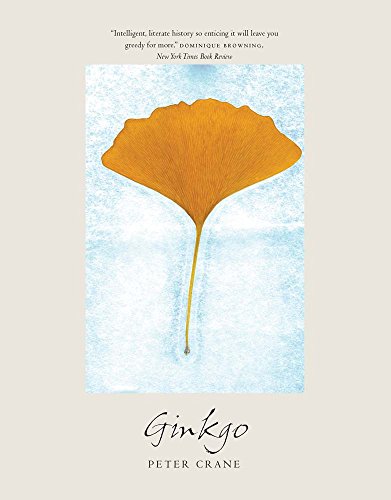
Perhaps the world’s most distinctive tree, ginkgo has remained stubbornly unchanged for more than two hundred million years. A living link to the age of dinosaurs, it survived the great ice ages as a relic in China, but it earned its reprieve when people first found it useful about a thousand years ago. Today ginkgo is beloved for the elegance of its leaves, prized for its edible nuts, and revered for its longevity. This engaging book tells the rich and engaging story of a tree that people saved from extinction—a story that offers hope for other botanical biographies that are still being written. Inspired by the historic ginkgo that has thrived in London’s Kew Gardens since the 1760s, renowned botanist Peter Crane explores the history of the ginkgo from its mysterious origin through its proliferation, drastic decline, and ultimate resurgence. Crane also highlights the cultural and social significance of the ginkgo: its medicinal and nutritional uses, its power as a source of artistic and religious inspiration, and its importance as one of the world’s most popular street trees. Readers of this book will be drawn to the nearest ginkgo, where they can experience firsthand the timeless beauty of the oldest tree on Earth.
User’s Reviews
Editorial Reviews: Review “This intelligent, literate history is so enticing it will leave you greedy for more.”—Dominique Browning, New York Times Book Review”You might think you’d have to be a scholarly sort of tree hugger to wrap your mind around GINKGO: The Tree That Time Forgot, by Peter Crane, but this intelligent, literate history is so enticing it will leave you greedy for more.”—Dominique Browning, New York Times Book Review”It’s a personable story, as Crane examines the fossil record seeking to trace the plant’s evolution and the tree’s cultural impact.”—The Chicago Tribune”Ginkgo cranei, an extinct species of the family, is named after the author who lived beside the UK’s oldest Ginkgo while he was director of Kew Gardens. This qualification is dwarfed by the depth of Crane’s knowledge and the sparkle of his prose. He also reminds us why conservation matters: ‘Letting species go extinct when we have the power to intervene is like letting a library burn just when we are learning how to read.'”—Jane Owen, The Financial Times”An entertaining introduction to botanical lore.”—Kirkus Reviews”Among a clutch of new books, Ginkgo has all the right ingredients. It is one of those rare works written by a scholar whose passion for his subject makes you want to go out and hug a ginkgo–or at least seek one out to examine it more closely.”—New Scientist”Readers of this fascinating history will be glad to know there is at least one life-form that owes its survival, not its destruction, to humans.”—Scientific American”After reading this captivating book, you will never simply just look at a tree of any species again, and most certainly not a ginkgo, without pondering its cultural importance, how it came to be growing in this place at this time, and its reproductive biology, economic uses, and phylogenetic position.”—J. C. McElwain, Science”Highly recommended.”―Choice”Apart from covering all the main aspects of the biology, growth, history and cultivation of Ginkgo, it includes a fascinating account of the study of fossil plants and of the personalities involved . . . This is a delightful book to read, alike to botanists and to anyone with an interest in trees.”—Martyn Rix, Curtis’s Botanical Magazine”Encyclopedic in breadth and depth, this ‘global biography’ of the ginkgo is an elegant account infused with the writer’s sense of wonderment for his subject. Reading it will likely make you seek out the nearest specimen to appreciate it anew.”—Key ReporterA Best Science Book of 2013, New ScientistShortlisted for the 2014 Phi Beta Kappa Award in Science”This engaging book uses Ginkgo as a point of departure to examine a wide range of topics—the history of botanical exploration in China and Japan, as well as plant anatomy, physiology, evolution, extinction, and conservation. . . . It is both scholarly and accessible.”—Scott Wing, Smithsonian Institution”Ginkgo takes a place among the best books on plants that I have had the pleasure of reading. It provides an extremely interesting account of a remarkable plant through space, time, and culture.”—Peter H. Raven, President Emeritus, Missouri Botanical Garden”My favorite Ginkgo is the iconic ‘over my dead body’ in Hibiya Park in Tokyo. Peter Crane’s book will enchant both experts and newcomers to these splendid plants.”—Robert M May, University of Oxford”Peter Crane provides a compelling and definitive portrait of the Tree That Time Forgot: its ancient lineage, its natural history, and history interwoven with people . . . an eye-opening page turner about the Ginkgo in particular and trees in general. A triumph of beautifully written scholarship.”—Thomas E. Lovejoy, University Professor of Environmental Science and Policy, George Mason University”A remarkable book about a remarkable tree that came through from the age of the dinosaurs in one corner of China, and has now repopulated parks and gardens all over the world. An important biography of the ultimate survivor.”—Richard Fortey, author of Horseshoe Crabs & Velvet Worms About the Author Peter Crane is Carl W. Knobloch Jr. Dean and professor, School of Forestry and Environmental Studies, Yale University, and former director of The Royal Botanic Gardens, Kew, UK. He divides his time between Oak Park, IL, and New Haven, CT.
Reviews from Amazon users which were colected at the time this book was published on the website:
⭐No one cannot tell ginkgoes for their unique leaves with conical shape. Ginkgoes stand throughout Japan, in the precincts of temples and shrines, in the schoolyards and in the streets. Many ginkgo trees have their own legends together with our various reminiscence. We admire their yellow color in Autumn. Ginkgo nuts is popular as a classy side dish for sake, is necessaries for Japanese hors d’ oeuvre, chawan-mushi. It becomes a symbol of Tokyo, a university. The tree puts down its roots into our lives. Peter Crane talks about “Ginkgo” from various phases of our relation with them, from a point of botany, archaeology, paleontology and comparative culture. The way he tells a story is full of deep respects to his predecessors.According to his accounts ginkgoes have been ever present for 200 million years or more. Once widespread throughout the Northern Hemisphere, they almost disappeared as the climate changed to cool and dry. Extinction of mediating animals might cause bad impact on their survival. Where caught my eyes is ginkgoes were discovered in Japan through trading at Deshima in the late seventeenth century, and were brought into cultivation in Europe and then in America. Ginkgoes were survived in China and evidently spread to Korea and Japan. Crane’s knowledge is wide and profound, he searches the origin of word “Ginkgo” in the chapter titled Naming. He explains the word originated in Japanese “Ginkyo.” People longs for it’s longevity. While the seeds have been widely used in the East, extracts from leaves have got attention almost exclusively in the West. Ginkgo leaf extracts are said to be among the leading prescription medicines in both Germany and France. It is used for symptomatic treatment of deficits in memory, concentration, and certain kinds of depression.There is a long dispute about the subsistence of zoos and aquariums. The explanation of Wollemi pine makes me think twice about the preservation of species. The timescales of ginkgo’s life story, as he says, make us pose to consider the current climate change. Following to the modern-day mantra of more, better, faster unthinkingly will only lead us to catastrophe. The book gives us good opportunity to reflect more often and think more carefully about what we lost because of our short-sighted decision.
⭐BOOK REVIEWPeter Crane has fortunately organized his book into chapters so that the reader can choose only the sections of interest, instead of plowing through this long book. There is information for the person who has a female ginkgo in his backyard, the city dweller who admires the male ginkgos lining her street, the elder worried about losing his memory who is considering taking Ginkgo biloba pills, the botanist who is interested in the history of plants and how they reproduce, the historian who has visited London’s Kew Gardens, and someone who is fascinated with Chinese, Korean and Japanese culture, religious practices and history.Peter Raven, President Emeritus of the Missouri Botanical Garden in Saint Louis provides a fine foreword that outlines the many facets of the uniqueness of Ginkgo biloba. “…ginkgo stand out by virtue of its unique features, amazing history, and long association with people.” Its distinctive fan-shaped leaves and tall trunks are found in parks, streets and recreational areas throughout the temperate world, but are extremely rare as an uncultivated native tree.“Among the seed plants, only ginkgo and cycads for motile sperm within their pollen tubes, a fascinating example of the survival of an archaic characteristic.” “Ginkgo has survived essentially unchanged for as much as 200 million years.”
⭐Nice book for a Ginkgo fan. Small black and white pictures. Good info.
⭐This book tells the history of the Ginkgo tree, from its fossilized past covering millions of years, to its remnant population in China, to its widespread cultivation today. Perhaps the only thing missing is a description of the characteristics of Ginkgo wood.The author shows a real fascination with the Ginkgo tree, having delved deeply into all aspects of its history and its growth. He seems to know where every individual tree is to be found! He concludes the book with a discussion of the value of preserving not just the Ginkgo, but other rare plants. What I most enjoyed about the book was the author’s sincerity in his affection for the plants he studies.
⭐I grew up in Grinnell, Iowa where there are many Ginkgo Trees….Many years ago an elderly Botanist at Grinnell College planted many Ginkgo trees all around town & I was always interested in them as a child…I lived in Chicago & other cities for many years and rarely saw Ginkgos. I am now over 80 years old, retired in beautiful Grinnell, known as the JEWEL OF THE Prairie & surrounded by my beautiful ginkgos. Peter Cranes book answered so many questions about this wonderful tree, its amazing history, fascinating facts etc. that I plan to make sure all my area libraries and tree loving friends have access to this great book.
⭐This is a great book for those that love these ancient trees.
⭐Peter Crane’s book explains the fascinating history of the ginkgo tree, from evolutionary prehistory to today. But the author uses the ginkgo story as a focus point to explain all aspects of evolution and conservation: the book is not just about ginkgoes. This book helped me understand the crucial role that botanical gardens and arboreta can play in saving a tree species from extinction. It worked with ginkgoes, dawn redwoods, Wollemi pines, and Franklinia bushes. It can work with other woody species as well, including a rare species of shrub that I work with. You can tell from the book that Peter Crane really loves ginkgoes, and when an author loves something, the readers will too.
⭐A wonderful compendium on all things gingko. Provides a lot of history and knowledge of gingko trees during human life and before. A great book book for tree lovers.
⭐Peter Crane, the author of this work, has an attractive prose style conducive to both easy reading and ready assimilation. It will not escape the notice of ornithologists that there is a foreword by Peter Raven and that a raven is better equipped for perching in a ginkgo tree than is a crane. Mr Crane, who currently holds an important position at Yale University, was formerly director of the Royal Botanic Gardens, Kew. In addition to foreword, preface, notes, large bibliography and comprehensive index, the work is made up of 37 chapters divided into seven parts.Part 1: Prologue. Deals with time line, trees and identity.Part II The Living Tree: Energy, Growth, Stature, Sex and Gender.Part III Origin and Prehistory: Origins, Ancestry, Relationships, Recognition, Proliferation, Winnowing, Persistence and Prosperity.Part IV Decline and Survival: Constraint, Retreat, Extinction, Endurance and Relic.Part V History: Antiquity, Reprieve, Voyages, Renewal, Naming and Resurgence.Part VI Use: Gardens, Nuts, Streets and PharmacyPart VII Future – Risk, Insurance, Gift and Legacy.This is a very dip-into-able work. You can pick it up any time and get straight to the place that will tell you just what you want to know about the ginkgo, its evolution and relationships with other plants and much else besides. Anyone who is setting out to write a comprehensive work on a scientific subject could not to better than to follow both the layout and readability styles of this wonderful work, which reads much better than many novels. I’m sure many people will enjoy reading it.
⭐Magic, totally fascinating, a great read which unravels the origins and the marvels of a single genus from a respected scientist you will see this familiar plant in a new light after reading this
⭐Arrived quick and safely to my son in Nottingham and he was very pleased
⭐I am in the process of reading the book, which is so interesting and informative and beautifully written. I have many Gingko bonsais and really relate to this amazing tree.
⭐This book is an interesting source of information for botanists. Peter Cave has included information on the botanic aspects of the plant and it’s origin with reference to paleobotanic sources, as well as giving an insight to it’s importance to cultures through time.
Keywords
Free Download Ginkgo: The Tree That Time Forgot in PDF format
Ginkgo: The Tree That Time Forgot PDF Free Download
Download Ginkgo: The Tree That Time Forgot 2015 PDF Free
Ginkgo: The Tree That Time Forgot 2015 PDF Free Download
Download Ginkgo: The Tree That Time Forgot PDF
Free Download Ebook Ginkgo: The Tree That Time Forgot