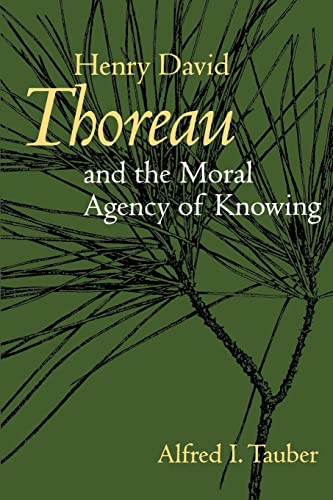
Ebook Info
- Published: 2003
- Number of pages: 328 pages
- Format: PDF
- File Size: 1.82 MB
- Authors: Alfred I. Tauber
Description
In his graceful philosophical account, Alfred I. Tauber shows why Thoreau still seems so relevant today―more relevant in many respects than he seemed to his contemporaries. Although Thoreau has been skillfully and thoroughly examined as a writer, naturalist, mystic, historian, social thinker, Transcendentalist, and lifelong student, we may find in Tauber’s portrait of Thoreau the moralist a characterization that binds all these aspects of his career together.Thoreau was caught at a critical turn in the history of science, between the ebb of Romanticism and the rising tide of positivism. He responded to the challenges posed by the new ideal of objectivity not by rejecting the scientific worldview, but by humanizing it for himself. Tauber portrays Thoreau as a man whose moral vision guided his life’s work. Each of Thoreau’s projects reflected a self-proclaimed “metaphysical ethics,” an articulated program of self-discovery and self-knowing. By writing, by combining precision with poetry in his naturalist pursuits and simplicity with mystical fervor in his daily activity, Thoreau sought to live a life of virtue―one he would characterize as marked by deliberate choice. This unique vision of human agency and responsibility will still seem fresh and contemporary to readers at the start of the twenty-first century.
User’s Reviews
Editorial Reviews: Review “Tauber’s work will amply reward persistent thumbing. It deserves praise as a novel, often stringent philosophical reading of Thoreau, one that properly places him in the forefront of ecological debate in our time.” ― Thoreau Society Bulletin”Tauber is a sensible thinker who possesses the uncommon merit of recognizing which are the most interesting questions. Moreover, he has a good eye for the range of connections to various intellectual traditions, and this is stimulating, as is his effort to locate Thoreau’s significance for contemporary debates. Most importantly, one of his recurring themes—Thoreau’s view that human knowing as such necessarily has a moral cast–is rightly a perennial one for thoughtful human beings, and always worth reflecting upon.” ― Philosophy and Literature From the Inside Flap “Tauber’s book is encyclopedicnot only a revealing and comprehensive study of Thoreau but also a full vision of the Romantic Weltanschauung and its relevance to contemporary concerns in philosophy, science, and poetics. While this scope is wildly ambitious, Tauber admirably delivers, always informing his parts with the whole, consistently altering the whole with his parts.”Eric Wilson, author of Emerson’s Sublime Science”In arguing for the centrally moral and ethical value of Thoreau’s works, Tauber is taking a brave stance in these slippery postmodern times . It’s one thing to praise Thoreau for his opposition to the Mexican War, his philosophy of passive resistance, and his fervent opposition to slavery. It’s quite another to argue that his entire projecthis whole sense of identity, self-formation, and his relation to natureis part of a deeply moral enterprise .Thoreau’s modernity has been defined in many ways in recent years. Tauber adds another important and distinctive dimension to this discussion.”H. Daniel Peck, John Guy Vassar Professor of English, Vassar College From the Back Cover “Tauber’s book is encyclopedic―not only a revealing and comprehensive study of Thoreau but also a full vision of the Romantic Weltanschauung and its relevance to contemporary concerns in philosophy, science, and poetics. While this scope is wildly ambitious, Tauber admirably delivers, always informing his parts with the whole, consistently altering the whole with his parts.”―Eric Wilson, author of Emerson’s Sublime Science”In arguing for the centrally moral and ethical value of Thoreau’s works, Tauber is taking a brave stance in these slippery postmodern times…. It’s one thing to praise Thoreau for his opposition to the Mexican War, his philosophy of passive resistance, and his fervent opposition to slavery. It’s quite another to argue that his entire project―his whole sense of identity, self-formation, and his relation to nature―is part of a deeply moral enterprise….Thoreau’s modernity has been defined in many ways in recent years. Tauber adds another important and distinctive dimension to this discussion.”―H. Daniel Peck, John Guy Vassar Professor of English, Vassar College About the Author Alfred I. Tauber is Professor of Philosophy, Professor of Medicine, and Director of the Center for Philosophy and History of Science at Boston University. Among his previous books are Confessions of a Medicine Man (1999) and The Immune Self: Theory or Metaphor? (1994). Read more
Reviews from Amazon users which were colected at the time this book was published on the website:
⭐This is a book for two kinds of readers. Those who are particularly drawn to Thoreau will find a provocative thesis on which to hang all of his various pursuits. Tauber approaches him as a historian and philosopher of science, and shows how Thoreau was reacting against a rising tide of positivism – a form of radical objectivity — to preserve his individualistic perspective on the world. Whether he was doing natural history or cultural history, Thoreau collected facts and assembled them to uniquely construct his own view of nature or culture. But Thoreau is only a foil for Tauber’s larger purposes. Tauber’s major theme is that all knowledge is value-laden and we choose the values by which to know the world and live in it. The fact/value distinction, so important in much of philosophy of science, is brought together here. This thesis is of interest, not only to understand Thoreau, but for a very much wider set of concerns. Tauber is charting out a post-critical understanding of the nature of knowledge, building on two philosophies: Michael Polanyi’s “tacit mode” of understanding and Emanuel Levinas’s ethical metaphysics. The first argues that the conditions that make knowing possible are not “foundational” or can ever be made explicit, but rather are embedded in individual experience and common social life; from this source, explicit knowledge is created. The second thesis maintains that values determine how we encounter the world and ultimately know it. These themes are not novel to contemporary philosophy, but when posed in present debates about the nature of reality, the claims of relativism, and the problematic status of the self, Tauber’s synthesis offers a way out of the maze of postmodernism to new assertions about the primacy of the person. Thoreau is used to demonstrate how the postmodern challenge has its origins in the romanticism and that the responses offered then, when understood in the light of 20th century developments, takes on new significance. This is an ambitious book: The Thoreau lover will find some of the philosophy challenging and the philosophically inclined will find the focus on Thoreau potentially distracting. But each will find their efforts well paid: the first will understand Thoreau in a new way, and the second will see a philosophy enacted in a rarely realized illustration.
Keywords
Free Download Henry David Thoreau and the Moral Agency of Knowing in PDF format
Henry David Thoreau and the Moral Agency of Knowing PDF Free Download
Download Henry David Thoreau and the Moral Agency of Knowing 2003 PDF Free
Henry David Thoreau and the Moral Agency of Knowing 2003 PDF Free Download
Download Henry David Thoreau and the Moral Agency of Knowing PDF
Free Download Ebook Henry David Thoreau and the Moral Agency of Knowing