Ebook Info
- Published:
- Number of pages:
- Format: PDF
- File Size: 0.83 MB
- Authors: Seneca
Description
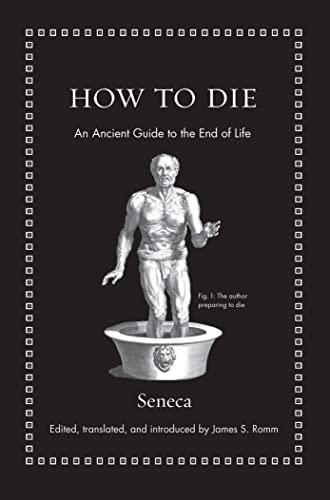
Timeless wisdom on death and dying from the celebrated Stoic philosopher Seneca”It takes an entire lifetime to learn how to die,” wrote the Roman Stoic philosopher Seneca (c. 4 BC–65 AD). He counseled readers to “study death always,” and took his own advice, returning to the subject again and again in all his writings, yet he never treated it in a complete work. How to Die gathers in one volume, for the first time, Seneca’s remarkable meditations on death and dying. Edited and translated by James S. Romm, How to Die reveals a provocative thinker and dazzling writer who speaks with a startling frankness about the need to accept death or even, under certain conditions, to seek it out. Seneca believed that life is only a journey toward death and that one must rehearse for death throughout life. Here, he tells us how to practice for death, how to die well, and how to understand the role of a good death in a good life. He stresses the universality of death, its importance as life’s final rite of passage, and its ability to liberate us from pain, slavery, or political oppression. Featuring beautifully rendered new translations, How to Die also includes an enlightening introduction, notes, the original Latin texts, and an epilogue presenting Tacitus’s description of Seneca’s grim suicide.
User’s Reviews
Reviews from Amazon users which were colected at the time this book was published on the website:
⭐you’ll be glad you bought it
⭐How to Die is a guide on how to live and how to be free. James Romm has selected, translated, and provided context on Seneca’s works about death to help me live better and to prepare for death when it comes. I learned why I should not fear death, how not to have regrets, and how to live freely. He made Seneca’s words come alive.I am working my way through this series of books. They are an excellent way to present different concepts in philosophy. Each book is a great way to learn about living and dying, leadership, controlling your emotions, and other ideas. They introduce me to different philosophers and point me in directions I would not have gone without such introductions.The audible version enhanced the experience and made it easier to understand the concepts presented.
⭐This is a great book for a more classical take on mortality. Very thought provoking. It includes the Latin text as well as the English. Highly recommend it for anyone studying the subject of mortality. It’s a quick read and you won’t regret putting the short time into it.
⭐This slim volume should be read by everyone. One does not have to be at death’s door to appreciate the wisdom given by Seneca. This is a book for the reader of all ages. Stoic though he was, he repeats like a mantra his advice, to be afraid of death is to be afraid of living and you only live life to the fullest when you are prepared to pass away honorably.This was true in Seneca’s time and is more so in these contemporary days. Our culture is youth oriented, and issues like aging, illness, and death are not only to be avoided but feared. Look at how many euphemisms we have for death or dying. We don’t want to look at the possibility and if the subject arises in conversation, you are branded a killjoy. (No pun intended.)Seneca is saying we should confront death and dying for what it is: the natural passage of all things, another chapter in a life, but beforehand, live life as you should confront death, with dignity. At times, he gives what resembles to be the advice given by Krishna in the Bhagavad Gita. How to Die contains wisdom for the ages.
⭐This is a book that we in the West need! It’s a wonderful compilation of Seneca’s various writings and mentions of death in his essays and letter. One of the reasons we — especially in the United States and the modern Western world — do not know how to live well and happily is that we fear death. We just don’t know how to die! Seneca can teach us much about death and dying and he does so eloquently in his writings. This is a good companion to books from the Eastern philosophies of Hinduism, Buddhism, the Tao, etc. when studying death. It is as important to have a good death as it is to have a good life — and perhaps more so. When we know how to die, we will begin to learn to live fearlessly and with a lust for life. In fact HOW we die is much less important than how we’ve lived our lives. We need to put less emphasis on living longer and strive for a life of greater good.
⭐Sort of surprised I’m saying this, but this is probably my favorite along with Advice for Future Corpses (and Those Who Love Them): A Practical Perspective on Death and Dying on this subject. Such ancient writings I found more affirming and practical than much of what is written today. My only caveat would be, don’t do what Seneca does and try to approach someone dealing with loss/in mourning with this stuff (as correct as he might be, I can’t imagine this was of much comfort to the mother who lost her teenage son that he wrote to!). This is more for your own benefit and contemplation rather than sharing or learning how to relate to others on the subject, you have to come to writings like this on your own, for learning how to best relate to people who are dying or who have lost somebody, the other book I mentioned would be much better. Anyways, I’d rate this as a must-read, for sure.
⭐Rather dry and certainly not a happy read, but consider the subject! Raises interesting points not just about dying, but living as well.
⭐I really got a lot out of this. The translation was easy to read and the notes very supportive. There was a lot of focus on suicide which I did not expect but then as I considered the time in which this was written it was simply not an uncommon path and therefore appropriate. Overall I have highlight after highlight in my notebook that I will come back to many times as this study continues for me.
⭐This book is a translation of the reflections of an ancient mind on an age-old minor problem in the life of man – death. The gist of this book, and its main themes, are intertwined. Death is not to be feared nor ignored. It is to be faced, honestly and fearlessly. That is the only way death makes sense because it is knowing that life is but a process of dying that we learn to live. As Seneca says, it is not about wehther we have a long life, but whether we have enough.At page 41, he says, ‘no one is so naive as not to recognize that he must die at some point, yet when he approaches that point he turns back, trembles, and pleads. But wouldn’t a man seem to you the greatest of fools, if he wept because for a thousand years previously he had not been a live? ‘ He goes on to ask rhetorically, ‘What’s there to be feared in returning to where you came from?’ He sees life and death not so much as the mirror images of each other, but as distinct spheres in which we can only occupy one at a time. Where death is, we are not; where we are, death is not. Hence, if we were to be paralysed by the thought of death, then even if we were to live to be a hundred, as far as Seneca is concerned, we would not have lived but merely lingered in life, ‘and not have died late, but died a long time’.This is s small book, made large only because it contains the complete version in Latin as well. If you have not yet come to terms with death, this book will certainly help you.
⭐Why the author decided to fill about half the book with the original Latin text is beyond me unless that was his whole purpose, to fill pages. Having cancer I’m rather interested in the subject and having read other Seneca works, I bought this one. While I think Seneca was spot on with his thoughts on anger, with death he was truly living in a different time. As a fan of gladiator fights to the death, he saw dying in front of the braying crowd as a good way to go, but not killing yourself before entering the arena. There’s a need for a book on dying the good death; unfortunately this isn’t it.
⭐Seneca and people of his age knew death well. This translation is easy to read and worth doing so.
⭐An interesting little read – before you die! Recommend.
⭐I really enjoyed this audiobook! It is rather short at just 2.5 hours, but the production value is very high. P. J. Ochlan has a wonderful, rich voice and reads with passion. He seems to be performing rather than simply reading.
Keywords
Free Download How to Die: An Ancient Guide to the End of Life (Ancient Wisdom for Modern Readers) in PDF format
How to Die: An Ancient Guide to the End of Life (Ancient Wisdom for Modern Readers) PDF Free Download
Download How to Die: An Ancient Guide to the End of Life (Ancient Wisdom for Modern Readers) PDF Free
How to Die: An Ancient Guide to the End of Life (Ancient Wisdom for Modern Readers) PDF Free Download
Download How to Die: An Ancient Guide to the End of Life (Ancient Wisdom for Modern Readers) PDF
Free Download Ebook How to Die: An Ancient Guide to the End of Life (Ancient Wisdom for Modern Readers)