Ebook Info
- Published: 2019
- Number of pages: 344 pages
- Format: PDF
- File Size: 2.82 MB
- Authors: Justin E. H. Smith
Description
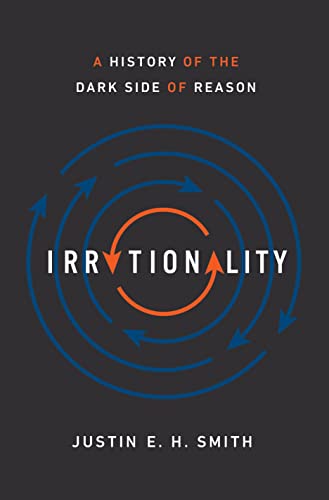
A fascinating history that reveals the ways in which the pursuit of rationality often leads to an explosion of irrationalityIt’s a story we can’t stop telling ourselves. Once, humans were benighted by superstition and irrationality, but then the Greeks invented reason. Later, the Enlightenment enshrined rationality as the supreme value. Discovering that reason is the defining feature of our species, we named ourselves the “rational animal.” But is this flattering story itself rational? In this sweeping account of irrationality from antiquity to today―from the fifth-century BC murder of Hippasus for revealing the existence of irrational numbers to the rise of Twitter mobs and the election of Donald Trump―Justin Smith says the evidence suggests the opposite. From sex and music to religion and war, irrationality makes up the greater part of human life and history.Rich and ambitious, Irrationality ranges across philosophy, politics, and current events. Challenging conventional thinking about logic, natural reason, dreams, art and science, pseudoscience, the Enlightenment, the internet, jokes and lies, and death, the book shows how history reveals that any triumph of reason is temporary and reversible, and that rational schemes, notably including many from Silicon Valley, often result in their polar opposite. The problem is that the rational gives birth to the irrational and vice versa in an endless cycle, and any effort to permanently set things in order sooner or later ends in an explosion of unreason. Because of this, it is irrational to try to eliminate irrationality. For better or worse, it is an ineradicable feature of life.Illuminating unreason at a moment when the world appears to have gone mad again, Irrationality is fascinating, provocative, and timely.
User’s Reviews
Editorial Reviews: Review “A Choice Outstanding Academic Title of the Year””Irrationality is . . . stippled with fascinating meditations and vignettes.”—Kwame Anthony Appiah, New York Review of Books”Irrationality is unique among recent paeans to Enlightenment and liberalism in marrying a resolute defence of reason with a recognition of how futile such defences tend to be. As Smith expertly reveals, wherever one looks in the history of Western philosophy, rationality is haunted and teased by its other.”—William Davies, London Review of Books”Smith is an excellent dramatizer of this dialectic, a witty and provocative guide leading the reader through chapters on logic . . . pseudoscience . . . and death . . . with a distinctive voice and considerable wit.”—Jonathan Egid, Times Literary Supplement Review “No philosopher alive today writes with as much wit, voice, and erudition as Justin Smith. Irrationality is a masterpiece: an urgent warning that no grand design of perfect rationality can provide the solution to the depravity of this political moment.”―Yascha Mounk, author of The People vs. Democracy: Why Our Freedom Is in Danger and How to Save It “Justin Smith’s book could not have come at a better moment. In an era in which many have taken leave of their senses, he draws a map of what led us here, offering a convincing account of the Enlightenment and its discontents. The passages on Trumpism are particularly edifying.”―Christy Wampole, author of The Other Serious: Essays for the New American Generation “With a vast sweep and elegant writing, this is a remarkable, erudite, and stylish book on an important and timely subject: the persistent tendency toward irrationalism in human history. Irrationality is fresh, perceptive, and enjoyable.”―Kieran Setiya, author of Midlife: A Philosophical Guide”A learned, ludic, and often profound meditation on how the perverse dialectic of reason and unreason has played out over history, from the era of Pythagoras to that of Žižek and Trump. Smith writes with the limpidity of an anglophone philosopher and the cool encyclopedic assurance of a Parisian intello.”―Jim Holt, author of Why Does the World Exist? An Existential Detective Story About the Author Justin E. H. Smith is professor of the history and philosophy of science at the University of Paris 7–Denis Diderot. His books include The Philosopher: A History in Six Types (Princeton). An editor at large of Cabinet Magazine, he also writes frequently for the New York Times, Harper’s Magazine, and other publications. Twitter @jehsmith Read more
Reviews from Amazon users which were colected at the time this book was published on the website:
⭐Justin Smith meanders all over the place in this “history of the dark side of reason.” My copy has dozens and dozens of annotations challenging the author’s take on this or that. But by some measures, that’s an indication that I needed to read the book, if nothing less in order to sharpen my own views and arguments. I actually do academic work in some of the areas touched by Smith, e.g., on pseudoscience, and what the author says is correct and well documented, regardless of whether I happen to agree with the specific points being made. The basic conceit of the book, that “irrationality is as potentially harmful as it is humanly ineradicable, and that efforts to eradicate it are themselves supremely irrational,” is surely correct, and regardless of our own cultural background, perspectives, and hopes, we need to come to terms with that. Smith’s book is certainly a good guide in that respect.
⭐This book is a powerful critique of what the author views as our new age of rising irrationality fueled by social media and Internet anonymity. In this work, Smith has taken a forceful stand against extremism and shallow debate, which he sees as undermining the political future and intellectual health of modern societies. He laments the decline of reasoned dialogue as a force in establishing the truth and its replacement with sarcasm, jokes, images, insinuations, and slogans.Much of his language about these trends is quite harsh but does not seem out of place with his arguments. He is also not shy about mentioning a number of contemporary American politicians.Smith believes that irrationality and anti-intellectualism are an inescapable part of human existence. He also maintains that any attempt to eradicate irrationality is itself irrational. Thus the book has a pessimistic undertone, but the author certainly welcomes all efforts to return to dialogue based on knowledge as a central part of decision-making. This is a book worth reading, considering, and discussing.
⭐This is an important and timely work. Sweeping in scope, it challenges many assumptions at the core of contemporary culture. The author is clearly an erudite, but even more importantly, has an authentic deep understanding of philosophy not just as a source of wisdom, but as a meaningful resource in coping with the rapidly changing world against the backdrop of our mortality. Although written in a very engaging style, occasionally the narrative takes one too many turns, but they are always worth it. Highly recommend!
⭐As a former philosophy major now working in social media “tech”, I have grappled with many of the questions Justin Smith puts forth. Great to read such quandaries picked apart by someone more astute than myself!I read this book in tandem with the recent publication of Trick Mirror, which can be found here:https://smile.amazon.com/Trick-Mirror-Self-Delusion-Jia-Tolentino/dp/0525510540/ref=sr_1_1?keywords=trick+mirror&qid=1565204035&s=gateway&sr=8-1
⭐The author guides us through a historical and meandering labyrinth the purpose of which is evidently to show us how smart he is. He shows us instead the opposite particularly with factual inaccuracies, such as his claim the results of the presidential election were due to “gerrymandered voting districts”. Voting districts have no impact on Presidential election, only congressional. A dissatisfying book that is nothing more than run-on sentences and academic-speak.
⭐Perhaps the highest compliment one can pay to a book is to say one wishes one had written it. That is not to say I agree with every word in it–only most of them, and I especially appreciate the way they are offered. Smith is from Sacramento and I have lived 12 miles west of there for 49 years–that might have something to do with our convergence in views, but I doubt it since I grew up in Philadelphia! Smith gives credit to my former U.C. Davis colleague Daniel Rancour-Laferriere. When he was here I regarded him as one of the tiny handful of true intellectuals on our faculty. Perhaps relevant; perhaps not.I have always called myself a product of Enlightenment values and have been skeptical of Isaiah Berlin’s notion of a “counter-Enlightenment,” seeing it as too diverse to be considered a movement in any coherent sense. But Smith’s is an exceptionally lucid overview of both. I wish he had explored the transmogrification of Enlightenment rationality into the confected rituals and arcana of Rosicrucianism and Freemasonry, which in a sense parallels Napoleon’s transformation of the French Revolution into a war machine. Dame Frances Yates began that job with “The Rosicrucian Enlightenment” (1972), which reads like a prolegomenon to a larger and more definitive work. Things do turn into their opposites–there are political examples cited here.On p. 203 Smith could have cited the “Ratfink Song” sung by Young Republicans at the Goldwater convention (“Riding through the Reich/in a new Mercedes-Benz…”) as a foreshadowing of today’s GOP and its epater-le-bourgeois ethos. The discussion of sexual intermediacy on p. 230 could have referred to the copious literature of such phenomena among indigenous peoples, including so-called “berdaches” and “mujerados” in the Americas.Though broader in scope, this is in a sense a worthy successor to Hofstadter’s “Paranoid Style in American Politics.” When I moved out West I saved only a handful of books from my collegiate days. That was one of them, and I have placed “Irrationality” on the shelf next to it, along with “The Political Economy of Slavery” and “God Bless You, Mr. Rosewater.”James Branch Cabell said this in 1915 in “The Rivet in Grandfather’s Neck”: “So this was all that living came to! You heard of other people being rapt by splendid sins and splendid virtues, and you anticipated that tomorrow some such majestic energy would transfigure your own living, and change everything: but the great adventure never arrived somehow; and the days were frittered away piecemeal, what with eating your dinner, and taking a wholesome walk…and other infinitesimal avocations, each one innocent, none of any particular importance…each consuming one irrevocable moment of the allotted time–until at last you found that living had not, necessarily, any climax at all.”
⭐As stated
⭐Animals are naturally rational. Humans are not. How true! Irrationality cannot be eliminated but tolerated. Enjoy reading this historic, anecdotal account of irrationality.
⭐What does anybody do with books! Duh, read them.Such an eminently readable book on critical, serious matters. Truly fine writing.
Keywords
Free Download Irrationality: A History of the Dark Side of Reason in PDF format
Irrationality: A History of the Dark Side of Reason PDF Free Download
Download Irrationality: A History of the Dark Side of Reason 2019 PDF Free
Irrationality: A History of the Dark Side of Reason 2019 PDF Free Download
Download Irrationality: A History of the Dark Side of Reason PDF
Free Download Ebook Irrationality: A History of the Dark Side of Reason