

Ebook Info
- Published: 2012
- Number of pages: 426 pages
- Format: PDF
- File Size: 3.09 MB
- Authors: Michael White
Description
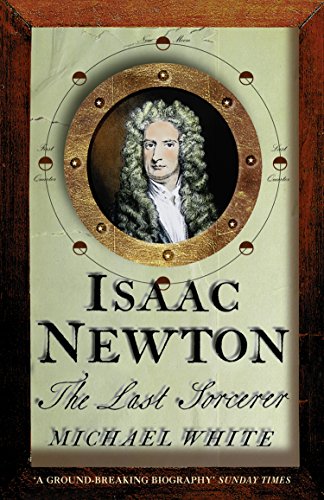
First time in ebook format, this biography of Isaac Newton reveals the extraordinary influence that the study of alchemy had on the greatest Early Modern scientific discoveries. In this ‘ground breaking biography’ Michael White destroys the myths of the life of Isaac Newton and reveals a portrait of the scientist as the last sorcerer.According to traditional accounts, Newton was the first modern scientist . As creator of the theory of gravity, calculus, modern theories of light and devisor of the three laws of mechanics, his methods are perceived as the genesis of modern science. Yet the traditional version of his life fails to tell, by some considerable margin, the full story. How for example could Newton’s apparent empiricism be married with his interest in alchemy and magic? What had inspired him in his discoveries? How did he reconcile his scientific discoveries with his religious faith? And, most of all, who was this man who, historians tell us, remained a virgin all his life and who seemed to be an argumentative ego maniac on the one hand and a kindly old man on the other?In this revelatory biography, White paints an original picture of Isaac Newton completely at variance with the traditional portrait.
User’s Reviews
Reviews from Amazon users which were colected at the time this book was published on the website:
⭐I have a fascination for all things Newton. This book is a great resource and as well as a totally absorbing story about one of the greatest minds in European history. This is a also a fascinating window into another time.
⭐I haven’t finished the book. When reading it I found that the author is not accurate in descriptions of physical ideas. For example, he does not distinguish between distance traveled in free fall and speed of the object when describing Galileo’s discovery (p. 79).The chapter 2 is called “The changing view of Matter and Energy” which mainly describes development of ideas on matter but not energy. The latter concept was developed much later after Newtonian time and was not known to Newton or Galileo.So the reader who is in science profession finds this disturbing and this puts under question historical propositions in the book about Newton’s life where one may not have knowledge of. Thus, I question whether the material presented in the book about Newton’s life are really accurate.
⭐Insightful and interesting. A super-genius who invented calculus to prove that the Earth moved around the Sun. Astronomers already believed that to be true but couldn’t prove it. He was shielded from the Catholic Church because he lived in England who had broken from the Catholic Church. Also invented the reflecting telescope and was constantly investigating all sorts of things like light. He’s called a sorcerer because he even investigated sorcery and probably got mercury poisoning because it was said to central to alchemy (his careful scientific research dispelled the popular belief that alchemy was possible using the methods and equipment available at the time). He was a cold unfriendly man who couldn’t relate to other people. This book is well written and gives you the scoop on a man most educated people have heard of but don’t know as a person.
⭐I was attracted to this book by a moronic blogger on another site who tried to rationalize the idiocy of “Intelligent Design” by arguing that Isaac Newton believed God created the universe! Another blogger recommended “The Last Sorcerer” as a rebutal to that comment.Michael White’s scholarship is well-researched, incisive and thoughtful. He reveals the history of the awakening of scientific thought and inquiry of the 17th and 18th centuries in a readable and interesting manner.His descriptions of Newton, Hooke, Waterhouse, Huygens, et al, who opened the doors to the modern scientific method are easy to follow and carefully organized. Sir Isaac, indeed as much a man of God as he was a man of his time, was nonetheless largely responsible for the beginning of the end of superstition and ignorance and the awakening of inquiry and experiment.This is a good read for anyone interested in where we’ve been and how we got to where we are.
⭐This is an excellent biography of Isaac Newton and his coworkers with an emphasis on their work with alchemy. It also discusses the ancient Royal Society of London which was a natural philosophy group made up of the great minds at Cambridge, England. Two of the contemporaries include Robert Boyle and Robert Hook the fathers of chemistry and microbiology.It emphasizes their work in alchemy in their relationship with Isaac Newton
⭐This work is carefully documented and quite detailed, however it presents the man’s life as if read in a novel. The life of Sir I is not an easy one to tell because of the intricate nature of his character; yet, for me, it was an informative, enjoyable read. Once read, you will come away with a deeper understanding of the complex mind of this great scientist.
⭐Great subject!
⭐I receive the product as Advertised. . . . . . . . . . . . . . .
⭐In my opinion, Michael White has written an excellent, well researched biography of one of our greatest scientists. He explains in detail how Isaac Newton had a troubled childhood and how this may have adversely affected his personality in later life, leading him to be very secretive, trusting few people and disliking criticism, and resulting in him being reticent to publish his theories. His Principia, for example, was twenty years in the making and when it was published it was in Latin and deliberately written in a way to ensure very few people would be able to understand it.White also does a good job of explaining the bleak atmosphere at Cambridge University in the 17th century, and the workings and politics of the Royal Society, then in its infancy. Both institutions were very different then to how they are in the 21st century.As the title of the book suggests, White places much emphasis on Newton’s alchemy endeavours, and how Newton saw alchemy as a way of explaining nature and the universe, and providing an insight into the mind of God. To Newton, and to many others of the period, alchemy meant a lot more than transmuting base metals into gold, or finding the elixir of life. Newton was not alone in believing that ancient civilisations had a much fuller understanding of nature, the universe and God and that these revelations had been lost in the mists of time but could be re-discovered through the ancient art of alchemy and by studying the bible. White explains all of this very clearly. Newton carried out an enormous number of alchemical investigations to try to unlock the meaning of life, as well as undertaking detailed analyses of the bible for similar purposes. Whilst I could accept that someone in that era, even someone like Newton, could see good reasons for carrying out alchemy and re-interpreting the bible, unfortunately White didn’t convince me that Newton’s research in these areas had been crucial to leading him to his conclusions on gravitation. To me that really didn’t make sense and in a way this is a pity because it seemed to be an important objective of the book.Another theme through much of the book was the personal antagonism between Newton and others. A prime example was Newton’s abhorrence of Robert Hooke, and vice-versa. This mutual loathing is documented elsewhere but I did feel that White painted Hooke to be blacker than he really was. Other accounts refer to Hooke’s popularity and his honesty. I can’t help feeling that both scientists were equally to blame for the detestation that existed between them. Likewise, Newton held a grudge against the Astronomer Royal, John Flamsteed, who he felt was hindering his work on the second edition of the Principia by dallying over the provision of astronomical observations. Newton used Machiavellian methods to undermine Flamsteed, even using Prince George as a way of getting at the data. Another victim of Newton’s malevolence was the polymath Gottfried Wilhelm Leibniz who had independently invented calculus, but who found himself being accused of stealing Newton’s (then unpublished) work. Newton was unforgiving of those who he believed had crossed him and he bore grudges against these individuals for ever more.But from the book we learn that whatever Newton did, he invested all of his efforts into that undertaking, be it carrying out investigations into alchemy, optics and gravitation, running the Royal Mint, or being President of the Royal Society. Over his lifetime he acquired many enemies and seems to have made few friends. And those friends he did make did not always get the loyalty from Newton they may have expected in times of adversity.Overall, Michael White paints a vivid picture of a genius who was a workaholic but also a vindictive misanthrope who sought to destroy those he fell out with. On the whole a thoroughly nasty individual but one who was nevertheless widely respected for his abilities, if not for his personality. I look forward to reading more biographies by White.
⭐I’ve just finished this amazing book. As I am in the lucky position to be a room guide at his birthplace, I wanted to find out more detail about the man and his life after he left Woolsthorpe. It’s known to be the ‘hardest read’ of the biographies that are currently available, but I only found this out when I’d reached page 280!The detail in this book is overwhelming at times, and I struggled to understand the descriptions of the scientific theory (not being a scientist), but the biographical aspect is quite astonishing in its’ depth and, sometimes, in the leap of the authors imagination. There is a great deal of speculation, which is written immaculately, but is still not evidenced. I don’t believe some of the detail would stand up in a modern court! It’s to be expected, as the great man died a long time ago, but still – take the facts where they are and take the speculation with a pinch of salt. I have done.However, I thought it was an incredible read and I have found it to be very thorough and well written. The depth of research is obvious, as is the passion of the author for the subject. There is more to know about Sir Isaac Newton and I’m looking forward to continuing my studies. Hopefully my next read will be as enlightening and enthusiastic as this has been. It has brought a whole new level of appreciation of the place where he was born and I have many tales to tell the visitors that visit.
⭐A brilliant insight into a fascinating man. The author seems fair and balanced, not taking definitive stances on the various issues of man-genius, sorcerer-scientist, or straight-gay etc, providing arguments either way and being clear on when things are supposition. This results in a multi-layered and riveting account of a complex and driven character, portraying one of the greatest minds in human history as both mezmorizingly exceptional and yet humanly flawed. It’s re-assuring to learn that one of the most profound minds of the Western world was just as petty in using his room-mate’s towel when they didn’t get along!
⭐The biography gives an entertaining and informative account of Newton’s life through the lens of his life long obsession with alchemy and his deeply held Arian religious beliefs. The author makes a lucid case that it was these two passions (however misguided), along with Newton’s thirst for knowledge, that drove Newton to his scientific discoveries.The book is not overly scientific. It does not go into the mathematics or describe any of Newton’s theories in great detail. Depending on your view point this may be a strength or a weakness, but it does make the biography easily accessible to readers who do not have a scientific background.The biography also paints a lesser known side of Newton – namely Newton the civil servant. As warden and then master of the Royal Mint the biography gives an entertaining account of Newton as he tries to restructure the Royal Mint and increase efficiency, while simultaneously bringing to justice currency counterfeiters with almost a religious zeal.However, I found the most enjoyable sections of the biography to be the accounts of Newton’s feuds with other well known historical figures of the time – namely: Robert Hooke, John Flamsteed (First Astronomer Royal), and Gottfried Leibniz. Most enjoyable was his battle with Leibniz, and the battle for the title of “discoverer of Calculus”. This gave an insight into the dark side of Newton and his ruthlessness when dealing with adversaries.Overall a great read and highly recommended but personally I would of liked to of seen a little more scientific detail (in particular at least a mention of the second most famous equation in all of physics – F = ma).
⭐I didn’t gel with this book mainly because I didn’t gel with Mr. Newton.
Keywords
Free Download Isaac Newton: The Last Sorcerer in PDF format
Isaac Newton: The Last Sorcerer PDF Free Download
Download Isaac Newton: The Last Sorcerer 2012 PDF Free
Isaac Newton: The Last Sorcerer 2012 PDF Free Download
Download Isaac Newton: The Last Sorcerer PDF
Free Download Ebook Isaac Newton: The Last Sorcerer