Ebook Info
- Published: 2016
- Number of pages: 480 pages
- Format: PDF
- File Size: 21.03 MB
- Authors: Andrew Whitaker
Description
John Stewart Bell (1928-1990) was one of the most important figures in twentieth-century physics, famous for his work on the fundamental aspects of the century’s most important theory, quantum mechanics. While the debate over quantum theory between the supremely famous physicists, Albert Einstein and Niels Bohr, appeared to have become sterile in the 1930s, Bell was able to revive it and to make crucial advances – Bell’s Theorem or Bell’s Inequalities. He was able todemonstrate a contradiction between quantum theory and essential elements of pre-quantum theory – locality and causality. The book gives a non-mathematical account of Bell’s relatively impoverished upbringing in Belfast and his education. It describes his major contributions to quantum theory, butalso his important work in the physics of accelerators, and nuclear and elementary particle physics.
User’s Reviews
Reviews from Amazon users which were colected at the time this book was published on the website:
⭐I thoroughly enjoyed the book and found it refreshingly different. I have to admit to a PhD in Physics, but I left that subject behind decades ago. These days for interest I consume popular books on subjects like quantum cosmology, relativity, string theory, symmetry etc., together with bibliographies of the past and present giants of these fields. Bell was, without doubt, one of the giants and his achievements deserve to be much better known. I found the book refreshingly different because it was written for someone just like me, with a modest technical understanding of the issues, and a desire to understand how ideas emerged and evolved. Andrew Whitaker hit the right note for me, and many others too I suspect. I think authors and editors dumb-down the material in many popular science books because they want the content to appeal to the widest audience. However, I also think many readers of such books are self-selected to understand much more than they are fed. There were times when I lost the full meaning but that’s OK. Whitaker delivers, and without a single equation.
⭐Written by a physicist, the background situates John in his time and place, then illustrate that foundational ideas are based on assumptions that are often perpetuated, refined and conveyed until someone, like John, redefines their foundation.
⭐great review of a great life of a cutting edge physicist
⭐Five stars best of the best!
⭐This is a very readable and non-technical account of the life and scientific work of John Stewart Bell by Andrew Whitaker (Professor Emeritus, School of Mathematics and Physics, Queen’s University, Belfast). Whitaker is himself an expert in the field of quantum physics and quantum information theory, having written more technical accounts of the work of J S Bell (
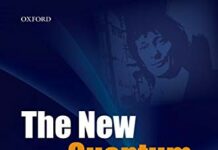
⭐The New Quantum Age: From Bell’s Theorem to Quantum Computation and Teleportation
⭐) and the paradoxes of quantum mechanics (
⭐Einstein, Bohr and the Quantum Dilemma: From Quantum Theory to Quantum Information
⭐).Whitaker gives a sweeping chronological account of the events in Bell’s life and science, placing them in the true context of their times, so that one finds interleaved and well written histories of the development of quantum mechanics and its interpretation; the UK atom bomb project; AERE Harwell reactor and nuclear physics; particle-accelerator physics; CERN and Quantum Computing, interwoven with a perceptive account of Bell’s involvement and contributions.However the most significant aspects of Bell’s scientific work were not his ‘day job’ as a particle-accelerator theorist, but his ‘hobby’ – Bell’s brave and persistent questioning, over many years, of the conceptual foundations of Quantum Mechanics. This is lucidly described and explained in an equation-free manner which, nevertheless, gives the non-expert reader a clear idea of the significance of Bell’s Inequalities for the interpretation of QM. Bell’s insights have provided the foundation and motivation for specific experimental tests of Quantum Theory which are described in the book, and appear to be almost certainly proving (when all ‘loopholes’ have finally been closed, as explained by Whitaker) that the predictions of QM are correct. However what is proved can also be seen as confirmation of Einstein’s assertion, that QM is incomplete, because when interpreted objectively Bell’s theorem and its consequent experiments show that QM is explicitly non-local and therefore (as Einstein and Bell would insist) is proved inadequate by ‘reductio ad absurdum’.Andrew Whitaker should be congratulated for making an understanding of Bell’s life and work available to a wider audience.
⭐An excellent book
Keywords
Free Download John Stewart Bell and Twentieth-Century Physics: Vision and Integrity in PDF format
John Stewart Bell and Twentieth-Century Physics: Vision and Integrity PDF Free Download
Download John Stewart Bell and Twentieth-Century Physics: Vision and Integrity 2016 PDF Free
John Stewart Bell and Twentieth-Century Physics: Vision and Integrity 2016 PDF Free Download
Download John Stewart Bell and Twentieth-Century Physics: Vision and Integrity PDF
Free Download Ebook John Stewart Bell and Twentieth-Century Physics: Vision and Integrity