Ebook Info
- Published:
- Number of pages:
- Format: Epub
- File Size: 0.47 MB
- Authors: Jon Clinch
Description
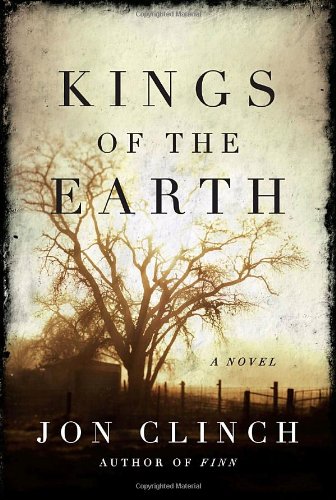
Following up Finn, his much-heralded and prize-winning debut whose voice evoked “the mythic styles of his literary predecessors . . . William Faulkner, Toni Morrison, Cormac McCarthy and Edward P. Jones” (San Francisco Chronicle), Jon Clinch returns with Kings of the Earth,a powerful and haunting story of life, death, and family in rural America. The edge of civilization is closer than we think. It’s as close as a primitive farm on the margins of an upstate New York town, where the three Proctor brothers live together in a kind of crumbling stasis. They linger like creatures from an older, wilder, and far less forgiving world—until one of them dies in his sleep and the other two are suspected of murder.Told in a chorus of voices that span a generation, Kings of the Earth examines the bonds of family and blood, faith and suspicion, that link not just the brothers but their entire community.Vernon, the oldest of the Proctors, is reduced by work and illness to a shambling shadow of himself. Feebleminded Audie lingers by his side, needy and unknowable. And Creed, the youngest of the three and the only one to have seen anything of the world (courtesy of the U.S. Army), struggles with impulses and accusations beyond his understanding. We also meet Del Graham, a state trooper torn between his urge to understand the brothers and his desire for justice; Preston Hatch, a kindhearted and resourceful neighbor who’s spent his life protecting the three men from themselves; the brothers’ only sister, Donna, who managed to cut herself loose from the family but is then drawn back; and a host of other living, breathing characters whose voices emerge to shape this deeply intimate saga of the human condition at its limits.
User’s Reviews
Editorial Reviews: Amazon.com Review Jon Clinch on Kings of the Earth Draw an X across New York State–letting one arm of it be the Erie Canal as it runs from Albany to Buffalo–and where the two arms of that X cross, you’ll find the city of Oneida. The place where I grew up. It’s a city by name and charter only, so when you picture it you should picture a town instead. A modest one. And on the perimeter of that town, past a sign at the edge of a cornfield that with no irony whatsoever marks the “city limits,” picture a rich and endless panorama of farming country. A glacial landscape of great beauty, at work in the service of corn and cows. My father was born in that farming country, although he didn’t stay. He was the son of a previously itinerant day laborer and machinist and circus magician, who had left Tennessee’s Clinch Mountain in order to start a new family in upstate New York. My mother, on the other hand, was born in the town. She descended from educators and preachers who traced their lineage to William Howard Taft–not just America’s fattest President, but the only one who did double-duty as her Chief Justice. No wonder I love that “city limits” sign, planted out there at the edge of a cornfield. No wonder I’m interested in whatever divisions it would seem to mark. The thing is, I never saw the beauty of that place until I’d left it behind. And when I finally discovered what I’d lost, I spent years finding my way back. Kings of the Earth was part of that journey. In it I tried to capture and preserve the voices of my childhood. The sound of the world as I knew it. The stories that people told, the things they valued, and the ways in which they understood one another (or tried to). Writing it was, as one character says, “like trying to hear a tune somebody whistled last week.” But however impossible that kind of thing might be, making the effort can bring a person very close to something precious and important. Because in spite of the many different voices heard in Kings of the Earth–women and men, farmers and city folks, con men and criminals and keepers of the peace–the book isn’t just about how they talk. It’s about how they listen. To one another. The story begins with three old brothers on a dirt farm, just down the road from the place where my father came into this world. Three uneducated brothers who’ve lived and worked and slept together on that patch of hard ground and in that shack of a house all their lives long. Until the summer morning when one of them doesn’t wake up. Whatever might have happened in that shared bed of theirs was deeply private, but it takes on a wide public dimension. And the effort to make sense of it draws together a community of personalities, each of them with his or her own point of view. Together they draw a portrait that spans the better part of the twentieth century in one small American town, a portrait not just of the brothers but of themselves. Listening to those people talk–giving them their own voices and putting them all in a book where they might endure for at least a little while–was my aim and above all my honor. From Publishers Weekly Starred Review. In Clinch’s multilayered, pastoral second novel (after Finn), a death among three elderly, illiterate brothers living together on an upstate New York farm raises suspicions and accusations in the surrounding community. After their beloved mother, Ruth, dies, Audie, considered mentally “fragile,” is devastated, but goes on tending to the Carversville farm with his brothers Vernon and Creed. When Vernon, frail at 60 and not under a doctor’s care, dies in his bed with evidence of asphyxiation, Creed is interrogated by troopers, along with Audie, the brother closest to Vernon. Family histories and troubles are divulged in short chapters by a cacophony of characters speaking in first person. Secrets and hidden alliances are revealed: Vernon’s nephew, Tom, grew and sold marijuana, which the family used medicinally; the brothers endured painful, bloody haircuts administered by their father. Alongside the police troopers’ investigation, each player contributes his own personal perspectives and motivations, including allusions to homosexual behavior. Inspired by the Ward brothers (of the 1992 documentary My Brother’s Keeper), Clinch explores family dynamics in this quiet storm of a novel that will stun readers with its power. Copyright © Reed Business Information, a division of Reed Elsevier Inc. All rights reserved. From Bookmarks Magazine Sometimes fiction is stranger, and more compelling, than truth–and this decidedly unromantic tale of rural America is just that. With a realism not often present in modern-day fiction, Clinch tells his story with a technique used by William Faulkner and in prose compared to that of Cormac McCarthy; he is eloquent and clear-eyed in everything–from his descriptions of the harsh landscape to the simple brothers’ grueling farm life. The short chapters offer unique perspectives from a mélange of characters over many decades, a technique that worked well for most critics. Described as an honest, compelling, and revelatory novel, Kings of the Earth “is the kind of fiction we should be reading” (Washington Post). From Booklist As children, brothers Vernon, Audie, and Creed Proctor slept in the same bed in the family’s dilapidated farmhouse in upstate New York. Decades later, now semiliterate grown men, they still sleep in the same bed. They’re indifferent to any twentieth-century societal considerations—e.g., hygiene—except the tending of their dairy cows. But Vernon, who believes he has cancer, dies in bed, and state troopers arrest Creed for murder. Area residents, who know the Proctors largely as reclusive oddities or even pariahs, reject the idea that Creed is capable of murder and donate money for his legal defense. Kings of the Earth is a gripping tale of family, life, death, and the hardships and hazards of agricultural work and rural poverty. Spanning nearly 60 years, the story is narrated in multiple voices: the brothers; their neighbor, who tries to protect them from things they don’t understand; a state trooper; and others. It’s an odd but intriguing story, made both odder and more intriguing by the fact that it is based on real people and real events. –Thomas Gaughan Review “To read a book by Jon Clinch is to enter an emotional mineshaft, a place where the darkness is profound and menacing yet lures you on with the promise of untold treasure. Like Finn, Clinch’s stunning debut, Kings of the Earth is blunt and brutal yet beautifully told, a classic tale of family kinship twisted askew. It is a fine fable as well, leaving in its wake the resonance of a modern ballad—more Waits than Springsteen—about the fate of America’s rural outback.”—Julia Glass, author of Three Junes and winner of the National Book Award “Kings of the Earth is the product of a truly inspired pairing. By applying Faulkner’s pointillism and stream-of-consciousness to the Upstate Gothic, Jon Clinch delivers a rich, involving yarn. As one character says: ‘Out here there is no such thing as a main road . . . Everything winds.’”—Stewart O’Nan, author of Last Night at the Lobster About the Author Born and raised in the remote heart of upstate New York, Jon Clinch has been an English teacher, a metalworker, a folksinger, an illustrator, a typeface designer, a housepainter, a copywriter, and an advertising executive. Teaching and advertising took him south to the suburbs of Philadelphia for many years, and only with the publication of Finn, his first novel, was he able to return to the kind of rural surroundings he’d loved from the start: This time, in the Green Mountains of Vermont. He is married to novelist Wendy Clinch, and they have one daughter. Excerpt. © Reprinted by permission. All rights reserved. 1990 My brother Vernon went on ahead. I woke up and felt for him but the bed was dry and my brother Creed was already up. He had his overalls on and he was telling me that I had to get up too because it was after fourthirty and the cows wouldn’t wait. The bed was cold but it was dry. My brother Vernon was still in it and he was cold like the bed was since he had gone on. That left me here with Creed. It made me the oldest. Preston I wouldn’t have been surprised if we’d lost the both of them at the same time. Vernon and Audie I mean. That’s how close they’ve been ever since they were boys. Vernon would lead the way and Audie would follow right along behind. Not that they were two peas in a pod, not by any means. Vernon was the brains of the operation and Audie had problems. Has problems. I was sitting in the kitchen with my coffee and down the hill Creed opened the barn door the way he always does first thing, but instead of opening it and looking at the day and then going right back in he kept coming. I’ve known those boys since they were boys, I’ve lived right here alongside their place since the thirties, and they’ve always run in the same track. Everything goes the same today as it went yesterday. That’s how it is around a farm. A farm is the master of you and not the other way around. So when Creed opened the barn door and came out and kept on coming instead of going back in, I knew something wasn’t right. I believe I stood up at the kitchen table and said so to Margaret. I said something wasn’t right. He was coming across the field toward our place and I guessed by how he was coming that it’d be a good idea to meet him halfway if I could. I put my coffee cup down and I went out onto the porch and then I came back in to put my coat on because it was cooler outdoors than I’d expected it to be and I guessed I might be out there for a while. Creed had on that old wool coat of his that’s torn up the back and covered all over with cow manure. It’s either his coat or Vernon’s. I can never remember. They all swap things around. It’s the way they were brought up. Anyway he was wearing the wool coat. That house of theirs doesn’t have anything much in the way of insulation, so they probably have a better idea of the weather out- doors than we do. That’s why I had to go back in for a coat of my own. Outdoors is no different from indoors to them, except outdoors there’s more breeze and it smells better. Even in the barnyard. I don’t know if he slept in that coat or not but he might have. That poor old boy looked like he was about to have a heart attack and I was glad I’d gone out so he didn’t have to keep coming up the hill. “Vernon died in the night,” he said. He was shaking a little, like he was about to have a fit. I’m no doctor but that’s how it seemed. A doctor might tell you something else, or put it another way. “My brother’s awful cold,” he said. So we went down. I got him turned back around and we went down the hill and in through the barn instead of up on the porch and in by the front door. Not that I think they ever lock that front door. I don’t guess those boys ever owned a lock other than the one on that room they closed off thirty years ago. Why would they? But we didn’t go in the front door anyhow. We cut straight through the barn. The cows were coming in all by themselves and they were complaining the way they will, but they were going to have to wait. The house has just the one room that they use. Audie was on the floor and Vernon was in the bed. I wouldn’t say he was cold but he wasn’t much better than room temperature. It seemed to me he was stiffening up some. Creed didn’t seem to mind my touching him, but I minded it enough for both of us. I’ve been around death enough that it ought not to bother me, but now that I’m getting nearer to it myself it’s different. It’s different for an old man. Audie was the one who needed a hand. He was curled up in a ball in his long johns and he was shaking all over like he was freezing to death. Moving all over, every part of him, the way his brother Creed had done outdoors but worse. Audie will do that some anyhow, just as a regular thing, but this was worse than usual. I said his name and he didn’t say anything back. I got down on my hands and knees in front of him and I looked at him hard and I said his name louder. I made an effort to kind of bark it, the way Vernon used to when he wanted to get his attention. I slapped the floor with the flat of my hand and a cloud of dust rose up and I got a splinter but never mind that. He heard me and his eyes popped opened wide and he looked at me like he’d seen a ghost. Or like I was the ghost and he was looking straight through me at something else. Maybe Vernon, up there on the bed. Audie’s pretty near blind and one of his eyes is clouded over some, but I’ve never seen anything so blue. Audie When I came out onto the front porch they were turning. A little wind had come up and they were all faced in the same direction and they were turning. I couldn’t see them all that clear but I could hear every one separate. They all make a different sound. Every one. I didn’t make them that way on purpose, but that’s how they come out. They can’t help it and I couldn’t help it either. They come out how they come out. Vernon says they’re like children that way. They were turning in the little wind and I listened to them turn and I felt some better. Donna It was Margaret who thought to call the sister. Margaret Hatch, who’d watched from her kitchen window as her husband walked down the hill between the houses and who’d kept watching when he didn’t come back. Margaret, who’d watched as the sun came up and the shadow of her house gathered itself and pushed down the hill to poke at the Proctor boys’ barn, and who’d moved with her coffee out onto the screen porch to keep on watching as the shadow withdrew a little and the heat of the day began to rise and the state trooper’s patrol car came roaring up the dirt lane. She figured the boys’ telephone must work or else they couldn’t have called the troopers, but she didn’t figure they would think to call Donna. She was right. She looked up the number and stood in the kitchen and dialed. She wished she had a cigarette, and the idea of it surprised her completely. She hadn’t smoked since Harry Truman, but she thought that right now a cigarette might be just the thing to calm her nerves.The house smelled like cow manure and dry rot and spoiled food. Like tobacco and burnt rope and rat droppings. Like old men and sickness and death. Del Graham was the captain and he arrived first. He walked past the old man who sat rocking on the porch with his long white beard pooling in his lap and his hands knotted over his hairless skull, and he went through the open front door as into a mouth full of rotted teeth. The disarray and the stink. The order and the purposefulness gone to no use in the end. Creed was sitting at the table alongside the neighbor, Hatch. Preston Hatch who’d made the call. The telephone was on the table between them, and they sat composed on either side of it like a formal double portrait. Titans of industry, awaiting a message from some distant outpost of commerce. The telephone was solid black, square and heavy. All business. The cord that connected it to the wall was wrapped in a kind of woven material that Graham didn’t remember having seen for a long time. It looped easily and snakelike in spite of its age, and although it was frayed in places it looked made to last. The telephone was the old- fashioned kind with a dial, rotary phones they called them, and the numbers under the dial were either worn away from use or obscured by dirt. He figured the second. Either way, in the absence of the numbers a person would need to count in order to make a phone call. Graham guessed that such a telephone probably didn’t get much use, considering. It was a conduit to a world that had no business here. The bed was in the corner beyond the table and the man on it had no pulse. There was one empty chair at the table and Graham came back and took it for himself. These two looked like individuals who could be trusted to know death when they laid their hands on it. He knew Creed by sight. He was the double of the old man on the porch except for a full head of hair pushed up crazily in some places and flattened down in other places. He looked about used up. His cheeks were hollow beneath his beard and his mouth was caved in. His nose was spotted and bulbous, something grown underground and dug up and left to wither. His pale eyes, heavy- lidded and sunken, were vague and weary of witness. “So what happened.” “Vernon’s dead. My brother.” “I know. I’m sorry.” “My brother Vernon.” “I know who he is.” Creed held a Red Man cap in his knobby hands and he wrung it. “He weren’… Read more
Reviews from Amazon users which were colected at the time this book was published on the website:
⭐Three brothers in upstate New York live a lonely agrarian life. They live as if from another century, almost as if on the frontier of long ago when people were isolated and had mostly just immediate family to rely on and relate to. Luckily they have a next door neighbor, Preston, who’s lived in the world and has some social skills. Most of their story is shown through Preston’s eyes. Vernon is the oldest brother followed by Audie and then after gap of 8 or so years there’s Creed. They could almost be interchangeable however. They have a world view or hive instinct unique to them. Creed did see a little of the world when he was in the Korean War but then he comes back home and falls almost right back into lock step with Vernon and Audie. Audie’s `special’ though it’s not quite clear if he’s mentally slow, has an illness such as epilepsy or he’s emotionally unstable or perhaps he’s on a different spiritual level. Vernon is kind of a shadowy figure since it’s his death around which the other events are centered. The book opens as he dies in his sleep in the bed the three men share. Though he’s 60 something and ill when he dies the local law man suspects foul play. Creed is the main suspect. Preston steps up to defend Creed and protect Audie just as he’d always done throughout their lives.Each chapter is headed by a different character’s name. Sometimes they tell their story in first person sometimes their tale is told for them by an unnamed narrator. Oddly the third person accounts, though they have a particular character’s name as the chapter heading, don’t always center around that person, they’re only mentioned somewhere in the text. I suspect Clinch was saying something about who is a victim and who isn’t. And that’s where there are some surprises. You’d expect the dead man and his damaged brother to be victims but they’re not. You’d expect the youngest of the siblings, Donna, the only one of the four siblings to escape the farm, get an education and marry, to be empowered but you never hear her story first hand. This was a fascinating interplay. Clinch has a truly unique voice.
⭐With his second novel, Jon Clinch has proven himself ready to join the ranks of some of America’s greatest “serious” writers – the ones whose works are studied and celebrated for generations to come. While the complex construction of this book may sound daunting (more than a dozen points of view, leapfrogging back and forth in time across six decades), each new voice serves to amplify what’s happening in the story, and ultimately moves the story along to its next stage. Somehow it’s not confusing at all, and is very easy to follow. That’s some damn good writing.And oh, what voices. There’s the well-meaning but nosy Preston, whose duty-bound obsession with jobs being done *right* outweighs any moral concerns those jobs might raise. There’s DeAlton, whose appearances in the book consist of one-sided dialog snippets that capture only his half of whatever conversation he’s having – an apt literary construct for a character so self-absorbed that he ignores anyone else’s thoughts. And of course, there are the three brothers on whom the story focuses. Each of the brothers is brought vividly to life through his words, his actions, and in many cases, his smell.Dark in places, quietly funny in others, the novel matter-of-factly explores the abject poverty and occasional violence that inevitably inhabit the hardscrabble lives of these people. Oddly, the result is not a depressing read, but rather one that is gritty and real. It borders on cliché to say it, but after reading this book, you really feel you’ve gotten to know some new people – likely ones who would otherwise never register on your radar.When you combine the uniquely American humanity Clinch captures with a level of literary technique that is simultaneously dazzling and transparent, you’ve got somebody who I think will emerge as one of this century’s great writers.
⭐Those who expect the MacPheron brothers in Kent Haruf’s PLAINSONG will be disappointed this particular brand of bachelor brothers.Vernon, Creed, and Audie are aging brothers who still sleep in the same bed as they did when they were boys. That is until one morning Vernon, the oldest, winds up dead and it looks to Del Graham, the sheriff, as if one of the boys is the culprit.Author Jon Clinch employs about a dozen viewpoints and jumps from 1990 back to the thirties when the Proctor brothers’ drunken father was still alive. We meet Ruth, their mother; Lester; their nephew Tom; their sister, Donna; their brother-in-law Delroy, who sells milking machines; and perhaps the most humane character in the book, Preston Hatch, the boys’ next-door-neighbor, who cares about them and looks after them. A subplot involves a marijuana growing enterprise on the farm, involving Tom, the nephew.This is a rather puzzling book. Although they work their behinds off, the Proctor boys are dirt poor. They can’t even afford a used car. When they need to go to town they use the tractor. They also seem to be up to their necks in manure. When Vernon tries to pay for a ticket at a high school play, his money has manure on it. I was raised on a farm, and there’s plenty of the stuff around, but not that much!Clinch also leaves several loose ends that will annoy some readers. He does hint at a solution to one of them (watch what happens to the three legged dog). He also uses way too much white space. I covered the last fifty pages in about a half hour, and I’m a slow reader.I don’t mean to say that this isn’t a touching book at times. When Creed comes home from Korea, the greeting he receives is especially poignant; these boys would walk through walls for each other. You’ll also pull for Creed when he goes courting.
⭐Clinch: Kings of the Earth. I would not recommend this book to anyone. The story starts only on page 228. Up to there it consists of very short chapters, sometimes of only one or two paragraphs, named according to the characters in the book. Noneless, those titles don’t necessarily mean that the chapter deals with the person whose name it carries. Neither it is the person’s view, or anybody’s view about the person. The chapters take place either in 1990,1986,1947,1988,1932,1968,1955,1936,1971,1985,1939,1945,1965,1938,1960,or 1970. Not that it makes much difference. The dead mother’s chapter run many years after she has been dead, and she uses words (if it is her talking), which, according to her station in life, would hardly be known to her. Only after page 228 are the chapters longer and something is happening in them. Basically two crimes are committed-the oldest brother dies during the night, and the nephew grows marijuana.There is one sympathetis character – the neighbour, who takes care of the brothers as if they were his own. We don’t learn much about this neighbour, it is just that his chapters, which are the only personal ones, help the reader to sutvive the rest. This dark, messy book is certainly not a pleasant reading. I will stay away from the author in the future. The comparisons with William Faulkner or Mark Twain are ridiculous. Art is what is missing.
Keywords
Free Download Kings of the Earth: A Novel in Epub format
Kings of the Earth: A Novel Epub Free Download
Download Kings of the Earth: A Novel Epub Free
Kings of the Earth: A Novel Epub Free Download
Download Kings of the Earth: A Novel Epub
Free Download Ebook Kings of the Earth: A Novel