Ebook Info
- Published: 2009
- Number of pages: 256 pages
- Format: PDF
- File Size: 5.46 MB
- Authors: Ronald Aronson
Description
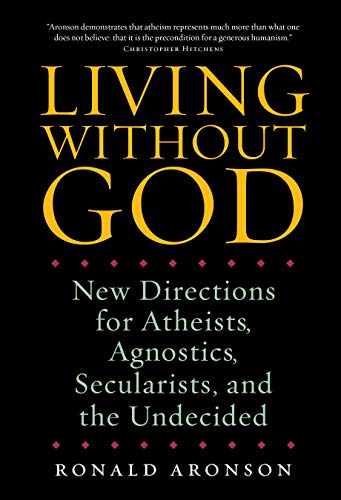
Ronald Aronson has a mission: to demonstrate that a life without religion can be coherent, moral, and committed. In the last few years, the “New Atheists” — Sam Harris, Daniel Dennett, Richard Dawkins, and Christopher Hitchens — have created a stir by criticizing religion and the belief in God. Aronson moves beyond the discussion of what we should not believe, proposing contemporary answers to Immanuel Kant’s three great questions: What can I know? What ought I to do? What can I hope? Grounded in the sense that we are deeply dependent and interconnected beings who are rooted in nature, history, society, and the global economy, Living Without God explores the issues of 21st-century secularists. Reflecting on such perplexing questions as why are we grateful for life’s gifts, who or what is responsible for inequalities, and how to live in the face of aging and dying, Living Without God is less interested in attacking religion than in developing a positive philosophy for atheists, agnostics, secular humanists, skeptics, and freethinkers.
User’s Reviews
Editorial Reviews: Review “Ronald Aronson demonstrates that atheism represents much more than what one does not believe: that it is the precondition for a generous humanism.The two closing chapters are models of stoicism at its best.” —ChristopherHitchens, author of God is Not Great”As a Christian I applaud my Brother Ronald Aronson for his powerful defense of a courageous and compassionate secular worldview. He is a religiously musical atheist I admire!” —Cornel West”This book is not just for non–believers. All of us are ‘living without God’—at least a loving, personal God. Aronson just shows us how to do it with courage and panache.” —Barbara Ehrenreich”[Living Without God] brooks no argument with religion as religion, but it challenges how the religious right has warped our politics in recent times.” —Detroit Metro Times”A first rate humanist scholar, [Aronson is] intent on showing we don’t need belief in god, or in Progress, the Enlightment substitute, to see us through.” —Naturalism.org About the Author Ronald Aronson grew up in Detroit and was educated at Wayne State, U.C.L.A., the University of Michigan, and Brandeis University, where he earned a Ph.D. in the History of Ideas. He studied with William Barrett, Page Smith, and Herbert Marcuse. Swept up in the political activism of the 1960s, he became a community organizer in the African American neighborhood of New Brunswick, New Jersey, and an editor of the prominent New Left journal, Studies on the Left. In spring, 1968, as he was completing a doctoral dissertation on “Art and Freedom in the Philosophy of Jean–Paul Sartre,” he participated in the “Freedom School” organized in the aftermath of the student strike at Columbia University.Aronson has taught at Wayne State University since 1968, first at Monteith College, and from 1978 until 2008 in the (now–defunct) Department of Interdisciplinary Studies, a program for working adults. Author or editor of eight books, he is an internationally recognized authority on Jean–Paul Sartre. He has focused above all on the process of Sartre’s transformation to a political thinker and activist. He has been Chair of the Sartre Society of North America and founding editor of the journal Sartre Studies International. With support by the National Endowment for the Humanities in 1980 he published Jean–Paul Sartre – Philosophy in the World (Verso); the American Council of Learned Societies supported research for his Sartre’s Second Critique (University of Chicago Press, 1987). In 1983–4 he was Research Associate at University College London and in 1987 and again in 1990 he was guest lecturer at the University of Natal and other South African universities. The story of his first experience in South Africa, at the height of the struggle to end apartheid, is told in Stay Out of Politics: A Philosopher Views South Africa (Chicago, 1990). In recognition of his scholarly career and political contributions to South Africa, in April, 2002, he was awarded the honorary degree of Doctor of Laws by the University of Natal, Durban, South Africa.Winner of several scholarly and teaching awards at Wayne State, Aronson is a past president of its Academy of Scholars, the highest honor bestowed by faculty colleagues. In 2004 the WSU Board of Governors appointed Aronson Distinguished Professor of Humanities, as someone who “is recognized internationally as an author who joins social activism with the history of ideas.”Aronson has produced televised political debates on democratic values and affirmative action (participants included Cornel West, Barbara Ehrenreich, Abigail Thernstrom, David Frum, and Dinesh D’Souza) and has published articles in Dissent, The Nation, The Yale Review, The Chronicle of Higher Education, The Washington Post, The Toronto Star, The International Herald–Tribune, The Times Literary Supplement (London, and The Times Higher Education Supplement (London). He is co–producer of the feature–length documentary film “Professional Revolutionary” about legendary Detroit social and political activist Saul Wellman and, most recently, 1st Amendment on Trial: The Case of the Detroit Six, focused on the Federal government’s trial of Communist Party leaders in the ’50s. One of his lifelong concerns has been to study and write about the nature of political commitment.
Reviews from Amazon users which were colected at the time this book was published on the website:
⭐As a Christian minister, I read this book looking for an understanding of secular humanism., and I found that the author does a fine job of articulating a philosophy of life without reference to God. Most of the other atheists/agnostics I have read are so busy attacking fundamentalism that they spend no effort to develop a positive philosophy of their own. Professor Aronson begins by addressing the question of how to be thankful without a religious world view. He properly recognizes that life without thankfulness loses much of its richness and joy. He also addresses how to be moral, how to face death, and how to find hope in times of struggle. He has the most difficulty with the issue of hope, saying that we find hope in a blind determination to keep going. To me, he seems to be saying that if you are strong enough to find hope in times of heartache and despair, then you will be okay, but if not, too bad. His philosophy, therefore, is only for the strong. The Christian Faith, however, can work both for persons who are weak and for persons who are strong. The strong find challenges that stretch them to their limits, and the weak find compassion and love to help them overcome challenges that would be beyond them. In any event, Living Without God is a thoughtful, honest, and well-written book.
⭐I almost seriously misjudged this book. From the title I expected a rather different book; and when I realized that the author was planning to tell us about his ideas of how to live without god but included seemingly no awareness of previous work (for example that of Paul Kurtz, who’s not mentioned anywhere), I found myself significantly discouraged. Then, too, the author’s style of presenting a set of observations and then seemingly to refute them with another set, along with his tendency to want to “see all aspects” of an issue, can create some confusion and at times become quite tedious. Fortunately for me, I persisted, and gradually I began to appreciate Aronson’s dedication to investigating issues and questions that deepen and widen one’s understandings, especially of how a life of meaning can be created via greater awareness of appropriate gratitude for the struggles and achievements of forebears of all kinds (including major philosophers) and the responsibilities (if we chose to accept them) toward those forebears (and their current-day offspring) in being a part of the continuing work of making possible advancement for all human life–without expecting god to do it for us. If that is a part of why you might buy this book, it’s an excellent purchase.
⭐Not as inspiring or “new directional” as I’d hoped. Most of the discussions are on a very basic, even anecdotal, level, and the topics chosen–and how they’re treated–aren’t revelatory. Discussions of free will or social responsibility are very basic and don’t pull from the best of current thinking. What’s more, the author doesn’t even claim to be doing this.So I really have to wonder who this book is meant for. It’s not clearly set out to persuade an “undecided” of the merits of a secular worldview, and it doesn’t provide a solid foundation for constructing that worldview either. Maybe if an atheist/agnostic had never really bothered thinking about the more “positive” ways of approaching a life of unbelief or how to live ethically and meaningfully in the world…I certainly don’t think that the book has no value or that it isn’t written in a (mildly) engaging manner, but it wasn’t very eye-opening, and it didn’t do for me what, say, J. D. Trout’s
⭐did in terms of thinking about realistic social policy based on frank, evidence-based discussions of our minds and decision-making.Maybe recommend it or pass it along to someone curious about a non-religious approach to living meaningfully (whether or not they are themselves undecided) who wants a different perspective without needing to be convinced by a solid, robust case
⭐I’ve worked for 6 years as a hospice chaplain and consistently find Ron Aronson’s book helpful in my own life and understanding as a humanist and teacher. His chapter Dying without God is worth the price of the book. He sees living well(!!) and dying well with eyes cleansed of millennia of theist overlay. Refreshing and insightful.
⭐As the editorial reviews above point out, this book takes the next step beyond Dawkins, Dennett, Hitchens and Harris. Instead of focusing on why there is no reason to believe in God, this book is a thought-provoking exploration of what it means to live without God or religion.One interesting item that caught me on an internal inconsistency was the page 140 discussion on destiny. There is a tendency to abdicate self-responsibility in favor of some vague sense of destiny.
⭐I only found a few sections that made me sit up and pay attention where the author seems to be truly focusing on issues specific to those that the title tries to attract.The personal sections about his despair over Detroit and what he’s trying to do to help the community seemed a bit too pretentious.In that same vein, I found many sections that were so personal that they didn’t generalize well for readers in other circumstances.Overall, I nice presentation of humanist liberal attitudes about how one ought to live, but only tangentially relevant to those he targets with the title and sub-title.Might be most helpful for a person who, until recently, was wholly entrenched in church life and is seeking a new direction.
⭐Ronald Aronson has written a thoughtful, compassionate and humane guide for people who are trying to live without religious beliefs in contemporary Western society. He shows that the Humanist outlook is coherent and robust, and he does so while reflecting on the great challenges to the democratic way of life which have arisen during the last century. His tone is amiable and friendly, while at the same time he is clearly well-informed on topics from politics, philosophy, sociology and the arts. He is not polemical, but he is firm regarding his Humanist beliefs and moral values. Unlike Dawkins, Hitchens, Harris and Dennett, he is more concerned to find a way of living for the non-believer than to demolish the out-dated practices of religion. I liked the book very much because Aronson’s unassuming style of writing and his strong sense of our common humanity. I am only sorry that the title “Living Without God” is a bleak, abstract phrase which does not really convey the warm, humane philosophy which the book contains. I hope that many people will read his book and recommend it to others too.
Keywords
Free Download Living Without God: New Directions for Atheists, Agnostics, Secularists, and the Undecided in PDF format
Living Without God: New Directions for Atheists, Agnostics, Secularists, and the Undecided PDF Free Download
Download Living Without God: New Directions for Atheists, Agnostics, Secularists, and the Undecided 2009 PDF Free
Living Without God: New Directions for Atheists, Agnostics, Secularists, and the Undecided 2009 PDF Free Download
Download Living Without God: New Directions for Atheists, Agnostics, Secularists, and the Undecided PDF
Free Download Ebook Living Without God: New Directions for Atheists, Agnostics, Secularists, and the Undecided