

Ebook Info
- Published: 2018
- Number of pages: 352 pages
- Format: PDF
- File Size: 20.71 MB
- Authors: Brian Keating
Description
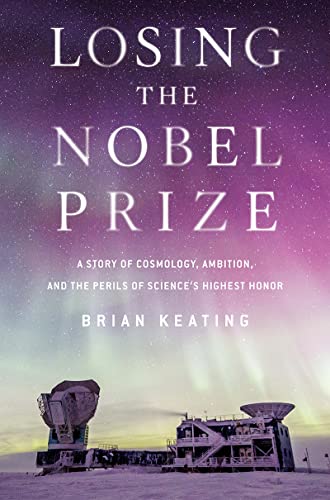
A Forbes, Physics Today, Science News, and Science Friday Best Science Book Of 2018 The inside story of a quest to unlock one of cosmology’s biggest mysteries, derailed by the lure of the Nobel Prize.What would it have been like to be an eyewitness to the Big Bang? In 2014, astronomers wielding BICEP2, the most powerful cosmology telescope ever made, revealed that they’d glimpsed the spark that ignited the Big Bang. Millions around the world tuned in to the announcement broadcast live from Harvard University, immediately igniting rumors of an imminent Nobel Prize. But had these cosmologists truly read the cosmic prologue or, swept up in Nobel dreams, had they been deceived by a galactic mirage?In Losing the Nobel Prize, cosmologist and inventor of the BICEP (Background Imaging of Cosmic Extragalactic Polarization) experiment Brian Keating tells the inside story of BICEP2’s mesmerizing discovery and the scientific drama that ensued. In an adventure story that spans the globe from Rhode Island to the South Pole, from California to Chile, Keating takes us on a personal journey of revelation and discovery, bringing to vivid life the highly competitive, take-no-prisoners, publish-or-perish world of modern science. Along the way, he provocatively argues that the Nobel Prize, instead of advancing scientific progress, may actually hamper it, encouraging speed and greed while punishing collaboration and bold innovation. In a thoughtful reappraisal of the wishes of Alfred Nobel, Keating offers practical solutions for reforming the prize, providing a vision of a scientific future in which cosmologists may, finally, be able to see all the way back to the very beginning.
User’s Reviews
Editorial Reviews: Review “A riveting account of the rise and fall of the seeming confirmation of the cosmological theory of inflation… Keating offers vivid profiles of the personalities involved in shaping our modern view of the universe.”- Science“Losing the Nobel Prize dissects the error-prone humanity of science, but cuts the ugly details with beauty… Charming and clever, Losing the Nobel Prize bounces between clear explanations of nitty-gritty science, accounts of personal relationships and historical lessons.”- ScienceNews“Brian Keating’s riveting new book tells the inside story of the search for cosmic origins, emphasizing the influence of Nobel dreams and laying bare the question of whether the lure of grand prizes is ultimately a good thing for science.”- Brian Greene, author of The Elegant Universe“By losing the Nobel Prize, Keating and BICEP2 has led us to an even greater victory: the recognition that there are more important things in this Universe, like scientific truths, than the fleeting glory of an earthly award.”Forbes“A fascinating autobiographical account, full of intriguing detail, of the passions and inspirations that underlie the scientific quest to comprehend the nature and origins of our universe…A highly thoughtful and informative book.”- Sir Roger Penrose, Emeritus Rouse Ball Professor of Mathematics, University of Oxford and author of The Emperor’s New Mind“Visionary Brian Keating takes us along on a refreshing and honest journey to see how great discoveries are made and unmade. This is one of the greatest stories told in cosmology. I couldn’t put it down!”- Stephon Alexander, Professor of Physics, Brown University, jazz musician, and author of The Jazz of Physics“[Keating] is a deft writer, interweaving the science with personal musings.”- Nature“A compelling personal memoir, a fascinating history of cosmology, and an interesting firsthand account of a dramatic scientific adventure.”- Physics Today“In this riveting personal account, Brian Keating writes frankly of his challenges, frustrations, and motivations during the years spent building and operating the instruments used to tackle one of the most fundamental problems in science: how our universe began.”- Martin J. Rees, Astronomer Royal and author of Universe“Part adventure story, part cautionary tale, Brian Keating’s Losing the Nobel Prize is that rare thing among popular science books―a page-turner.”- Rae Armantrout, professor emerita, University of California, San Diego, and Pulitzer Prize-winning author of Versed“A deeply personal journey that illuminates both the ultimate questions that cosmologists seek to answer, and the problems that we, as human beings, generate in the pursuit of those answers… Whether you’re familiar with these ideas behind the evolution of our universe or have never heard the word ‘inflation’ before, Keating’s narrative ensures you’ll have the background you need to understand why this result was so sought-after.”- Astronomy.com“Brian Keating describes the thrilling highs and dramatic lows that accompany the relentless pursuit of science’s top accolade. This is a personal, cautionary tale to which we should all listen.”- Peter H. Diamandis, chairman/founder, XPRIZE Foundation and Singularity University, and author of Abundance and Bold“Brian Keating’s compulsively readable book shows us the human side of science: the passion, the competition, the jealousies, the mistakes, the triumphs, the heartbreaks. A first-hand account of how science happens at the very highest levels.”- Sean Carroll, author of The Big Picture“Brian Keating is a wonderful storyteller with a very good story to tell. His tale is provocative and evocative as he takes us on a highly personal journey to the heart of the scientific exploration of the universe.”- Lee Smolin, Perimeter Institute, and author of Time Reborn“I loved this well-told tale of science, passion, and the pursuit―literally to the ends of the earth―of life’s purest questions. Brian Keating weaves together a must-read drama of big dreams, awe-inspiring technology, and a belief in the power of science to solve any puzzle. He is thoroughly modern and forward facing, questioning the veneration of the Nobel Prize, and making the case with his heartfelt story that the real prize is in the science itself.”- Julian Guthrie, author of How to Make a Spaceship“Three fascinating tales entwine between these covers; a young man growing to scientific maturity, an elusive baby picture of our universe, and the prize he hoped that picture would garner. The story, enthralling as it is, remains unfinished.”- Jill Tarter, Bernard M. Oliver Chair, SETI Institute“Our most august institutions―government, billion-dollar corporations, and even staid academia―are rife with human politicking and raw ambition. In Losing the Nobel Prize, Brian Keating describes just some of that jockeying and maneuvering among the smartest people in the world, studying the most abstruse and fundamental knowledge, while chasing humanity’s greatest honor. Along the way, Keating provides understandable explanations of the more mind-bending aspects of modern cosmology, and just what we know about our universe.”- Antonio García Martínez, author of Chaos Monkeys“A fascinating blend of personal history and an honest behind-the-scenes look at high-stakes science. Brian Keating was at the origin of what appeared to be one of the most exciting discoveries in modern cosmology. His vivid storytelling brings humanity’s search for the origin of the Universe to life.”- Jay Pasachoff, author of Peterson Field Guide to the Stars and Planets“Cosmologists had thought that they had glimpsed a distant image of the first moments of the universe. Instead, this image turned out to be ‘smudge on the window’: galactic dust once again bedeviling cosmologists. Keating conveys this exciting search through a personal tale of the ups and downs of cutting edge science.”- David Spergel, Professor, Princeton University, Co-Winner of the 2018 Breakthrough Prize in Fundamental Physics“In Losing the Nobel Prize, Brian Keating shares a view from the jagged frontiers of scientific exploration, offering fresh insights into the passions, ambitions, and competition that drive many researchers today. A fascinating journey.”- David Kaiser, professor of physics and the history of science, MIT and author of How the Hippies Saved Physics“According to Brian Keating, the Oscar and Nobel science prizes have a lot in common. In Losing the Nobel Prize, he weaves together the Nobel Prize institution, his personal life, and his own involvement in modern cosmology into a multi-facetted and highly readable story. Providing a vivid picture of the adventurous and competitive world of cosmological research, he also suggests radical reforms to the venerable but perhaps outdated Stockholm institution.”- Helge Kragh, Emeritus Professor, Aarhus University and author of Cosmology & Controversy“Brian Keating’s Losing the Nobel Prize tells an exciting story of breakthrough discoveries in modern cosmology, his personal hunt for signals from the Big Bang, and the pros and cons of Nobel dreams. The book is a page-turner. Keating’s misgivings about the role of the Nobel Prize as a driver of scientists to rush to discovery make for thought-provoking reading.”- Katherine Freese, George E. Uhlenbeck Professor of Physics, University of Michigan and author of The Cosmic Cocktail“An extraordinary work of intellectual honesty. Astrophysicist Brian Keating explores the fascinating history and mixed effects of the Nobel Prize, especially on the field of physics. For a few years, Keating felt these effects, as people chattered about his own possible candidacy, before the chances and mischances of science changed course. That experience informs Losing the Nobel. An amazing journey.”- David Brin, author of Existence About the Author Brian Keating is a professor of physics at the University of California, San Diego; a Fellow of the American Physical Society; a commercially rated pilot; and the director of the Simons Observatory. He received the 2007 Presidential Early Career Award for Scientists and Engineers for his work on BICEP. He lives with his family in La Jolla, California.
Reviews from Amazon users which were colected at the time this book was published on the website:
⭐Paul Gauguin famously inscribed on his best-known painting its title: D’où Venons Nous/ Que Sommes Nous/ Où Allons Nous—Where Do We Come From? What Are We? Where Are We Going? For eons, from perspectives of faith, empiricism, and theoretical cosmology these questions have puzzled, fascinated, and inspired people of every known culture. From the earliest days when humans first walked the earth, the first question — where do we come from? — has been of special interest to stargazers. Few stargazers have devoted their professional lives to a search for physical evidence of the origins of the universe. One such person, a stargazer from the time of his early memories, is Brian Keating, author of Losing the Nobel Prize. Perhaps the most famous stargazer was Dr. Keating’s boyhood hero: the Italian astronomer and builder of telescopes, Galileo di Vincenzo Bonaulti de Galilei. In 1609, Galileo pointed an eight-powered telescope of his own design and manufacture at Jupiter. What he saw could not be seen with the naked eye—Jupiter’s four largest moons as they existed ninety minutes earlier, the time it takes for light to travel from the sun added to the approximate time it takes the reflected light to travel back to earth. Similarly, when we see stars, or planets, or moons—any celestial objects—whether through a telescope or with the naked eye, what we really see is those objects as they existed in the past. Thus telescopes are time machines, revealing more of the universe than we otherwise could observe.Inspired by and following in Galileo’s footsteps of celestial discovery, Brian Keating’s career in experimental astronomy includes building telescopes designed to discover whether the universe had an origin, a moment of inception, a moment when time began, a moment that is colloquially and scientifically referred to as the Big Bang: a singular primordial cataclysm from which an infinitely hot and infinitely dense state where time stood still was rapidly changed into an expanding (inflating) state of, literally, astronomical proportions. A telescope he co-designed-BICEP—was created and deployed to the South Pole to discover evidence to support the Big Bang theory.What would this observable evidence look like, what would it be? Losing the Nobel Prize elegantly and beautifully answers this question in prose that enables the lay reader to comprehend the science and appreciate stories of explorations that take the reader back in time, back toward the birth of the universe. In a word, however, we learn that this evidence would look like B-modes, patterns of very faint swirling polarized electromagnetic waves imprinted on cosmic microwaves by primordial gravitational waves. The seeds of gravitational waves—vacuum fluctuations—and later full-blown gravitational waves were created by inflation before the universe was one second old. Thus, detection of B-modes would prove the existence of the gravity waves that were necessary to imprint them on the primordial cosmic microwaves, and the existence of gravity waves would prove the existence of the inflation necessary to create them. This should give you a feeling for the magnitude of what a discovery of B-modes would mean. In Dr. Keating’s words in Losing the Nobel Prize, discovery of B-modes would be a ticket to Stockholm (where Nobel Prizes are awarded each December.) On rare occasions when I have finished reading a book, with a sense of wonder and intrigue, with love for the story, the characters, and the writing, I have immediately turned back to page one and begun reading it again. Dreams of my Father by Barack Obama was one of these books. Jobs by Walter Isaacson was another. That I had this experience of wanting right away to read Losing the Nobel Prize a second time places it in my life in rarefied company, illustrating my highest recommendation to other readers of autobiography or memoir or of the history and philosophy of science. If you enjoyed The Grand Design by Stephen Hawking and Leonard Mlodinow (or any of their books) or The Hidden Reality by Brian Greene (or any of his books) or Einstein or Jobs or The Innovators by Walter Isaacson, then Losing the Nobel Prize without question is a book you will be glad you read. But Losing the Nobel Prize is much more than the Hawking-Mlodinow or the Brian Greene books just mentioned. It is more like Black Holes and Time Warps by Kip Thorne in that it is an exceptional story about the evolution of astrophysics in which the author becomes or is a character. It is more personal and it is more historical in a than popular astrophysics books written for a lay audience. It is what in literature is known as a closed-ended story: the reader knows the outcome (Brian Keating has not yet won a Nobel Prize). The excitement and intrigue is in the journey toward a known destination. Reading Losing the Nobel Prize is riveting suspense as the clock ticks down in the unfolding of a high-stakes science drama.The subtitle of Losing the Nobel Prize is: A Story of Cosmology, Ambition, and the Perils of Science’s Highest Honor. Losing the Nobel Prize includes these topics and much more. It is also a story of family, familial love, and faith, a telling of the lives and discoveries of some of the greatest astronomers and astrophysicists of past centuries and of this one. It is a non-fiction bildungsroman of the author, who as a boy became enamored of and determined to follow in the footsteps of Galileo as an inventor and builder of telescopes. It is a story of Alfred Nobel and his bequest that established the Nobel Prize in physics. It tells the stories of extraordinary accomplishments of scientists who sought and who were denied the prize. And of course, it tells stories of some of those very few physicists who became Nobel laureates. The book is written with humility, wit, and insight. It is told with cognizance of irony and humor. It is a story of contemporary cosmology. It is a tale of inspiration and one of caution. It is a lesson in the perils of confirmation bias. It tells stories of journeys of immeasurable worth. The writing is simply gorgeous. Brian Keating earned his PhD at Brown University. He completed his Post-Doctoral studies at Caltech. Today he is a Distinguished Professor of Physics at the Center for Astrophysics & Space Sciences in the Department of Physics at the University of California, San Diego. I purchased a hardcover and a Kindle copy of this book.
⭐Dr. Keating presents an interesting history of observational astronomy, featuring the humbling of astronomers over four centuries who failed to appreciate the effects of dust on their observations. He uses his own experience in designing and participating in a sophisticated radio astronomy polarization study to disclose the imprint left by the inflation stage of the Big Bang on the cosmic microwave background. I remember being thrilled by the news that BICEP2, the experiment in question, had yielded a booming signal ostensibly due to the primordial imprint. It seemed too good to be true, and eventually the results of a more complex experiment, Planck, showed just that. Dr. Keating had fallen victim to his confirmation bias and the effects of dust. This is a major theme of the book. The biographical exposition is poignant, and I appreciated the attention the author gave to the social aspects of science. Another big theme is the Nobel prize, the pinnacle of scientific recognition and the most intense nexus of social forces in science. The author’s concerns are real enough, and he makes good arguments for changing the rules of the award. I am not in any danger of being in contention for the prize, so I can be genuinely disinterested. The reality is that science has become a corporate endeavor, where the scientific stars are CEOs running teams of hundreds and even thousands of scientists and engineers. In the face of necessarily limited funding, basic science becomes a narrow slog for most, with the lead dogs enjoying the scenery. It makes sense that the established limitations on the award of the Nobel should be revisited, but I just can’t get very excited about it. I am glad that the plebes of science are given more attention here, and perhaps the book serves as a contribution to the sociology of science.
⭐A very interesting read. I enjoyed most the account of how, over the last 50 years, the big-bang theory has developed. This is well done. The authors own personal account of his involvement with the rather doomed BICEP2 experiment together with his motivation by ambitions of winning a Nobel are also of great interest. Intertwined with these accounts are the authors views on what is wrong with the Nobel prize. Many of the problems with the Nobel prize have been documented elsewhere – its limitations to a maximum of three living people for certain subjects etc – and the injustices this results in together with the over-competitive atmosphere with people who nowadays must often work in large teams. He illustrates his criticisms with reference to several (well-known) cases. Overall a bit of a mixture of a book but a worthwhile read.
⭐The world of professional science is a highly competitive one, none more so than in a discipline where everyone it seems are vying to get their hands on the ultimate reward: the Nobel Prize for Physics.On March 17 2014, a team of astronomers announced at a press conference, held at Harvard University, that they had detected traces of the so-called B-modes – the faint, wiggly signatures produced when the baby universe inflated – using a special type of telescope called BICEP2. Although Keating was co-leader of the project he was regarded by some as a competitor and had not been invited to the press conference. Even his name was barely mentioned during the announcement. Still, despite the snubbing, there was every chance that this discovery would offer him a ticket to Stockholm to collect his golden reward.Or maybe not.This book tells the inside story of the quest to find signals from the birth of the universe and the scientific drama that followed. There is plenty of cosmology along the way, clearly explained in a witty and charming style that makes the book a pleasure to read.Intermingled amongst the cosmology are chapters on the Nobel Prize. Here the author argues that the Nobel Prize has failed to live up to its reputation and rather than advance scientific progress, actually promotes greed and punishes collaboration and innovation. Thoughtfully, he offers his own solutions on how the prize can be reformed and modernised so that it works alongside 21st century science in a more positive way.This book is a real page-turner and one that I thoroughly enjoyed reading. Highly recommended.
⭐What a great book, really enjoyed reading this! Brian Keating delivers not only a nice recap of observational cosmology (and a warning never to underestimate cosmic dust!), but also an honest, entertaining and moving account of the often harsh realities in which modern science works. His story is captivating, the science very well explained (for all backgrounds), and the writing style witty, informative and funny.Keating’s story is particularly interesting given the huge implications of his research, however the most pleasing aspect of his book is the way in which scientists are shown to be (above all) human! Would recommend this book to anyone wanting to gain some understanding of observational cosmology or some insight as to how the competitive world of astronomy (and science in general) really works.
⭐I hugely enjoyed reading this book. It’s beautifully written – a wonderful combination of first-hand accounts of frontline science and tales from history that establish the key scientific ideas and set the stage, all interwoven with compelling, honest and often moving accounts of Keating’s career. Thoroughly recommended.
⭐Brian Keating ist Professor für Physik am Center of Astrophysics and Space Sciences der Universität San Diego, er beschäftigt sich mit Experimenten, die Daten über die früheste Entwicklung des Universums aus der kosmischen Mikrowellen Hintergrundstrahlung (CMB), sammeln sollen.Ausgezeichnete Bücher zur modernen Kosmologie und insbesondere zur Rolle der Inflationstheorie, gibt es etliche, darunter auch einige, die für eine breite Leserschaft geeignet sind, etwa Lawrence Krauss ‘A Universe from Nothing’ und das großartige ‘The Infaltionary Universe’ von Alan Guth, dem Architekt der Inflationstheorie selbst; das vorliegende Buch ist aber insofern besonders, da es aus dem Blickwinkel eines Experimentalwissenschaftlers verfasst wurde. Zwar erlaubt die Inflation theoretische Erklärungen für einige bedeutende Puzzle der Urknall Kosmologie, aber dieser Theorie wird oft vorgeworfen, dass sie nicht direkt beobachtbar ist. Um so faszinierender ist die Geschichte des Autors, der über seine Ideen zum Nachweis von Mustern in der CMB, die zumindest indirekt einen Beleg für die inflationäre Phase des Univerums liefern sollen, berichtet — Ideen die schließlich zum Bau des BICEP (Background Imaging of Cosmic Extragalactic Polarization) Teleskops führten.Der Autor geht aber nicht nur auf die physikalischen und kosmologischen Grundlagen seines Experiments ein, er spricht auch über das Wohl und Wehe eines Wissenschaftlers, insbesondere eines Experimentators – lange vorbei die Zeiten eines Faraday, dessen Versuche einige Rollen Draht, Magnetnadeln und Galvanoskope bedurften, die ganze Anordnung passte gut auf einen Labortisch – heutig Experimente haben aber oft andere Dimensionen, manche fast industrielle – also müssen Fördermittel aufgetrieben werden, die Vorbereitung dauert oft jahrelang und die Aufgaben sind in der Regeln nur von Teams zu bewältigen. Aber auch von den Leidenschaften des Forschens ist die Rede. So fließen in Keatings Darstellungen ganz selbstverständlich auch autobiographische Elemente ein, und es ist nicht verwunderlich, dass der Autor auch über die Nobelpreiswürdigkeit seines Entwurfs nachdenkt – eine solche Chance ergibt sich in einem Forscherleben nur einmal.Um die Hintergründe seines Experiments erläutern können, geht der Autor kurz auf die jüngere Geschichte der Kosmologie ein, die 1916 von Albert Einstein als Wissenschaft etabliert wurde, als er seine kurz vorher geschaffen Allgemeine Relativitätstheorie aus das Universum als Ganzes angewandt hatte. Doch selbst Einstein erwartete nur ein statisches All, er erweiterte dazu sogar seine Feldgleichungen der Gravitation um den sogenannten kosmologische Term. Erst nach den bahnbrechenden Entdeckungen von Edwin Hubble 1923, freundete er sich zögerlich mit dem Model eines expandierendem Universums an, vor allem, da das auch zur Konsequenz hat, dass die Welt einen Anfang in der Zeit haben müsste – dass sie mit einem Big Bang begann – dagegen gab es gravierende philosophische Vorbehalte; deswegen erhielt auch zunächst ein alternatives Model von Hoyle, Bondi und Gold größeren Zuspruch. Erst mit der Entdeckungen der kosmischen Hintergrund Strahlung 1964 von Penzia und Wilson, verdichteten sich die Indizien für die Big Bang Theory. Allerdings konnten auch die Anhänger der Steady State Theory diese Strahlung in ihr erweitertes Model (QSSC) integrieren, sie hätte aber durch die Streuung an kosmischen Staub polarisiert sein müssen. Das konnte aber 2002 durch Messung mit dem Degree Angular Scale Interferometer (DASI) ausgeschlossen werden.Auch bei BICEP spielen Polarisationsstrukturen in der CMB die entscheidende Rolle. Larry Abbott und Mark Wise zeigten, dass das die inflationäre Phase mit er Erzeugung primordialer Gravitationswellen einhergeht, die dem Plasma Riffel einprägen, aus dem 380000 Jahre später die Hintergrundstrahlung erzeugt wird. Alex Polnarev bewies, dass diese Gravitationswellen B- Mode Polarisationsmuster in der CMB hinterlassen, d.h. wirbelartige Muster im Bereich von Winkelgraden.Als Postdoc wird Keating von Jaffes et.al. ‘Polarization pursuers’ guide’ dazu inspiriert, über die Möglichkeiten des Nachweises von B- Modes in der CMB nachzudenken. Er ist davon so eingenommen, dass er seine eigentlichen Themen vernachlässigt. So muss es sich zunächst eine neuen Mentor suchen, er findet ihn in Andrew Lange und wechselt nach Pasadena. Gemeinsam mit Jamie Bock kann er Lange für seine Idee gewinnen, der Mittel organisiert, um BICEP tatsächlich zu bauen. In der Nähe des Südpols führt BICEP von 2005 bis 2008 Beobachtungen durch. Aber erst das verfeinerte Nachfolge Projekt BICEP2, an dem der Autor nicht mehr leitend beteiligt ist, war empfindlich genug, um die gesuchten Polarisationsphänomene tatsächlich identifizieren zu können. Jedenfalls wurde das im Rahmen einer Pressekonferenz im März 2014 verkündet. Das Auswertungsteam hatte sich dabei aber auf Vorabinformationen zur Abschätzung des Einflusses des galaktischen Staubs gestützt. Bereits im September, als erste Daten des Planck Weltraumteleskops veröffentlicht wurden, musste die Ergebnisse revidiert werden.Der Autor sieht damit seine Chancen auf eine Einladung nach Stockholm schwinden, findet dafür aber einen starken Buchtitel. Darüber mag er nicht weiter räsonieren, bekennt er in der Einleitung, möchte aber das Buch zum Anlass nehmen, um sich darin auch über die Geschichte des von Alfred Nobel gestifteten Preises, seiner Bedeutung für die Gemeinde der Naturwissenschaftler, und über die heutige Vergabepraxis — insbesondere des Physik Nobelpreises — zu äußern. Tatsächlich waren bedeutenden neuer Entdeckungen, wie die des Higgs Boson oder der Nachweis von Gravitationswellen, nur im Rahmen von ‘Big Science’ Experimenten wie ATLAS und CMS am LHC bzw. LIGO möglich, an den riesige Forscherteams beteiligt waren. Ist es da nicht angebracht, den Preis künftig auch an Gruppen zu verleihen, statt ihn nur an maximal drei Laureaten zu verteilen. Ob allerdings Keatings Verstellung, Nobels Vermächtnis ‘wieder herstellen’ zu müssen, Anklang findet, sei dahingestellt.Das Buch ist mit acht Farbtafeln, einem ausführlichen Index und einem Anhang mit Anmerkungen zum Text, das auch die Quellenangaben enthält, schön ausgestattet, eine separate Bibliographie fehlt hingegen.
⭐
Keywords
Free Download Losing the Nobel Prize: A Story of Cosmology, Ambition, and the Perils of Science’s Highest Honor in PDF format
Losing the Nobel Prize: A Story of Cosmology, Ambition, and the Perils of Science’s Highest Honor PDF Free Download
Download Losing the Nobel Prize: A Story of Cosmology, Ambition, and the Perils of Science’s Highest Honor 2018 PDF Free
Losing the Nobel Prize: A Story of Cosmology, Ambition, and the Perils of Science’s Highest Honor 2018 PDF Free Download
Download Losing the Nobel Prize: A Story of Cosmology, Ambition, and the Perils of Science’s Highest Honor PDF
Free Download Ebook Losing the Nobel Prize: A Story of Cosmology, Ambition, and the Perils of Science’s Highest Honor