Ebook Info
- Published: 2013
- Number of pages: 304 pages
- Format: PDF
- File Size: 27.61 MB
- Authors: Edward Frenkel
Description
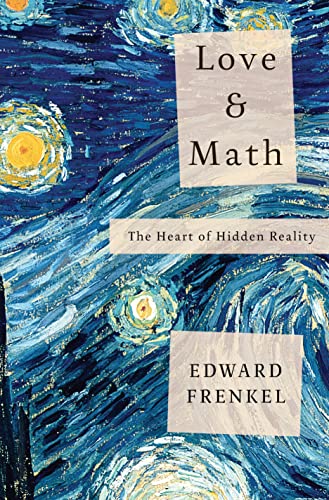
A New York Times Science BestsellerWhat if you had to take an art class in which you were only taught how to paint a fence? What if you were never shown the paintings of van Gogh and Picasso, werent even told they existed? Alas, this is how math is taught, and so for most of us it becomes the intellectual equivalent of watching paint dry.In Love and Math, renowned mathematician Edward Frenkel reveals a side of math weve never seen, suffused with all the beauty and elegance of a work of art. In this heartfelt and passionate book, Frenkel shows that mathematics, far from occupying a specialist niche, goes to the heart of all matter, uniting us across cultures, time, and space.Love and Math tells two intertwined stories: of the wonders of mathematics and of one young mans journey learning and living it. Having braved a discriminatory educational system to become one of the twenty-first centurys leading mathematicians, Frenkel now works on one of the biggest ideas to come out of math in the last 50 years: the Langlands Program. Considered by many to be a Grand Unified Theory of mathematics, the Langlands Program enables researchers to translate findings from one field to another so that they can solve problems, such as Fermats last theorem, that had seemed intractable before.At its core, Love and Math is a story about accessing a new way of thinking, which can enrich our lives and empower us to better understand the world and our place in it. It is an invitation to discover the magic hidden universe of mathematics.
User’s Reviews
Editorial Reviews: From Publishers Weekly U.C. Berkley mathematician Frenkel reveals the joy of pure intellectual discovery in this autobiographical story of determination, passion, and the Langlands program—a sort of Grand Unified Field Theory of mathematics. As a teenager Frenkel was converted from math hater to eager theorist by a mathematical friend of the family, enough to pursue it despite his struggles against an unapologetically anti-Semitic Soviet educational system. Frenkel writes casually of climbing over the fence to sit in on advanced classes at Moscow State University, a top school that didn&’t accept Jews. With the help of mentors, he worked hard and eventually found his way to Harvard and the freedom to focus on his research. Frenkel balances autobiographical narrative with enthusiastic discussions of his own work on the Langlands program, a web of algebraic conjectures named after a Canadian mathematician that is noted for its usefulness in organizing seemingly chaotic data into regular patterns full of symmetry and harmony, and its applications to quantum theory. While the math can be heavy going, Frenkel&’s gusto will draw readers into his own quest, pursuing the deepest realities of mathematics as if it were a giant jigsaw puzzle, in which no one knows what the final image is going to look like. B&w illus. (Oct.) From Booklist After Rick and Isla meet at a dinner party and fall in love, what’s next? For Frenkel, it is the mathematical charting of the Rick-Isla relationship as a trajectory on the x-y plane. The surprising notion of a “formula of love” fits into the remarkable understanding of math Frankel unfolds as he recounts his labors on conceptual frontiers where an audacious new master theory, the Langlands Program, is linking geometry, number theory, and algebra. To qualify for a role in those labors, Frenkel defied the anti-Semitism pervading the Soviet academic world in which he came of age and then won appointment to a Harvard professorship. Aware that few of his readers share his academic training, Frenkel pares the technical details to a minimum as he reflects on the platonic transcendence of mathematical concepts and marvels at their mysterious utility in explaining physical phenomena. Not merely dry formulas in textbooks, the math Frenkel celebrates fosters freedom and, yes, even distills the essence of love. A breathtaking personal and intellectual odyssey. –Bryce Christensen About the Author Edward Frenkel is a professor of mathematics at the University of California, Berkeley, which he joined in 1997 after spending a few years on the faculty at Harvard University. His recent work has focused on the Langlands Program and dualities in Quantum Field Theory. Frenkel has authored two monographs and over eighty articles in mathematical journals, and he has lectured on his work around the world. The winner of the Hermann Weyl Prize in mathematical physics, he lives in Berkeley, California. Read more
Reviews from Amazon users which were colected at the time this book was published on the website:
⭐I purchased the Kindle version of this book. It’s an appealing combination of memoir and mathematics. But the occasional mathematical formulas, which are a key part of the exposition, are so tiny as to be unreadable. Increasing the size of the font makes no difference, whether on a Kindle or an Android reader. I have attached a screenshot that shows an example, but look closely; the formula follows “cubic equation”. — I am giving this book four stars only because I do not want to discourage readers of the paper version.
⭐What I REALLY like about this book is that Frenkel talks about real math without talking down to the reader. I don’t follow it all, since I did not read it as carefully as it needs to be read, but I will take another pass at it soon. This is in contrast to textbooks, which 1. I wouldn’t be able to follow at all since I don’t have the background nor will I spend the time to get it, and 2. I would probably never re-read a math textbook. Come on, really? Nope.I read “My Brain is Open” about Paul Erdos a few years ago, and loaned it out, so I can’t remember for sure how it compares to this one, but I think I was left a little frustrated. Paul Erdos collaborated in many mathematical ventures, but as I remember, it is assumed the reader couldn’t possibly follow what they were.Edward Frenkel makes the attempt. I am flattered and delighted. He is skillful enough in this so that I want to rise to the occasion.In addition, he tells the story of his own life and career in an engaging way.One of the things that I find remarkable in Frenkel’s account is the view into a mostly-male field that isn’t about soldiering or something similarly physical. As a woman, I did take four years of math in college but didn’t continue. It wasn’t because I didn’t like it – I loved it! It was because of the toxic posturing that accompanies the field, or at least, in my college it seemed to. We students were subtly and not-so-subtly evaluated by our professors and classmates to see if we had “what it takes” to be a great mathematician. One of my professors actually called the other female student in my year to his office and told her that, while she would never be a first-tier mathematician, she had what it took to become a second-tier thinker and she should consider going into math as a career. When she told me about this, she was crying. She did math because she liked to do it, and it had not occurred to her that such rankings were part of the winnowing process. I, of course, was also devastated because clearly I was not even going to be second-tier. Neither of us continued in the field, though, looking back, I think that we should have. Female brains are different than male brains, and we both frequently noted that we found some classes hard and others easy, and that seemed to be in inverse relationship to what our male classmates found. If we had gone on in the “difficult” fields that we thought were easy, who knows where it might have led?With what we know now about the relationship between focused practice and achievement, it seems insane to worry so much about what minds look like in the moment. If my friend had wanted to become a first-tier mathematician, she ought to have been advised to do what Frenkel does, that is, think about math all the time and poke around in the literature and talk to other mathematicians and think about it some more and talk with colleagues some more and do that with passion and verve. I personally work very well in collaboration, but collaboration, while Frenkel talks about it a LOT, was not encouraged in my college. It was too important to evaluate how brilliant people were as they stood alone. The one time I did hang out with a mathematician who was in a class further on than mine, I did so well in the class that we had been talking about, that I went to the professor and confessed that I had an unfair advantage. He said that cheating was frowned upon but he would let it pass this time. I certainly never made the mistake of cheating by talking to another mathematician again!And now, as I read Frenkel, I see how crucial that is. Of course.
⭐The observation to which this book is a response is the fact that intelligent, educated, and sophisticated readers who take pride in the breadth of their knowledge, reveal with pride that they hate math. Those of us who use advanced mathematics integrally and intimately in our work have all heard this refrain. Why would someone take pride in their ignorance? Why would someone who would never say they hate art take pleasure in affirming their aversion to mathematics, which is doubtless and indisputably one of the most stunning achievements of human intellect?Frenkel’s answer is that students are not taught math properly in school. Students learn how to perform calculations, but are never exposed to the deep principles of symmetry and dynamics that embody the true beauty of mathematics. His response is to show how human an enterprise modern mathematical research can be. I read this book from cover to cover with some pleasure, but I do not think he has made his case. Frenkel tell us early of the insights of Galois and even explains with some effectiveness exactly what an incredible tour de force Galois theory is. Moreover, Galois proved something with his detour through group theory that is truly remarkable: there are no general solutions to polynomial equations of degree greater than four using the operations of arithmetic operating on integers and their various integral roots. Frenkel explains that the Langlands Program is a sophisticated and ambitious extension of Galois’ project, but he fails in two ways. First, he introduces a plethora of mathematical constructs to which he gives a best vague descriptions, and gives no intuition as to why they are related to one another in interesting ways. Second, he gives us no concrete examples of how all of this high-level math solves some real-world problem of the sort that Galois theory addresses. Why all the huffing and puffing? All we are told is that some of the theory Is useful in banking and cryptography. How and why? Who knows?In fact, probably most people who become mathematicians or use mathematics extensively actually like to solve rote problems. I know I did. I would spend hours and hours solving problems, deriving trigonometric identities, and integrating funny-looking rational functions. Moreover, I treat mathematics as very hard and exhausting—like running laps and lifting weights. The rewards are surely there, but it is simply hard work most of the time. Art and music are fun, not work. Of course, we must learn to appreciate art and music, but once the brain is prepared, it is all fun thereafter. Math is not like that. Math is sweat and pain all the way. Struggling through a three page paper full of symbols is excruciating effort. The reward is surely there at the end—understanding something of ineffable majesty.I still think that the beauty of mathematics can be explained to humanists, I’m not sure how, though.
⭐I was partly hoping to find out what happened next after Simon Singh’s wonderful “Fermat’s Last Theorem”. This book does give you an update on the Langlands Programme, which is interesting and probably very inspiring to the mathematically-inclined teenager. The end notes and other references give you plenty of lines for further reading. The author is nowhere close to Singh as a writer, so you need a decent level of mathematical fluency to really follow that part, but it’s still interesting even if you don’t really get it. The author loves this stuff and is willing to go to a lot of effort explaining what sheaves are and why it matters; there are also video lectures. The general reader will be better off with anything by Singh, or indeed with the author’s own video collaborations with Numberphile, which are brilliantly edited and consequently very enjoyable. As for the autobiographical parts and the click-bait title, the author is not being straight with us. He gets us invested in his ingenuous youth, assuming we are interested, then un-assumes it when it doesn’t suit him to say what, if anything, he has learned about being an adult. The Walkman-buying Soviet outcast skips straight to spoiled oblivious middle-aged US academic without any process of transition: refer to the end-note to chapter 16 before you decide whether to buy. This eye-stretching insult to the reader is followed, but not compensated for, by an entertaining account of a magnificently decorative mid-life crisis vanity project in which Woman is Muse and Canvas. It all reads a bit like all the scenes required to make sense of the plot have been censored. If you are a teenager starting out in mathematics and you hope to hear it will be a safe or welcoming world for you – this book will certainly not reassure you. The author thinks it will, but the effect is quite the opposite. He isn’t a good enough writer either to convince us of what he wants us to know, or to conceal what he doesn’t. The film script bits are jarring, and the blurb endorsement by renowned international redactedwomble N.N. Taleb is kind of perfect. A very unique book. Not all that good, but I’ve got to hand it to him for trying a lot of things that sound like bad ideas.
⭐Frenkel’s book deserves a much wider audience this side of the Atlantic than it currently has.I read Love and Maths alongside Hacking’s “Why is there a Philosophy of Maths at all”, and at least in the first few days, I persevered with the dual task until I eventually focused on Frenkel almost exclusively. I’ve now read the book twice and must admit to having been moved from being merely entertained to being seriously impressed.The title and the first few largely biographical chapters are, in truth, slightly misleading. Once Frenkel gets going, however, he impresses as a serious writer with no quarter given for the less than serious reader. But the “cost”, as can happen so often, is not clarity of accessibility. This last point is interesting. The way that Frenkel ensures no compromise is by providing, in the main body of the book, a fairly low lying terrain. Think of this as a strenuous but ultimately achievable trek up Kilamanjaro. Yes, you have to be able to breath the thin air, but there are no serious 5:5 stretches. You don’t need your climbing rope and crampons or ice pick. However, laced, literally page by page, are footnotes that are more like the diversion to K2. And what an amazing diversion. You can (if you want) be seriously addressed with credible mathematical discourses, and yet stay the course if you feel threatened. Its a smart way of delivering a superb read.Leaving aside this very clever mechanism, the heart of the book brings together a beautifully crafted exposition of the importance of the Langlands programme with a topical weft and weave of contemporary maths.A few months after I read the book a second time I had the chance to meet Frenkel very briefly. He is a disarming and charming man with a steely eyed determination to convey his feelings. The book is the same. Don’t be fooled by the title, and don’t give up in the foothills. The peaks are what count. You will be infected by the love of the subject that so many of us wish we could share with loads more people. I just hope the book gets more of an audience in Britain.Frenkel also wrote the obit for Grothendieck in the NY Times. Well worth the read for those who dont know a mathematician who may well deserve the title of the 20th century’s greatest (and yes, I include Godel, Hilbert and Weyl et al in that comparison).
⭐This was disappointing. It’s a combination of an autobiography, which is quite interesting, especially his early mistreatment during Communist rule, and an awful attempt at presenting the mathematics he specialises in. Unless you already understand the field in which the author specialises, you will not gain anything from this, and presumably if you do understand it, there will be no need to read this book. There’s no structure, no order, no flow. Sometimes concepts are referenced before being explained or even introduced. Long passages are impenetrable to anyone who isn’t an expert. I really don’t know who this is for. I had hoped it would convey some of the joy of mastering a complex subject such as mathematics and revealing its inner beauty, but while this may be its intention, it doesn’t succeed.
⭐This book combines a variety of unusual features which make it absolutely unique.A distinctive feature of this book is that its author is one of the best mathematicians of our time. He combines his deep mathematical work with applying his time and effort to explain art of mathematics in different forms, ranging from movies to books.He is a most gifted presenter who is able to explain mathematical concepts in a nice and understandable way. He does this very emotionally and this book exerts a deep impact.The book contains a very sincere description of the author’s path in mathematics, which is very dramatic. The narrative reads like a text of a movie.The author convincingly writes about many ways how love is important for mathematical work and how mathematical discovery is similar in its nature to various forms of art.Do not hesitate to order and read this book, you will be so much rewarded. Most likely, you will discover how much different is mathematics from what you thought it was. And then, give it to your friends and relatives to read.
⭐This is a wonderful read. Frenkel’s intelligent enthusiasm makes this a genuine page turner. He has a wonderful ability to distil and explain some fairly esoteric mathematics in a way that is accessible and illuminating.I really highly recommend this book. Essentially a love letter to mathematics, that cannot but fail to win you over.Really just buy it! You will not be disappointed.
Keywords
Free Download Love and Math: The Heart of Hidden Reality in PDF format
Love and Math: The Heart of Hidden Reality PDF Free Download
Download Love and Math: The Heart of Hidden Reality 2013 PDF Free
Love and Math: The Heart of Hidden Reality 2013 PDF Free Download
Download Love and Math: The Heart of Hidden Reality PDF
Free Download Ebook Love and Math: The Heart of Hidden Reality