Ebook Info
- Published: 2017
- Number of pages: 464 pages
- Format: PDF
- File Size: 3.80 MB
- Authors: Michael Harris
Description
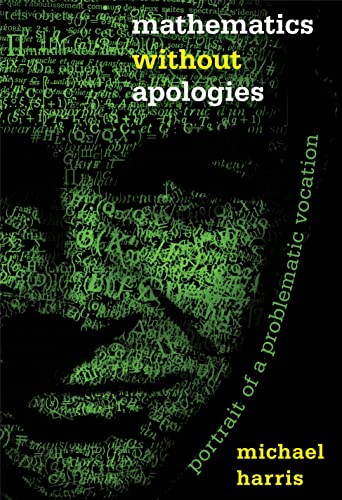
An insightful reflection on the mathematical soulWhat do pure mathematicians do, and why do they do it? Looking beyond the conventional answers―for the sake of truth, beauty, and practical applications―this book offers an eclectic panorama of the lives and values and hopes and fears of mathematicians in the twenty-first century, assembling material from a startlingly diverse assortment of scholarly, journalistic, and pop culture sources.Drawing on his personal experiences and obsessions as well as the thoughts and opinions of mathematicians from Archimedes and Omar Khayyám to such contemporary giants as Alexander Grothendieck and Robert Langlands, Michael Harris reveals the charisma and romance of mathematics as well as its darker side. In this portrait of mathematics as a community united around a set of common intellectual, ethical, and existential challenges, he touches on a wide variety of questions, such as: Are mathematicians to blame for the 2008 financial crisis? How can we talk about the ideas we were born too soon to understand? And how should you react if you are asked to explain number theory at a dinner party?Disarmingly candid, relentlessly intelligent, and richly entertaining, Mathematics without Apologies takes readers on an unapologetic guided tour of the mathematical life, from the philosophy and sociology of mathematics to its reflections in film and popular music, with detours through the mathematical and mystical traditions of Russia, India, medieval Islam, the Bronx, and beyond.
User’s Reviews
Editorial Reviews: Review “Winner of the 2016 PROSE Award in Mathematics, Association of American Publishers””One of Choice’s Outstanding Academic Titles for the Year””One of Choice’s Outstanding Academic Titles for 2015″”Mathematics without Apologies is a kaleidoscope of philosophical, sociological, historical and literary perspectives on what mathematicians do, and why.”—Amir Alexander, Nature”A wry and insightful look at what being a pure mathematician is all about, as seen from the inside.”—Steven Strogatz, Physics Today”If you are interested at all in what mathematics really is and what the best mathematicians really do (and you’re up for an intellectual challenge), I highly recommend that you get a copy and set some time aside for delving into this unusual book. . . . Harris manages to move back and forth between the deepest ideas about mathematics at the frontiers of the subject, insightful takes on the sociology of mathematical research, and a variety of topics pursued in a sometimes gonzo version of post-modern academic style. You will surely sometimes be baffled, but definitely will come away knowing about many things you’d never heard of before, and with a lot of new ideas to think about.”—Peter Woit, Not Even Wrong”Harris is the kind of mathematician one hopes to meet at an intimate dinner party. By sharing his professional and personal relationship to mathematics, [he] links art, philosophy, music, and literature to academic culture and research problems.” ― Library Journal”Extraordinary, extravagant. . . . Harris is a polyglot, deeply learned. Threading through his remarkable book, unifying it, is Hardy’s lament regarding whether a pure mathematician can make a claim that the vocation has a philosophically ‘useful’ purpose. Harris’s reply is multivalent, persuasive, and profound. A book to be read and then read again.” ― Choice”The erudition displayed by Harris in this book is amazing. . . . The satisfaction it gives is more than rewarding.”—A. Bultheel, Adhemar Bultheel Blog”This book is a rich tapestry interweaving various aspects of culture and tradition–social, economic, religious, aesthetic–in an attempt to explicate the three basic philosophical questions underlying mathematics as a human endeavor: the What, Why and How of it.”—Swami Vidyanathananda, Prabuddha Bharata”Michael Harris is more than a mathematician; he is a Parisian intellectual.”—Brendan Larvor, London Mathematical Society Newsletter”Even apprentice number theorists can understand and enjoy this well-written book. Harris’s theories are coherent and rational, and he provides lay readers clarity into what contemporary mathematicians really do.”—Bernadette Trainer, Mathematics Teacher Review “Harris’s book is a wonderfully accomplished mix of many things: an auto-ethnography of a charismatic mathematician; an extended conversation regarding beauty, truth, and the good in pure mathematics; a reflection on the doing and practice of it; and an unapologetic embrace of the playfulness of mathematical thought.”―Brian Rotman, professor emeritus, Ohio State University”Michael Harris writes with all-absorbing exuberance and intensity about what it feels like from the inside to do mathematics, and he succeeds, for the uninitiated like myself, in conveying the motives and the pleasure that have impelled him and his precursors and peers to seek to understand. But Mathematics without Apologies is many things besides: it combines thoughtful personal memoir, sharp social chronicle, entertaining literary analysis, and jeux d’esprit reflecting on formulae for love or on the hidden structures in the fiction of Thomas Pynchon. Most importantly, however, Harris issues a clarion call for the autonomy of research in our time. He defends―fiercely and lucidly―the pursuit of understanding without recourse to commercial interests or other principles of utility. This is an original and passionate book; Michael Harris has fashioned much-needed luminous arguments for the cause of intellectual independence.”―Marina Warner, professor of English and creative writing, Birkbeck, University of London, and author of Stranger Magic: Charmed States and the Arabian Nights”Michael Harris opens the doors and gently guides you into a magic world. Once inside, you can’t help but feel mesmerized, eager to see how deep the rabbit hole goes. And no wonder: a major thinker of our time is talking to you about math and so much more, like you’ve never heard before.”―Edward Frenkel, author of Love and Math: The Heart of Hidden Reality”Here is a quilted book about mathematical practice, each patch wonderfully prepared. Part invitation to number theory, part autobiography, part sociology of mathematical training, Mathematics without Apologies brings us into contemporary mathematics as a living, active inquiry by real people. Anyone wanting a varied, cultured, and penetrating view of today’s mathematics could find no better place to engage.”―Peter Galison, author of Einstein’s Clocks, Poincaré’s Maps: Empires of Time”In Mathematics without Apologies, an important mathematician reports to outsiders straight from the frontier of knowledge. Alternating chapters of more traditional popularization with a sophisticated essayistic discourse that naturally blends the historical, the autobiographical, and the philosophical, Michael Harris manages to convey the complexity, the magic, and the near-mystical quality of modern mathematical research.”―Apostolos Doxiadis, coauthor of Logicomix: An Epic Search for Truth and author of Uncle Petros and Goldbach’s Conjecture: A Novel of Mathematical Obsession”Mathematics without Apologies is a math book like no other. Harris mixes number theory, literary criticism, and philosophy into a powerful meditation on mathematics as it is really practiced, vaporizing all clichés and romantic myths within his astoundingly broad reach.”―Jordan Ellenberg, author of How Not to Be Wrong: The Power of Mathematical Thinking”Becoming a mathematician is like becoming a musician. The apprentice must master the technique, but along the way he also has to develop an aesthetic sense. Only then can he become a master in his own right. In this lively book, Harris examines the mathematician’s craft from every angle, from the elementary and familiar to the sophisticated and exotic, and questions the ethics of using mathematics in finance. Mathematics without Apologies is a very personal book dealing with timeless questions.”―Ivar Ekeland, mathematician and economist, author of The Best of All Possible Worlds and The Cat in Numberland”As the only child of John von Neumann, I have long tried to understand what it is that mathematicians do. Michael Harris addresses the question from every angle. I still don’t have a complete handle on the answer, but I’m certainly puzzled at a much higher level than before.”―Marina von Neumann Whitman, University of Michigan”Harris offers a unique and passionate view of the life and work of contemporary mathematicians. Rich in detail and marvelously broad in scope, Mathematics without Apologies gives an unforgettable account of the frustrations, elations, and sheer wonder of doing mathematics.”―Barry Mazur, Harvard University”Mathematical high culture collides with pop culture and all hell breaks loose! Harris takes us on a wild ride―never a dull moment!”―Gregory Chaitin, author of Proving Darwin: Making Biology Mathematical”Mathematics without Apologies is a work of relentless intelligence that depicts Harris’s experience of mathematics, but it is not at all a mathematician’s autobiography. It is a madly erudite and creative reflection on the mathematical life.”―Colin McLarty, author of Elementary Categories, Elementary Toposes”Harris vividly conveys what it is to work as a researcher in pure mathematics today. Through a series of novel and unexpected perspectives, he transforms readers’ preconceptions of this activity. What we encounter here are the reflections of an erudite mathematician, uncommonly well read outside his field, on the nature and purpose of his subject.”―David Corfield, author of Towards a Philosophy of Real Mathematics”It is difficult to present in a few lines the wealth of information contained in this marvelous book, our strong advice being to read it and benefit from [Harris’s] erudition and his charming style of presentation.”―Studia Mathematica”It is high time for Harris’s book, Mathematics without Apologies. . . . I learned something new on almost every page. . . . I would recommend Mathematics without Apologies to anyone curious about what it is like to be a modern practitioner of this ancient field.”―Harvard Magazine From the Back Cover “Harris’s book is a wonderfully accomplished mix of many things: an auto-ethnography of a charismatic mathematician; an extended conversation regarding beauty, truth, and the good in pure mathematics; a reflection on the doing and practice of it; and an unapologetic embrace of the playfulness of mathematical thought.”–Brian Rotman, professor emeritus, Ohio State University”Michael Harris writes with all-absorbing exuberance and intensity about what it feels like from the inside to do mathematics, and he succeeds, for the uninitiated like myself, in conveying the motives and the pleasure that have impelled him and his precursors and peers to seek to understand. But Mathematics without Apologies is many things besides: it combines thoughtful personal memoir, sharp social chronicle, entertaining literary analysis, and jeux d’esprit reflecting on formulae for love or on the hidden structures in the fiction of Thomas Pynchon. Most importantly, however, Harris issues a clarion call for the autonomy of research in our time. He defends–fiercely and lucidly–the pursuit of understanding without recourse to commercial interests or other principles of utility. This is an original and passionate book; Michael Harris has fashioned much-needed luminous arguments for the cause of intellectual independence.”–Marina Warner, professor of English and creative writing, Birkbeck, University of London, and author of Stranger Magic: Charmed States and the Arabian Nights”Michael Harris opens the doors and gently guides you into a magic world. Once inside, you can’t help but feel mesmerized, eager to see how deep the rabbit hole goes. And no wonder: a major thinker of our time is talking to you about math and so much more, like you’ve never heard before.”–Edward Frenkel, author of Love and Math: The Heart of Hidden Reality”Here is a quilted book about mathematical practice, each patch wonderfully prepared. Part invitation to number theory, part autobiography, part sociology of mathematical training, Mathematics without Apologies brings us into contemporary mathematics as a living, active inquiry by real people. Anyone wanting a varied, cultured, and penetrating view of today’s mathematics could find no better place to engage.”–Peter Galison, author of Einstein’s Clocks, Poincare’s Maps: Empires of Time”In Mathematics without Apologies, an important mathematician reports to outsiders straight from the frontier of knowledge. Alternating chapters of more traditional popularization with a sophisticated essayistic discourse that naturally blends the historical, the autobiographical, and the philosophical, Michael Harris manages to convey the complexity, the magic, and the near-mystical quality of modern mathematical research.”–Apostolos Doxiadis, coauthor of Logicomix: An Epic Search for Truth and author of Uncle Petros and Goldbach’s Conjecture: A Novel of Mathematical Obsession”Mathematics without Apologies is a math book like no other. Harris mixes number theory, literary criticism, and philosophy into a powerful meditation on mathematics as it is really practiced, vaporizing all cliches and romantic myths within his astoundingly broad reach.”–Jordan Ellenberg, author of How Not to Be Wrong: The Power of Mathematical Thinking”Becoming a mathematician is like becoming a musician. The apprentice must master the technique, but along the way he also has to develop an aesthetic sense. Only then can he become a master in his own right. In this lively book, Harris examines the mathematician’s craft from every angle, from the elementary and familiar to the sophisticated and exotic, and questions the ethics of using mathematics in finance. Mathematics without Apologies is a very personal book dealing with timeless questions.”–Ivar Ekeland, mathematician and economist, author of The Best of All Possible Worlds and The Cat in Numberland”As the only child of John von Neumann, I have long tried to understand what it is that mathematicians do. Michael Harris addresses the question from every angle. I still don’t have a complete handle on the answer, but I’m certainly puzzled at a much higher level than before.”–Marina von Neumann Whitman, University of Michigan”Harris offers a unique and passionate view of the life and work of contemporary mathematicians. Rich in detail and marvelously broad in scope, Mathematics without Apologies gives an unforgettable account of the frustrations, elations, and sheer wonder of doing mathematics.”–Barry Mazur, Harvard University”Mathematical high culture collides with pop culture and all hell breaks loose! Harris takes us on a wild ride–never a dull moment!”–Gregory Chaitin, author of Proving Darwin: Making Biology Mathematical”Mathematics without Apologies is a work of relentless intelligence that depicts Harris’s experience of mathematics, but it is not at all a mathematician’s autobiography. It is a madly erudite and creative reflection on the mathematical life.”–Colin McLarty, author of Elementary Categories, Elementary Toposes”Harris vividly conveys what it is to work as a researcher in pure mathematics today. Through a series of novel and unexpected perspectives, he transforms readers’ preconceptions of this activity. What we encounter here are the reflections of an erudite mathematician, uncommonly well read outside his field, on the nature and purpose of his subject.”–David Corfield, author of Towards a Philosophy of Real Mathematics”It is difficult to present in a few lines the wealth of information contained in this marvelous book, our strong advice being to read it and benefit from [Harris’s] erudition and his charming style of presentation.”–Studia Mathematica”It is high time for Harris’s book, Mathematics without Apologies. . . . I learned something new on almost every page. . . . I would recommend Mathematics without Apologies to anyone curious about what it is like to be a modern practitioner of this ancient field.”–Harvard Magazine About the Author Michael Harris is professor of mathematics at the Université Paris Diderot and Columbia University. He is the author or coauthor of more than eighty mathematical books and articles, and has received a number of prizes, including the Clay Research Award, which he shared in 2007 with Richard Taylor. Read more
Reviews from Amazon users which were colected at the time this book was published on the website:
⭐Professor Michael Harris has written a book, mathematics without apologies with the subtitle “portrait of a problematic vocation.” I hope that there will be more such books by him. As well, others in the many professional fields that fill our universities and colleges should try their hands at this style of book.This book is in some ways a “travel” book in that Professor Harris takes us on a tour of the “The Land of Mathematics.” In doing so, he provides various pieces of autobiography allowing us to see how he was able to enter and live in this land. He introduces two of the Great Leaders, Alexander Grothendieck (only recently deceased) and Robert P Langlands, as well as a large coterie of friends and fellow inhabitants. And he does this by also including a reasonable amount of the history of this marvelous place. His knowledge of the terrain and his ability with the language of this land is extensive.Though I have described this as a travel book, he clarifies this in Chapter 8 by writing “My goal in this chapter is ethnographic, not historic or sociological.” I dare to write that this is his goal overall as well, and that history and sociology and other methods are the tools used to accomplish this.One aspect of this Land has been discussed for millennia and that is the question of whether this Land exists independently of the inhabitants or whether it is constantly being “created” by its inhabitants. No matter the answer chosen, it is a Land that has no real limits on size. It is constantly expanding and compressing in that new ideas extend the landscape and new theories compress it in turn providing problems to solve. A very strange topography, indeed. But it is this seemingly changing strangeness that is the great attraction to its inhabitants.This is not a “beach” read. It requires careful reading. It also requires learning a bit about the two names above. I suggest reading their entries in Wikipedia.The book is in many respects a response to a book, A Mathematicians Apology, written in 1940 by G H Hardy (1877 -1947) a brilliant turn of the century and early 20th century British mathematician. In that book, still read today, Hardy discussed his life’s work and proudly declared that there was nothing useful in anything that he did. Hardy didn’t live to see how false this claim eventually turned out to be.Though the title mentions mathematics, don’t worry. He introduces math that is an easy read, provided you read carefully. It is presented in a very smart introduction to number theory, presented in four independent interludes scattered in the book, which are entitled “How to Explain Number Theory at a Dinner Party.” This is well worth reading.The book is long, more than 400 pages. There are extensive pages of Notes, and a large set of References. The book is divided into 11 chapters. If you have a good math background, you can approach the book as a collection of essays that can be read and digested, some more easily than others.I would recommend reading the Preface and Chapters 1, 2, 3, 4, 10, and the Afterword and then read the remaining chapters as desired. Chapter 4 discusses the role of mathematics in the current world of advanced finance. It is a must read. I found (bonus) Chapter 5 truly tough going. My mathematics training made the rest of the book easier to read, but not easy.So what is the main focus of this “travel” book? Professor Harris describes a life where groups of people, pure mathematicians, do intensely creative work that they enjoy, i.e., which provides them with “pleasure.” How many of us “enjoy” the work we do? In this work, they are maintained in environments that provide them with sufficient external goods, e.g., salaries, free time, etc., for which we all strive. Why should the public be expected to support this “relaxed” lifestyle?He then writes on page 70, “why is it a matter of general interest … to have a small group of people working at the limit of their creative powers on something they enjoy?” Read the book and find out an answer to this, though I caution, it may not be THE answer, or is it?In summary, we have a book with a unique style where an inhabitant of the Land of Mathematics takes us on a tour in showing us what it took for one person to become an inhabitant and how the citizens of this Land live and work. The Land has many hills and mountains that not only challenge the citizens in their daily lives but also change over time. Their language is strange to most of us. Learning it requires hard study and hard work to learn, so the guide must use a variety of techniques to acquaint us with this language. Is he successful? I believe so.Dick SwensonWalla Walla, WAFebruary 2016
⭐Perhaps the goal was to ramble, but I didn’t get it. To be clear: I got all the content in the book. What I didn’t get was why it was being written, or what the overarching point was, or what the thread was, the thesis, the theses, the story, the yarn, the criticism, or the commentary. Assuming there was no point, and this was just meant to be a view into the working life of a mathematician (cf Cédric Villani Birth of Theorem), then we could have a better model. Yet the title is “… without apologies.” So perhaps judgements such as mine are expected and, ab initio, invalidated via the “without apologies.”With that being said, I offer the banal and vapid inventory of my life since beginning this review (five minutes ago, for brevity) without apologies: vexed over two or three stars… began to write gobbledygook so title field would reveal itself… Entitled “Rampling and Incoherent”… I can’t remember the title of Villani’s book even though I just read it… it would be a funny irony if I found a way to use the Latin term “ab initio” to critique a math book… Oh yeah!!! I can use the Latin term “ab initio” as prologue to this rant meant to parody the banality of the book… wait!!!… this is starting to loop on itself… oh geez, this is what math types call a degeneracy… did I create the degeneracy or did Harris?You get the point. If this is Frenkel redux I felt it fell short.
⭐On pages 75 and 76 of the book the author states:“Crispin Wright had this to say about “improving the lives of ordinary people”:A good philosophical process will be one which, necessarily, is appreciated as such by its participants, as interesting, eye-opening, inspiring, and perhaps importantly revisionary….If it is a good for those who participate, then in a pluralist and civilized society, participation should be encouraged, and its scope should be widened as far as possible.69This book does not pretend to justify mathematics; no one needs another Mathematician’s Apology. It’s goal is not so much to explain mathematics as to convey to Wright’s “ordinary people” – presumably those whose lives are not necessarily directly bound up with mathematics – what it is like to be a mathematician, freely choosing a tradition to which to adapt, not to serve the Powerful Beings of market rationality nor the metaphysical Powerful Beings of our own creation. The pleasure of the mathematical tradition is inseparable from the pathos of its relaxed field, where the poles of some familiar antinomies – mind versus body, finite versus infinite, and necessity versus contingency, just to mention some of the themes of this book’s three central chapters – stage confrontations that evolve along with the preoccupations of participants in the tradition, who don’t necessarily imagine or even care how they might eventually reach resolution.My hope is that exposure to the peculiarity of this pathos may enrich the lives of “ordinary people.” In this book I am trying to make the mathematical tradition just real enough to make the pathos palpable. Here the presumed, but largely unsubstantiated, parallel between mathematics and the arts offers unexpected clarity. Anyone who wants to include mathematics among the arts has to accept the ambiguity that comes with that status and with the different perspectives implicit in different ways of talking about art. Six of these perspectives are particularly relevant: the changing semantic fields the word art has historically designated; the attempts by philosophers to define art, for example, by subordinating it to the (largely outdated) notion of beauty or to ground ethics in aesthetics, as in G.E. Moore’s Principia Ethica, which by way of Hardy’s Apology continues to influence mathematicians (see chapter 10); the skeptical attitude of those, like Pierre Bourdieu, who read artistic taste as a stand-in for social distinction; the institutions of the art world, whose representatives reflect upon themselves in Muntadas’s interviews; the artist’s personal creative experience within the framework of the artistic tradition; and the irreducible and (usually) material existence of the art works themselves.”The author has very clearly and very admirably succeeded in his goal.But the book is very information dense and very precisely written, so it has to be read carefully, word-for-word, sentence-for-sentence and paragraph-for-paragraph with frequent pauses to reflect upon what one has just read. Many of the notes and references should also be very carefully read and digested.The book contains a clever series of well-written subchapters entitled, “How to Explain Number Theory at a Dinner Party,” in which the author very skillfully guides the reader from the most elementary proof in number theory, the proof of the irrationality of the square root of 2, to one of the most difficult unsolved problems in mathematics, the Birch-Swinnerton-Dyer Conjecture. But to derive any benefit whatsoever from these subchapters the reader has to work through each and every computation in these chapters with a pencil and paper in hand. The intellectual reward is well worth the effort; as the reader will actually experience what it is like to do mathematics.The Princeton University Press description of the book, excerpted by Amazon.com to promote the book, is a very succinct, but nevertheless very accurate description of the book. I see no way to improve it.This book can be read with profit by any interested, intelligent layperson, who is willing to expend the proper amount of time and intellectual effort to do so. Although the book is not directed to the professional research mathematician, he or she will find many sections of the book to be especially interesting. and informative.Thank you Michael, for taking much valuable time and effort from your cutting-edge research activities to write this wonderful book. Henceforth, whenever somebody asks me what I do and why I do it, I will simply advise them to read your book.C.J. Mozzochi, Ph.D., Author of “The Fermat Diary” and Author of “The Fermat Proof”
⭐Too dry for my read.
⭐A superb book touching on many aspects of number theory.
⭐Good quality, would repeat
⭐Um seine Relativitätstheorie aufstellen zu können, musste Albert Einstein Zeit zunächst als physikalische Größe fassen – er ‘entschied’ schlicht: Zeit ist , was Uhren messen. Michael Harris, Zahlentheoretiker an der Columbia Universität, versucht einen ähnlichen gordischen Schnitt: Mathematik ist, was Mathematiker ‘treiben’; unzufrieden mit der Literatur ÜBER Mathematik, die allzu oft sich wiederholender Stereotypen und Klischees bedient, beschloss er, das entsprechendes Buch selbst zu schreiben.Mathematik wird oft als ganz besonderer Wissenschaftszweig charakterisiert, der sich mit absoluten Wahrheiten beschäftigt, und deren Struktur von Schönheit geprägt wird, weswegen sich die Protagonisten dieser Disziplin auch oft als Künstler ansehen – Georg Cantor sagte „Das Wesen der Mathematik liegt in ihrer Freiheit.“ Aber sind das die Dinge, für die sich Mathematiker wirklich interessieren, nach welchen ‘Prinzipien’ bestimmen sie ihre Themen? Zunächst einmal erhalten Doktoranden ihre Themen in der Regel von ihrem Betreuer; etablierte Wissenschaftler müssen, um als solche anerkannt zu werden, publizieren. Wissenschaftliche Publikationen durchlaufen das Prozedere des Peer Review, bevor sie veröffentlicht werden, dadurch stellen die Journale sicher, das ihre Artikel auf Korrektheit und Signifikanz geprüft wurden. Das alles erzeugt eine etablierte Hierarchie, und dieses ‘Ranking’ beeinflusst wieder die Kommissionen zur Vergabe offener Stellen.Mathematik ist also eine lebendige menschliche Aktivität, die in einem kulturellen Umfeld stattfindet und als solche auch eine kulturelle Geschichte hat, die der Autor mit Mitteln der kulturellen Analyse untersucht – ohne deren pathetischen Stil zu übernehmen; er untersucht dabei die Wurzeln von Ideen und Methoden, die Mathematiker im allgemein als gegeben annehmen.Bei seinen Untersuchungen zum zum Wirken von Mathematik, untersucht Harris u.a. die Ideen und Arbeiten von Alexander Grothendieck und Robert Langlands, zu dessen ‘Vereinheitlichungs’ Programm der Autor gemeinsam mit Michael Taylor wichtige Beiträge geleistet hat; n/unendlich- Kategorien Grothediecksche ‘Motive’ kommen ebenso zur Sprache, wie Voevodskys univalente Grundlegung der Mathematik, die bei ihrer Formulierung automatische Beweisprüfungs- Methoden berücksichtigt, deren Wert, angesichts immer länger werdender Beweise und Ableitungen, diskutiert wird.Aber der Autor kommt auch auf die Beziehungen der Mathematik zur Philosophie – Indische, Russisch-Orthodoxer, sowie mittelalterlich Islamischer Tradition – und sogar zur Soziologie zu sprechen; ebenso werden die Beziehungen von Mathematik zur Musik und Kultur verhandelt – klassischer, aber auch der Einfluss von Popart – darunter Ed Frenkels Kurzfilm ‘rites of love and math’. Sogar die Rolle von Tricks in der Mathematik bleibt nicht unerwähnt.Viele der vorgetragenen Ideen sind im Kontext eines Buche über Mathematik sicher bisher kaum erwogen wurden; dank intensiver Internet Recherchen zeigt der Autor seine Freude daran, immer neue Relationen und Beziehungen zu seinen Themen auszutesten, die Ergebnisse finden sich nicht nur im Text wieder, sondern auch in einer Vielzahl elaborierter Fußnoten, die gemeinsam mit der Bibliographie allein über 100 Seiten beanspruchen.In einem Interview mit seinem Verlag (Princeton Univ. Press), stellt der Interviewer fest, dass das Buch, bei all den verhandelten Kontroversen und Polemiken, historischen wie auch gegenwärtigen, sich selten zu einer klar fasslichen Position durchringt, der Autor antwortet, dass viele der am schärften ausgetragenen Kontroversen, wie die um Wigners ‘unbegründeter Effektivität der Mathematik..’, nicht zu dem gehört, was Mathematiker tatsächlich interessiert, er den Leser aber nicht in diese Polemiken hineinziehen möchte, da er ein Buch über Mathematik schreiben wollte, dass dem Leser nicht vorschreibt, was er denken soll, er räumt ein, dass das ein Risiko sein mag, das er aber zu tragen bereit ist.Das Buch ist in der oben geschilderten Vielfältigkeit sicherlich sehr offen und demokratisch hinsichtlich der Darstellung der verschiedensten Ideen; aber ich würde den Autor nicht so schnell aus seiner Verantwortung entlassen, aus einer faszinierenden Materialsammlung ein Werk, mit so etwas wie einem ‘roten Faden’, zu destillieren.
⭐
Keywords
Free Download Mathematics without Apologies: Portrait of a Problematic Vocation (Science Essentials) in PDF format
Mathematics without Apologies: Portrait of a Problematic Vocation (Science Essentials) PDF Free Download
Download Mathematics without Apologies: Portrait of a Problematic Vocation (Science Essentials) 2017 PDF Free
Mathematics without Apologies: Portrait of a Problematic Vocation (Science Essentials) 2017 PDF Free Download
Download Mathematics without Apologies: Portrait of a Problematic Vocation (Science Essentials) PDF
Free Download Ebook Mathematics without Apologies: Portrait of a Problematic Vocation (Science Essentials)