Ebook Info
- Published: 2001
- Number of pages: 320 pages
- Format: PDF
- File Size: 1.51 MB
- Authors: Brian Boyd
Description
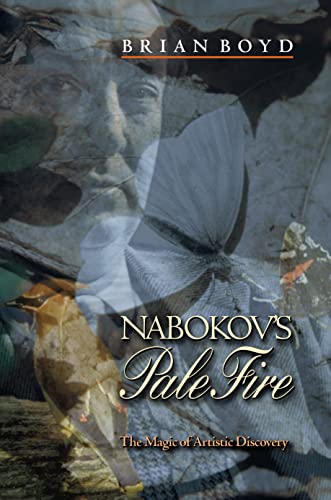
Pale Fire is regarded by many as Vladimir Nabokov’s masterpiece. The novel has been hailed as one of the most striking early examples of postmodernism and has become a famous test case for theories about reading because of the apparent impossibility of deciding between several radically different interpretations. Does the book have two narrators, as it first appears, or one? How much is fantasy and how much is reality? Whose fantasy and whose reality are they? Brian Boyd, Nabokov’s biographer and hitherto the foremost proponent of the idea that Pale Fire has one narrator, John Shade, now rejects this position and presents a new and startlingly different solution that will permanently shift the nature of critical debate on the novel. Boyd argues that the book does indeed have two narrators, Shade and Charles Kinbote, but reveals that Kinbote had some strange and highly surprising help in writing his sections. In light of this interpretation, Pale Fire now looks distinctly less postmodern–and more interesting than ever. In presenting his arguments, Boyd shows how Nabokov designed Pale Fire for readers to make surprising discoveries on a first reading and even more surprising discoveries on subsequent readings by following carefully prepared clues within the novel. Boyd leads the reader step-by-step through the book, gradually revealing the profound relationship between Nabokov’s ethics, aesthetics, epistemology, and metaphysics. If Nabokov has generously planned the novel to be accessible on a first reading and yet to incorporate successive vistas of surprise, Boyd argues, it is because he thinks a deep generosity lies behind the inexhaustibility, complexity, and mystery of the world. Boyd also shows how Nabokov’s interest in discovery springs in part from his work as a scientist and scholar, and draws comparisons between the processes of readerly and scientific discovery. This is a profound, provocative, and compelling reinterpretation of one of the greatest novels of the twentieth century.
User’s Reviews
Editorial Reviews: Review “One of Choice’s Outstanding Academic Titles for 2000″”My award for Novel of the Century goes to Nabokov’s Pale Fire . . . .The book that prompted these reflections and confirmed me in my choice for Novel of the Century was Brian Boyd’s remarkable, obsessive, delirious, devotional study.”—Ron Rosenbaum, New York Observer”It seems impossible for any scholar to write about Pale Fire, Nabokov’s novel disguised as a poem and a pseudo-scholarly consideration of that poem, without appearing to be offering a mimicry of the great work. Nabokov’s Pale Fire is no exception. Writing with an intensity that would suit Pale Fire’s own narrators, Brian Boyd, a leading authority on Nabokov, gives an exquisitely detailed reading of the book and advances a new thesis about which fictional character (or characters) is supposed to have written the book.” ― Publishers Weekly”Brian Boyd’s strength as a critic . . . is that his compendious knowledge of Nabokov’s biography and writings, especially those in English, is matched by his level-headedness and attention to detail.”—Catriona Kelly, Times Literary Supplement”[Boyd] is far and away Nabokov’s best-informed and most subtle critic. . . [He] bases his new interpretation on a staggering wealth of textual and extratextual detail and is clearly right on every major argument.” ― Choice”A readable, elegantly written and witty guide through [the] process of discovery to which Nabokov himself invariably invites us, in what is arguably his finest novel.”—Helen McLean, The Globe and Mail”This critical study . . . is not merely a brilliant search for the ‘truth’ of Pale Fire–it is also a study of the way we read texts and think about existence.”—Irving Malin, Review of Contemporary Fiction”[E]ye-opening. . . . Boyd’s singular reading . . . suggests a novel that is in fact startlingly harmonious, one in which life and death blend in seamless unity.”—Daniel Zalewski, New York Times Book Review”Writing with an intensity that would suit Pale Fire’s own narrators, Brian Boyd, a leading authority on Nabokov, gives an exquisitely detailed reading of the book.” ― Publishers Weekly”This startling new theory is not only hard to refute–it makes it impossible for anyone to see Pale Fire under the same light. . . . For the discoveries that lie ahead we are now indebted to Boyd’s scrupulous research and pertinent interpretation. Nabokov’s Pale Fire: The Magic of Artistic Discovery is truly the essential companion/mode d’emploi to one of the greatest masterpieces of the 20th century.”—Alexandre O. Philippe, Bloomsbury Review”Boyd’s Pale Fire will change how we read Nabokov’s. Boyd brilliantly shows the intensity with which the three parts of the novel ‘recall’ one another. . . . Above all, Nabokov’s Pale Fire is a manifesto for close reading. There can be no better recommendation than that.”—Eric Naiman, Slavic Review Review “No one knows more about Nabokov and his works than Brian Boyd does, and this book is obviously a work of passion. It enlivens our sense of a marvelous novel, it encourages generous close reading, and it makes the best case possible for the general human value of Nabokov’s fiendish cleverness.”―Michael Wood, Princeton University, author of The Magician’s Doubts: Nabokov and the Risks of Fiction”Brian Boyd is Nabokov’s ideal, astute, and observant reader, paying attention to every detail which, for Nabokov, was the essence of all writing and all reading. Boyd does so not only intelligently and thoughtfully but also lovingly.”―Galya Diment, University of Washington”This is a remarkable piece of literary detective work. Brian Boyd brings to bear on Nabokov’s most elaborately encrypted novel an acute attention to textual detail and a vast fund of relevant learning, coupled with endlessly resourceful ingenuity. The result is a provocative thesis about the structure and meaning of the novel-seemingly a “solution” but, as he himself grants, really grounds for continuing discussion, and in any case, a vivid demonstration of the excitements of skilled reading.”―Robert Alter, University of California, Berkeley From the Back Cover “No one knows more about Nabokov and his works than Brian Boyd does, and this book is obviously a work of passion. It enlivens our sense of a marvelous novel, it encourages generous close reading, and it makes the best case possible for the general human value of Nabokov’s fiendish cleverness.”–Michael Wood, Princeton University, author of The Magician’s Doubts: Nabokov and the Risks of Fiction”Brian Boyd is Nabokov’s ideal, astute, and observant reader, paying attention to every detail which, for Nabokov, was the essence of all writing and all reading. Boyd does so not only intelligently and thoughtfully but also lovingly.”–Galya Diment, University of Washington”This is a remarkable piece of literary detective work. Brian Boyd brings to bear on Nabokov’s most elaborately encrypted novel an acute attention to textual detail and a vast fund of relevant learning, coupled with endlessly resourceful ingenuity. The result is a provocative thesis about the structure and meaning of the novel-seemingly a “solution” but, as he himself grants, really grounds for continuing discussion, and in any case, a vivid demonstration of the excitements of skilled reading.”–Robert Alter, University of California, Berkeley About the Author Brian Boyd is Distinguished University Professor in the Department of English at the University of Auckland, New Zealand. He is the author of the prize-winning Vladimir Nabokov: The Russian Years (Princeton 1990), Vladimir Nabokov: The American Years (Princeton 1991), and Nabokov’s Ada: The Place of Consciousness. Referred to in a recent journal as “the great man of Nabokov studies,” he has also edited Nabokov’s English novels and autobiography for the Library of America and Nabokov’s Butterflies for Beacon Press. Read more
Reviews from Amazon users which were colected at the time this book was published on the website:
⭐I have recently re-read this fine book (as I was re-re-re-re-reading the novel for the fifth or sixth time). I admire the structure of taking us through a first, then second, then third read to get at the solution of Nabokov’s puzzles and challenges. I also liked the author’s erudition, his vast years of romance with both the novelist and this work, and his attention to detail both within the book and in what’s implied from outside.I am also aware of the interest in Popper and the scientific approach the author demonstrates and advocates. Especially his brief dismissal of a need for a post-modern interpretation of the great work. The author as discoverer. As apparently Nabokov thought all readers should be.Nabokov was a lifelong collector and describer of butterflies. That is well known to any Nabokovian. To the extent he was a scientist I am not sure. Yes he briefly studied zoology at Cambridge, but quickly switched to Russian & French. That then leaves him technically unqualified as scientist. And as practitioner we have to pigeonhole him as a dedicated and perhaps even addicted amateur ever in search of the new species. And yes, science includes adding to taxonomies, that’s true. So being generous – as Nabokov himself is said by Boyd to be in this novel – we can refer to him as someone who practised science.Now why am I waffling about this? Because of the vast irony I see in the life of a great creator who thought of himself – in one of his dimensions anyhow – as a scientist yet whose central motif in personal philosophy and in creative writing – his “main theme” as his wife Vera called it – was the afterlife and communication of the living dead with the still living.Which brings me back to Professor Boyd’s wonderful book. This contact from the afterworld is made patent through Aunt Maud Shade’s mysterious communication in the barn with Hazel. Tell your father not to cross the lawn to the judge’s house; combined with several buried references to the species of butterfly Hazel will be manifest in during this period of her living death, and which inhabits Shade’s garden, and what’s more will flutter onto him in those last fateful minutes. Then further communication is placed at several crucial points in the novel: Hazel influences her father to write his masterpiece; she creates for the deranged Botkin (alias Kinbote) his kingship, his kinship, his ex-country, his past. Then when assassinated Shade himself is supposed to create for Kinbote all the plot pieces to do with Grey the killer becoming de Grey/Gradus the would-be regicide.So here’s where I am at: Aunt Maud’s communication is the closest thing we can get to some pseudo-objective communication with the living. (Was Maud the closest female name Nabokov could think of to do with Morse? For presumably AM taps out her light flashes as Morse code.) But no mechanism I can find tells me just how Hazel tells her father what to write about, informs Kinbote about his fantasy alter-self, or about just how the dead Shade creates for Kinbote the Gradus story. No science here. No bobo-links either.Perhaps I need to re-re-read this book. Perhaps Professor Boyd does have some hidden mechanism that I am missing. Maybe I am just a pedant. But it needs addressing I think, in a work that presents itself as undertaking something akin to scientific discovery and in a work about a work by a great writer who purports to deal in science himself. Boyd not only fails to supply a mechanism (so I think with read and re-read). But also Nabokov the scientist fails to provide a communication mechanism for Boyd to find and us to appreciate.Enough. I still think it a fascinating and beautifully written analysis, and readily give it 5 stars.
⭐It’s good in that Boyd cobbles together a convincing reading of Hazel Shade’s role in the work. This I appreciated, as I am not the sort of reader who knows offhand all of Nabokov’s 19th century references, and these are apparently essential to the Hazel theme in PF.Unfortunately, there is a tendency among Nabokovians to accept their idol’s critical taste at face value, and Boyd seems to fall down this rabbit hole. It doesn’t seem to hurt his analysis of the foreword, commentary, or index, but the analysis of the poem suffers. First, the poem is what it is: to employ phrases that are not uncharged, I would characterize it as a verse monoculture product critical of other verse monoculture products, or a school of quietude poem critiquing other school of quietude poems. In other words, it’s a canon poem. It’s not breaking extensive new ground here. Second, large sections of the poem attack Eliot directly, and in general. Boyd mentions its relation to The Waste Land and the Four Quartets but fails to dig deep: for example, Nabokov was known to think even less of Pound than of Eliot. Certainly there is a Kinbote-as-Pound theme waiting to be extracted, since Kinbote is the final editor (the un-il miglior fabbro) of Pale Fire, but Boyd fails to examine the poem deeply enough (IMO). I’d’ve preferred some more deep delving here, rather than just reference-chasing.Finally, I think Boyd undersells the Timon/Hamlet ambiguity PF sets up. He mentions it as a reader’s error, but I think it’s an essential part of the chess-problem ambiguity in the text. The reader is presented with tons of direct Timon references, a few direct Hamlet references, and left to her own devices on where to go: I think Boyd draws this out just enough to expose the issue, rather than attacking it squarely. And I think he should attack the issue squarely given that he seeks to emphasize the ghost story portions of PF.
⭐Obviously I must not be as big a Nabokov groupie as other Pale Fire enthusiasts, because when I read Pale Fire in a college seminar, most of us spent weeks admiring Nabokov’s academic satire and what we then thought was a purposefully horrible poem. Now I feel somewhat shamed because Boyd seems to think the poem itself is great poetry — I cringe because our class read out loud particularly funny lines and laughed at what a good “bad” poem Nabokov wrote. Maybe Boyd does miss some of the humor, but that is all he misses. I don’t think he leaves one line, joke, pun, or obscure reference unexplained. I enjoyed the first few chapters more because they stuck to many of the more obvious discoveries Nabokov intended his readers to make. By the middle, Boyd had my head spinning with some of the leaps of analysis — I was too confused to agree or disagree. But by the end, his overall surprises and theories come together and make sense. No matter what you make of Boyd’s theory, I applaud the book for its emphasis on close reading and for its obvious love of this great writer. Nabokov is one of this century’s best and deserves this kind of in-depth reading. In the final chapter, Boyd answers some of the criticisms about his theory (by Michael Wood, for instance, a Princeton prof) and almost ends up sounding like Kinbote for a moment in his defensiveness. This book is a true discovery for a devout reader because it shows how to read better and more closely, how to link (bobo-link) seemingly unrelated bits together. Hats off to a great work of Nabokov scholarship — Boyd brought in lots of information from Nabokov’s other works that proved to be quite important.
⭐The book is great. Boyd’s interpretation is original and seminal. This reading of Nabokov’s Pale Fire opens new possibilities to the study of the novel through a thought-provoking and thorough analysis of the text.
Keywords
Free Download Nabokov’s Pale Fire: The Magic of Artistic Discovery in PDF format
Nabokov’s Pale Fire: The Magic of Artistic Discovery PDF Free Download
Download Nabokov’s Pale Fire: The Magic of Artistic Discovery 2001 PDF Free
Nabokov’s Pale Fire: The Magic of Artistic Discovery 2001 PDF Free Download
Download Nabokov’s Pale Fire: The Magic of Artistic Discovery PDF
Free Download Ebook Nabokov’s Pale Fire: The Magic of Artistic Discovery