

Ebook Info
- Published: 2017
- Number of pages: 546 pages
- Format: PDF
- File Size: 3.63 MB
- Authors: Min Jin Lee
Description
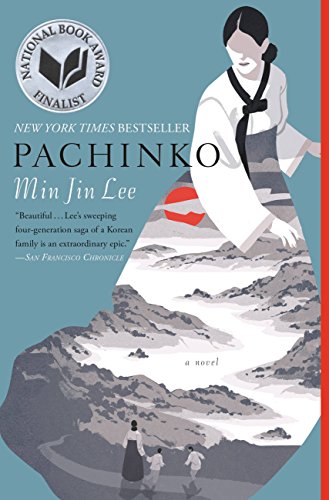
A New York Times Top Ten Book of the Year and National Book Award finalist, Pachinko is an “extraordinary epic” of four generations of a poor Korean immigrant family as they fight to control their destiny in 20th-century Japan (San Francisco Chronicle). NEW YORK TIMES NOTABLE BOOK OF 2017 * A USA TODAY TOP TEN OF 2017 * JULY PICK FOR THE PBS NEWSHOUR-NEW YORK TIMES BOOK CLUB NOW READ THIS * FINALIST FOR THE 2018DAYTON LITERARY PEACE PRIZE* WINNER OF THE MEDICI BOOK CLUB PRIZE Roxane Gay’s Favorite Book of 2017, Washington Post NEW YORK TIMES BESTSELLER * #1 BOSTON GLOBE BESTSELLER * USA TODAY BESTSELLER * WALL STREET JOURNAL BESTSELLER * WASHINGTON POST BESTSELLER “There could only be a few winners, and a lot of losers. And yet we played on, because we had hope that we might be the lucky ones.” In the early 1900s, teenaged Sunja, the adored daughter of a crippled fisherman, falls for a wealthy stranger at the seashore near her home in Korea. He promises her the world, but when she discovers she is pregnant–and that her lover is married–she refuses to be bought. Instead, she accepts an offer of marriage from a gentle, sickly minister passing through on his way to Japan. But her decision to abandon her home, and to reject her son’s powerful father, sets off a dramatic saga that will echo down through the generations. Richly told and profoundly moving, Pachinko is a story of love, sacrifice, ambition, and loyalty. From bustling street markets to the halls of Japan’s finest universities to the pachinko parlors of the criminal underworld, Lee’s complex and passionate characters–strong, stubborn women, devoted sisters and sons, fathers shaken by moral crisis–survive and thrive against the indifferent arc of history.*Includes reading group guide*
User’s Reviews
Reviews from Amazon users which were colected at the time this book was published on the website:
⭐This was a excellent book. A real page turner. The origin of the story centered around the Japanese colonial occupation of Korea from 1910 to 1945. This book tells the story of how ordinary Korean people survived during this period and longer. The book follows a poor family during the occupation, WWII, the Cold War, and the Korean War. It touches on some of the religions followed by the Korean people in Korea and in Japan.It is easy to get caught up in the characters. There was a lot of fluff in the book. The author expanded on characters that would have not been of interest to any reader and certainly not to me.Pachinko is about a family saga set in Korea and Japan from 1910 to 1980. Sunja, daughter of Hoonie and Yangjin, is a teenaged girl living with her mother, who runs a boarding house in a fishing village in Gohyang, Korea. Hoonie is the crippled son of a poor fisherman, and Yangjin is the daughter of a poor farmer, so they are used to struggling to survive. When Sonja’s loving father, Hoonie, dies of tuberculosis when she was 13 years old, she and her mother continue to work hard to keep the boarding house above water.Sunja has worked hard all of her life. She is now in charge of shopping for the boardinghouse after her father dies. It’s what her mother does, too. Koh Hansu, a wealthy man who has a wife and 3 children in Osaka, notices 16 year-old Sunja on her shopping errands. He is attracted to her and follows her to see where she goes. One day, he sees that three Japanese boys are mocking her for being Korean. The boys surround Sunja and then start to assault her. Koh Hansu saves her from the boys and gains Sunja’s trust. Koh Hansu continues to pursue her. She does not know that he is already married and falls hard for him. He professes to love her and gives her a gold pocket watch. She wants to be his wife, and expects him to propose marriage. When she gets pregnant and he then tells her that he is already married, he offers to provide for her, but she rejects his offer as dishonorable. Koh Hansu, I believe, really loved Sunja. He says he’ll support her, but she wants nothing more to do with him.For weeks, Sonja and her mother have taken care of a kind Japanese boarder and pastor, Baek Isak, who has been ill with tuberculosis. To save Sunja’s reputation and give her child a good name, he offers to marry Sunja and take her to Osaka where his family lives. Sunja and Baek Isak move in with his brother Yoseb and his wife Kyunghee. Yoseb has contempt for the pregnant Sunja, but having no children of her own, Kyunghee welcomes Sunja and is excited about the baby. Kyunghee was so lovely and she loved Sunja. Her husband Yoseb was difficult. Baek Isak and Sonja also have a son together by the name of Noa.After Baek Isak dies, Sunja gets a job in a restaurant, since she now has no other income. Kim, the man whom she considered her boss, is really employed by Koh Hansu (Noa’s father), who owns the restaurant and got her the job.In 1940, Japan invades China and then soon joins the Axis powers with Germany and Italy. Food becomes scarce in Osaka. The restaurant closes because there is very little food to buy at the market. I believe that Koh Hansu was a decent person who learned how to survive and became rich with the help of his Japanese father-in-law. He did what he had to do to survive in my opinion. He could have been a bit nicer and moral, but that was not who he was.On the last night at the restaurant, Koh Hansu appears and urges Sonja and her friend Kyunghee to leave Osaka and go to a safe place he knows, the Tamaguci farm in the country. He tells them that the Americans are going to bomb Osaka. Kyunghee cannot convince her husband Yoseb to go since he has been offered a job as a foreman in a steel factory in Nagasaki. The women take Sonja’s two boys with them and reach safety. The Americans bomb Nagasaki. Yoseb survives the bombing but never recovers his health. Surprisingly, I think the household wanted him to die sooner.Sunja and Hansu’s son, Noa was a studious child who was so much like his stepfather, Isak, who Noa believed to be his real father. Mozasu, Isak’s biological son, struggles with the stigma of, being half Korean and is not very studious, had a harder time in school. Noa did so well in school, his father Koh Hansu wanted to pay for his education at an elite school in Tokyo. Noa, thought Hansu was just his benefactor at the time.In Japan, Pachinko parlors were often associated with Koreans. In the book, Sonja and Baek Isak’s son, Mozasu, worked in a pachinko parlor for Goro-san as a guard and then became the general manager of Paradaisu Seven. He ended up a multi-millionaire and owner of multiple pachinko parlors. I had never heard of pachinko, and after reading the book, still could not figure out what the fascination was.In the 1950s, Mosazu, Sonja and Baek Isak’s son, is hired as a guard at a pachinko parlor. Mosazu works hard in order to pay Yoseb’s medical bills, food, and rent. He also wants to help his half-brother, Noa, go to Waseda University to major in English literature. Without asking permission, Koh Hansu steps in and pays Noa’s tuition, room and board. Noa is doing well, but when his girlfriend, Aikido comes uninvited to lunch with his father and tells Noa that his father is a mobster, he confronts his mother, drops out of school and disappears.After World War II, Korea is split up by the Americans, Russians and Chinese. Even the Japanese take over some areas. The Koreans still suffer from the foreign powers’ takeover of their country.As Koreans in Japan, they are considered visitors even when they were born there. There were jobs they could never have; it was illegal to rent to them. The Koreans lived in ghettos that did not have the same services as Japanese neighborhoods. The Koreans were looked down upon in the Japanese public schools and most jobs were not available to them regardless of their training or education. Koreans were considered dirty and undesirable to Japanese citizens.When a Korean boy turned fourteen, he had to register, be fingerprinted and interviewed, and he had to ask for permission to remain in Japan, even though he was born there and has never been to Korea. This process will be repeated every three years. And this was in the 1970s, not the 1870s. Getting Japanese citizenship was extremely difficult. But Sunja’s family does get ahead, attaining a comfortable living. There were a quite a few sexual interactions in the book by unmarried couples that were surprising. The book even explored a homosexual who was friends with Mosazu. I could not figure out whether or not Mosazu knew that he was a homosexual. I know that Koh Hansu knew. Hansu could deploy private detectives everywhere with his money.
⭐Pachinko repeatedly broke my heart into a million little pieces and I love every single second of it.The gorgeously written novel follows four generations of a Korean family impacted by the Japanese occupation of Korea. We see the family in both Korea and Japan, before during and after the occupation, and how wartime affected each of them in different ways.I loved that this novel was very real and did not shy away from any of the tragedies that occurred to people during this horrible time in history, but was written in a way that did not overwhelm me as a reader. Often, the tragedies took place off page and we were informed at the begging of a chapter when someone had passed away or another awful event took place. This allowed me to learn about all the horrific events that happened without being with the characters and reading their grief and shock in the moment. This novel could have become too heavy to read, and I really appreciate that the author wrote in a way that was informative and still heartbreaking but not entirely emotionally overwhelming.I think my favorite aspect of this novel is how beautiful, raw, and messy the family and relationship dynamics were. There is no such thing as a perfect family, parent, or child and the novel explores various types of relationships and love and how beautiful but also heartbreaking they can be. There were moments that showed no matter how hard you try as a parent, you cannot be perfect to or fully protect your children and how complicated and imperfect people are in general.Another aspect I loved and one that I found the most informative to me as someone who did not learn very much of Korea’s and Japan’s histories when I was younger, is how complicated the two countries relationships became and how much the war still affects their people’s views of each other today. I think this novel is perfect for anyone who wants to know more about their histories, especially from Korea’s perspective.Overall, I found this novel so heartbreaking but in the best way. The writing is gorgeous and I loved every second I spent with the characters, no matter how painful it became. I highly recommend and am now looking forward to watching the tv show very soon.
⭐I bought the Kindle edition of this book as it was a special offer. I hummed and hawed and eventually decided that it was such a low price it didn’t really matter if I liked it or not.I am so pleased I bought this book. It was enthralling – took me less than two days to read. I began by thinking it was going to be a family saga type book (which I normally avoid like the plague) but it was anything but.I found myself become deeply involved with the characters and wanting to know how they got on, how their various decisions affected their lives. I was actually pleased it is a standalone book as it meant more than the first in a series.I’d no idea what pachinko was (or, indeed, is) and I vaguely (and incorrectly) thought it would have something to do with food or clothing.I hadn’t realised how the Koreans were treated by the Japanese and had no idea of what they had to undergo in their day to day lives in either Korea or Japan. This book was an education.
⭐I heard Min Jin Lee interviewed and quickly realised that there was a Korean/Japanese history about which I knew virtually nothing.I understood from the interview that this book took a very long time to write and that it was impeccably researched, so thought it deserved reading. There are a considerable number of characters with Korean and Japanese names and lots of words that need looking up in order to get their full meaning. I didn’t even know what ‘Pachinko’ was and if you don’t know you won’t find out until about half way through the book – unless you look it up first. These are not criticisms, but I do feel that this book needs a fairly academic approach to get the most out of it. It is not an easy read. Following the lives and ‘fortunes’ of a Korean family who ‘escape’ to Japan in order to avoid starvation, it is a story of persecution and prejudice on many levels. If you like a feel-good story this is not for you, but if you can take a big dose of reality and admire the qualities of human spirit and tenacity in adversity then you will find this book both informative and deeply moving.
⭐For some reason I’m absolutely fascinated by Japan & asian culture so I love reading novels set there. At first I was gripped by this book as it did give a real taste of history & life set in this part of the world… However, by about half way through I was starting to get bored.. The author kept introducing more & more characters whose names & family lineage were very difficult to keep up with & the story was going nowhere. It was kind of interesting to see the history & development of a whole family & Korean & Japanese culture over several generations I just wish there had been a little bit more to the story; each time I became invested in a particular branch of the family story it would change & move onto another & this left a quite dissatisfied feeling…
⭐This novel follows a Korean family through three generations and their search to be able to belong somewhere.Everything starts well by engaging the sympathies of the reader. The scene is set concisely, giving the images of life in the small town without too much of the historical background.Gradually the plot evolves throughout the rest of the book, showing the characters moving through their lives, struggling with their individual interpretations of identity. There is plenty of cultural information that is fascinating, in particular the complicated relationship between Korea and Japan. leading into the implications to the family of the Korean divide. World events move at a great pace but, in this story, we see the impact on the people.The flow of the novel is variable though. I found the start quite slow and it took me some time to get into the swing of reading, finding many excuses to put it down. I was much more engaged in the middle section but then it slowed again towards the end where there was one too many characters introduced.Generations merge and there are no clear switched from one to the next which had a very natural feel about it.Finally the end of the book approached and it was thoughtful, revisiting emotions stirred earlier in the story along with tying up many loose ends.
⭐An absorbing, distressing and heartwarming saga of 4 generations. Set in the time of the Japanese occupation of Korea this is not an easy read but as well as accounts of poverty, struggle and cruelty there is hope and determination. The Koreans suffer racism, abuse, poverty and loss but this family somehow sticks together for the first two parts of the tale. Part 3 however is a completely different kettle of fish. Was it written by the same person? It is much more sexual than earlier sections , perhaps to show the contrast between wartime and the 70s but I found that the focus on sex and the resultant bad language made this part of the book very shallow
Keywords
Free Download Pachinko (National Book Award Finalist) in PDF format
Pachinko (National Book Award Finalist) PDF Free Download
Download Pachinko (National Book Award Finalist) 2017 PDF Free
Pachinko (National Book Award Finalist) 2017 PDF Free Download
Download Pachinko (National Book Award Finalist) PDF
Free Download Ebook Pachinko (National Book Award Finalist)