Ebook Info
- Published: 1999
- Number of pages: 314 pages
- Format: PDF
- File Size: 28.03 MB
- Authors: Carl Plantinga
Description
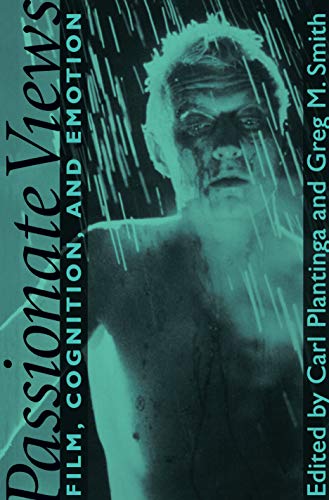
The movie theater has always been a place where people come together to share powerful emotional experiences, from the fear generated by horror films and the anxiety induced by thrillers to the laughter elicited by screwball comedies and the tears precipitated by melodramas. Indeed, the dependability of movies to provide such experiences lies at the center of the medium’s appeal and power. Yet cinema’s ability to influence, even manipulate, the emotions of the spectator is one of the least-explored topics in film theory today.In Passionate Views, thirteen internationally recognized scholars of film studies, philosophy, and psychology explore the emotional appeal of the cinema. Employing a novel cognitive perspective, the volume investigates the relationship between genre and emotion; explores how film narrative, music, and cinematic techniques such as the close-up are used to elicit emotion; and examines the spectator’s identification with and response to film characters.An impressive range of films and topics is brought together by Carl Plantinga and Greg M. Smith, including: the success of Stella Dallas and An Affair to Remember as tearjerkers; the power of Night of the Living Dead to inspire fear and disgust; the sublime evoked in The Passion of Joan of Arc, Aguirre, the Wrath of God, and The Children of Paradise; the emotional basis of film comedy as seen in When Harry Met Sally; the use of cinematic cues in Raiders of the Lost Ark and Local Hero to arouse emotions; the relationship between narrative flow and emotion in Once Upon a Time in the West and E.T.; the emotive use of music in The Elephant Man and A Clockwork Orange; Stranger than Paradise’s sense of timing; desire and resolution in Casablanca; audience identification with the main characters in Groundhog Day and The Crying Game; portrayal of perversity in The Silence of the Lambs, Flaming Creatures, and Shivers; and empathy elicited through closeups of actors’ faces in Yankee Doodle Dandy and Blade Runner.Passionate Views offers a new approach to our understanding of film and will be of interest to anyone fascinated by the emotional power of motion pictures and their relationship to the central concerns of our lives, as well as by the techniques filmmakers use to move an audience.
User’s Reviews
Reviews from Amazon users which were colected at the time this book was published on the website:
⭐The 12 articles in this collection are a little dated for readers interested in film theory. E.g. its “novel cognitive perspective” is hardly novel today. There are some insightful articles, particularly the first four under “Kinds of Film, Kinds of Emotion”, but many of the remaining articles drift without channeling a clear direction. There is enough of substance in the book to warrant buying it, but there are better and more up-to-date books available now.
⭐A welcome and insightful anthology, bringing much needed attention and light to the affective dimension of film. Too often the undeniable emotional power of the cinematic experience has been ignored by scholars and critics, unless this elusive register of film was being “politicized” in Marxist or feminist critiques of the “insidious” messages of a dominant ideology.The essays about “Clockwork Orange” and “The Elephant Man” are especially useful (though I would argue that no director has captured the “sound of silence” more affectingly than does Lynch in the disturbing montage sequences representing Merrick’s consciousness).Since Jeff Smith’s essay addresses my own somewhat “pioneering” analysis of Friedhofer’s score for “Best Years,” I’ll briefly respond. The representation of my own position and approach–influenced by Lacanian “suture” theory–is impressively accurate. But I would suggest that Smith’s counterproposal of a more cognitive-based approach would not necessarily produce a more reliable account of the viewer’s response to the film score–especially given the widely-accepted discreditation of music’s inherently narrative, or “programmatic,” features. Rather, music is one of cinema’s most fluid and elusive signifiers, capable of reaching the viewer at both conscious and sub-conscious levels as well as evoking emotions through incongruous juxtapositions of the ironic and the literal. Representing this “transaction” between the film’s emotive messages and the viewer’s claiming them as “his own,” will always be an activity located in a rhetorical as much as an analytic space.
⭐I would rate this book as a very beautiful step in the best direction for film making. Normally film schools doesnt give so much importance to Emotions in a movie .And movie is all about emotions. This book bares down to the minimum How emotions actually are generated and how the behaviour of emotions is. This book tries to atleast get you started on your journey of understanding how to play with emotions in movie.
⭐
⭐
Keywords
Free Download Passionate Views: Film, Cognition, and Emotion in PDF format
Passionate Views: Film, Cognition, and Emotion PDF Free Download
Download Passionate Views: Film, Cognition, and Emotion 1999 PDF Free
Passionate Views: Film, Cognition, and Emotion 1999 PDF Free Download
Download Passionate Views: Film, Cognition, and Emotion PDF
Free Download Ebook Passionate Views: Film, Cognition, and Emotion