Ebook Info
- Published: 2008
- Number of pages: 401 pages
- Format: PDF
- File Size: 3.20 MB
- Authors: Neal Koblitz
Description
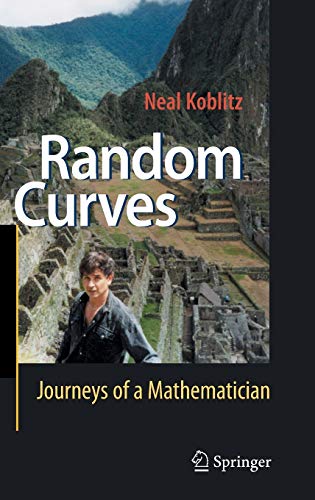
Neal Koblitz is a co-inventor of one of the two most popular forms of encryption and digital signature, and his autobiographical memoirs are collected in this volume. Besides his own personal career in mathematics and cryptography, Koblitz details his travels to the Soviet Union, Latin America, Vietnam and elsewhere; political activism; and academic controversies relating to math education, the C. P. Snow “two-culture” problem, and mistreatment of women in academia. These engaging stories fully capture the experiences of a student and later a scientist caught up in the tumultuous events of his generation.
User’s Reviews
Editorial Reviews: Review From the reviews: “Random Curves: Journeys of a Mathematician has recently been published by Springer Verlag. a ] focuses on Koblitza (TM)s life and his many journeys. a ] serve as a travelogue as well as an autobiography, and give a different perspective on some of the countries than one might find elsewhere. a ] Random Curves is a fun read and an interesting insight into the mind of a prolific and active mathematician.” (Darren Glass, MathDL, March, 2008)“Neal Koblitz is my kind of guy. How do I know? I’ve never met him, never even saw him on a platform at the AMS or MAA. But I’ve just read his memoir, Random Curves. He doesn’t pull his punches. He knows right from wrong. He speaks truth to power! Koblitz attended Harvard College from 1965 to 1969. He majored in math and organized for the Progressive Labor Party, a Mao-ist oriented anti-war organization. In those days many people thought of Mao Tse-Tung as an ascetic poet-of-the-people type of revolutionary, uniting the best qualities of Vladimir Lenin, Charles DeGaulle and Mother Teresa. Nowadays, quite the opposite, one finds plentiful books and articles exposing Mao as a disgusting, hypocritical monster. But unlike the usual respectable academic with radical episodes in his youth, Koblitz never apologizes for his early politics. He just frankly tells what it was like. With relish. […] But he has done much more than just teach number theory and publish papers. He has traveled and spent long periods living in those territories to which travel was largely forbidden or restricted in cold-war America, including the Soviet Union, Cuba, North Vietnam, Nicaragua and El Salvador. He tells about mathematical life and ordinary daily life in those terrae incognitae freshly and frankly. Moreover, back in Seattle he tried really hard to “serve the people” – that is, to teach classes that meet the needs of ordinary undergraduates, and even ordinary little children in elementary school. Needless to say, his efforts to do good were rewarding and worthwhile, but he also met senseless and pointless frustrations and obstacles. […] It has turned out that exotic number theory has a significant payoff in cryptography! Nowadays coding of confidential information often is based on the Rivest-ShamirAdleman method, which uses the simple fact that it is much easier to multiply two very large prime numbers together, than it is to factor the product back, to find those two prime factors. Long ago, Henri Poincaré discovered a sophisticated kind of “multiplication”, which used elliptic curves to define a new kind of “product” of rational numbers. Neal Koblitz and Victor Miller both had the idea to use elliptic multiplication as a coding method. This method turns out to have significant practical advantages, and consequently Neal Koblitz was transformed into an applied mathematician, leading conferences on cryptography, and involved-no surprise!!-in sensational controversies with Eminent Authorities in the world of cryptography. The title “Random Curves” comes from this work in cryptography. He has written a fascinating chapter where he contrasts the two cultures-not the stale old literary and scientific “Two Cultures” of C.P. Snow, but rather the two cultures of academic pure mathematics and hard cash, big money cryptography.” (Ruben Hersh, The College Mathematics Journal, 40:2, March 2009) About the Author Neal Koblitz is a Professor of Mathematics at the University of Washington in the Department of Mathematics. He is also an adjunct professor with the Centre for Applied Cryptographic Research at the University of Waterloo. He is the creator of hyperelliptic curve cryptography and the independent co-creator of elliptic curve cryptography. Professor Koblitz received his undergraduate degree from Harvard University, where he was a Putnam Fellow, in 1969. He received his Ph.D. from Princeton University in 1974 under the direction of Nickolas Katz.
Reviews from Amazon users which were colected at the time this book was published on the website:
⭐This is a fascinating book. It is the autobiography of Neal Koblitz, who is a well known mathematician, who has done important work in number theory and cryptology.It documents the activities of Koblitz and to some extent his wife, Ann Hibner Koblitz, herself an accomplished academic in women and gender studies. It follows their experiences through student politics, their travels to the USSR and their political engagements in Vietnam, Latin America and elsewhere. It also has a chapter on Koblitz’s work in the cryptology community, and one on the work in education conducted by Koblitz and his wife. It also has many reflections on higher education, both inside and outside the U.S., and on the differences between the sciences and the humanities. The book is written in a factual and often detached manner. At the same time, the book is permeated with the progressive ideas that motivated their experiences. One of the central thrusts of their efforts has been their organization of the Kovalevskaia Fund for the encouragement of women in science, technology and medicine in Asia, Africa and Latin America.It seems that while not all mathematicians are left-leaning, in many parts of the world, mathematics departments have more than their fair share of lefties. (Koblitz actually offers a reason for why this might be the case). Many of us of the baby boomer generation, who participated in student politics in our younger days, will find this book riveting. But I think the book will appeal to a very broad readership; it is interesting and thought-provoking from beginning to end. And it is an inspiring case study of what an intellectual can accomplish.
⭐I – a mathematician – bought this book because I had had the pleasure talking to Neal Koblitz for hours at a conference dinner. His biographical stories were truly fascinating and entertaining.Still the book surprised me beyond belief. It is a true page-turner. A great story, well-written. I joyfully learned a lot about history and that is why I recommend this book to everyone. You do not have to have any inclination towards mathematics to enjoy it. (Once I interrupted my reading, left the book on the living-room table, and almost had to fight to get it back from my wife – a non-mathematician – who briefly picked it up out of curiosity and would not want to drop it anymore.)
⭐
Keywords
Free Download Random Curves: Journeys of a Mathematician 2008th Edition in PDF format
Random Curves: Journeys of a Mathematician 2008th Edition PDF Free Download
Download Random Curves: Journeys of a Mathematician 2008th Edition 2008 PDF Free
Random Curves: Journeys of a Mathematician 2008th Edition 2008 PDF Free Download
Download Random Curves: Journeys of a Mathematician 2008th Edition PDF
Free Download Ebook Random Curves: Journeys of a Mathematician 2008th Edition